Category Archives: Electric Cars

News and reviews of the latest electric cars (full electrics and plug-in hybrids).

Could the coronavirus accelerate the green transition?

Coronavirus continues to impact businesses across the globe causing uncertainty in all sectors of the economy. While lockdowns and travel restrictions have been relaxed in the UK, the drastically reduced air pollution experienced, albeit temporarily, has driven reappraisal of future mobility strategies while also highlighting a significant role and opportunity for the electric vehicle (EV) sector.

The post COVID-19 global economy will be different – bet on longer term winners

While the health threat of coronavirus will be ended by the development and distribution of a vaccine, it is increasingly clear the economic effects will be more lasting. Recovery will happen, but it will be patchy, certain sectors (travel, hospitality, office real estate) will be permanently transformed.

This altered economic landscape means short term attempts to go “back to normal” are ill advised. Instead, governments and investors will need to look at which areas have a longer-term future and back these to the hilt – and yes, this may be to the detriment of others.

In automotive terms, would anyone recommend measures to support the production of a new suite of diesel passenger vehicles while the global economy lag has depressed sales? This is the time to pivot to the development of the passenger vehicles that will be in demand once recovery is here in earnest – and those are electric.

Read more: Current News

It’s Time to Go Green!

If you would like to know more about Solar Panels and the PowerBanx range of home battery systems, and get a free instant quote, please complete our online form:

Cheap Motoring

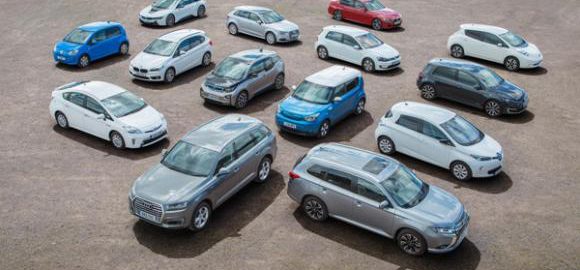
Electric vehicles cheaper to own than petrol or diesel equivalents

Electric vehicles are cheaper to own and run compared with combustion-engined equivalents, according to new research.

Over the lifetime of a vehicle, an electric car works out at around £107 cheaper per year compared with a standard petrol or diesel car, data from Direct Line has found.

Cheap Motoring

Purchasing an electric vehicle in 2020 and running it over its lifetime would cost £52,133 compared with £53,625 for an equivalent petrol model.

“Our analysis also shows that with the ban on new non-electric cars set to come into force in less than 15 years’ time, Britons could already be saving money by switching from a traditional petrol or diesel car to an equivalent electric model”

Neil Ingram, head of motor product at Direct Line

The insurance company put the anticipated lifetime of a vehicle at around 13.9 years, with any car bought today likely needing to be replaced by the end of 2034 – just prior to the ban on petrol, diesel and hybrid cars coming into play.

Read more: Shropshire Star

It’s Time to Go Green!

If you would like to know more about Solar Panels and the PowerBanx range of home battery systems, and get a free instant quote, please complete our online form:

Renault ZOE Van (Image: Renault)

Renault Zoe van revealed as practical small EV with 245-mile range

Light modifications to the Zoe road car include a flat floor for easy loading; exterior looks largely unchanged

The Renault Zoe Van will join the firm’s fleet of electric commercial vehicles later this year.

Created by applying modest modifications to the Zoe road car – most notably opaque rear windows and the removal of the rear seats to form a flat load area – the Zoe Van will be powered by the same 52kWh battery pack and 107bhp R110 electric motor. Its range is rated at 245 miles per charge under the WLTP test cycle, allowing for a 50% payload and 75kg driver.

Renault ZOE Van (Image: Renault)

Peak charging via a 50kW DC outlet allows drivers to charge from zero to 80% in 70 minutes and a 30-minute charge is enough for a 90-mile range boost. A 22kW charger can fill the battery from empty in three hours.

Load volume is rated at one cubic metre. The load bay is 1205mm long and maximum load width is 1110mm. Maximum payload is rated at up to 387kg.

The Zoe Van is available in two trims: Business and Business+. Buyers of either can opt for rapid charging capability.

Standard equipment includes a 10.0in TFT instrument cluster, 7.0in infotainment screen with Apple CarPlay and Android Auto connectivity, manual air conditioning, electric front windows, electrically adjustable heated door mirrors, automatic headlights and wipers, full-LED headlights, 15in steel wheels and a USB socket.

Read more: Autocar

It’s Time to Go Green!

If you would like to know more about Solar Panels and the PowerBanx range of home battery systems, and get a free instant quote, please complete our online form:

Honda e Electric Car (Image: Honda.co.uk)

Honda e review: first UK test

I’m sceptical about the Honda e.

You’re not the only one – so was I. I’m using the past tense deliberately. But when it was first shown I had some issues. It didn’t look as cool and radical as the concept. I thought a base price of £26,160 was too expensive. I didn’t think 130 miles was near enough range. I thought the camera wing mirrors were a gimmick. I wasn’t sure about the car’s whole width being taken up by screens. I feared cutesy styling concealed flimsy engineering.

Honda e Electric Car (Image: Honda.co.uk)

And now you’ve spent a few days with it?

Only one of those concerns remains: the wing mirrors. Better here than in the Audi e-tron as the screens sit in a more natural place, but still a flawed solution. And I don’t get on with the electric rear view mirror in this £29,160 Advanced version, either. Makes your eyes feel funny after a while. One flick and you’re back to a normal rearwards view, trying to see past your passenger’s heads.
Other issues have cropped up, but none is remotely serious enough to prevent this being a thoroughly excellent little electric car.

Come on, let’s get those flaws out in the open.

The biggest one is boot space. The e is powered by a single electric motor driving the rear wheels alone. That means the boot floor is high and a Maxi pack of Shreddies doesn’t fit under the parcel shelf. In fact, after bag four the rest of the supermarket shop is going on the back seats. 171 litres in total when a Renault Zoe has 338 litres – almost precisely double the size. It’s not a deal breaker, but I was surprised how often things had to be twisted, laid flat or put in the rear footwells.
Speaking of rear space, you will get four adults in, but load it up with weight and that 130-mile claimed range is going to fall significantly. Especially during winter. And it’s not like you’re going to get 130 miles anyway. Reckon on 100. Probably closer to 80 with your mates on board. This is beginning to sound bad, isn’t it?

It is. What if I drive enthusiastically?

That’s not going to do you any favours either. If you want range, go for that Renault Zoe and its 50kWh battery. On the WLTP cycle it promises 238 miles range – over 100 more than the Honda with its smaller 35kWh battery. But how often do you drive 100, or even 80 miles in a day? And do you have access to another car if that’s the case? These are the key questions you need to answer, together with resolving your charging strategy. If you’ve got off-street parking, have a charger installed – it’s only a few hundred quid. It’s a wonderful feeling to arrive home and just plug in. No off-street parking? Running a cable across a pavement is probably not an option, which means you’re going to be using charge points. Minefield.

How is the Honda for nipping around town?

Possibly the best city car there is, no matter what fuel it’s powered by. It might be heavy (1,542kg) but it’s compact – mid-way between a Zoe and VW’s Up for length and width. The windscreen is nearly as upright as a Mini Electric’s, but you sit higher and have a more commanding view out over a very stubby bonnet. It’s super-simple to drive, and snaps away from lights with real vigour.
But the best thing about it is the turning circle. This side of a London Taxi, there’s nothing to touch it. It makes parking simple, multi-storeys a doddle and odd though it sounds, it’s weirdly satisfying to have something that turns as tight as a dodgem.

Read more: Top Gear

It’s Time to Go Green!

If you would like to know more about Solar Panels and the PowerBanx range of home battery systems, and get a free instant quote, please complete our online form:

POD Point Rollout at Tesco Stores (Image: Tesco/POD Point)

Pod Point marks ‘landmark moment’ of Tesco rollout as it hits 200 stores

Electric vehicle (EV) charging company Pod Point has reached a new milestone in its rollout of chargers at Tesco stores.

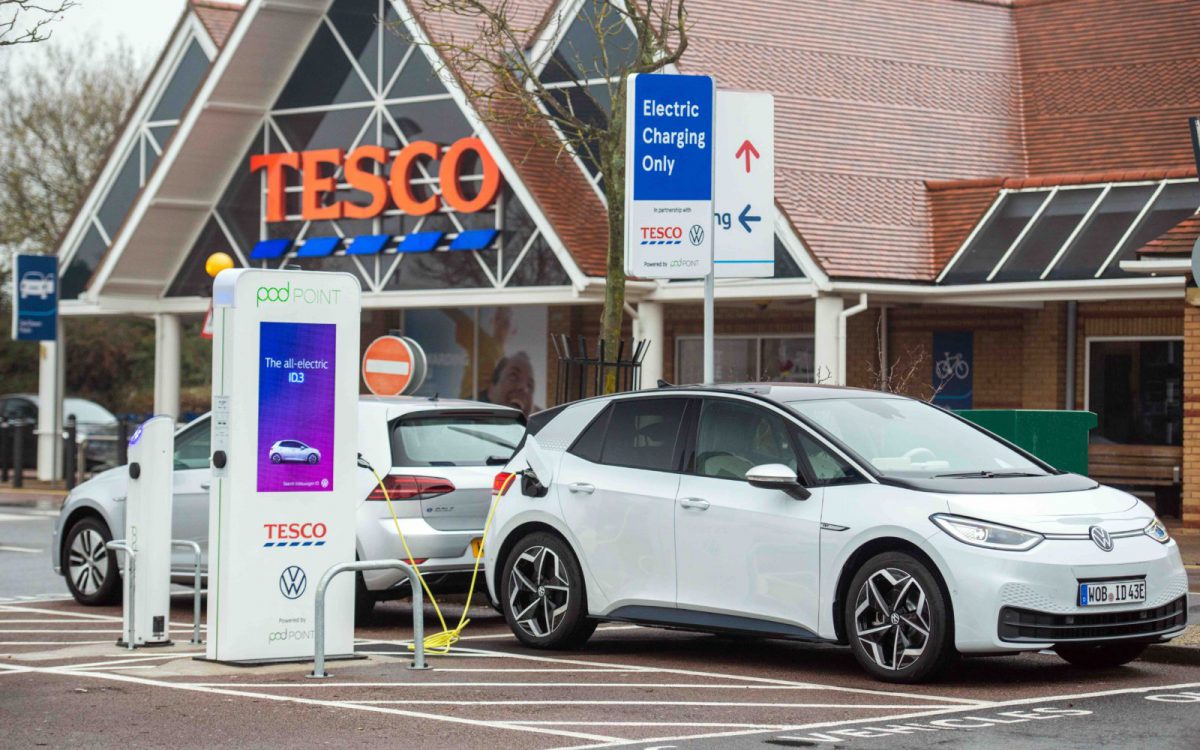
Chargers have now been installed at 200 Tesco stores, with the latest – four 7kW charging bays – going in at the Chester Tesco Superstore. This takes the number of chargers installed as part of the rollout to 402, with at least two charging points installed at each location.

POD Point Rollout at Tesco Stores (Image: Tesco/POD Point)

The partnership is on track to install chargers at a further 200 stores by the end of the year, Pod Point said, with 12% of the total Tesco store footprint now having EV charging facilities.

This is set to rise to 36% following the rollout, which is being done as a partnership between Pod Point, Tesco and Volkswagen and was first announced in 2018.

It is aiming to install 2,400 charging points across 600 UK stores, with chargers first installed in 2019.

Since then, over 669MWh has been used to power customers’ vehicles, with the chargers – which are free to use – powered exclusively through renewables.

Read more: Current News

It’s Time to Go Green!

If you would like to know more about Solar Panels and the PowerBanx range of home battery systems, and get a free instant quote, please complete our online form:
Nissan Ariya EV SUV (Image: Nissan)

2021 Nissan Ariya electric SUV revealed: price, specs and release date

The Nissan Ariya is a high-tech electric SUV with a 310-mile range and futuristic looks…

In order to explain why the new Nissan Ariya could represent a watershed moment for electric cars, we need to have a little history lesson, so pay attention at the back.

Nissan Ariya EV SUV (Image: Nissan)

In 2006, Nissan changed the game for SUVs with the launch of the Qashqai – the first mass-market family SUV which showed that you could have a high-set driving position and family friendly practicality without the sky-high running costs of a traditional off-roader. Then, in 2010, lightning struck twice with the Nissan Juke – a small SUV which took the Qashqai’s very successful formula, shrank it considerably, and lowered running costs yet again. Both cars, unsurprisingly, have sold like proverbial hot cakes ever since. The point is that Nissan has a habit of shaking up the market when it launches a new SUV, which is exactly why the new Ariya is such big news.

The Ariya is a fully electric large SUV, with styling that’s not changed dramatically from 2019’s concept car of the same name. Slim LED lights and a Nissan badge which lights up to welcome you to the car gives the Ariya a futuristic look, while its sloping rear roofline means this Nissan walks a fine line between traditional and coupe-styled SUV. Some of the concept’s frivolities, though, such as cameras replacing traditional door mirrors, haven’t made it to production. You can bet that the next Qashqai family SUV will take strong cues from the Ariya when it arrives later this year, too.

Read more: What Car

It’s Time to Go Green!

If you would like to know more about Solar Panels and the PowerBanx range of home battery systems, and get a free instant quote, please complete our online form:

2020 Renault Zoe (Image: Renault)

Electric-Car Subsidies Make Renaults Free in Germany

Car buyers in Europe can now get their hands on a brand-new electric vehicle for less than the typical cost of a mobile-phone contract. Thanks to newly generous subsidies, some are even free.

Shoppers have swarmed virtual showrooms in Germany and France — the region’s two largest passenger-car markets — after their national governments boosted electric-vehicle incentives to stimulate demand. Their purchase subsidies are now among the most favorable in the world, according to BloombergNEF.

2020 Renault Zoe (Image: Renault)

The state support is allowing Autohaus Koenig, a dealership chain with more than 50 locations across Germany, to advertise a lease for the battery-powered Renault Zoe that is entirely covered by subsidies. In the 20 days since it put the offer online, roughly 3,000 people have inquired and about 300 have signed contracts.

“If we had more sales staff, we would have sold even more,” said Wolfgang Huber, head of electric-car sales for the dealer in Berlin, who published a Facebook post asking customers to be patient. “We did expect an increase in sales with the subsidies, but this run really struck us.”

Chancellor Angela Merkel and President Emmanuel Macron have sought to soften the coronavirus pandemic’s blow to the badly hit car sector. Sales in Europe have recovered more slowly in Europe than in China or North America, pressuring policy makers to support major sources of employment and economic activity.

In France, sales of Renault’s Zoe model are on track to double this year even as demand for gasoline vehicles has cratered. And in the Netherlands, where the city of Amsterdam is banning non-electric cars from 2030, a 10 million-euro ($11.4 million) fund to support EV purchases was used up in just eight days this month.

“There are a lot of attractive offers right now because of higher subsidies, and that’s boosting demand,” said Aleksandra O’Donovan, an analyst with BloombergNEF. “The EU is pushing toward decarbonizing transport, and the coronavirus crisis has allowed them to accelerate that.”

Read more: Bloomberg

It’s Time to Go Green!

If you would like to know more about Solar Panels and the PowerBanx range of home battery systems, and get a free instant quote, please complete our online form:

Hyundai IONIQ Electric 2020 (Image: Hyundai)

Why I bought a Renault Zoe and a Hyundai Ioniq Electric: owner review

Back in 2015, Kevin Booker and his wife wanted a quirky car few people owned – now they own two electric cars and wouldn’t look back. Here’s why…

You might say that my wife and I ‘get’ electric cars now: we started our journey with a Renault Zoe Q210 (22kwh battery) back in December 2015 for my wife’s small daily commute as a way to test the feasibility of an electric vehicle and have grown in confidence from there.

Hyundai IONIQ Electric 2020 (Image: Hyundai)

Over the past four and a half years we have covered more than 42,000 miles, and I’d say that our experiences have only been positive. What’s not to love? The ease of driving, the quietness, the power and instant torque and the cheap running costs all stand out.

We’ve had adventures all over England and Wales and always been surprised and delighted by the number of people that want to stop for a chat about the car, with lots of questions, around its range and how long it takes to charge.

If there are frustrations, they are not down to the car. We love driving the Zoe, but there are issues with the charging infrastructure, which lags behind what you would find in many other countries.

Read more: What Car

It’s Time to Go Green!

If you would like to know more about Solar Panels and the PowerBanx range of home battery systems, and get a free instant quote, please complete our online form:

Tesla Model 3 (Image: Tesla.com)

Captain of the Green Plate Club – Accelerating EV Adoption?

The pandemic is likely to have lasting effects on traditional business models as we adapt to homeworking, social distancing and see aspects of a public policy shift away from globalisation, writes Mark Richards, partner and co-leader for Energy, Environmental & Infrastructure at Bryan Cave Leighton Paisner LLP.

The transport sector has been hit hard, as airline operators wrestle with record slumps in demand, airports underutilised and traditional mass transit systems operators deal with a fraction of usual daily commuter passengers.

The need to socially distance has led to an increase in commuters utilising their cars to get to and from their workplaces, especially those keyworkers who are unable to undertake their jobs remotely. But these keyworkers are only a fraction of the typical commuters heading into our big cities, most are currently home working.

Tesla Model 3 (Image: Tesla.com)

The combination of the lockdown imposed by the Government and continued homeworking has significantly reduced traffic volumes in our cities, which in turn has led to significant improvements in air quality and noise reduction.

Can these benefits be maintained and indeed accelerated through the adoption of zero-emission vehicles?

There are few industries enjoying double-digit growth in 2020, the EV sector is one of those – in July 2020 we have seen Tesla Inc. market capitalisation exceed Toyota, to become the largest car manufacturer in the world.

So in the UK with a push to net-zero by 2050, along with a ban on the sale of new petrol and diesel vans by 2035, is there more than can be done to accelerate the transition to zero-emission vehicles, especially if investment in industries supporting (and the adoption of) electrification of mobility is a COVID-19 recovery response?

The UK Government can already be commended for the recent tax incentives put in place to attract company car drivers to switch to electric vehicles, this comes after the UK Government’s commitment to the sector through its ‘Road to Zero’ strategy announced in July 2018, providing ambitious targets for a new car and van sales.

The Government continues to promote electric vehicle adoption and has enacted various pieces of legislation to promote the e-mobility transition including the Autonomous and Electric Vehicles Act 2018 and Alternative Fuels Directive/The Alternative Fuels Infrastructure Regulations 2017.

These pieces of legislation in most place focus on the conditions for creating electric vehicle charge points.

So, on balance, the current policies from the UK Government are creating a very positive ecosystem for the greater adoption of zero-emission vehicles, however, more can be done.

Read more: Air Quality News

It’s Time to Go Green!

If you would like to know more about Solar Panels and the PowerBanx range of home battery systems, and get a free instant quote, please complete our online form:

Climate change: Road plans will scupper CO2 targets, report says

The vast majority of emissions cuts from electric cars will be wiped out by new road-building, a report says.

The government says vehicle emissions per mile will fall as zero-emissions cars take over Britain’s roads.

But the report says the 80% of the CO2 savings from clean cars will be negated by the £27bn planned roads programme.

It adds that if ministers want a “green recovery” the cash would be better spent on public transport, walking, cycling, and remote-working hubs.

And they point out that the electric cars will continue to increase local air pollution through particles eroding from brakes and tyres.

The calculations have been made by an environmental consultancy, Transport for Quality of Life, using data collected by Highways England.

The paper estimates that a third of the predicted increase in emissions would come from construction – including energy for making steel, concrete and asphalt.

A third would be created by increased vehicle speeds on faster roads.

And a further third would be caused by extra traffic generated by new roads stimulating more car-dependent housing, retail parks and business parks.

Read more: BBC

It’s Time to Go Green!

If you would like to know more about Solar Panels and the PowerBanx range of home battery systems, and get a free instant quote, please complete our online form: