Category Archives: Electric Cars

News and reviews of the latest electric cars (full electrics and plug-in hybrids).

BMW i3 120Ah (Image: BMW)

A really simple introduction to one-pedal driving

In the early days of motoring, cars didn’t have the standardized three pedals, steering wheel, and gear shifter controls that most of us will know.

Take the Ford Model T for example: to drive it in reverse you depress the middle pedal, its brake pedal is where a modern accelerator should be, and its throttle is on a lever on the steering column. It’s confusing to say the least.

As cars got more advanced, driving them became an increasingly simple affair. From the confusing controls of early motorcars, three pedals, steering wheel, and a gear selector became the norm. As automatic gearboxes became A Thing, cars with just two pedals, and no gear stick became more common.

However, with the advent of electric vehicles, we now only need to use one pedal for most of our driving. Let’s take a look at what that actually means.

BMW i3 120Ah (Image: BMW)

What is it?
If you’re new to EVs, they still come with two pedals: stop and go. But thanks to the characteristics of electric motors, you don’t always have to use the brake pedal. One-pedal driving allows you to come to a complete stop in an EV without touching the brakes.

Electric cars come with a feature called “regenerative braking.” In effect, this uses the vehicle’s motors like generators to convert the kinetic (moving) energy of the vehicle back into electricity to recharge the batteries.

When this happens, the magnetic resistance of the motors creates a braking force which slows the vehicle. In my experience, when regenerative braking is set to the highest level, it has the same effect as hard braking.

This means that when you’re pulling up to traffic lights, or are in a traffic jam, you only need to take your foot off the go pedal for the car to stop.

Read more: SHIFT

It’s Time to Go Green!

If you would like to know more about Solar Panels and the PowerBanx range of home battery systems, and get a free instant quote, please complete our online form:

Renault Zoe R135 Review: Still Top Of The City EV Class

If you’re in the market for a small electric car with respectable range and city-friendly dimensions, there are, somewhat suddenly, plenty of options to pick from. Your choices include new compact EVs in the form of the Mini Electric, Vauxhall Corsa-e, Honda E and Peugeot e-208, and of course the Renault Zoe.

The latter, Europe’s best-selling electric car, has been with us since 2012 yet still looks pin-sharp and modern without straying too close to the ‘look-at-me-I’m-from-the-future’ aesthetic some EVs are guilty of.

Despite this, and with more plug-in competition than ever in the sub-Tesla Model 3 sector of the market, Renault has face-lifted the little Zoe for 2020. The changes accumulate to more of a remastering than a rewrite, with little changing on the exterior. This is no bad thing, and I think the subtly tweaked exterior still looks fresh, if a little angry from some angles.

Inside though, things have moved forward considerably. Surfaces are universally softer and more premium to the touch, while the central, portrait-orientated 9.3-inch touchscreen display is a big improvement over what went before. The system runs both Apple CarPlay and Android Auto, so chances are you will plug in your smartphone and use that for all your navigation, media and communication needs.

Below the sharp and responsive display are a set of physical controls for the climate and air conditioning. Hurrah! At a time when too many manufacturers are obsessed with removing tactile switchgear, all-too-often replacing them with distracting touch interfaces, Renault has made the right call. Yes, some touch-only systems work perfectly well, like that of the Polestar 2, but the reassurance one gets from rotating a knob without having to remove eyes from road can’t be understated.

Read more: Forbes

It’s Time to Go Green!

If you would like to know more about Solar Panels and the PowerBanx range of home battery systems, and get a free instant quote, please complete our online form:

UK electric car industry booming despite coronavirus

ELECTRIC car sales have seen a huge surge in sales despite coronavirus causing months of stagnation across the industry, according to the latest figures from the Society of Motor Manufacturers & Traders (SMMT).

New car registrations in the UK rose for the first time in 2020, increasing by 11.3% compared to July last year, the SMMT said.

The demand for Battery Electric Vehicles (BEVs) continued to accelerate, with sales surging 259% against last year. BEVs are reportedly becoming increasingly popular as government incentives, more attractive price points and improved battery range provide more reasons for drivers to go electric.

While increasing sales show promise for the automotive sector, industry insiders warn that the EU continues to lag behind in electric lithium-ion battery production, representing less than 3% of global manufacturing capacity.

With lithium-ion battery demand projected to increase ten-fold by 2029, the over-reliance on a few large-scale manufacturers overseas creates both risk and uncertainty for the sector, insiders warn.

Kevin Brundish, CEO and founder of AMTE Power, which operates a battery facility in Thurso, said: “Despite challenging market conditions, the drive towards electrification is continuing to gather pace and is projected to accelerate in the years ahead.

Read more: The National

It’s Time to Go Green!

If you would like to know more about Solar Panels and the PowerBanx range of home battery systems, and get a free instant quote, please complete our online form:
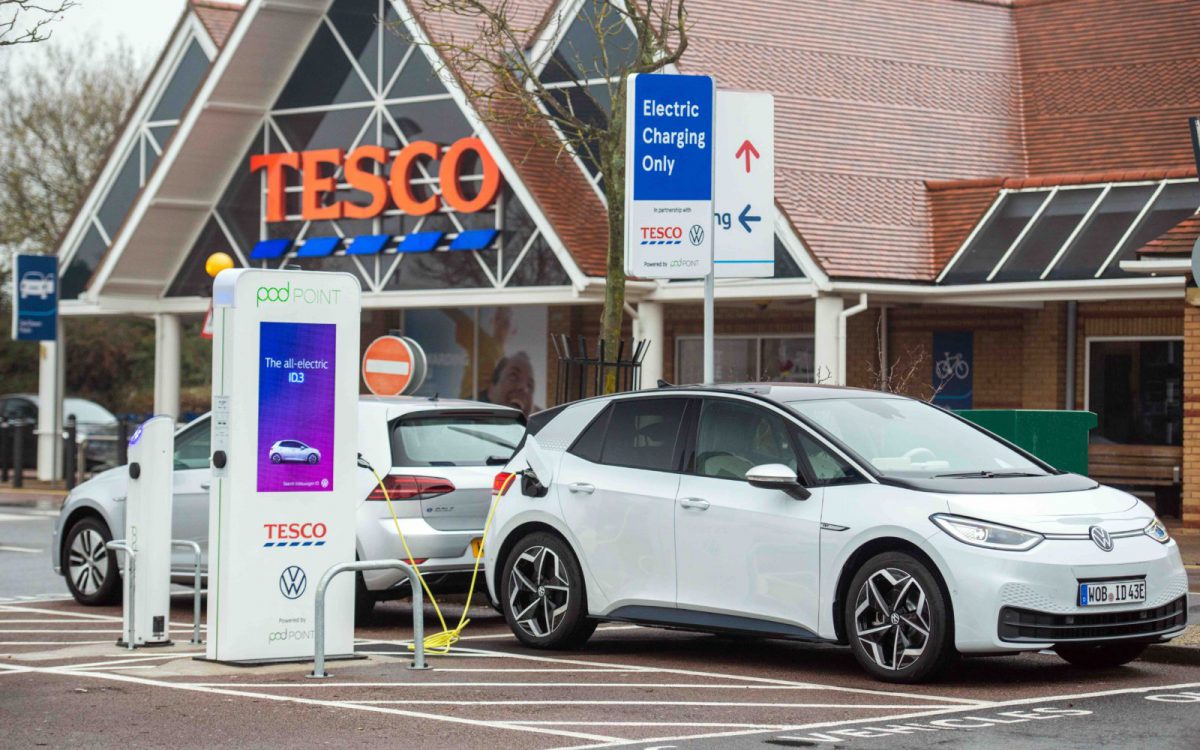
POD Point Rollout at Tesco Stores (Image: Tesco/POD Point)

Peugeot e-208 wins ‘Electric Small Car of the Year’ award at What Car? Electric Car Awards

The Peugeot e-208 Allure Premium has been named the ‘Electric Small Car of the Year’ at the inaugural What Car? Electric Car Awards, beating a host of rivals to the title, including Honda E and Renault Zoe.

The Peugeot e-208 is the company’s first new generation full electric vehicle. It comes with an electric 50kWh, 136hp powertrain that’s capable of up to 217 miles of range (WLTP) from a single charge and supports rapid charging of up to 100kW, reaching 80 percent charge in as little as 30 minutes.

POD Point Rollout at Tesco Stores (Image: Tesco/POD Point)

“All things considered, the e-208 is the best small electric car you can buy” said What Car? Editor, Steve Huntingford. “It has a good real-world range, the suspension does a great job of keeping you comfortable, and the interior is as eye-catching as it is classy. We particularly like the Allure Premium version, because it’s attractively priced, but still comes with loads of kit, including climate control, wireless phone charging and a 10.0in infotainment system with phone mirroring.”

David Peel, Managing Director of Peugeot UK, added that the company is following a unique philosophy around the ‘power of choice’ that allows buyers to choose the right powertrain that suits their needs and that Peugeot’s electric vehicles come with the same practical features as their petrol or diesel vehicle counterparts, with no compromise in capability, interior space or technology.

In other categories, the Hyundai Ioniq Electric has been named the best Electric Family Car on sale. The multi-award winning Kia e-Niro won Best Electric small SUV and the SEAT Mii electric won Value Electric Car of the Year.

Read more: Renewable Energy Magazine

It’s Time to Go Green!

If you would like to know more about Solar Panels and the PowerBanx range of home battery systems, and get a free instant quote, please complete our online form:

Electric vehicle sales predicted to exceed future expectations

By the end of the decade, a third of all new car sales worldwide will be electric according to new analysis from Deloitte. This would bring the total number of electric vehicles (EVs) sold in a single year to 31.1 million globally; ten million more than previously forecast.

In spite of Covid-19 disruption total EV sales are still expected to reach 2.5 million worldwide in 2020. Based on a compound annual growth rate of 29%, Deloitte’s research estimates this to top 11.2 million in 2025 and 31.1 million by 2030. At this milestone, fully electric vehicles will account for 81% of all new EVs sold according to the research, outperforming their plug-in hybrid peers.

Deloitte identified a key factor in driving EV growth over the next ten years as changing consumer sentiment, as many barriers to adoption gradually dissipate.

Jamie Hamilton, head of electric vehicles at Deloitte, commented: “The price premium attached to many electric vehicles restricted some early adopters but, as the cost of EVs have converged with petrol and diesel equivalents, the pool of prospective buyers is set to increase. A wider range of new electric vehicles, combined with a growing secondhand market, means EVs are becoming a more viable option for many. However, overcoming consumer concerns around driving range and perceived lack of charging infrastructure will be important factors as more drivers consider the practicalities of switching to electric.”

Additional factors driving growth include a favorable regulatory environment, be it financial incentives or emissions targets, and the development of new EV models that span both affordable and luxury ends of the market. Similarly, as company cars and fleet continue to represent the majority of all new car sales, a shift to EVs at a corporate level will further the global transition to electric.

Read more: electric & hybrid vehicle technology international

It’s Time to Go Green!

If you would like to know more about Solar Panels and the PowerBanx range of home battery systems, and get a free instant quote, please complete our online form:

2020 Renault Zoe (Image: Renault)

Hybrid vs plug-in hybrid vs electric cars: which electrified vehicle is right for you

Should you buy a hybrid, plug-in hybrid or electric car? We examine the pros and cons of today’s electrified powertrains.

The age of the electrified car is upon us and the prominence of hybrid, plug-in hybrid and electric cars, on our roads and in the thinking of car buyers, is only going to grow in the coming years.

If you’re considering a new car today, at the very least you’ve probably wondered whether you should be finding out more about what the various electrified powertrain options have to offer. Hybrid technology in particular is permeating through familiar model ranges at a rapid pace as manufacturers move to lower their emissions in line with legislation and the number of pure electric options on offer is expanding quickly.

2020 Renault Zoe (Image: Renault)

With the advent of electrified powertrains, the car buying process has become even more complex. Buyers must make a decision on what are still unfamiliar technologies, deciding which would fit their lifestyle and usage patterns, prove most cost effective to run and bring the best value for money. Is now the right time to take the plunge on a pure electric car? Would a plug-in hybrid make a sensible compromise? Should you stick with good-old petrol or diesel for a while longer?

If you’ve been through similar car buying dilemmas in recent times, you’re not alone and the answers that were correct 12 months ago may not be today. The technology, the cars that use it, the infrastructure that supports it and the legislative landscape that governs it are all evolving so staying on top of it all isn’t easy.

Fortunately, our guide to hybrid, plug-in hybrid and electric cars is here to help. Below we look at each of the technologies in turn, explain the differences and identify the pros and cons…

Read more: AutoExpress

It’s Time to Go Green!

If you would like to know more about Solar Panels and the PowerBanx range of home battery systems, and get a free instant quote, please complete our online form:

EVs Are Not A Problem For The Electric Grid, They Are The Solution

One of the stock arguments you will hear against the wide adoption of electric vehicles is about how the power supply grid is going to cope with all these high-voltage devices drawing current to recharge.

A home EV charging station will require somewhere between 2kW and 7kW when it is replenishing a car battery. If all EVs are plugged in at once, surely the grid will collapse and power stations will be overextended? Dogs and cats will live together, and mass hysteria will break out? But not only is this a complete misunderstanding of EV charging habits, it could be getting things completely the wrong way round. Here’s why.

First, let’s give the negative argument some thought. There were about 33 million passenger cars in the UK in 2019, according to the UK Department of Transport, and there were nearly 274 million registered cars in the USA in 2018, according to the Federal Highway Administration of the US Department of Transportation. If all of these are swapped for EVs with batteries with at least 50kWh, and you charge them all at once at 7kW, you could be asking the UK grid to supply 231GW of energy for at least seven hours, and the US grid 1.9TW. UK power stations supplied 86.9TWh in Q1 2020, which is an average of 39.8GW per hour. The USA had a capacity of 1.1TW at the end of 2019.

This is obviously never going to work. There’s not enough capacity on either grid. But of course, it never would have to. One of the big misconceptions about EVs is that you charge them every day like a phone. This also leads to gross miscalculations about how long the batteries will last, but let’s not get into that argument right now. A survey by Statista published in January 2020 stated that in 2017 UK motorists drove on average 4,500 miles per year for private use, and the trend since then has been down. That’s just 12 miles a day, and with lots of EVs now providing a 200-mile range on a single charge, on average you’ll be charging your EV twice a month. So, in reality, assuming an even distribution of charging, the UK grid could easily cope with everyone owning an EV and charging it twice a month on average. American drivers use their cars a lot more – 13,500 miles a year, according to the US Department of Transport. But that’s still only six charging cycles a month for an EV with a 200-mile range, which is well within current capacity.

Read More: Forbes

It’s Time to Go Green!

If you would like to know more about Solar Panels and the PowerBanx range of home battery systems, and get a free instant quote, please complete our online form:

POD Point Rollout at Tesco Stores (Image: Tesco/POD Point)

Engenie joins Octopus Electric Juice roaming service in ‘crucial step’ for seamless charging

POD Point Rollout at Tesco Stores (Image: Tesco/POD Point)

Octopus Energy has added a new electric vehicle (EV) charging network to its roaming service Electric Juice.

Engenie – which operates over 150 rapid charging stations at over 100 UK locations – is the latest to come on board to the service.

Its charging locations, including London’s first rapid charging hub, will now be included in the Electric Juice network, with Octopus stating that with this addition the network now has “significant” inner-city and on-the-road coverage.

This follows on from the launch of the Beta version in May, which saw Char.gy be the first to join the network, which allows drivers to pay with their Octopus Energy account across both Char.gy and Engenie’s networks.

This is to be expanded across other charging locations as more networks are added, Octopus said, helping to eradicate the often-cited barrier to electrification of different networks requiring different apps and payment cards.

Read more: Current News

It’s Time to Go Green!

If you would like to know more about Solar Panels and the PowerBanx range of home battery systems, and get a free instant quote, please complete our online form:
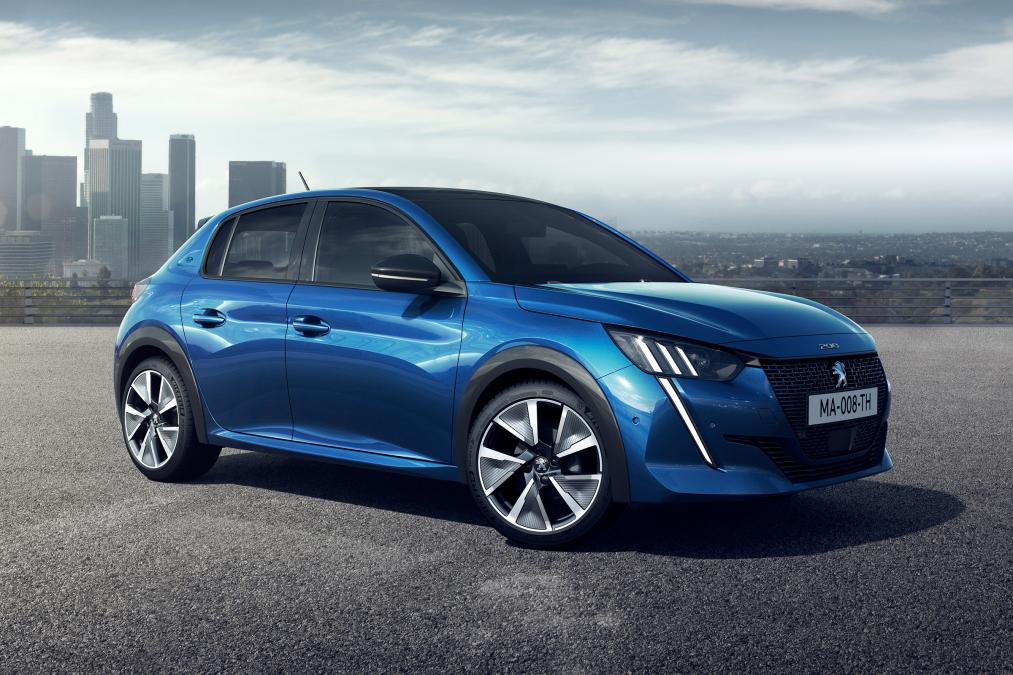
Peugeot e-208 (Image: Peugeot)

Traditional European EV Players Under Threat From Surging Peugeot

Seemingly from nowhere, French automaker PSA has assaulted a tardy Volkswagen to deliver what could be the people’s electric car.

Yes, the Renault Zoe and the Nissan Leaf, along with strong EV players from Hyundai and Kia, rule the sub-€40,000 EV roost in Europe, but the 210-year-old Peugeot has surprised the market.

Peugeot e-208 (Image: Peugeot)

PSA has already proven itself well managed to weather the Covid-19 pandemic, with a first half profit of €595 million despite its biggest markets being locked down for months.

And now figures have emerged showing its e-208, the all-electric version of its mass-volume small hatchback, stunning the market in Europe.

The e-208, which is built on the same production lines as the combustion-powered 208 models, achieved orders of 17 percent of Peugeot’s 208 model mix across its 10 biggest European markets in June.

Read more: Forbes

It’s Time to Go Green!

If you would like to know more about Solar Panels and the PowerBanx range of home battery systems, and get a free instant quote, please complete our online form:

Scottish Water Renault Kangoo electric van (Image: Renault)

Renault Set New EV Sales Record In June 2020

Renault posted an outstanding EV sales result in Europe as both ZOE and Kangoo Z.E. were selling better than ever.

Renault’s preliminary sales result for the month of June 2020 reveals a new all-time record of 12,309, which is 86% more than a year ago!

The French company hugely benefited from stronger incentives for EVs in some European countries, especially in its home market – France, and also in Germany. Demand for ZOE is booming.

Scottish Water Renault Kangoo electric van (Image: Renault)

After the first six months of 2020, the total result is over 42,600 (up 38% year-over-year).

In Europe, nearly 10% of new passenger Renaults sold in June (and over 10% YTD) were all-electric. Because Renault does not sell many EVs outside of Europe, the global share was lower: 6.5% in June and 6% YTD.

Source: Inside EVs

It’s Time to Go Green!

If you would like to know more about Solar Panels and the PowerBanx range of home battery systems, and get a free instant quote, please complete our online form: