Category Archives: Electric Cars

News and reviews of the latest electric cars (full electrics and plug-in hybrids).

Shell starts equipping petrol stations with electric chargers

Shell will start to equip its 870 service stations in the Netherlands and in Belgium with fast electric chargers /Belga

The Dutch oil company Shell is starting to equip its petrol service stations with fast electric chargers too, starting with 20 stations in the Randstad in the Netherlands.

“Only 15 to 20 minutes to charge up to 75%”,

says Machteld de Haan who is responsible for the Shell staions in the Benelux and France.

“Just enough time for a freshly made sandwich with coffee and a sanitary stop on the way”.

Electrical cars are still a niche. In the Netherlands around 15.000 fully electric cars are cruising the roads, in Belgium about 4.300 according to the latest figures.

“But the market can grow fast in the future and we feel the moment is right to step in”,

de Haan says. Last year Shell opened Europe’s largest service station in Luxembourg with 51 fuel pumps and not one electric charger, but now Shell is determined to make the switch.

In the Netherlands Shell is market leader with 600 service stations, in Belgium Shell accounts for 270 stations. Machteld de Haan won’t give any forecast on when all these service stations will be equipped with chargers.

“People will still need fossil fuels for decades. In rolling out the chargers we won’t look at what others do, but take into account our own infrastructure only. The charging stations will have a prominent position, next to the fuel pumps.”

Source: Go Press Mobility

Could Electric Vehicles Become The New Norm?

No one can deny that something big is happening to the automotive industry.

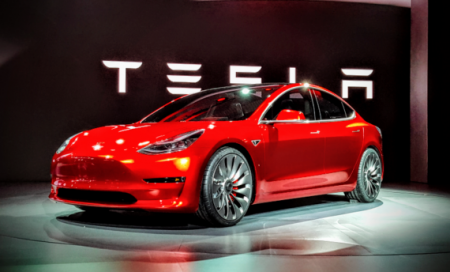
Take a look at Tesla, which has a permanent spotlight on its all-electric cars. From its flagship Model S luxury car, to locking in ~400,000 pre-orders within weeks of unveiling its much more affordable Model 3 for the masses, Tesla is taking on automotive giants that have been around for decades. According to Bloomberg Finance, Tesla’s market cap just surpassed General Motors by $2 billion.

Tesla Model 3

The underlying message surrounding this race is crucial: the transition toward sustainable transportation is happening, and it is happening now.

Most recent estimates show that, by 2019, the global market for EVs will grow to over $227 billion dollars. By 2022, it is estimated that they will cost the same as their internal-combustion counterparts up front (and be cheaper operationally). That’s the point of liftoff for sales and only the beginning. It is estimated that electric vehicles will account for 35% of all new vehicle sales by 2040, expressed in the chart below.

To better understand where the sudden acceleration in all-electric vehicles came from, let’s take a look at the surge in car demand. For every 1,000 people in the United States, there are 1,000 cars. Even with this 1:1 ratio, the USA’s 239.8 million units continue to be the largest vehicle population in the world.

With this, the EPA says that,

“transportation remains the largest single source of air pollution in the United States.”

Moving abroad, the automotive market started seeing rapid car demand in 2010. China’s vehicle registrations jumped by 27.5% and India’s by 8.9%. Looking at the growth potential in these developing countries and comparing them to the US, it has reached a point where it just isn’t feasible to work outside of global emission standards to meet this demand.

The rest of the world seems to be in agreement. Ten of the largest countries are establishing policies that promote better fuel economy and greenhouse gas emission standards for passenger vehicles, including Japan, the European Union, the United States, Canada, China, South Korea, Mexico, Brazil, India, and Germany.

So, great, the move toward all-electric vehicles is the way to a cleaner future.

Read more: Clean Technica

Hyundai Ioniqs: pitting hybrid vs electric on video

Road trips have been a staple of automobile culture for decades, but with the rise of electric vehicles, charging infrastructure has thrown them a curve ball.

Unlike gasoline-powered vehicles, which can refuel almost anywhere in a populated area, electric vehicles require a little more planning to ensure things go smoothly.

So, how easy is it? The Straight Pipes aimed to find out in a new video installment.

The duo took a 2017 Hyundai Ioniq Electric and an Ioniq Plug-In Hybrid to see how easy it is to take on a spur of the moment road trip with only some basic planning along the way.

Read more: Green Car Reports

Milton Keynes Electric Car Company Expands to Meet Soaring Demand

Milton Keynes entrepreneurial start-up, Fuel Included Ltd, provides Electric Cars with free miles included on a single monthly payment. Fuel Included has recently expanded to meet the growing demand for electric cars.

Company founder and CTO Trevor Larkum said,

“The electric car market is seeing exponential growth. This is a fantastic time to be offering the consumer a simpler way to go electric. We can saving them money while having a really positive impact on pollution and the climate”.

Trevor has brought two new members on to his team since January 2017. Having worked with both previously, the new team was able to hit the ground running.

Jason Tisdall has taken on the role of CEO.

“For many consumers, the electric car is still an unknown. We are focusing on making it simple for them to assess the basics. Will they save money, what is the impact on climate change and what happens if they run out of charge? By demystifying these areas, many customers feel much more secure in making the switch to electric. Our experience is that, once they do, they never look back”.

Jo Pegram-Mills has joined as Sales and Business Administrator.

“I am focused on improving the back-end office systems so that customers can enjoy a smooth and straightforward journey of learning about, buying and running an electric car. All of us in the office own electric cars ourselves. We have a wealth of experience, and a real passion about our business and giving our customers a fantastic experience”.

f

BMW Announces Wireless Charging Option On The 530e

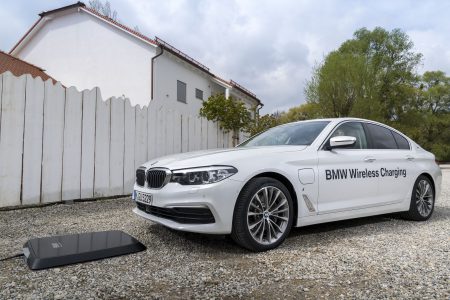
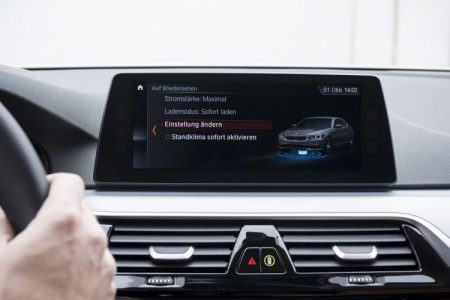
BMW has announced wireless charging will be added as an option for the 2018 model year 530e iPerformance plug-in hybrid.

BMW 530e iPerformance – wireless charging

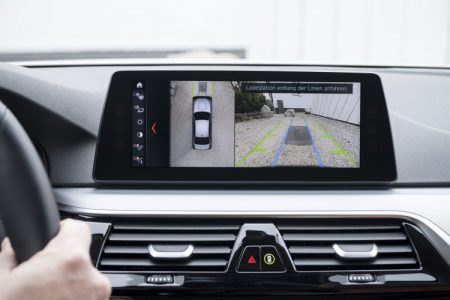
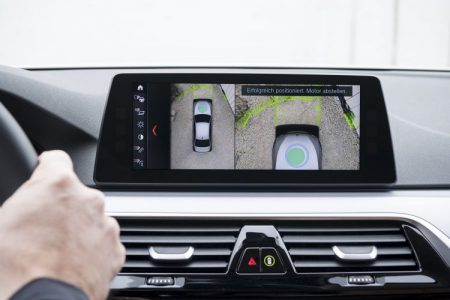
The 3.2 kW wireless system will be integrated with the 530e’s on-board infotainment system to show the charger’s alignment on the screen.

The conventional system of charging for the 530e (ie-plugging it in yourself) is rated at 3.7 kW, that can replenish the BMW’s 9.2 kWh battery in less than three hours using a wall box.

From electric socket, while charging power is limited due safety reasons/output limits, charging takes about five hours.

BMW 530e iPerformance – wireless charging

The 3.2 kW wireless system would take a little over three hours to charge the battery.

“In addition, BMW Wireless Charging for the high-voltage battery will be made available as an option for the BMW 530e iPerformance from 2018. This technology allows energy transfer to take place without the use of cables.

Presented by BMW in prototype form, the system consists of a base pad with integrated primary coil – which can be installed in a garage, for example, but also in the open – and a secondary coil integrated in the underside of the vehicle. An alternating magnetic field is generated between the two coils, through which electricity is transmitted without cables or contacts at a charge rate of up to 3.2 kW.

This form of power supply to the high-voltage battery is extremely convenient for customers and involves a charging time of around three-and-a-half hours.”

Read more: InsideEVs

BEVs Set New Sales Record In Western Europe In March and Q1

Over the past couple of years, European all-electric car sales have been growing without much drama, as new models, with better electric abilities have continued to assault the mark.

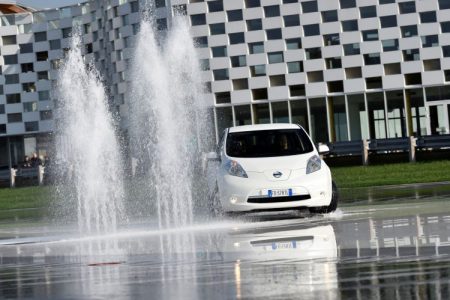
2017 Nissan Leaf

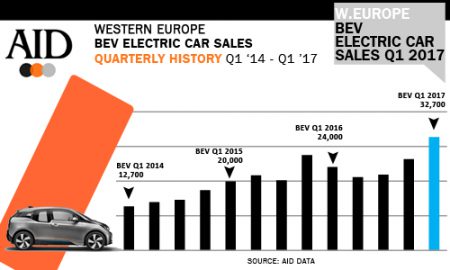
Recently sales in Western Europe reached a new all-time record of:

  • 32,700 in the first quarter
  • 15,102 in March

Also the market share finds its highest level at 0.8% in March (up from 0.7% year ago).

March sees highest-ever electric car sales total on record (Source: EagleAID)

“Never before in Europe’s comparatively short electric car history have so many pure electric cars (BEVs) been registered as this March.

The UK’s traditional March car registration blitz, this time with a more than one-third jump to a chart-topping 3,141 electric cars, helped elevate West Europe’s BEV sales in March by just over a quarter to 15,102 units.

That’s the highest ever electric car registration total for any month on record.”

Source: Inside EVs

Electric car lease UK

Electric Car Lease UK

Lease an Electric Car

We can help you if you are looking for the cheapest electric car lease UK. We specialise in providing electric cars in the UK on lease and PCP contracts.

Electric car lease UKElectric Car Lease UK

So how does electric car leasing differ from a PCP?

  • With a UK electric car lease you pay a fixed price per month for a fixed term (typically 3 years). There is also an upfront payment (usually worth 3 or 6 times the monthly payment). At the end of the term you give the car back. A private lease is technically known as Personal Contract Purchase (PCH).
  • A PCP (personal contract purchase) is similar to a lease in that you can give the car back and walk away at the end of the term. However it differs in that you can choose to keep the car instead by paying a final or ‘balloon’ payment. Also, the upfront payment is usually a fixed amount (e.g. £499) rather than a multiple of the monthly amount. It is effectively a deposit if you decide to keep the car.

We recommend that you take an electric car on the assumption that you’ll give it back at the end of the term. That’s because the technology is advancing so fast that there will be new ones coming available with greater range and performance. Therefore we don’t think it makes sense to buy outright at the moment.

For most people it doesn’t make any real difference if you get your new electric car on lease or PCP – you really just want the cheapest overall cost (considering the upfront payment plus monthly payments).

Benefits of Electric Cars

Electric cars are the most technologically advanced cars available. Therefore they tend to be more expensive to buy outright than fossil-fuelled cars. However:

  • electric cars are cheap to run. Fuel (electricity) costs are very low: a ‘fill-up’ costs as little as £1.50.
  • they often get free parking (e.g. in Westminster, Milton Keynes, Leeds, some railway stations, etc.).
  • they get exemption from congestion charging.
  • electric cars are nicer to drive as they are quiet, smooth and don’t pollute.
  • they typically have greater performance (acceleration) than equivalent fossil cars.
  • all-electric cars pay no road tax.
  • they are usually cheaper to service and maintain.

The result of all this is that an electric car can provide very cheap motoring. It’s important, though, to consider all the costs of a car (fuel, tax, parking, etc.) and don’t just look at the monthly payment. With many of our cars we even include free charging.

Electric Car Lease UK: How We Can Help

If you’re not sure whether an electric car lease would work for you and save you money, try out our Total Cost of Ownership service.

Top electric cars available on electric car lease UK (Image: Fuel Included)

If you already know what you want then take a look at our most popular deals:

Tesla Energy Storage Turns To Aggregation

Tesla is now expanding its energy storage business from simply supplying the battery systems, to also remote control of installed storage systems to make the grid cleaner and more efficient.

Tesla calls it aggregation – the next step in energy storage.

Tesla Powerwall

The idea is to enable Powerwall owners to give utilities access to the battery – for use when energy demand is at its highest. Naturally, in turn owners would gain compensation for the extra capacity.

The first Tesla partner with the project is Green Mountain Power in Vermont.

Tesla and Green Mountain Power are excited to announce a program where you can get a Powerwall to back up your home with reliable energy for only $15/month.

In some ways, it’s similar to renting autonomous car, as Tesla would also build a platform joining those who have product, with those who are in need of using a product.

Read more: Inside EVs

How The Electric Vehicle Economy Will Win On Price

Too many U.S. states, and their electric utilities, think electric vehicles are linked to urgent action on climate change. They see EVs as an environmental solution to a problem that has yet to gain political consensus, at least in the U.S.

But they’re wrong: Electric vehicles, like the rest of the products emerging from what I and other economists call the green economic revolution, will win mass-market adoption because they cost less. And that day is fast arriving.

Electric vehicles anchor a critical mass of technologies poised to slash transportation costs through a new business model often called mobility as a service, or MaaS.

Google tests a self-driving car prototype in Palo Alto, California.

Some posit that MaaS will win price-competitive advantage by:

  • Displacing fossil fuels with lower-cost renewable electricity
  • Reducing vehicle maintenance costs by displacing mechanical systems with electronics
  • Reducing labor with autonomous vehicles
  • Lowering consumer costs with digitally-purchased, incremental mobility services compared to vehicle ownership

Recent estimates project that MaaS will be four to 10 times cheaper than owning a car in less than 15 years. The average American household is projected to save $5,600 annually. Such a massive cut could potentially drive our national economy to a 3 percent annual growth rate.

Vehicles designed as consumer devices

MaaS innovators are not focused on improving existing car design. Instead they seek to design vehicles as consumer electronics. These five technologies will drive the redesign of vehicles into consumer electronic devices:

  1. 5G: 5G is the next wave of mobile connectivity. It has gigabyte speeds and bandwidth compared to today’s 4G speeds. As early as 2018, MaaS will use 5G to create real-time convenience and efficiency between smart, autonomous vehicles and consumers.
  2. Artificial Intelligence (AI): AI is the autonomous electric vehicle’s operating system and “steering wheel.” It will autonomously steer electric vehicles from customer to customer and curb to curb. It will optimize for safety, on-time performance and lowest cost.
  3. Digital commerce: Car loans will be displaced by cheaper, easier and more convenient digital payment for incremental mobility service. Think of Uber-like services supplying whatever you need (drones, SUVs, pick-up trucks or non-emergency medical vehicles). through a digital payment system accessed through a smart phone or wearable device.
  4. Renewable electricity: Renewable electricity will fuel vehicles designed as consumer devices. Electricity is the preferred energy for consumer electronic, and renewables will eventually take over as they become cheaper than fossil fuels or fossil-derived electricity.
  5. Batteries: Batteries are on a downward cost curve driven by innovation and manufacturing economies of scale. Battery costs have already fallen by 75 percent and are projected to win another 75 percent cost decline by 2030. Battery range is being extended even as costs decline. And this month a company claimed its new-generation battery technology put up a 300-mile driving range with five-minute recharging times.

Read more: Triple Pundit