Category Archives: Electric Cars

News and reviews of the latest electric cars (full electrics and plug-in hybrids).

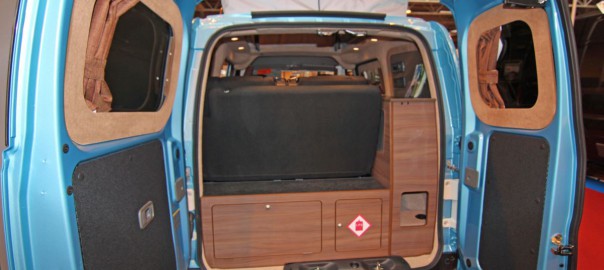
View through the rear doors (Image: T. Larkum)

First Drive: The Nissan Townstar EV is a compelling entry to the compact electric van market

Nissan is kicking off a revived van line-up with the Townstar. Ted Welford tries it out in Paris.

While Nissan is acknowledged for its Leaf being the first truly mass-market electric car, this firm’s impact on the commercial vehicle segment shouldn’t be underestimated either. Its e-NV200 was one of the first vans to be offered as an EV, and it was a huge hit, accounting for 40 per cent of all electric vans sold, even in its latter years.

Following that van up is a tough ask, but a few years after the e-NV200 was dropped, here we are with its replacement – the Townstar. This time, Nissan’s had to use its Alliance partner Renault’s Kangoo as its basis but reckons its experience and strong EV customer base give it the edge. But is that the case?

The e-NV200 was really starting to show its age by the end, so this Townstar – which is part of Nissan’s new ‘star’ van-naming policy, incorporating the Primastar and Interstar – immediately feels more modern.

Nissan Ariya EV SUV (Image: Nissan)

It’s got a particularly car-like interior, with a large touchscreen and digital dial display fitted to higher-spec models, along with a multitude of new driver assistance features, with Nissan boasting about 20 new technologies being introduced to the Townstar.

Read more: Express&Star

It’s Time to Go Green!

If you would like to know more about Solar Panels and the PowerBanx range of home battery systems, and get a free instant quote, please complete our online form:

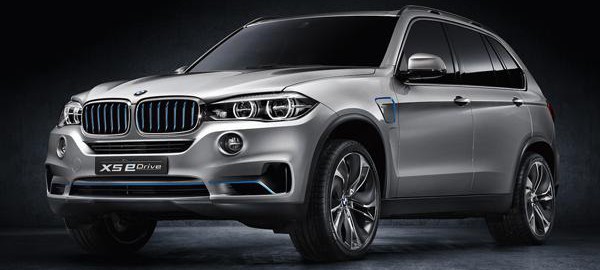
BMW X5 e-Drive PHEV (Image: BMW)

On the hunt for the best plug in hybrid cars for 2023? I’m a car expert and these are my top picks

If you read our guide to the best electric cars, you’ll know that here at Marie Claire UK, we’re passionate about protecting the planet and investing in vehicles that cause less pollution.

Interested in a more sustainable vehicle but not ready to go full-bore electric just yet? There are other options available, like plug in hybrid cars, which are cars with a decent electric range alongside a petrol or diesel engine for longer trips.


Why is it important we start investing more sensibly now and taking care of our planet? Well, because global warming is increasing at a rapid rate that even scientists didn’t predict. Not only that but petrol and diesel cars will be banned from sale in the UK in 2030, asking consumers to seriously consider where they invest their money.

As a car expert and Editorial Director at AutoTrader UK, I know a thing or two about what makes a car good, taking into consideration its sustainability credentials, affordability, and how enjoyable it is to drive, too. For my edit of the eight best plug in hybrid cars for 2023, keep scrolling.

Read more: MarieClaire

It’s Time to Go Green!

If you would like to know more about Solar Panels and the PowerBanx range of home battery systems, and get a free instant quote, please complete our online form:

Connected Kerb on-street charging (Image: Connected Kerb)

UK start-up launches charging cable for homes without a driveway

A self-closing cable channel for electric car owners without a driveway is being rilled out by UK start-up Kerbo Charge.

The company said it solves the problem of how to charge an electric vehicle (EV) for homes without driveways and will typically save customers £1,439 a year compared to solely using fast public chargers.

Kerbo Charge said an estimated 40% of the UK population do not have access to a driveway, meaning that EV owners either need to trail a cable over the pavement in the front of their house – creating a trip hazard – or use public chargers, which typically cost around £23 more per charge than topping up at home.

The company said its Kerbo Charge channel includes a self-closing lid that snaps down shut as the cable is inserted and removed.

Connected Kerb on-street charging (Image: Connected Kerb)

It has also been built to contour with the surface of the pavement, meaning it will sit flush with the pavement surface and its shallow form factor allows for quick installation by council engineers as there is no need to cut below the top tarmac layer of the pavement, Kerbo Charge said.

Michael Goulden, co-founder at Kerbo Charge, said: “We developed this product in partnership with local authorities – the critical design requirements are the ability to flex with uneven pavement surfaces, be easy to install and to be safe for all foot traffic.

Read more: SmartTransport

It’s Time to Go Green!

If you would like to know more about Solar Panels and the PowerBanx range of home battery systems, and get a free instant quote, please complete our online form:

ZS EV (Image: MG)

‘Perfect’ electric vehicle beats out petrol and diesel to win Car of the Year 2023

An electric car has won the UK Car of the Year award for 2023, with judges calling the vehicle “perfect” and hailing it as being affordable.

The MG4 has been crowned the UK Car of the Year 2023, in another major triumph for . However, unlike 2022 when the top four cars were battery-powered, the MG’s closest competition came from internal combustion engined models at either end of the performance spectrum.

The five-door hatchback comes with an impressive 281 miles of electric range in the standard model or 360 miles (579km) with the Long Range MG4.

As with all new cars, the MG4 comes with a range of features to make the motoring experience easier and smoother.

ZS EV (Image: MG)
ZS EV (Image: MG)

The Trophy Long Range model comes with a 360 parking camera, a 10.25” colour touchscreen and iSMART app connectivity.

Battery life is often cited as an issue for drivers, but the MG can charge from 10 to 80 percent in as little as 35 minutes, and the car starts from as little as £26,995.

The budget seven-seat Dacia Jogger was a deserved runner-up, while third place outright went to Toyota’s GR86, which claimed the Best Coupé category in this year’s awards.

The Dacia Jogger was hailed as prioritising cost-conscious motoring, starting at a cost-effective £17,175.

Read more: Express

It’s Time to Go Green!

If you would like to know more about Solar Panels and the PowerBanx range of home battery systems, and get a free instant quote, please complete our online form:

Government buys more diesel cars than electric despite zero emission pledge by 2027

A Freedom of Information request has revealed just 3.5% of the Home Office fleet is electric despite a 2021 pledge for a zero-emission fleet by 2027 – just years away

Tories have been accused of talking hot air over cars – after we found the Government still buys more diesels than electric models.

That is despite a 2021 pledge for a zero-emission fleet by 2027.

Since then, one department has bought nearly three times as many diesel vehicles as electric ones.

The Home Office added 168 diesel guzzlers to its fleet of 1,617 vehicles, and 62 electric motors.

Just 3.5% of its fleet is electric, data obtained under Freedom of Information laws revealed.


Motoring writer Quentin Willson, who founded the FairCharge campaign to make electric cars affordable, said: “These figures show the massive hole between what the Government say and what they do.

“If the UK is going to reap the benefits of electric cars, with high-paid jobs, cleaner air and less reliance on foreign oil, the Government needs to be leading the charge.”

Our research also found that since 2021, the Department for Transport has added 67 diesels compared with 54 electric vehicles, which make up 9.5% of its fleet.

Shadow Transport Secretary Louise Haigh said: “Hapless Tories are stuck in first gear. Labour’s plans will turbocharge electric vehicle manufacturing and bring good jobs back to industrial heartlands.”

Read more: Mirror

It’s Time to Go Green!

If you would like to know more about Solar Panels and the PowerBanx range of home battery systems, and get a free instant quote, please complete our online form:

Parking Brake (Image: T. Heale)

New 2023 Hyundai Kona EV grows to boost practicality

Crossover to be “upscaled” with new multi-powertrain platform based on learnings from Ioniq 5 and 6

The new second-generation Hyundai Kona has been “taken to the next level” through a focus on the electric version and learnings from the Hyundai Ioniq 5 and Hyundai Ioniq 6.

Already on sale in Korea and due to arrive in Europe this summer, the new Kona arrives just six years after the original. It will continue to be offered with petrol, hybrid and electric versions – but while the first-gen version was developed as an ICE car, the EV was the priority for the new model.

The EV accounted for around 40 per cent of first-gen Kona sales in Europe, and with the continent moving to electric cars that ratio will increase sharply in future. Hyundai design chief Sang-Yup Lee said the focus was on ‘upscaling’ the car in both size and quality.


Hyundai Kona Electric (Image: Hyundai)

The Peugeot 2008 rival switches to a new multi-powertrain platform, and has grown substantially – Hyundai refers to it as being ‘upscaled’. At 4355mm the new Kona is 175m longer than its predecessor; it is also 25mm wider and 20mm higher, while the wheelbase has been stretched by 60mm. That makes it slightly smaller than the closely related Kia Niro EV, leaving the Bayon as the smallest SUV in Hyundai’s line-up.

Read more: Autocar

It’s Time to Go Green!

If you would like to know more about Solar Panels and the PowerBanx range of home battery systems, and get a free instant quote, please complete our online form:

Tesla cuts prices for its most expensive electric vehicles to drive demand

Cuts range from 4% on performance version of Model S to 9% on more expensive Model X

Tesla has cut prices on its two most expensive electric vehicles in the United States, according to the company’s website, days after its chief executive, Elon Musk, said recent price cuts on other models had stoked demand.

The price cuts, Tesla’s fifth adjustment since the start of the year, ranged from 4% on the performance version of the Model S to 9% on the more expensive Model X.

Musk has said repeatedly in recent months that Tesla would focus on bringing prices down to drive demand and that it had seen success in sparking orders with global discounts introduced in January.

“The desire for people to own a Tesla is extremely high. The limiting factor is their ability to pay for a Tesla,” Musk said last week at Tesla’s investor day.

Tesla did not immediately respond to a request for comment on the most recent price cuts.

Tesla slashed prices on its cars across all its markets in January, offering discounts of up to 20% in what many analysts saw as the start of a price war by the electric vehicle market leader.

Read more: TheGuardian

 It’s Time to Go Green!

If you would like to know more about Solar Panels and the PowerBanx range of home battery systems, and get a free instant quote, please complete our online form:
Petrol and diesel drivers issued ‘word of caution’ before electric car switch

A majority of drivers around the UK believe petrol and diesel cars are cheaper to run than electric vehicles, a new poll has found

According to new data, 54 percent of motorists think  and  vehicles are now the cheapest to run. As the cost of electricity continues to rise, just 18 percent of drivers thought a fully  would be cheaper.

This is in stark contrast to 2022, when a survey found 57 percent said cheaper running costs were an incentive to switch to an EV.

Only one in 10 motorists believe that a plug-in hybrid vehicle would be the cheapest to run.

Despite the findings, experts are trying to show drivers that electric vehicles are still significantly cheaper to run when charged economically.

The data, from NFU Mutual, found that the cost of living crisis had a huge impact on drivers wanting to commit to an electric car.

The energy crisis has hit public perception of the cost benefits of electric vehicles, with most now thinking petrol and diesel cars are cheaper to run.

The survey results come as high electricity wholesale prices have pushed up the cost of household electricity bills and public electric vehicle charging.

Jade Devlin, motor insurance expert at NFU Mutual, said EVs still have cheaper running costs than petrol and diesel cars.

Read more: Express

It’s Time to Go Green!

If you would like to know more about Solar Panels and the PowerBanx range of home battery systems, and get a free instant quote, please complete our online form:

BMW i3 ‘occasional use’ charging cable (Image: BMW)

OVO launches EV charging tariff three times cheaper than UK average

Energy supplier OVO Energy has launched a new smart charging EV plan allowing customers to access charging rates of 10p per kWh – three times cheaper than the UK average of 34p per kWh.

The Charge Anytime tariff add-on, which is powered by energy software platform Kaluza, uses algorithms to optimise EV charging in response to different market dynamics such as when both emissions and costs are low.

Another feature of the tariff add-on is that it splits the EV charging costs from home electricity charges and credits customers for the amount of electricity saved via smart charging each month. The result could see up to 71% in savings, OVO said, equating to around £350 per year.

This is increasingly crucial as energy and charging costs soar as a result of the energy crisis.

“As people struggle to navigate this volatile energy market, tariffs like Charge Anytime will play a vital role in increasing EV adoption and strengthening the grid,” said Scott Neuman, CEO at Kaluza.

“Building on time-of-use rates employed by many utilities globally, Kaluza is now developing novel propositions like type-of-use focused on giving millions of EV users a simple charging experience so that they have the energy they need, precisely when they need it, at the lowest environmental impact and cost possible.

Read more: Current+

It’s Time to Go Green!

If you would like to know more about Solar Panels and the PowerBanx range of home battery systems, and get a free instant quote, please complete our online form:

Electric cars are ‘significantly cheaper’ to service than petrols and diesels – but we’re on course to have a shortage of qualified mechanics to work on them

  • Average servicing costs for an EV is £103 – petrol car is £151 and diesels is £163
  • Experts suggest lower bills for EVs is a result of having fewer moving parts
  • IMI is concerned the uptake in technicians earning qualifications to work on battery cars isn’t keeping pace with the growth in EV sales 

While many drivers still have their concerns about switching to electric vehicles (EVs) – from high prices to the lack of charging points and battery range anxiety – one benefit is more affordable servicing costs, according to a new report.


Analysis of 280,000 garage quotes given to drivers last year revealed fully-electric models are ‘significantly cheaper’ to service than all other fuel types.

An electric car costs an average of £103 to service, whereas diesels are most expensive at an average of £163, followed by hybrids (£159) and petrols (£151), according to BookMyGarage.com.

While owners of EVs will welcome the findings, the Institute of the Motor Industry is concerned that the number of technicians gaining qualifications to safely work on them won’t keep pace with electric car sales before the end of the decade.

Based on these figures, it suggests electric cars are almost a third (32 per cent) less expensive to service than petrols and 37 per cent cheaper than diesels.

Read more: ThisisMoney

It’s Time to Go Green!

If you would like to know more about Solar Panels and the PowerBanx range of home battery systems, and get a free instant quote, please complete our online form: