Category Archives: Electric Cars

News and reviews of the latest electric cars (full electrics and plug-in hybrids).

Shell claims UK first with 150kW EV charging forecourt install

Shell has claimed a UK first by installing a 150kW ultra-rapid electric vehicle charger on a petrol station forecourt in London.

The charger, which forms part of the energy giant’s Shell Recharge service, is now available for public use at Shell’s Battersea Service Station in Battersea, south London.

The 150kW charger, provided by European EV charging supplier Allego, has been installed alongside the station’s existing 50kW rapid chargers, bolstering the station’s options for EV drivers.

Allego will continue to manage the operation of both the 50kW and 150kW chargers which make up Shell Recharge, and Allego’s chief executive Anja van Niersen said the firm highly valued Shell’s initiative of integrating high-powered charging services at its portfolio of forecourts.

“We know that electric vehicle drivers want the right charging solution at the right place, to be always available and combined with excellent services. Shell Recharge shows how these wishes can be met,” she said.

Read more: Current News

Captur E-TECH Plug-in (Image: Renault)

Renault Captur E-Tech Plug-in hybrid announced

A plug-in hybrid version of the new Renault Captur SUV will be available when the car goes on sale next year

Details of the all-new Renault Captur plug-in hybrid have been released, with the company confirming a pure-electric range of up to 28 miles.

Due to go on sale in early 2020, the Captur E-Tech Plug-in will use a 1.6-litre petrol engine and two electric motors, complete with a 9.8kWh lithium-ion battery pack.

Captur E-TECH Plug-in (Image: Renault)

It will be capable of doing 83mph in pure-electric mode, and also features advanced brake regeneration that the company says “always retains enough charge to move away and run at low speeds in electric mode”.

The Captur will also have a single-pedal driving mode – similar to the Nissan Leaf’s e-Pedal system – for low-speed traffic, which is designed to maximise efficiency and ease of driving.

Read more: Driving Electric

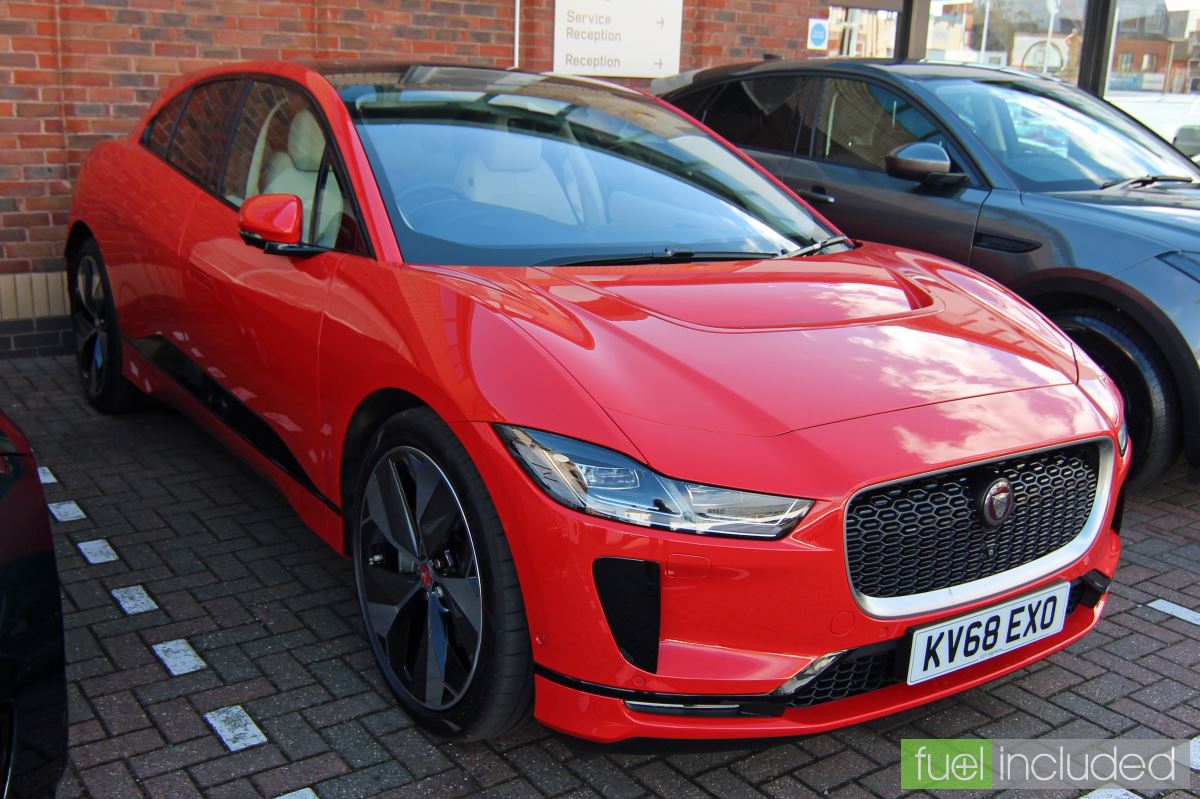
Jaguar I-PACE Electric Car (Image: T. Larkum)

Jaguar Land Rover announces range of EVs to be built in West Midlands plant

The announcement is seen as a major thumbs up for the UK car industry

Jaguar Land Rover (JLR) has announced it is set to build a new range of electric vehicles at its manufacturing plant in Castle Bromwich, Birmingham.

Honouring its commitment to deliver electrified options for all new Jaguar and Land Rover models by next year, a next-generation all-electric Jaguar XJ will be the first vehicle in the range to enter production.

Jaguar I-PACE Electric Car (Image: T. Larkum)

Crafted by the team behind the Jaguar I-PACE – the brand’s first all-electric car – the new saloon promises to deliver in design, performance and luxury, although the company has given no indication as to when it might take to the road.

“The future of mobility is electric and, as a visionary British company, we are committed to making our next generation of zero-emission vehicles in the UK,” JLR CEO. Prof. Dr. Ralf Speth said.

“We are co-locating our electric vehicle manufacture, Electronic Drive Units and battery assembly to create a powerhouse of electrification in the Midlands.”

Read more: Standard

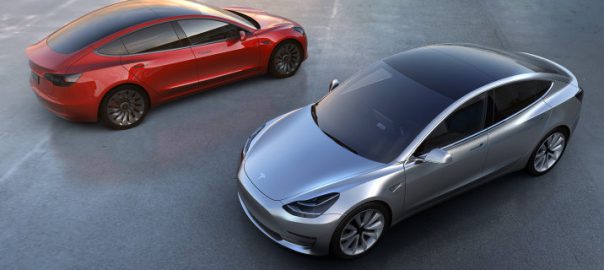
Tesla Model 3 Unveil (Image: Tesla)

First UK Tesla Model 3 deliveries handed over to customers

The Tesla Model 3’s arrival in the UK has been anticipated for a long time now. The US brand promised it would be an affordable alternative to both conventionally powered and electrified models from other manufacturers, but a number of issues delayed its delivery to some global markets, the UK not least among them.

Finally, though, the wait for British customers is over, with the first UK customer cars being driven off dealer forecourts around the country last week by buyers who put their deposits down two to three years ago.

Tesla Model 3 Unveil (Image: Tesla)

Tesla is confident enough in the quality of the Model 3 that it’s giving customers a one-week grace period, at any point during which they can give the car back for a full refund. This goes some way towards explaining why a large number of people were happy to commit to buying a car they had never even seen in the metal, let alone driven.

Read more: Driving Electric

IONITY targets UK motorways with latest ultra-rapid EV charging deal

Ultra-fast EV charging provider IONITY has continued its UK expansion by penning a deal with Extra MSA Group, which owns and operates parts of the UK’s motorway network.

Under the deal IONITY, which is a joint venture between automotive giants Daimler, Ford, BMW and Volkswagen, will install its HPC technology at eight MSA-owned service stations on UK motorways.

The service stations will be those under MSA’s ‘Extra’ brand, and each site will initially comprise six 350kW chargers supplied by IONITY.

The first HPC station is to be installed at Extra’s new location on junction 45 of the M1 at Leeds Skelton Lake later this year, with other installs already earmarked for locations in Cobham, Cambridge, Beaconsfield, Cullompton, Blackburn, Baldock and Peterborough.

Combined with other partnerships IONITY has already sealed, most notably with Shell and Motor Fuels Group, the charging firm said it was now closing in on its target of developing 40 HPC stations at strategic locations in the UK.

Read more: Current News

Electric cars: New vehicles to emit noise to aid safety

New electric vehicles will have to feature a noise-emitting device, under an EU rule coming into force on Monday.

It follows concerns that low-emission cars and vans are too quiet, putting pedestrians at risk because they cannot be heard as they approach.

All new types of four-wheel electric vehicle must be fitted with the device, which sounds like a traditional engine.

A car’s acoustic vehicle alert system (Avas) must sound when reversing or travelling below 12mph (19km/h).

The EU says the cars are most likely to be near pedestrians when they are backing up or driving slowly, although drivers will have the power to deactivate the devices if they think it is necessary.

Read more: BBC

Charging Hub with eVolt Rapid Chargers (Image: SWARCO eVolt)

Scottish government unveils £20 million fund to bolster public EV charging infrastructure

Over £20 million will fund the installation of 800 new charge points across Scotland in a bid to increase the country’s EV uptake.

The Scottish government has announced £20.6 million of funding for the new charging infrastructure, delivered through the Switched on Towns and Cities Challenge Fund (STCCF) and the Local Authority Installation Programme (LAIP).

Five local authorities have been awarded £12.1 million through the first round of STCCF for the delivery of 500 charge points. The remaining £8.5 million has been awarded to 31 local authorities through the LAIP, which will see a further 300 charge points installed.

The aim of the funding is to fill in existing gaps in infrastructure to alleviate range anxiety in Scotland.

Charging Hub with eVolt Rapid Chargers (Image: SWARCO eVolt)

Glasgow City Council is to install 70 public charge points, including a new charging hub and charging facilities for taxis and private hire vehicles. Stirling Council will install 133 charging bays, as well as trialling 16 lamp post chargers.

Dundee City Council plans to install 66 charging bays and create a rapid charging hub close to the A90, Edinburgh City Council is to install 134 chargers and Falkirk Council is to install 106, including a 32 bay charging hub with integrated battery storage.

Read more: Current News

Proposed Electric Forecourt (Image: GRIDSERVE)

End of petrol? Solar power electric forecourt to charge electric cars in just TEN minutes

ULTRA-FAST electric car charging forecourts will roll-out across the UK this year with the start of a billion-pound project to build 100 solar-powered sites.

The first of more than 100 solar-powered forecourts to be built in the UK have been announced. Commercial vehicles will be able to recharge within 30 minutes at forecourts equipped with next-generation solar panels. While some smaller cars with high-speed charging can be fully topped up in just ten minutes. Gridserve, the British firm behind the billion pound project imagines their forecourts will eventually replace traditional petrol stations.

Proposed Electric Forecourt (Image: GRIDSERVE)

The first solar powered forecourt will be built in Braintree, Essex and Gridserve has already confirmed more than 80 sites will be built – with even more are in the pipeline.

“Airport-style” lounges will be built as part of the £1 billion ($1.31 billion) project, to offer commuters shops, and facilities as they wait for their cars to recharge.

Construction at sites in Hull and York are also expected to start before the end of the year.

Read more: Express

OVO Vehicle-to-Grid (V2G) charging (Image: T. Larkum/Fuel Included)

V2G tech soon to be economically viable, ready to deliver millions in consumer benefits

Vehicle-to-grid (V2G) EV chargers could be economically viable in the near term and save hundreds of millions of pounds in grid costs, but only if the industry can deliver specific conditions.

That is the principal finding from a new report on the technology, published this week on the back of a government-funded competition surrounding the nascent technology.

The ‘Vehicle to Grid Britain’ report, led by Element Energy, forms part of the V2G competition funded by both the Office for Low Emission Vehicles (OLEV) and the Department for Business, Energy and Industrial Strategy (BEIS) and supported by Innovate UK.

OVO Vehicle-to-Grid (V2G) charging (Image: T. Larkum/Fuel Included)

It has garnered insight from consortium members including Nissan, Energy Systems Catapult, Cenex, WPD, National Grid ESO and Moixa, and produced a series of conclusions that it says uncovers both near-term niches and longer term opportunities for V2G.

Crucially, the report concludes that residential V2G charging could make economic sense in the near term, but only if a set of ideal operating conditions are met.

Read more: Current News

Rising CO2 emissions a problem of carmakers’ own making as they push SUVs but hold back electric car

Official new data from the EU’s environmental watchdog (EEA) shows that the CO2 emissions of new cars increased by 1.6% in 2018 to 120.4 grams of CO2 per km.

While the lack of progress in real-world emissions and fuel efficiency was known for years, [1] now even the optimised and unrealistic lab test tests can no longer hide the problem. For the first time, CO2 emissions from vans also rose, by 1.2%.

The main driver is the rising sales of polluting yet very profitable SUVs. The average petrol SUV sold last year emitted 133g CO2/km while the average of other petrol cars sold was 120g CO2/km, according to provisional EU data released today. Heavier and less aerodynamic – and therefore less fuel efficient – than other cars, SUVs now account for around a third of new cars sold in Europe – up from 7% in 2008 [2].

Julia Poliscanova, clean vehicles manager at T&E, said:

“Carmakers are playing a high risk game where they’re deliberately postponing sales of cleaner cars to maximise SUV-fueled profits. It may please their shareholders but it’s a tragedy for our planet. These figures are a stark reminder that governments need to be much more forceful when it comes to promoting zero emission vehicles, in particular by reforming vehicle taxation and rolling out charge points.”

Read more: Transport & Environment