Category Archives: Electric Cars

News and reviews of the latest electric cars (full electrics and plug-in hybrids).

NISSAN LEAF TO NISSAN TREE: EV TRANSFORMS INTO CHRISTMAS SPECTACLE

Nissan has turned its all-electric Leaf hatchback into a Christmas tree, powering an extensive array of lights from the car’s regenerative braking energy systems.

The one-off vehicle utilises the manufacturer’s e-Pedal and B mode to power the model’s ‘spectacular light display’, including thousands of LEDs.

Helen Perry, head of electric vehicles for Nissan Europe, said: “Santa shouldn’t be the only one with a festive mode of transport. We wanted to make the Nissan Leaf more fun at this time of year whilst driving home a very important message.

“We hope this custom-made vehicle inspires people about the benefits of regenerative energy.”

The difference between the two regenerative braking systems mentioned is that while the e-Pedal harvests energy from the movement of the car during braking or deceleration, feeding it back to the batteries, B mode is a driving function that regenerates energy when using the traditional brake pedal as normal.

The Nissan Tree was created as a means to showcase the benefits of regenerative energy, emphasising that the average Leaf driver regenerates 744kWh of clean energy if they drive 11,000 miles – equivalent to 20 per cent of the overall domestic electricity consumption of an average household.

Read more: Motors

It’s Time to Go Green!

If you would like to know more about Solar Panels and the PowerBanx range of home battery systems, and get a free instant quote, please complete our online form:

Tesla Model 3 (Image: Tesla.com)

2019 was the year electric cars grew up

Electric cars had their biggest year ever in 2019, even as storm clouds gathered over their future.

The numbers were huge. Automakers committed $225 billion to electrification in the coming years. Electric vehicles (EVs) grabbed 2.2% of the global vehicle market over the first 10 months of 2019 as a slew of new models hit the road. Ford, which has yet to sell an all-electric vehicle, showed off the upcoming electric Mustang Mach-E (a crossover SUV) and an electric F-150 pick-up. Tesla, of course, shocked everyone by turning a profit and previewing a strange future with its “cybertruck,” potentially the Hummer for Millenials.

Tesla Model 3 (Image: Tesla.com)

But it wasn’t all rainbows. Outside of China and Norway, where car buyers enjoy generous incentives, the market is still driven by early adopters rather than the mainstream. EV sales for the year have been sluggish. While some states such as California have seen EVs capture 8% of new sales (all-electric and plug-in hybrid), the rest of the country has not yet caught on. After doubling between 2017 and 2018, EV market share in the US had crept up from 1.6% last March to 1.8% a year later (pdf).

That hasn’t slowed automakers’ ambitions. They’re betting it’s better to get ahead of the now-inevitable shift to EVs than play catch up to established rivals and Tesla. But if demand fails to pick up the big bet may mean consolidation and bankruptcy for some.

Here are the highlights from 2019.

EVs sold even as the car market dipped. The Model 3 can claim most of the credit.

The year started off strong for electric cars. After selling a record 361,000 EVs in 2018, automakers foresaw a robust 2019. Yet for carmakers not named Tesla, sales sputtered out mid-year. Sales for the three dozen or so other EV models on the market declined by an about 20% in 2019 compared to a year earlier, while Tesla’s Model 3 sales tripled between January and September. Tesla represented an astonishing 78% of US EV sales as of October, estimated CleanTechnica, delivering about 123,000 Model 3s, and 30,000 Model S and Model X vehicles. But EVs proved to be a rare bright spot amid what appears to be a long-term decline in global auto sales now entering its third year, what industry analysts call “peak car.”

Read more: Quartz

It’s Time to Go Green!

If you would like to know more about Solar Panels and the PowerBanx range of home battery systems, and get a free instant quote, please complete our online form:
Cheap Motoring

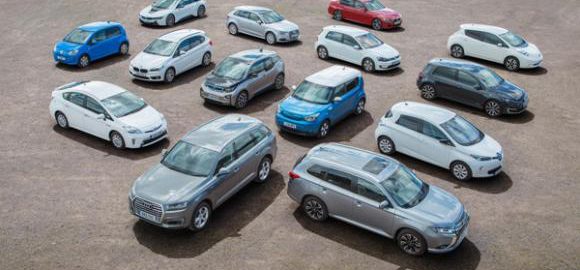
Why manufacturers aren’t delivering your EV sooner

If you have ordered an existing model in the past months, it’s unlikely you will pick it up at the dealer’s before January.

If you have put your name down for a model that is yet to be launched, you will probably have to wait until the end of 2020. What’s going on?

Getting electric vehicles to market has always been troublesome for Western OEMs. From the first-gen Renault Zoé to the Tesla Model 3 and the Audi e-tron: they have all arrived on the market later than planned. Somehow, manufacturers have a tendency of promising more than they can deliver, perhaps underestimating the challenges behind developing an EV and getting the supply chain and factories ready to build them.

Cheap Motoring

It seems that the Asian manufacturers have been better at managing this. It should hardly come as a surprise that in the land of affordable EVs with a decent range, it’s the Koreans and Japanese that rule. Hyundai Ioniq and Kona, Kia Niro, Nissan Leaf: they head the electric vehicle sales charts in Europe. They give the nearly pre-historic, totally obsolete VW e-Golf and equally retirement-deserving BMW i3 a run for their money.

Super credits

Whichever mass-production electric model you may have ordered in the past months, chances are you won’t see your EV arrive at the dealer’s before the first months of 2020. The same goes for the premium crossovers that go by the name Audi e-tron, Jaguar I-Pace or Mercedes EQC, incidentally. Is battery supply the issue, or is there more at play?

There are indeed only a handful of suppliers – mainly Chinese, Korean and Japanese – on the global lithium ion cell market and they are calling the shots. If you want cells as an OEM, you either pay a hefty price, or you wait until prices come down. The longer you wait, the cheaper you can buy, essentially. Guess which option most OEMs choose?

There is another, more important thing obstructing the delivery of EVs: the so-called super credits. Starting in 2020, every vehicle that emits less than 50g/km counts double in the calculation of an OEMs weighted average CO2 emissions. The average target is 95g/km and needs to be reached by 2021. No wonder that OEMs and their importers are postponing the delivery of as many EVs as possible.

Read more: Fleet Europe

It’s Time to Go Green!

If you would like to know more about Solar Panels and the PowerBanx range of home battery systems, and get a free instant quote, please complete our online form:

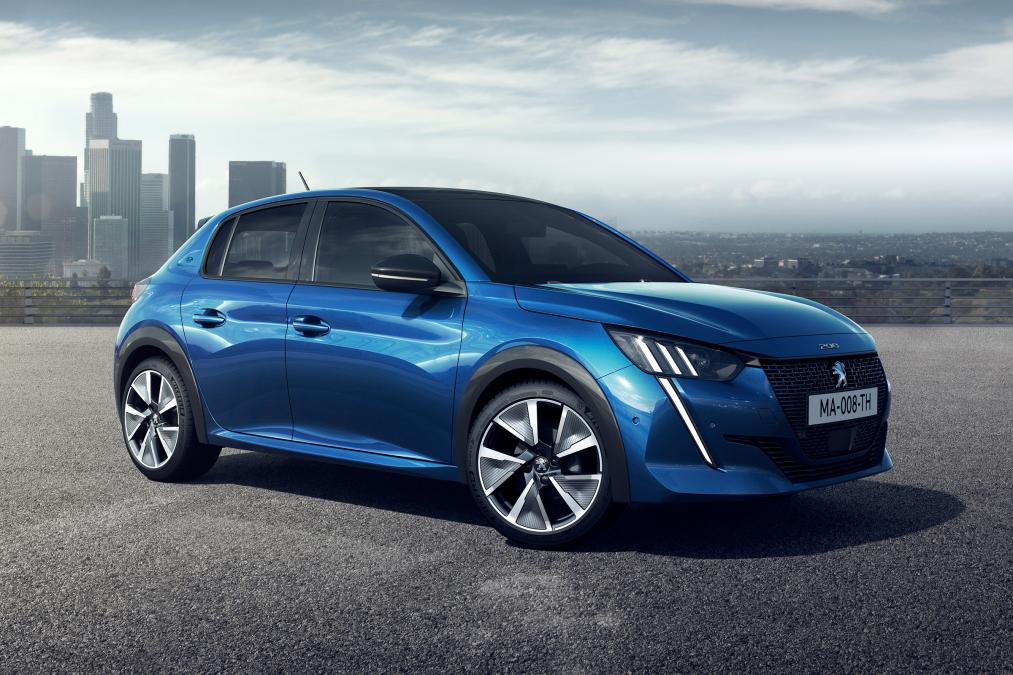
Peugeot e-208 (Image: Peugeot)

2020 set to be year of the electric car as sales soar

Experts are predicting that 2020 will be the year of the electric car as sales continue to rise.

Figures released today by the Society of Motor Manufacturers and Traders (SMMT) show that the number of battery-electric vehicles registered in November increased by 228.8 per cent compared to the same month in 2018 – with over 4500 new EVs hitting the roads.

So far this year, nearly 14,000 electric cars have been registered in the UK, compared to 38,500 plug-in hybrids and nearly 80,000 hybrids. Mild hybrids have also seen a dramatic increase in popularity, with registrations of mild-hybrid diesels increasing by more than 450 per cent last month.

Peugeot e-208 (Image: Peugeot)

Car manufacturers are rushing to launch new electric cars in a bid to meet new emission targets set by European Union legislators. By 2021, they face strict fines if their average CO2 emissions for each car exceed 95g/km. By selling more electric vehicles (with zero tailpipe emissions) and hybrids (with reduced tailpipe emissions), average CO2 emissions will drop.

Kia recently admitted that it has 3000 customers on a waiting list for the e-Niro – something it says it intends to clear in the first half of 2020, despite previously having to halt orders as it couldn’t keep up with demand.

Volkswagen is set to launch its new electric ID range with the ID.3 hatchback, while the Volkswagen Up, SEAT Mii and Skoda Citigo city cars are also going electric-only for 2020. Vauxhall’s new Corsa is available as a pure-electric model, as is the closely-related Peugeot 208.

Read more: Honest John

It’s Time to Go Green!

If you would like to know more about Solar Panels and the PowerBanx range of home battery systems, and get a free instant quote, please complete our online form:
Volkswagen ID.3 electric car (Image: Volkswagen.com)

Drivers can now charge their electric cars for free while doing their weekly shop

Volkswagen, Tesco and Pod Point are determined to provide shoppers with free charging points as motorists increasingly turn to electric vehicles as they become more and more convenient to run

Electric car drivers can now charge their vehicles for free while doing their weekly shop at over 100 supermarkets across the UK.

Volkswagen has partnered with Tesco and Pod Point to provide shoppers with free charging points – with a further 2,000 units in the pipeline.

Volkswagen ID.3 electric car (Image: Volkswagen.com)

It is estimated a typical EV driver who spends 50 minutes shopping each week could get more than 1,000 miles of free electricity for their car over a 12 month period.

The free charging points are a response to the growth of electric cars in the UK, with sales up by 125 per cent this year according to the Society of Motor Manufacturers and Traders.

And demand is set to rise, with Volkswagen’s survey of 2,000 UK motorists revealing 41 per cent are considering leasing or owning an EV as their next vehicle. This figure increases to 61 per cent among the 25-34 age group.

Read more: Mirror

It’s Time to Go Green!

If you would like to know more about Solar Panels and the PowerBanx range of home battery systems, and get a free instant quote, please complete our online form:

Tesla Cybertruck (Image: Tesla)

In Tesla’s shadow, Audi and Mercedes electric SUVs get no love

A couple of weeks ago, Mercedes-Benz quietly announced the price for its all-electric EQC sports-utility vehicle.

A $67,900 starting price for a luxurious, 200-mile, 402-horsepower luxury crossover is a good start for the EQC brand. But the announcement got completely lost in the shuffle in a week filled with buzz about Tesla’s bulletproof, stainless-steel Cybertruck. Even the deserved attention given to Ford’s Mustang-inspired electric SUV was cut short. So where does that leave the play-it-safe luxury electric SUVs from Mercedes-Benz, Audi, and BMW?

Mercedes-Benz EQC (Image: Mercedes-Benz)

As we reported a week ago, the $75,000 Audi e-tron has not been a big hit. Don’t get me wrong. Audi loyalists and traditional luxury car buyers appreciate the e-tron’s smooth, comfortable, and safe ride. But relatively low sales numbers suggest that the e-tron is not energy-efficient enough. And it doesn’t have enough range at 204 miles. Or it’s being produced in low numbers. Or there aren’t other stand-out attributes besides being a well-made automobile. Who knows?

Audi e-tron (Image: Audi)

But whatever the reason, the first of four all-electric e-tron variants did not stir a big response. Not when it’s facing competition for mindshare from the Cybertruck or an electric Mustang.

Tesla Cybertruck (Image: Tesla)

Read more: Electrek

It’s Time to Go Green!

If you would like to know more about Solar Panels and the PowerBanx range of home battery systems, and get a free instant quote, please complete our online form:

Electric cars might not yet be green, but we should buy them anyway

Transforming the way we travel is an essential part of tackling the climate crisis.

The transport sector contributes about 20% of global carbon emissions. In the UK the figure is 33%, and the country has made virtually no progress in reducing emissions from transport. In many countries, they’re actually increasing.

Electric vehicles are often hailed as the solution to this quandary, but some question their environmental credentials. With much of the world’s electricity still produced from fossil fuels, the criticism goes that EVs may actually be responsible for more carbon emissions over their lifetime than combustion engine vehicles.

As German economics professor Hans-Werner Sinn put it in a recent controversial article, all we are doing is transferring carbon emissions “from the exhaust pipe to the power plant”.

The assumptions underlying these claims are questionable. But even if true, this line of argument misses a key point. The car we choose to buy today directly influences the future of our energy system. Choose a combustion-powered vehicle and we lock in ongoing fossil fuel use. Choose an electric vehicle and we support the switch to a zero carbon society.

Due in large part to the high carbon-cost of EV batteries, the manufacturing process for an electric vehicle causes more carbon emissions than for a combustion engine vehicle. This means that the source of electricity used during the life of an EV is critical in determining how eco-friendly they are.

While two thirds of the world’s electricity is generated from fossil fuels, this proportion is decreasing rapidly. At least four countries are already at or close to being powered entirely by renewable electricity: Iceland, Paraguay, Costa Rica and Norway. Brazil is one of the ten largest economies in the world and they are at 75% renewable electricity. In the UK, the proportion of electricity provided by fossil fuels has halved over the last decade and is currently about 40%.

As the transition towards renewable electricity progresses, so too will the carbon footprint of EVs keep decreasing in step. This means that the superiority in carbon cost that electric vehicles already have over combustion vehicles, even if narrow now, will widen in the years to come.

Read more: The Conversation

It’s Time to Go Green!

If you would like to know more about Solar Panels and the PowerBanx range of home battery systems, and get a free instant quote, please complete our online form:

VW e-Golf (Image: Volkswagen.co.uk)

Electric cars go furthest on a fiver – almost twice the distance of diesel and petrol cars

Charging an electric car with £5 of energy will see it travel almost double the distance of a petrol or diesel motor using a fiver’s worth of fuel.

Electric vehicles carry drivers 40 miles further than the closest competing transport type, according to new research.

Surprisingly, one in five motorists think the low-emission vehicles are pricier to run than other cars.

The study found that a VW e-Golf could be driven for 102 miles on a £5 charge.

VW e-Golf (Image: Volkswagen.co.uk)

A comparable diesel Golf travelled 56.5 miles with £5 of fuel, while a petrol equivalent clocked just 49.6 miles.

Spending £5 on a bus or train ticket would see travellers covering only a fifth of the distance reached by electric cars.

Regional electricity prices were used to work out the price per kilowatt hour to charge a VW e-Golf’s battery before being compared with regional fuel and public transport costs.

Distances travelled using public transport from 10 different major cities were then averaged.

An electric car owner in London can travel as far as Bristol or Worcester on a £5 charge, while a diesel driver would only get as far as Oxford or Winchester.

A petrol car would reach Basingstoke or Milton Keynes, whereas spending a similar amount on a bus or train would barely get you out of the M25.

Read more: RAC

It’s Time to Go Green!

If you would like to know more about Solar Panels and the PowerBanx range of home battery systems, and get a free instant quote, please complete our online form:

Plug-In EV Car Sales In Europe Up 46% In October 2019

Plug-in hybrids entered a higher gear in Europe again, so the joint market share of BEVs/PHEVs went up to 4%.

While the Chinese and North American markets are experiencing (kind of temporary) a decrease of plug-in electric car sales, Europe moves forward with healthy growth rate.

In October, some 48,219 plug-ins were sold (up 46% year-over-year) according to EV Sales Blog, which notes also that PHEVs increased 75% almost matching BEVs, which increased 26%.

Together, all plug-ins hold roughly 4% of sales for the month, which is quite an achievement.

After ten months of 2019, sales amounted to over 429,250 at an average of 3.2% market share (2.0% or two-thirds for BEVs).

Read more: Inside EVs

It’s Time to Go Green!

If you would like to know more about Solar Panels and the PowerBanx range of home battery systems, and get a free instant quote, please complete our online form:

POP-UP ELECTRIC CAR CHARGING POINT TRIALS UNDERWAY IN OXFORD

Are retractable points ideal for on-street electric car charging?

ONE OF the chief obstacles to mass uptake of electric cars is being addressed in trials of “pop-up” charging points, designed for use in residential areas by drivers who have no access to off-street parking.

Oxford City Council will assess the viability of the new type of charging point in a pilot programme that will run until February 2020.

Urban Electric, which manufactures the “OxPop” charging points, says the system allows electric car drivers to “charge conveniently overnight in the street where you live”.

While the power of the charging points won’t set the pure-electric world alight (the 7kW output is similar to that of a domestic wall box charger), its advantage is in being able to retract into the ground when not in use, thereby reducing pavement clutter. The maker says this means pedestrians and wheelchair users on narrow footpaths won’t have to navigate around fixed charging points when they’re not in use.

Oxford City Council says the retractable nature of the points also means they negate the need for parking spaces reserved only for electric vehicles.

While the OxPops will be free to use during the trial period, only local residents who have successfully applied to take part in the pilot programme will have access to them. The council has also secured the use of a pure-electric BMW i3 city car for the duration of the trial, in order to ensure people who “are not ready to lease or purchase an electric car outright” can still participate.

Read more: Driving

It’s Time to Go Green!

If you would like to know more about Solar Panels and the PowerBanx range of home battery systems, and get a free instant quote, please complete our online form: