Category Archives: Hyundai

2020 Hyundai IONIQ (Image: Hyundai)

Prices are out for Hyundai’s new all-electric Ioniq

Hyundai has now released the prices for the revamped all-electric Ioniq, a few weeks after the hybrid and plug-in hybrid versions.

The upgraded all-electric model will hit markets in the second half of this year.

The Ioniq Electric is priced in Germany at 34,900 euros, in the UK, prices for the all-electric Ioniq start at £27,250. In the USA, the all-electric hatch-back is on sale initially in California, with prices starting at around $30,700 (around $20,700 in California after rebates) with a top price of just over $37,300, making it less expensive than the Nissan Leaf and the Chevy Bolt.
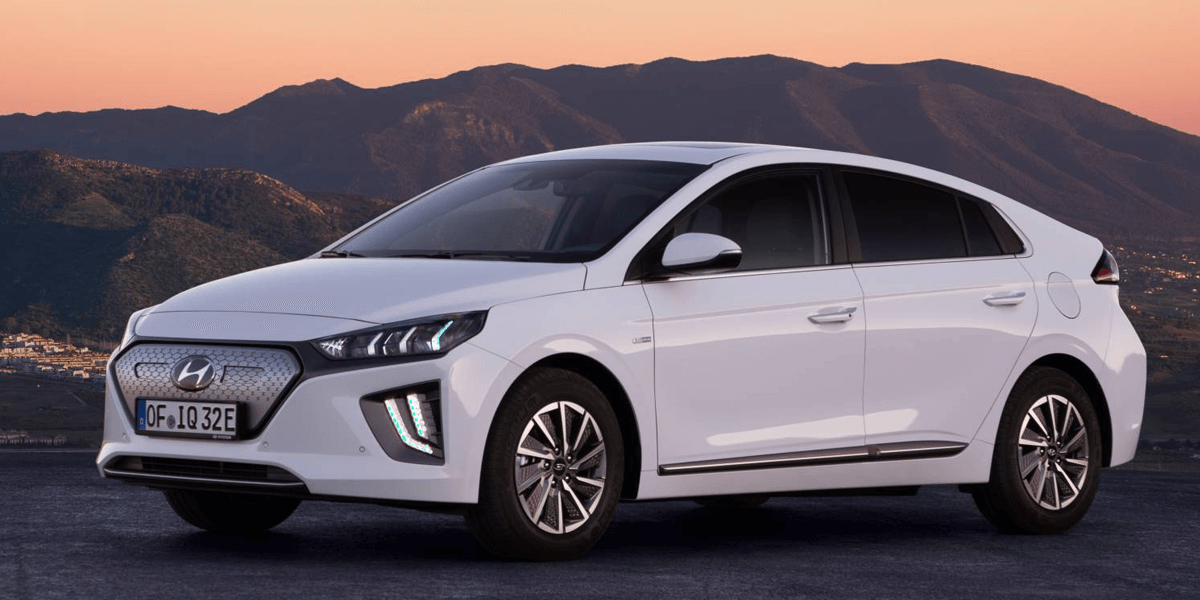
2020 Hyundai IONIQ (Image: Hyundai)

In May last year, Hyundai stopped taking orders for the previous all-electric Ioniq, due to battery shortages. A year later, the South Korean company released details of its revamped all-electric model without pricing details. Hyundai’s hybrid and plug-in hybrid versions were revealed in January this year, and cost less than the all-electric version, for example, the Hyundai Ioniq Hybrid is available in Germany from 25,800 euros, and the Ioniq Plug-in Hybrid from 32,000 euros – meaning the fully electric car will cost 1,600 euros more than its hybrid counterparts.

The new all-electric model, which will be hitting markets in the second half of this year, differs optically from its predecessor with the new headlights and above all the pattern on the closed radiator grille (which is reminiscent of the Kona Electric). The LED daytime running lights and the aluminium wheels have also been redesigned.

The most important new feature of the purely electric Ioniq is an increased battery capacity from 28 to 38.3 kWh, which should enable a WLTP range of 294 kilometres. In addition, the onboard charger of the electric motor will be upgraded from currently 6.6 to 7.2 kW. The AC charging process should take around six hours to 80 per cent.

Read more: Electrive

Kia e-Niro vs BMW i3 vs Hyundai Kona Electric

We find out if the new Kia e-Niro or revamped BMW i3 can beat our current EV champion, the Hyundai Kona Electric

Until recently, electric vehicles generally fell into one of two camps: small, more affordable and often frustrating because of drawbacks such as a limited range; or bigger cars that had larger batteries and therefore a longer range, but were also much pricier.

However, there’s now a growing group in the middle ground promising affordability and usability, thanks to their accurate and genuinely exploitable predicted range that’s making ‘range anxiety’ a thing of the past.

EVs are as usable as ever and leading this group are two upstarts and one familiar face. The newest model is the Kia e-Niro, which combines an advanced electric drivetrain with a conventional compact SUV body. The latest BMW i3 gets a bigger battery that gives it even more range. And in the sportier i3s trim that we’re testing here, it pretty much matches the e-Niro for performance and price.

Finally the Hyundai Kona Electric is our current favourite affordable EV, having taken the title at our New Car Awards last year – but it’s by no means old. The e-Niro shares much of the Hyundai’s tech, so it’ll be interesting to see how much difference there is and which will be Britain’s best wallet-friendly EV.

Read more: Auto Express

Hyundai Kona Electric (Image: Hyundai)

EV sales stalling as customers left waiting more than a year for a car

Britain’s electric vehicle revolution is being hampered by a “bottleneck” in global battery production, as demand far outstrips supply of zero-emission vehicles.

An investigation by the Press Association found that some dealers were telling customers they could be waiting more than a year if they placed an order for an EV today, with some manufacturers confirming they couldn’t guarantee the number of vehicles coming to the UK in the future.

Kia and Hyundai appear to be the worst affected, with the former’s e-Niro and latter’s Kona and Ioniq Electric experiencing 12-month-plus wait times.

Hyundai Kona Electric (Image: Hyundai)

Jaguar, Tesla, Nissan, Smart, Audi and Volkswagen are all also experiencing delays with their electric vehicle offerings of between two and five months.

A Kia spokesperson blamed global demand and battery supply, calling the e-Niro “a victim of its own success” and adding that the South Korean firm’s 2019 UK allocation of about 800 cars sold out within two weeks of going on sale in January.

He said: “The simple fact is our battery suppliers cannot make battery packs quickly enough for the demand, and if we haven’t got battery packs, we cannot sell the cars.”

Both Kia and its sister company Hyundai said they were taking reservations for 2020 deliveries and would contact interested customers once pricing and delivery time frames were clearer.

Read more: Evening Express

New longer range Hyundai IONIQ Electric (Image: Hyundai)

New Hyundai Ioniq Electric – Updated electric car gets a boost with more range and power

HYUNDAI has released details and pictures of the updated Ioniq Electric car which has more range, updated styling, and a few other new features.

Hyundai has unveiled the new Ioniq Electric car which has a number of modifications and tweaks to make it more compelling than before.

Of the changes to the updated Ioniq Electric car, the most important of them is a new battery pack which allows for more overall range.


New longer range Hyundai IONIQ Electric (Image: Hyundai)

The size of the battery pack has increased from 28kWh to 38.3 kWh which now allows a total range of 182-miles of WLTP of range on a single charge.

This is an increase of the previously claimed 174-miles, and what was claimed in WhatCar’s? Real Range data which stated that the car has an estimated useable range of 117-miles.

Read more: Express

Hyundai Kona Electric (Image: Hyundai)

Kia e-Niro versus Hyundai Kona EV: which of these ostensibly similar electric cars is the best?

The modern history of electric cars can be defined by five crucial models.

First came the G-Wiz in 2001, a slow and unsafe contraption which everybody laughed at but which nevertheless cemented the plausibility of EVs in Britain’s collective consciousness.

Next came the Nissan Leaf, and with it the notion that battery-electric cars could actually be quite good. And then came the Tesla Model S, which confirmed all of the above, but added the sort of desirability we had previously only expected from large-displacement petrol engines.

Then, a few months ago, came the Hyundai Kona EV and the Kia e-Niro. Eighteen years after the G-Wiz whirred into our world, the electric car has come of age.

Obviously there have been other electric cars – I particularly like the Jaguar I-Pace and the BMW i3 – but the Hyundai and the Kia offer a specific mixture of affordability, practicality and versatility that make them family-friendly in a mainstream sense.

The number of households that could rely on one of these cars as their primary vehicle is much higher than the pricey Jag or the tiny i3.

We discuss these cars in the same breath because they’re so similar. Hyundai and Kia are closely related, and the mechanical underpinnings of the e-Niro and the Kona EV are very similar.

Their performance is comparable, and the logistics of their electric powertrains is almost the same; they can travel roughly the same distance before needing to be recharged, and that process takes the same amount of time for the Kia as it does for the Hyundai.

Read more: MSN

Hyundai Kona Electric (Image: Hyundai)

The EV we’ve been waiting for: Hyundai Kona EV review

Hyundai Kona Electric 150kW Premium SE 64kWh 204PS Auto review

  • P11D value: £36,240
  • BIK: £36,240/13%
  • 5-door small SUV
  • 201bhp / 395Nm Permanent Magnet Synchronous Motor electric battery
  • Performance: 7.6s / 104mph
  • CO2 emissions/economy: 0g/km / 248 miles

What is it?

THE standard Kona is a well liked compact SUV that takes the usual benefits and packages them up in a distinctive design that is covered in sharp edges, converging crease, multiple light units and contrasting plastics and paints. It sounds a mess but works well.

Hyundai Kona Electric (Image: Hyundai)

Now Hyundai has taken the petrol and diesel engines out and replaced them with a pure electric drivetrain. There are two power outputs available from two battery capacities – the smaller 39kWh battery provides 134bhp, while the higher capacity 64kWh battery can deliver 201bhp. The increased capacity also increases range, with a WLTP rated range of 279 miles.

The entry model seems designed intentionally to upset Nissan, offering marginally more range in an on-trend SUV bodystyle, and all but matching it on price. Prices rise to just under £32,000 (including the government OLEV grant) for the fully-specced, big battery, Premium SE model.

Why would you want to drive a Hyundai Kona EV?

  • We got to drive the 64kWh version on the launch event, which means it was the more rapid of the two options. We all know about the instant acceleration offered by electric cars, but the Kona still surprises; 62mph comes along in just 7.6 seconds, despite the car weighing just under 1.7 tonnes. However, while it’s quick off the line, thrust fades away once you start reaching low motorway speeds, and it’s gone entirely at three figures.
  • It also does a good job at matching its official range, although the caveat there is that the first test was done on perfect, near empty, Norwegian roads – we’ll be testing the car on the flawed UK network soon. Still, despite a bit of ‘performance testing’ and a fair slog of motorway miles, the Kona’s on board computer suggested we’d get pretty close to that near 300 mile range. With rapid charging taking just 75 minutes to reach 80% charge (or about 260 miles of range) the days of range anxiety should be mostly just a memory.
  • While charging at 50kW at motorway services or the like can top the car up quickly, most will charge at home. Leaving it plugged in overnight will see a full charge in around nine and a half hours, assuming you’ve had a 7kW charger installed. These are subsidised up to £500 by the government, and even those with the heaviest of right foots will find that electricity is far cheaper than petrol.
  • Electric power means zero emissions, and that, in turn, means lower company car tax. With a BIK burden of just 13% (based on the full price, not the price after the government OLEV subsidy) that translates to a 20% taxpayer bill of less than £80 a month.
  • Ignore the EV side of things, and the Kona performs as any other similarly sized SUV. It rides quite nicely thanks to that longer suspension travel, and there’s enough room inside to accommodate four adults in comfort, and five at a squeeze. The boot remains a decent size too, despite losing 29 litres due to the presence of a battery pack under the floor.
  • It’s also loaded with equipment, at least in Premium or Premium SE spec. It’s positively luxurious, with heated and ventilated leather seats and a heated steering wheel, eight-inch infotainment with Android Auto and Apple CarPlay, wireless phone charging, head up display, LED lights front and rear and a Krell audio system with eight speakers and subwoofer.
  • Hyundai has not overlooked safety, with the Kona EV being equipped with automatic emergency braking with pedestrian detection, blind spot protection, lane keeping assist, rear cross traffic alerts and much more.

Read more: Business Motoring

Hyundai Kona Electric (Image: Hyundai)

Our Friend’s Electric: Good News for Potential Car Buyers Suffering from ‘Range Anxiety’

Research shows that some 37 per cent of motorists cite a distance of up to 300 miles as the range that would entice them to buy a pure electric vehicle. Their wait is over.

For many years the main barrier to consumer acceptance of electric vehicles has been “range anxiety”. Drivers have often wildly overestimated the length of their journeys, and underestimated the ability of electric vehicles to meet that need.

Now, though, the advances in electric vehicle technology – especially in sheer battery power – are gradually eroding that consumer resistance: electric cars are now within a matter of a few miles of meeting the range demands of more than one in three motorists – 300 miles or so.

Hyundai Kona Electric (Image: Hyundai)

Research by DrivingElectric.com, the independent consumer advice website for electric vehicles, shows that some 37 per cent of motorists cite a distance of up to 300 miles as the range that would entice them to buy a pure electric vehicle (that is, not a hybrid which also has a traditional petrol engine).

So now cars such as the long-range Hyundai Kona Electric – which can cover 292 miles – fall just eight miles short of the most common figure for consumers’ range ambitions.

Improvements in technology are arriving faster than many motorists realise, which means many don’t know their demands for range have already been met.

Read more: Independent

Hyundai Kona Electric (Image: Hyundai)

2018 brought the electric car to everyone

The Model 3 might still be pricey but there are alternatives.

It’s easy to look at a luxury automaker like Jaguar and declare 2018 the year the automotive industry caught up with Tesla. But like the Model X and Model S, the I-Pace is out of reach for most folks. It’s great that people with large bank accounts can get behind the wheel of a vehicle that runs on electrons instead of dead dinosaurs. What’s better is that 2018 showed that the rest of us can do the same thing.

Elon Musk promised a $35,000 electric vehicle with a range of more than 200 miles. The Model 3 is supposed to be the result of that pledge. But the company has yet to deliver a base-model version of the car. Building cars is hard; building inexpensive cars for the masses is near impossible. But that oath, and the fact that Tesla made electric cars “sexy,” inspired (or forced) other automakers to realize there is a market for electric-powered transportation.

Hyundai Kona Electric (Image: Hyundai)

The result: On the horizon, there’s a wave of electric vehicles truly built for everyone — and that’s where real change comes from. The spark of revolution might begin with a few rich people here and there, but the fire needs to spread beyond the loading zones of private schools and the valet parking of fusion restaurants. The real transformation is parked in front of Denny’s and charging outside Target while the driver is taking care of back-to-school shopping.

It was possible to get behind the wheel of an EV without dropping a huge chunk of cash before now, but it was a hard sell. If you only have the money to buy one vehicle, something with a range of 100 miles seems like a bad investment. Sure you want to save the planet, but you also want the peace of mind of being able to run errands before and after work without worrying about running out of juice.

We started 2018 with a car that was ready to tackle range anxiety while delivering on outstanding value: the Chevy Bolt. It’s on sale right now and is a perfect entry into the EV world. Even if you hadn’t planned on buying an electric car, get behind the wheel and drive it. At that point, you’ll understand just how great an electric car, SUV or even truck can be.

Read more: Engadget

Hyundai Kona Electric (Image: Hyundai)

Hyundai Kona Electric vs Mitsubishi Outlander PHEV vs Toyota C-HR

Is the all-electric Hyundai Kona a better SUV buy than a Mitsubishi Outlander PHEV or the hybrid Toyota C-HR?

As emissions regulations become ever more stringent, car manufacturers are increasingly looking for ways to cut down their models’ CO2 outputs – or eradicate them altogether.

This in turn means buyers who take the plunge have to fork out less money on their vehicles’ running costs. But if you’re looking to buy an Alternative Fuel Vehicle, what’s the best way to go?

Hyundai Kona Electric (Image: Hyundai)

There are many different types of technology in the marketplace, so to make sure you choose the right approach for your needs we’ve lined up three of the best alternatively-fuelled SUVs on sale today. In the all-electric camp is the Hyundai Kona Electric, our favourite affordable EV. Representing plug-in power is the Mitsubishi Outlander PHEV, Britain’s best-selling plug-in hybrid car, and flying the flag for conventional hybrid technology is the Toyota C-HR.

We really like all three models because of their ability to save fuel (or energy). So over the course of this test we’ll outline exactly how the tech in each car works, how to get the most from them and what you can expect from them day to day as we pick a winner.

Hyundai Kona Electric

If you’re looking at an electric car there’s a growing number to choose from, but the Hyundai Kona Electric is our current favourite affordable EV. Here we’re running the rule over the 39kWh model in Premium trim, at £28,720.

Electric cars are all about easy performance, and there’s plenty present here. The Kona Electric covered 0-60mph in 8.6 seconds (the fastest of the three cars), with an instant and impressive hit from 0-30mph. Acceleration tails off after this, but there’s still enough zip at motorway speeds for overtakes.

This is where the Kona is most comfortable, absorbing bumps with a welcome level of elasticity. Around town it’s also good; it’s just on twistier country roads (when the Kona’s chassis is being asked to cope with more) where it loses composure. It’s never uncomfortable, though.

Read more: Auto Express

Hyundai Kona Electric (Image: Hyundai)

Hyundai Kona Electric vs Nissan Leaf

What’s the best affordable small electric car on sale? We test the new Hyundai Kona Electric against the Nissan Leaf to find out…

For years the Nissan Leaf had the affordable electric car market to itself, sewing up the sector with a balance of range, practicality, performance and affordability that made electric cars viable for many, if not the masses. But now there’s a new challenger.

Hyundai has launched its Kona Electric, and with a choice of battery sizes available packaged in an SUV body, it’s an appealing choice that matches the second-generation Leaf for price, range and performance.

EVs are here to stay, but has Hyundai nailed it with the Kona Electric? Or have Nissan’s years of experience with its all-electric hatch paid dividends and put it ahead of the competition? We find out.

Hyundai Kona Electric

For: Range, infotainment, slightly cheaper than the Leaf but just as well equipped as standard.
Against: Boot not as big as the Nissan’s, ride can sometimes be a little lumpy.

Hyundai Kona Electric (Image: Hyundai)

Hyundai’s compact Kona SUV was designed with an all-electric variant in mind, so buyers don’t have to make too many compromises with the packaging when compared with a petrol or diesel model.

The electric motor is mounted up front in place of a conventional engine and gearbox, and drives the front wheels through a single-speed automatic transmission. This means there are no gears; you simply select ‘D’ and drive, which makes it a smooth experience, just like in the Leaf.

Read more: AutoExpress