Category Archives: Charging

Q-Park partners EB Charging for rollout of 600 EV chargepoints

EB Charging is to roll out nearly 600 electric vehicle charging points across 80 sites in the UK and Ireland in a new partnership with Q-Park.

The electric vehicle (EV) charging company – which was recently acquired by US charging firm Blink Charging – is to be responsible for the installation of EV charging hardware and the management of the charging provision.

This includes 24/7 customer support service for Q-Park customers who park and charge.
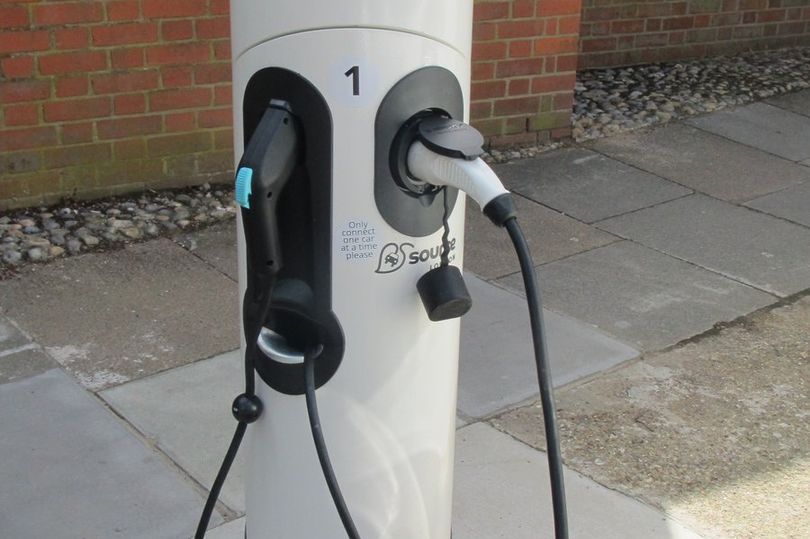
Brent’s first Electric Vehicle Charge Point is up and running on Dudley Road (Photo: Brent Council)

Q-Park is to invest over £3 million in the UK and Ireland on the rollout, with installations due to start in July 2022. This will include the modernisation of existing charging infrastructure with the latest ‘state-of-the-art hardware’, the companies said.

Once the deployment has finished, discussions will start on future phases, with Q-Park stating it is “eager to remain at the forefront of electric charging in the parking market”.

Read more: Current+

It’s Time to Go Green!

If you would like to know more about Solar Panels and the PowerBanx range of home battery systems, and get a free instant quote, please complete our online form:

Citroen Ami (Source: uk-mediacitroen.com)

How much does it cost to charge an electric car? Charging for EVs explained and how it compares to petrol

There are an estimated 400,000 electric cars on the road in the UK and more than 750,000 plug-in hybrids

Electric vehicles are becoming more and more popular, as petrol prices remain high and people search for more environmentally friendly options.

The UK Government is providing £500m over the next five years to support the roll-out of a fast-charging network for electric vehicles, ensuring that drivers will never be further than 30 miles from a rapid charging station.

There are an estimated 400,000 electric cars on the road in the UK and more than 750,000 plug-in hybrids.

Citroen Ami (Source: uk-mediacitroen.com)

In April 2022, 12,899 new electric vehicles were sold – a 40.9 per cent increase on April 2021. This gives them a 10.8 per cent market share.

As they grow in popularity, here’s what you need to know about charging costs, and how it compares to petrol.

Read more: inews

It’s Time to Go Green!

If you would like to know more about Solar Panels and the PowerBanx range of home battery systems, and get a free instant quote, please complete our online form:

High-power EV chargers rolled out at all Extra MSA Group motorway sites in IONITY deal

High-power electric vehicle (EV) charging is now available at all Extra MSA Group motorway service areas (MSAs) across the country.

IONITY has installed 38 charging points with a high-speed charging capacity of up to 30kW across all eight of Extra MSA Group’s MSA locations.

More are to follow at existing and proposed new MSA developments, according to the company, stating that IONITY is on track to deliver six high-powered chargers at each of Extra MSA Group’s sites ahead of the government’s 2023 target.

This government target of installing six high-power chargers at all MSAs by 2023 is being supported by the £950 million Rapid Charging Fund, which was first announced in the 2020 Budget.

The government’s goals extend to enabling the installation of 6,000 high-powered chargers across England’s motorways and major A-roads by 2035.

The new IONITY charging stations are geographically spread from Cullompton in the south to Leeds Skelton Lake in the north. All electricity supplied to the chargers is from 100% renewable sources, while all of Extra MSA Group’s locations have the capacity to increase the number of EV charging points as customer demand increases.

Read more: Current+

It’s Time to Go Green!

If you would like to know more about Solar Panels and the PowerBanx range of home battery systems, and get a free instant quote, please complete our online form:

IONITY rapid charge points at Leeds Skelton Lake Services (Image: IONITY)

If 800-Volt Architecture Is the Holy Grail of EVs, Why Do So Few Carmakers Use It?

Electric vehicles will take over the world, but before they do this, they need to convince a lot of people they are a viable alternative to ICE cars. One of the biggest issues is range anxiety and EV makers have offered several solutions to the problem. One of them is installing bigger batteries to improve the range, with all the downsides that derive from this. Among them are the high costs, but also the higher weight and the lower efficiency that comes with it.

Another way is to shorten the charging time, which will effectively allow an EV owner to spend less time at the charger. If this time is low enough, an EV could be charged pretty much the same way as an ICE is refueled, in a couple of minutes. This makes the range less important, as long as

Solar EV Charging Hub on Princes Street, Dundee (Image: eVolt)

the density of fast DC charging stations is high enough to not worry about running out of battery. It turns out that most EV makers have chosen this path or a combination of both.

Reducing the charging time is considered the holy grail of EVs and scientists are scrambling to get there using different technologies. The perspective of having your EV topped up in the time it takes the driver to drink one coffee is enticing enough. Scientists have tried lowering the charging time by improving battery technology or by adopting quantum charging. These are still years in the making, so don’t expect an EV to benefit anytime soon.

Read more: autoevolution

It’s Time to Go Green!

If you would like to know more about Solar Panels and the PowerBanx range of home battery systems, and get a free instant quote, please complete our online form:

Solar EV Charging Hub on Princes Street, Dundee (Image: eVolt)

InstaVolt launches ‘one of the UK’s largest’ EV charging hubs with Banbury expansion

InstaVolt has said its electric vehicle (EV) charging hub in Banbury, Oxfordshire is now one of the UK’s largest following the installation of eight new 150kW chargers.

The Alpitronic chargers have been installed alongside an existing eight 125kW chargers at the site, with work on the new chargers beginning in January 2022.

InstaVolt said this is in response to increased demand for rapid, easy to use chargepoints across the country, with the company aiming to grow its network to 10,000 rapid chargers by 2032. By this summer, it is hoping to have 1,000 rapid chargers on its network.

Solar EV Charging Hub on Princes Street, Dundee (Image: eVolt)

The company said that in the 12 months to March 2022, it has grown its network by 45%, with deals for EV charging rollouts with companies such as Costa CoffeeMcDonald’s, Bannatyne Health Clubs and Booths Supermarkets forming part of its “active efforts” to improve EV charging infrastructure.

Alongside the new chargers, the overall services at the hub have also been upgraded, with additional lighting, wider access spaces and two longer spaces to accommodate the increasing number of electric vans and fleet vehicles.

There are also plans for seating on site and a small wildflower meadow to increase biodiversity and create a habitat for pollinating insects.

Read more: Current+

It’s Time to Go Green!

If you would like to know more about Solar Panels and the PowerBanx range of home battery systems, and get a free instant quote, please complete our online form:
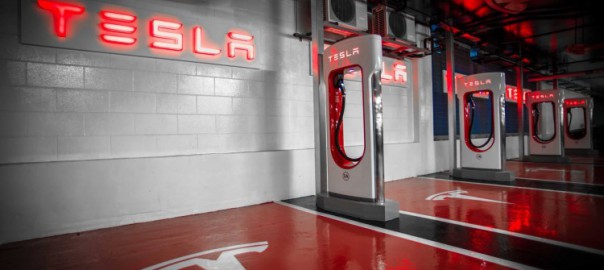
Tesla Supercharging Station at Westfield, London (Image: Tesla)

Britons buy more electric cars in March than in whole of 2019

Overall new car sales slump as petrol and diesel prices soar in Ukraine crisis

British drivers bought more electric cars in March alone than in the whole of 2019 even as the broader market slumped, according to figures that underline the accelerating pace of the UK’s transition away from internal combustion engines.

There were 39,315 new battery electric vehicle registrations during the month, according to the Society of Motor Manufacturers and Traders (SMMT), a lobby group. In 2019 there were 37,850 electric sales.

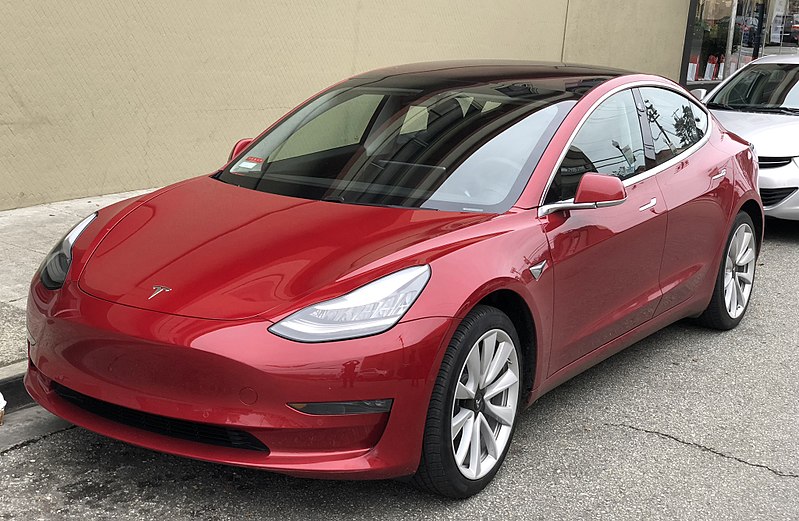
Tesla Model3 (Image: Wikimedia/Carlquinn)

Evidence of soaring demand for battery electric cars – which will become the most popular fuel type as soon as 2025 according to some analysts – has provided a bright spot for the car industry at a time when it has struggled for more than a year with computer chip supply bottlenecks.

Across electric and fossil fuel cars in total, the number of sales in the UK in March was the lowest for the month in 24 years.

March is an important month for the UK car industry, when buyers queue up for the latest number plates – a status symbol that can also help sustain secondhand values for a few months longer.

The slump in new car registrations, down 14% compared with March 2021, follows two months of year-on-year sales increases. The industry is concerned that it has missed a period of strong demand – buoyed up by household savings during pandemic lockdowns – and will be under pressure as household finances are squeezed by rising prices across the economy.

Read more: TheGuardian

It’s Time to Go Green!

If you would like to know more about Solar Panels and the PowerBanx range of home battery systems, and get a free instant quote, please complete our online form:
More battery electric vehicles sold in March than entirety of 2019 – SMMT

March 2022 was the best ever month for sales of battery electric vehicles (BEVs), according to the Society of Motor Manufacturers and Traders (SMMT).

In the month, there were 39,315 sales of new BEVs, a 78.7% increase on March 2021, when there were 22,003. This represented a 16.1% market share compared to 7.7%.

These figures mean that in March 2022 there were more BEVs sold than during the entirety of 2019, the SMMT said.

To date this year, there have been 64,165 sales of new BEVs, compared to 31,779 for the same period in 2021- a change of 101.9%.


The SMMT said that with grants for BEVs ongoing until at least next March, with interest rates being low and EVs benefitting from lower running costs, there are “significant benefits” for drivers who order new vehicles now.

“With increasing household and business costs, government must do all it can to support consumers so that the growth of electric vehicles can be sustained and the UK’s ambitious net zero timetable delivered,” Mike Hawes, SMMT chief executive, said.

Earlier this year, the SMMT called for VAT on electricity used for public chargepoints be cut to match that for home use, as well as for binding targets for the rollout of public chargepoints to help meet demand in light of surging BEV sales.

Read more: Current+

It’s Time to Go Green!

If you would like to know more about Solar Panels and the PowerBanx range of home battery systems, and get a free instant quote, please complete our online form:

BP Chargemaster Rapid Charger at Milton Keynes Charging Hub (Image: T. Larkum)

Government EV charging plan a ‘missed opportunity’ for drivers

The Department for Transport (DfT) has published plans outlining how it seeks to significantly increase the UK’s electric vehicle charging capacity.

Funding for the £1.6 billion Electric Vehicle Infrastructure Strategy has previously been announced. The DfT has now detailed exactly how the allocated money will be used.

At its core is the aim to have 300,000 public charging devices available by 2030. This represents a tenfold increase from the 30,000 currently installed across the country.

Rapid-charging roll-out

Tackling electric vehicle charging for the millions without access to off-street parking is a key part of the strategy.

Some £450 million will be used by the Local Electric Vehicle Infrastructure fund. This allows for local authorities to apply for money to deliver EV hubs and innovative on-street charging solutions.

Solar EV Charging Hub on Princes Street, Dundee (Image: eVolt)


An existing £950 million Rapid Charging Fund is intended to support the installation of fast-charging devices at motorway services. It expects to deliver 2,500 rapid-charging points by 2030, and 6,000 by 2035.

Charging operators will be mandated to provide customers with real-time data about the status of charge points. A 99 percent reliability rate for charging devices will also be expected.

Read more: MotoringElectric

It’s Time to Go Green!

If you would like to know more about Solar Panels and the PowerBanx range of home battery systems, and get a free instant quote, please complete our online form:

Milton Keynes 'Mushrooms' Charging Hub (Image: T. Larkum)

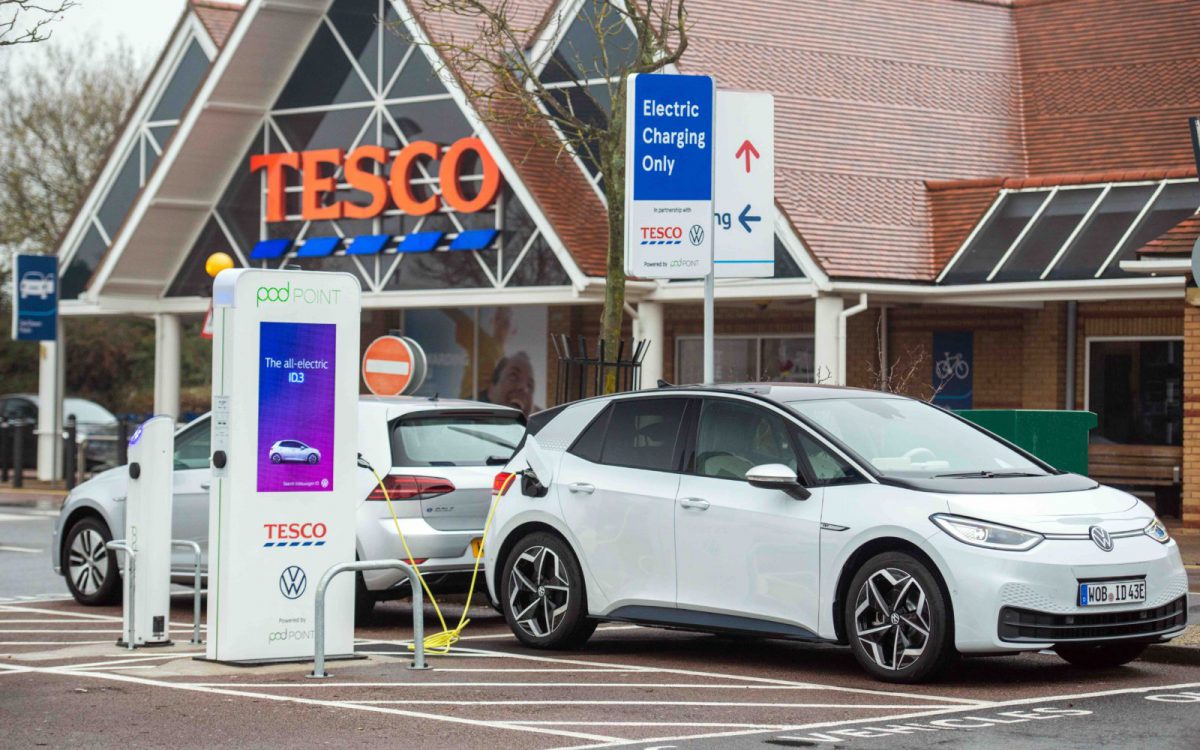
Tesco to make big change to car parks at 500 of its branches

Supermarket giant Tesco has announced a ‘big change’ is coming to 500 stores across the United Kingdom. The retailer revealed plans to bring electric charging points to its branches.

The giant expanded the UK’s largest free electric vehicle charging network after usage of the points surged by 300% over the past year, reports the Echo. It unveiled its 500th charging point at Tesco Extra in Inverness.

POD Point Rollout at Tesco Stores (Image: Tesco/POD Point)

Other areas that have benefitted from improved charging access include Southend-on-Sea, Bolton, Wirral and Port Talbot. Since the network was launched in 2019 by Tesco, Volkswagen and Pod Point, the charging points have provided more than 41 million miles of free electric driving.

The network uses renewable energy and, since it launched, has saved 8,786 tonnes of CO2 compared with travelling the same distance in a typical car with an internal combustion engine. Designed to offer Tesco customers a secure, reliable and accessible way to top up their electric cars, the network of more than 1,000 chargers at 500 Tesco supermarkets in the UK also now includes 100 rapid chargers.

Read more: msn


It’s Time to Go Green!

If you would like to know more about Solar Panels and the PowerBanx range of home battery systems, and get a free instant quote, please complete our online form:

BP Chargemaster Rapid Charger at Milton Keynes Charging Hub (Image: T. Larkum)

Electric cars: Positive news for EV owners as plan to boost number of public charge points unveiled

Electric vehicle owners will have access to 300,000 public charge points by the end of the decade, the government has said.

Some £500m will be invested to hit the target, according to the Department for Transport, which represents a 10-fold increase on the current 30,000 public charge points across the UK.

The 2030 deadline is the same date the government aims to ban the sale of new petrol and diesel vehicles, as motorists are encouraged to go electric to help the UK hit net zero by 2050.

Read more: Every key policy in UK’s plan to reach net zero

Helping drivers without access to off-street parking will be a focus when rolling out the new charge points.

The plan, part of the government’s wider Electric Vehicle Infrastructure Strategy, also highlights the need to ensure readily accessible fast charging for longer journeys.

At least 6,000 superfast charge points will be installed across England’s motorways by 2035 as part of an existing £950m commitment.

Read more: SkyNews

It’s Time to Go Green!

If you would like to know more about Solar Panels and the PowerBanx range of home battery systems, and get a free instant quote, please complete our online form: