Category Archives: Energy and Climate Change

News and articles on climate change, vehicle pollution, and renewable energy.

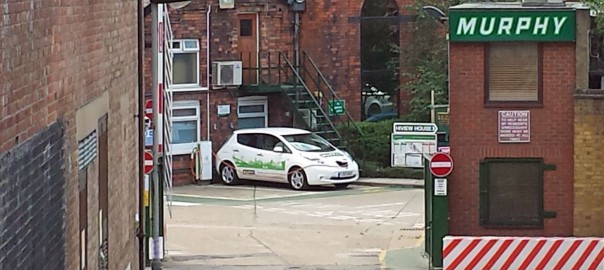
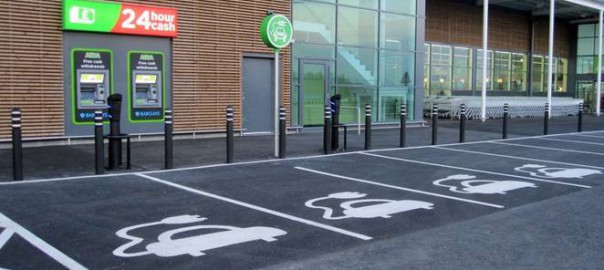
Electric car charging and parking (Image: G. Wallace)

Free parking, bus lane access for electric cars

This is becoming a perennial topic here on TreeHugger. The Guardian reports that eight UK cities are being awarded funds to provide major electric vehicle (EV) perks in an effort to increase adoption.

Electric car charging and parking (Image: G. Wallace)

Those perks will include a solar-powered charger at a York park-and-ride, free parking in Bristol and Milton Keynes, as well as bus lane access in Milton Keynes and Derby.

Cue the environmentalist handwringing.

On the one hand, I am sure Lloyd will be worrying about electric cars making it harder to fix our cities. After all, cars driving in bus lanes will inevitably impact public transit. And free parking for private automobiles seems to be the antithesis of reclaiming the ridiculous amount of space we devote to the motor car. With a demographic shift away from the car apparently underway, we do need to keep an eye on where we spend our resources.

In the other hand, I tend to be a part of the “it’s not this or that” crowd. Given our current dependence on private vehicles, and British’ cities on-going battle against life threatening smog, I’d suggest that speeding up the transition to emission-free cars is a significant step in the right direction.

The only caveat to that is the fact that the £40m pot being shared between these eight cities should not detract from other, non-car based efforts to slash emissions. From electric buses to treating cycling as mass transport, we must also continue our shift away from the car.

But surely, if done right, increased use of EVs should help us on this front too? As our streets get quieter, and as our air gets cleaner, it becomes easier and more pleasant for us to walk and cycle. And that can only be a good thing for everyone.

Read more: Treehugger
Electric vehicle sales to boom in 2016

2015 proved to be an interesting year for energy and climate issues both globally and in the UK. Will 2016 hold more of the same?

Forecasting is a dangerous business, but here are six predictions you should keep an eye on.

1) The showdown on oil prices between Saudi Arabia and the US will intensify, and the Saudis will eventually break.

It looks like oil and gas prices are going to remain low for the foreseeable future, panicking both the oil industry in Saudi Arabia and the shale gas industry in the US.

The big question is whether Saudi Arabia can keep production high and prices low long enough to bankrupt enough of the American shale industry. The answer may come by the end of 2016 and several factors point to the Saudis breaking first.

For one, despite losses for the oil industry, low oil prices benefit many sectors in the US, especially as consumers now have more spending money in their pockets. However for Saudi Arabia, an oil-dependent economy, low prices are a clear loser.

4) Hybrid sales will fall; electric vehicle sales will boom and become the hot energy news item of 2016.

etron-statics-258_Etron_i3-Outlander_AutoExpress

More so than renewables, low-carbon vehicles are an area where you might expect low oil prices to present a difficulty as they will encourage more people to stick with their regular car.

Sales of hybrid vehicles, which many people do compare to standard combustion vehicles in purchasing decisions, will likely fall. Conversely, electric vehicle purchases tend to be made by consumers who are less sensitive to price changes, evidenced by increased EV sales in 2015 despite low oil prices. In addition, a significant portion of EV sales are in industrial, commercial and public sectors where EV mandates play a strong role.

This prediction, like most others included here, differs significantly from OPEC’s delusional World Oil Outlook. On EVs it forecasts only a moderate increase in sales all the way out to 2040. OPEC dismisses EVs as a threat because it says it will take until 2040 for battery costs to fall by 30-50%, enough to make them viable options. It’s a particularly bold prediction as battery costs have fallen by about 50% in last five years alone.

Expect to see media interest in head-to-head races between the silent rockets and a lot of interest in three big 2016 releases: the Chevy Volt, the Nissan LEAF and the Tesla Model X.

Read more: New Economics

(Image: Razzouk/Shutterstock)

2016 Will Be the Year the Fossil Fuel Era Enters Terminal Decline

This year is set to be even warmer than last, but there are reasons to believe the shift to clean energy will gain serious momentum in 2016.

(Image: Razzouk/Shutterstock)

2015 was a landmark year for climate action. Its many highlights were topped by a Paris agreement where 195 countries set themselves on a low-carbon path via economy-wide plans sure to be developed and strengthened every year.

In the meantime, climate chaos continues to build: 2015 was the warmest year of the warmest decade since we started recording temperatures. 2016 is forecast to be even warmer. The number of climate refugees are swelling and everywhere popular movements against more pollution and irresponsibility are strengthening.

Expect the following broad trends to accentuate in 2016.

Clean Energy can no Longer be Stopped

Notwithstanding the low price of coal and oil, solar power and other forms of clean energy will continue their onward march in 2016 and quasi-monopolize additions to electricity supply worldwide.

Order books for new clean energy power plants are up sharply in the United States, China, India, as well as in the developing economies of Africa and Latin America. India, for example, with current electricity grid capacity of less than 300 gigawatts (GW), is on its way to building 100 GW of solar power by 2022 (from 5 GW currently), double the current solar capacity of China.

Meanwhile, cheaper battery technology will continue to drive clean energy costs down, while changing the way people think about energy: We will produce more electricity from solar power, but also store and manage it ourselves. This foretells nothing short of a revolution in the way our modern society fuels itself, upending previous assumptions about the need for large fossil fuel plants connected by an expensive, inefficient electricity grid.

Read more: Alternet

Nissan Leaf on charge in Highgate (Image: T. Larkum)

Air pollution now kills ten times more people than road accidents

World Health Organisation describes new data as ‘health emergency’, with rising concern likely to influence decision over Heathrow expansion

Nissan Leaf on charge in Highgate (Image: T. Larkum)
Nissan Leaf electric car on charge in London (Image: T. Larkum)

The World Health Organisation has issued a stark new warning about deadly levels of pollution in many of the world’s biggest cities, claiming poor air quality is killing millions and threatening to overwhelm health services across the globe.

Before the release next month of figures that will show air pollution has worsened since 2014 in hundreds of already blighted urban areas, the WHO says there is now a global “public health emergency” that will have untold financial implications for governments.

The latest data, taken from 2,000 cities, will show further deterioration in many places as populations have grown, leaving large areas under clouds of smog created by a mix of transport fumes, construction dust, toxic gases from power generation and wood burning in homes.

The toxic haze blanketing cities could be clearly seen last week from the international space station. Last week it was also revealed that several streets in London had exceeded their annual limits for nitrogen dioxide emissions just a few days into 2016.

“We have a public health emergency in many countries from pollution. It’s dramatic, one of the biggest problems we are facing globally, with horrible future costs to society,” said Maria Neira, head of public health at the WHO, which is a specialist agency of the United Nations. “Air pollution leads to chronic diseases which require hospital space. Before, we knew that pollution was responsible for diseases like pneumonia and asthma. Now we know that it leads to bloodstream, heart and cardiovascular diseases, too – even dementia. We are storing up problems. These are chronic diseases that require hospital beds. The cost will be enormous,” said Neira.

Read more: The Guardian

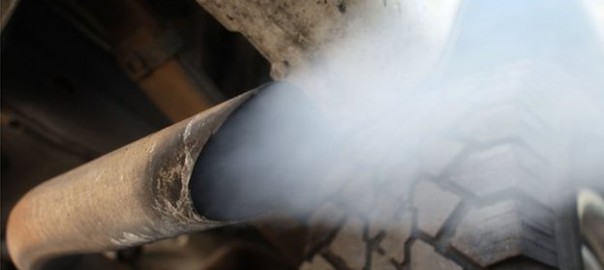
Car exhaust (Image: BBC)

Nine out of 10 new diesel cars exceed EU pollution limits, report finds

Road test reveals cars emit seven times the permitted level of exhaust emissions when tested in real-world conditions

Car exhaust (Image: BBC)

Nine out of 10 new diesel cars break new EU pollution limits when tested on roads rather than test tracks, according to a new report.

On average, the cars emit seven times the permitted level of NOx gasses, with the worst car producing 22 times the legal limit. Models from every major motor manufacturer breached the limit when they were evaluated in real-world conditions.

From 1 September, new diesel cars in the EU have had to comply with emissions rules called “Euro 6”. However, carmakers can use a whole range of techniques to ensure that their cars perform far better under test conditions than when driven by ordinary drivers.

These include stripping components from the car to reduce weight, using special lubricants, over-inflating tyres and using super-smooth test tracks. The same techniques are used to boost the apparent fuel efficiency of vehicles.

Read more: The Guardian

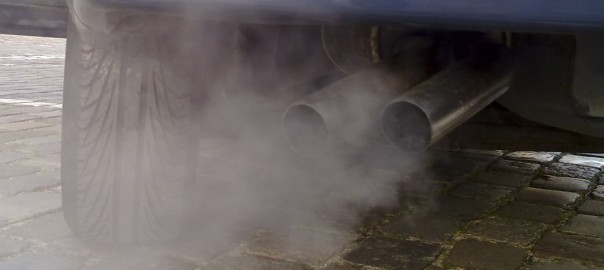
Car exhaust pollution (Image: Wikipedia)

Diesel fumes ‘biggest health catastrophe since Black Death’

Campaign groups are calling on the Government to do more to tackle ‘breathtaking’ air pollution levels

Car exhaust pollution (Image: Wikipedia)

Diesel exhaust fumes are causing the biggest health catastrophe since the Black Death, a campaign group has claimed, as new figures show air pollution limits for the whole year have been breached in just eight days in London.

European Union limits demand that maximum hourly nitrogen dioxide (NO2) concentrations are not exceeded for more than 18 hours a year – yet Putney High Street, in west London, had recorded its 19th hour breaching the limits during Friday morning’s rush hour, the London Air Quality Network said.

Oxford Street, where legal limits for the toxic gas for the whole of 2015 were breached in just two days, has almost certainly broken the limit again but the monitoring equipment is currently being repaired. Campaigners say that the Government must do more to tackle air pollution which has been linked to respiratory and heart problems.

Simon Birkett, founder and director of campaign group Clean Air in London, said it was breathtaking that toxic air pollution in the capital had breached the legal limit for the whole calendar year within the first few days of 2016. Mr Birkett also called on all the candidates in the mayoral elections to pledge to ban diesel exhausts from the most polluted areas by 2020.

He said:

“Worse, several air pollution monitors have been vying for the dubious honour of recording the first officially monitored breach of the nitrogen dioxide (NO2) legal limit in the world in 2016.”

Read more: Independent

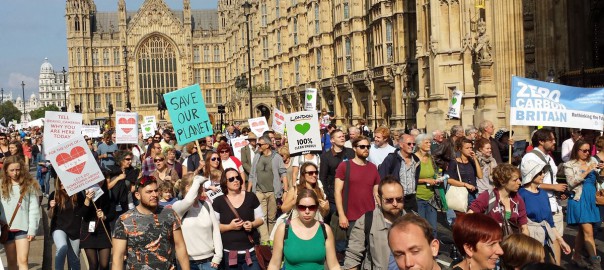
London Climate March - passing the Palace of Westminster (Image: T. Larkum)

World Bank issues ‘perfect storm’ warning for 2016

Simultaneous slowdown in Brics economies would jeopardise chances of pick-up in global growth this year, report says

London Climate March - passing the Palace of Westminster (Image: T. Larkum)
London Climate March – times they are a changing (Image: T. Larkum)

The risk of the global economy being battered by a “perfect storm” in 2016 has been highlighted by the World Bank in a flagship report that warns that a synchronised slowdown in the biggest emerging markets could be intensified by a fresh bout of financial turmoil.

The Bank said the possibility that Brazil, Russia, India, China and South Africa – the so-called Brics economies – could all face problems simultaneously would put in jeopardy the chances of a pick-up in growth in the coming year.

It added that the impact would be heightened by severe financial market stress of the sort triggered in 2013 by the announcement by the Federal Reserve that it was considering reducing the stimulus it was then providing to the US economy.

Launching its annual Global Economic Prospects, the Bank said activity in 2015 had failed to live up to its expectations – the fifth year in a row that growth has undershot the forecasts made by the Washington-based institution, which lends to the world’s poorest countries.

Read more: The Guardian

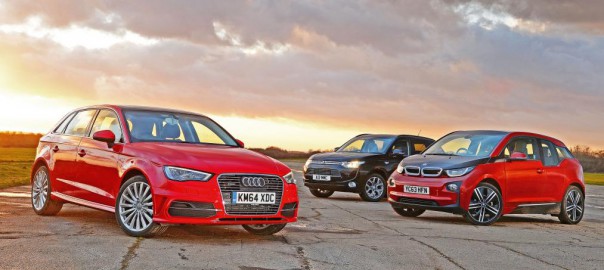
Audi A3 e-tron, Mitsubishi Outlander and BMW i3 plug-ins

OPEC’s mortal threat from electric cars

The oil cartel is living in a time-warp, seemingly unaware that global energy politics have changed forever

etron-statics-258_Etron_i3-Outlander_AutoExpress

OPEC remains defiant. Global reliance on oil and gas will continue unchanged for another quarter century. Fossil fuels will make up 78pc of the world’s energy in 2040, barely less than today.

There will be no meaningful advances in technology. Rivals will sputter and mostly waste money. The old energy order is preserved in aspic.

Emissions of CO2 will carry on rising as if nothing significant had been agreed in a solemn and binding accord by 190 countries at the Paris climate summit.

OPEC’s World Oil Outlook released today is a remarkable document, the apologia of a pre-modern vested interest that refuses to see the writing on the wall.

The underlying message is that the COP21 deal is of no relevance to the oil industry. Pledges by world leaders to drastically alter the trajectory of greenhouse gas emissions before 2040 – let alone to reach total “decarbonisation” by 2070 – are simply ignored.

Read more: Telegraph

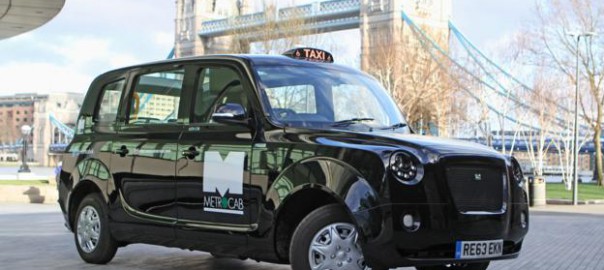
The release of the Metrocab, a battery-powered taxi capable of zero emissions, is one of the efforts to clean up the city’s transport (Image: Metrocab)

London’s lethal fog

After the Great Smog of 1952 killed up to 12,000 Londoners, the country cleaned up its act. But today, pollution of another kind may be just as insidious – and almost as lethal.

The release of the Metrocab, a battery-powered taxi capable of zero emissions, is one of the efforts to clean up the city’s transport (Image: Metrocab)

Imagine smog so thick that you can’t see your feet as you walk through it; so impenetrable that it blots out the sun; so toxic that it stings your eyes and leaves you gasping for breath.

It may sound like the backdrop to some post-apocalyptic nightmare, but on 5 December 1952, this terrifying scenario became the reality for the people of London. That day’s incident alone killed thousands and prompted a global transformation in the way we deal with air pollution.

On that cold, clear day in 1952, Londoners huddled around their coal fires for warmth. But while the smoke would normally disperse into the atmosphere, an anticyclone hanging over the region created an inversion – trapping the pollution close to the ground and leading to the formation of a sulphurous, toxic shroud that would blanket the capital for the next five days.

Before the weather conditions changed and the smog retreated, thousands had died. Official estimates at the time put the number of fatalities at 4,000 – more civilian casualties than were caused by any single incident during the war – while recent research suggests that it may have caused as many as 12,000 deaths.

Read more: BBC

The sun sets on drilling (Image: Pexels)

2016: a year of living dangerously

As oil prices fall further, China slows and Brazil risks collapse, cracks will be papered over and the scene set for a new implosion

The sun sets on drilling (Image: Pexels)

Economic forecasting is a mug’s game. One thing that has been learned from the financial crisis and Great Recession is that even those equipped with the most sophisticated models get it wrong, sometimes spectacularly.

So it is with both humility and trepidation that I will try to fulfil a promise made last week and make predictions for what is going to happen in 2016. In all honesty, the future is unknowable and anybody who says otherwise is lying.

So, with that caveat, here’s what I think might happen. At some point, a recovery built on booming asset prices, weak growth in earnings and rising personal debt is going to lead to another huge financial crisis – but not in the next 12 months.

Instead, 2016 will be a year of living dangerously, papering over cracks and buying time before all the old problems resurface.

Read more: The Guardian