Category Archives: Energy and Climate Change

News and articles on climate change, vehicle pollution, and renewable energy.

Driving into a city should become as antisocial as smoking

Imagine a capital city where nobody has to die on the roads.

It may sound almost impossible, but last year not a single pedestrian, cyclist or child lost their life on the streets of Norway’s capital, Oslo; the only fatality recorded was a motorist crashing into a fence. (By comparison 12 people were killed in Bristol, a city slightly smaller than Oslo, in 2017 – and over half of them were pedestrians or cyclists.)

The catch? The lives saved in Norway seem to have been a byproduct of a bigger plan to become a carbon-neutral city that would probably spark a mutiny if you tried it here. Oslo has closed some streets to traffic entirely, removed parking spaces across the city to deter drivers, introduced measures to stop parents doing the school run by car and reduced speed limits. There’s plentiful public transport and lots of bike lanes but the bottom line is, as Oslo’s mayor says, that while cities will always have traffic, “the drivers should act as guests”. And not very welcome guests, by the sound of it.

Something like this would probably be the future for British cities, if we were serious about dealing with the air pollution filling urban children’s lungs, as well as tackling the climate crisis. This week, Birmingham announced proposals to stop people driving across the city centre, amid research suggesting that illegal levels of air pollution may be shortening the lives of children growing up in the city by up to half a year. Cars will be allowed into a new clean-air zone, but not through it to reach other parts of the city, forcing them out around the ring road, or otherwise encouraging drivers on to the bus.

It’s following in the footsteps of other cities, including Bristol, which unveiled proposals last autumn to ban diesel cars from parts of the city in daytime, and Oxford, which this week published plans for a zero-emission zone in the centre with a £10 charge for non-compliant vehicles. Suddenly you can imagine a time when driving into a smog-laden city, in all but the greenest cars and for all but the most essential journeys, will feel as antisocial as smoking on the bus.

Read more: The Guardian

It’s Time to Go Green!

If you would like to know more about Solar Panels and the PowerBanx range of home battery systems, and get a free instant quote, please complete our online form:

Nottingham Climate Emergency: Council’s zero-carbon target means only electric vehicles in the city by 2028

A draft plan, which was approved unanimously yesterday (Monday, January 13) will now go out for public consultation.

Nearly every vehicle currently on the roads of Nottingham will need to be replaced within just eight years if the city council is to meet its own zero-carbon target.

Nottingham City Council hopes to be the first in the UK to become carbon neutral and has now produced a plan on how it intends to do this by 2028.

Several actions are planned, including having all domestic heating from renewable energy or low-carbon sources, enforcing energy efficiency standards, further public transport improvements and expanding local energy creation.

The council already has a growing fleet of its own electric cars, but details are scant about how the council plans to facilitate a move away from petrol and diesel engines for regular motorists, and it has admitted that the scale of the change needed is ‘enormous’.

A draft plan, which was approved unanimously yesterday (Monday, January 13) will now go out for public consultation.

On the issue of removing petrol and diesel engines (Known as internal combustion engines or ICEs) it says: “To achieve the 2028 carbon neutrality ambition, it will be necessary to almost entirely replace existing fossil-fuel-based Internal Combustion Engine (ICE) vehicles with ULEVs (ultra-low-emission vehicles).

“Recent research suggests that the lifetime carbon emissions of ULEVs are half those of a conventional vehicle, with more efficient electric vehicles saving on the carbon produced in the batteries in just two or three years.”

As well as an action plan, the council also passed its own Carbon Neutral Charter, which expands on the council’s green ambitions.

Read more:

It’s Time to Go Green!

If you would like to know more about Solar Panels and the PowerBanx range of home battery systems, and get a free instant quote, please complete our online form:
rel=”noopener”>Westbridgford Wire

EVs will need to become the norm if we don’t want to burn the planet

If the ongoing bushfire crisis has taught Australians one thing, it is that the use of petrol and diesel vehicles will have to be minimised in the future in order to avoid pumping more carbon into the atmosphere and making the problem worse.

And that means electric vehicles will have to start becoming the rule, not the exception as they are now.

Prior to the 2019 May election, the Australian Labor Party offered as one of its policies a subsidy on electric vehicles. But the government that was elected had no such policy and as a result any Australian who has to buy an electric vehicle today will have to fork out from his/her own pocket.

Electric vehicles are not cheap. I recently had a test drive in the Nissan LEAF, one of the three EVs that is available for sale locally – the others are from BMW and Hyundai – and the price is something that a medium-level petrol vehicle will cost.

There are some pluses: services are only required once every 20,000 kms, there is a five-year warranty, the drive is very smooth and the handling is exceptional. But the cost is still a big factor; the LEAF costs about $50,000.

Read more: IT Wire

It’s Time to Go Green!

If you would like to know more about Solar Panels and the PowerBanx range of home battery systems, and get a free instant quote, please complete our online form:

Sales of electric vehicles rise by 144 per cent as diesel cars decline in popularity

In a depressed new car market, sales of electric vehicles rose by 144 per cent in 2019, while diesel models continued the sharp slide in popularity witnessed in recent years.

Overall, Brexit uncertainties, weak consumer and business confidence and slow overall economic growth helped push new car sales down.

Preliminary figures suggest a fall of around 2.3 per cent in 2019, to 2.3 million units.

According to the Society of Motor Manufacturers and Traders, the main industry body, new cars sales will fall again in 2020, albeit by less than previously forecast and with the rate of decline slowing – down another 1.6 per cent by 2021.

Diesel is a major factor in the current market – a fall of 21.8 per cent last year as many potential customers simply postpone buying new until they have more clarity about future taxation and regulation of diesels.

Mike Hawes, chief executive of the SMMT described it as a another “turbulent 12 months” with the trade facing the same tough challenges.

As one of the few bright features in a gloomy scene, the growing acceptance and popularity of pure electric cars and stands out as a trend that should help, albeit in a modest way, the government to achieve its targets on CO2 emissions.

Read more: Independent

It’s Time to Go Green!

If you would like to know more about Solar Panels and the PowerBanx range of home battery systems, and get a free instant quote, please complete our online form:

Average CO2 emissions of cars sold in UK up for third year in row

Popularity of SUVs and falling diesel sales hit Britain’s hopes of reaching climate targets

The average carbon dioxide emissions of cars sold in the UK rose for the third year in a row during 2019 as falling diesel sales and the rising popularity of SUVs dealt a blow to Britain’s hopes of reaching climate targets.

Average CO2 emissions rose for the third year in a row, up 2.7% year on year to 127.9g of CO2 per kilometre, according to data from the car industry body. This is far above the newly introduced EU target of 95g per kilometre carmakers need to achieve over this year and next for all new cars. Cars account for just over 18% of UK emissions, according to government figures. Transport emissions as a whole account for a third of the UK total, with the sector viewed as vital contributor if the country is to achieve goals of cutting emissions to 51% of 1990 levels by 2025 and to reach net zero by 2050.

All manufacturers selling in the EU are rushing to meet emissions regulations that came into force on 1 January. The regulations were introduced in response to the climate crisis, with road transport a major contributor to global CO2 emissions.

Overall UK car sales fell by 2.4% year on year to about 2.3m, according to the Society of Motor Manufacturers and Traders, with the industry body blaming Brexit uncertainty and the slump in diesel sales as the main factors.

This indicates the worst year for the UK market since 2013, when sales were 2.26m. They reached a peak of 2.7m in 2016 but have declined steadily since.

A quarter of the CO2 increase was caused by the 21.8% drop in diesel sales over the year. Newer diesels on average have lower CO2 emissions than petrol cars, despite a backlash prompted by air quality concerns. Another quarter was caused by increased sales of SUVs, which are often heavier and have much worse aerodynamic profiles than smaller cars. Increased fuel use by SUVs was the second largest contributor to the increase in global CO2 emissions from 2010 to 2018, according to the International Energy Agency.

Read more: The Guardian

It’s Time to Go Green!

If you would like to know more about Solar Panels and the PowerBanx range of home battery systems, and get a free instant quote, please complete our online form:
Climate change: If you worry about global warming, the next car you buy should be electric

If you’re concerned about climate change, the next car you buy really should be electric.

Why? Because the average car, SUV or light truck in the United States is on the road for 11.8 years. So vehicles bought this coming year will be part of the shift away from fossil fuels that climate scientists say needs to be well underway within 10 years.

“By 2030 we need to be really well into this transition. Which means people need to be buying these cars now,” said Lewis Fulton, director of the Sustainable Transportation Energy Pathways program at the University of California, Davis.

The message is getting out there. In May, 16% of Americans said they were likely to buy an electric vehicle the next time they were in the market for a new or used car. Their leading reasons were concern for the environment and lower long-term costs of EVs, according to a AAA survey.

The good news, say owners, is that today’s electric cars are cost-effective, reliable, fun to drive and get upward of 200 miles to the charge so it’s not a hardship.

Read more: USA Today

It’s Time to Go Green!

If you would like to know more about Solar Panels and the PowerBanx range of home battery systems, and get a free instant quote, please complete our online form:
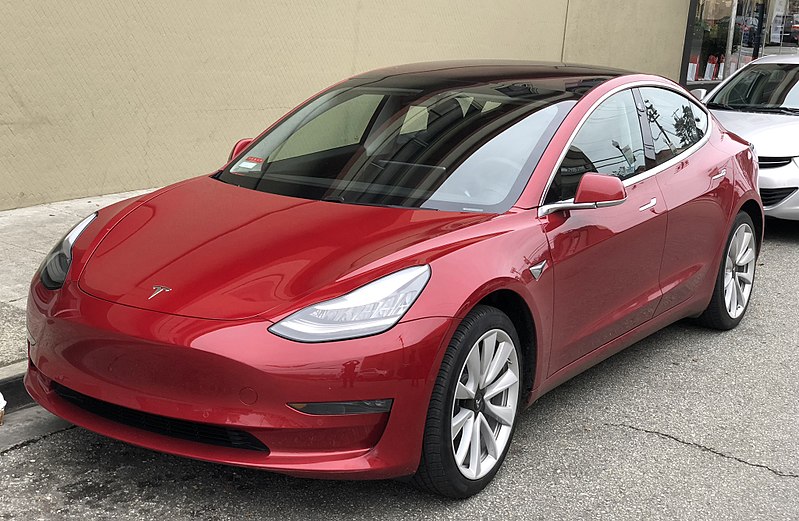
Tesla Model3 (Image: Wikimedia/Carlquinn)

Tesla’s Musk says solar, energy storage will grow faster than electric cars, and there’s some truth to it

  • Tesla CEO Elon Musk recently said the company’s solar and energy storage business will grow faster than its electric vehicle business.
  • With Tesla making progress on Model 3 production efficiency, Musk said on the most recent earnings call there will be more focus on solar and the broader Tesla Energy business, which includes aligning intermittent solar power with battery storage.
  • Tesla and Musk have faced criticism, and a shareholder lawsuit, over the solar business, the controversial acquisition of SolarCity, and issues at the company’s solar panel plant in Buffalo, New York.

A Model 3 ramp-up that resulted in a quarterly profit was a sign that Tesla’s automobile business finally may be financially stable. If so, it is a good time for Tesla to turn its attention to the energy business — encompassing solar and energy storage — that has for long taken a backseat to getting the electric vehicle assembly line in order.

Tesla Model3 (Image: Wikimedia/Carlquinn)

Elon Musk has been broadcasting this message since Tesla reported a surprise profit in the third quarter. On the call with Wall Street analysts after the earnings in November, the Tesla CEO said, “For almost two years we had to divert a tremendous amount of resources.”

Now Musk claims Tesla is poised for “the really crazy growth for as far into the future as I can imagine. … It would be difficult to overstate the degree to which Tesla Energy is going to be a major part of Tesla’s activity in the future,” he said.

Never one to shy away from bold claims or ambitions, Musk said Tesla Energy could grow to roughly the same size as Tesla’s automotive business, and solar would grow, on a percentage basis, the fastest of any, with storage second.

“I think both over time will grow faster than automotive,” Musk said. “They’re starting from a smaller base.” He added, “I think, especially, if you look at sort of — if you look at, like, year-over-year growth, it will be absolutely incredible … over the course of, say, a year, gigantic increase.”

In a recent internal email to Tesla employees, Musk outlined two critical year-end priorities: delivering all cars to their customers and boosting the rate of solar deployments by a significant degree.

Read more: CNBC

It’s Time to Go Green!

If you would like to know more about Solar Panels and the PowerBanx range of home battery systems, and get a free instant quote, please complete our online form:

Are Electric Vehicles Actually Worse for the Environment than Combustion Engines?

With so many people claiming that electric vehicles are in fact bad for the environment, we take a look at the data.

We’ve all seen it in the comments sections of social media posts. There are always a few people adamant that electric vehicles pollute more than internal combustion engine vehicles.

At best, they claim the electric vehicle (EV) industry is scoring an own goal by creating a technology that, throughout a vehicle’s lifetime, pollutes more than internal combustion engine (ICE) vehicles. At worst, they say it’s all part of a conspiracy aimed at filling the pockets of clean energy providers.

So, are electric vehicles really worse for the environment than internal combustion engine vehicles? The short answer is no. Here’s why.

The battery production conundrum

Whether you are a proponent of electric vehicles or not, one issue is widely accepted: EVs release a lot of CO2 during the manufacturing process. This is due largely to the production of lithium-ion batteries.

A new IVL report, released this month, says, “according to new calculations, the production of lithium-ion batteries on average emits somewhere between 61-106 kilos of carbon dioxide equivalents per kilowatt-hour battery capacity produced.”

However, this figure keeps improving. The figure above, for example, is an improvement on the same organization’s study in 2017 that said, “an electric car with a 100kWh battery [emits] 15-20 tons of carbon dioxide even before the vehicle ignition is turned on,” with emissions of 150 to 200 kilograms of carbon dioxide for each kilowatt-hour storage capacity in a car battery.

Read more: Interesting Engineering

It’s Time to Go Green!

If you would like to know more about Solar Panels and the PowerBanx range of home battery systems, and get a free instant quote, please complete our online form:

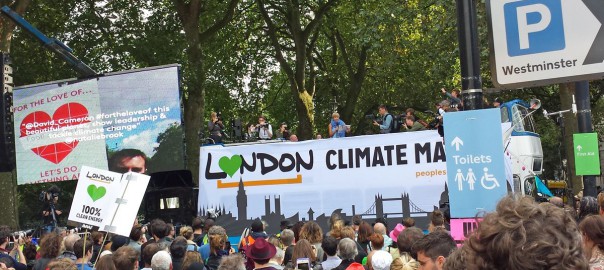
London Climate March - the Rally (Image: T. Larkum)

This Guy Studies the ‘Global Systems Death Spiral’ That Might End Humanity

Could climate change get so bad that it leads to our extinction? A few researchers are trying to answer that question.

Simon Beard has a career that most people would consider depressing and terrifying. He is part of a team of researchers trying to figure out if, how, and when climate change could cause the human species to go extinct. The stakes of his research—a potential annihilation of 7.7 billion humans and all the unborn people who come after them—couldn’t be any higher.

The idea that a heating planet will doom humanity is the subject of a lot of public speculation and anxiety, yet there are very few experts studying the existential impacts of climate change with any sort of academic rigor. Beard, who does this work at the Cambridge Center for the Study of Existential Risk, described it as “a field with next to no data” and a lot of unsupported hypotheses. “Under what circumstances could climate change cause a collapse of global civilization?” he said. “When you start asking that question, then your already quite-limited literature gets even more scarce.”

London Climate March - the Rally (Image: T. Larkum)
London Climate March – the Rally (Image: T. Larkum)

By bringing scientific precision to the doomsday scenario that wipes us off the planet, Beard hopes to convince world leaders to actually do something about it. “That’s really what we’re aiming for at the moment,” he said. “I think this could be genuinely transformative—firstly for the science but also by implication for the policy and the way that these things are discussed in society.”

The starting point for Beard’s research is that humans are incredibly resilient: We have found a way to survive in tropical rainforests, blistering deserts, icy tundra, and even for a brief time on the moon. But that says more about our collective strength than our skills as individuals. Shut down the grocery stores, turn off the taps, disband the government and very few of us, perhaps apart from a small number of rugged survivalists, would be able to stay alive for long.

“And so every one of us as an individual, I think, is very vulnerable, and relies upon these massive global systems that we’ve set up, these massive global institutions, to provide this support and to make us this wonderfully adaptable generalist species,” Beard recalled earlier this year on the Future of Life Institute podcast,

Those systems—the ones that put broccoli and frozen pizzas in our fridges and keep our streets from becoming Mad Max war zones—are themselves way more vulnerable and interconnected than we appreciate. The greenhouse gas emissions that humans are pumping into the atmosphere at record levels are changing the climate in ways that make it harder for us to grow and distribute food. This also increases pressure on our political system—as we saw with drought and crop failures in the lead-up to the Syrian civil war.

Read more: Vice

It’s Time to Go Green!

If you would like to know more about Solar Panels and the PowerBanx range of home battery systems, and get a free instant quote, please complete our online form:

Electric cars might not yet be green, but we should buy them anyway

Transforming the way we travel is an essential part of tackling the climate crisis.

The transport sector contributes about 20% of global carbon emissions. In the UK the figure is 33%, and the country has made virtually no progress in reducing emissions from transport. In many countries, they’re actually increasing.

Electric vehicles are often hailed as the solution to this quandary, but some question their environmental credentials. With much of the world’s electricity still produced from fossil fuels, the criticism goes that EVs may actually be responsible for more carbon emissions over their lifetime than combustion engine vehicles.

As German economics professor Hans-Werner Sinn put it in a recent controversial article, all we are doing is transferring carbon emissions “from the exhaust pipe to the power plant”.

The assumptions underlying these claims are questionable. But even if true, this line of argument misses a key point. The car we choose to buy today directly influences the future of our energy system. Choose a combustion-powered vehicle and we lock in ongoing fossil fuel use. Choose an electric vehicle and we support the switch to a zero carbon society.

Due in large part to the high carbon-cost of EV batteries, the manufacturing process for an electric vehicle causes more carbon emissions than for a combustion engine vehicle. This means that the source of electricity used during the life of an EV is critical in determining how eco-friendly they are.

While two thirds of the world’s electricity is generated from fossil fuels, this proportion is decreasing rapidly. At least four countries are already at or close to being powered entirely by renewable electricity: Iceland, Paraguay, Costa Rica and Norway. Brazil is one of the ten largest economies in the world and they are at 75% renewable electricity. In the UK, the proportion of electricity provided by fossil fuels has halved over the last decade and is currently about 40%.

As the transition towards renewable electricity progresses, so too will the carbon footprint of EVs keep decreasing in step. This means that the superiority in carbon cost that electric vehicles already have over combustion vehicles, even if narrow now, will widen in the years to come.

Read more: The Conversation

It’s Time to Go Green!

If you would like to know more about Solar Panels and the PowerBanx range of home battery systems, and get a free instant quote, please complete our online form: