Category Archives: Energy and Climate Change

News and articles on climate change, vehicle pollution, and renewable energy.

Nissan Leaf (Image: Qurren/Wikipedia)

Inside the industry: Will electric early movers reap dividends?

Firms like Nissan, Renault and BMW have plugged serious money into electrification but a coherent vision is key

It’s hard to look ahead when you are fighting fires, but for years now, across the automotive industry, yesterday’s crisis has been merging into tomorrow’s crisis, every perfect storm somehow becoming yet more perfect. The pattern is set to continue.

Take a step back and it’s interesting to note which manufacturers have had the foresight, resources and brain capacity to invest in communicating their strategy out to the theoretical furthest point, whatever it may be: electrification, certainly; autonomy and connectivity, too; but also as far out as modelling worlds in which we don’t own cars but hire them, or potentially don’t even allow cars into city centres – or anywhere at all.

Nissan Leaf (Image: Qurren/Wikipedia)

You might argue that all this change is unimportant until it becomes a money-making reality. A live case study to ponder is whether Nissan, Renault or BMW will enjoy any long-term benefit from moving early on electrification. The investment in the Leaf, Zoe and i3 – plus spin-off vehicles – runs to billions, but it’s hard to pinpoint any advantages, either in brand perception or profits. Maybe in time.

Perhaps the key to success here is offering a singularly distilled vision. In some cases, that’s simple: Tesla is the world’s most desired electric car brand because all it does is make desirable electric vehicles. Most rivals are beholden to profits from ‘legacy’ combustion-engined cars, their heritage suddenly a millstone. Mixed messages abound.

But even then, a coherent vision can reap dividends, and Volvo is the most prominent example of the quantum leap that can be made with such forward thinking. Back in 2014, when the XC90, the first of its new-generation cars, was launched, Volvo was marooned somewhere between premium and mainstream brands, a fringe player with a set of unfocused objectives selling around 400,000 cars a year.

A succession of new, quality cars has been central to its renaissance but so, too, has its ability to colour in its own road map. Its claims in 2017 to make its entire range electrified by 2020 – neatly overlooking that this included mild-hybrid systems – landed it perception-shifting headlines. Likewise, its oft-stated vision to ensure that nobody is killed in or by one of its cars. Today, it is selling around 800,000 cars a year.

People don’t just buy cars for what they can do for them today, but rather what they will say about them into the future. It’s remarkable how few car makers are willing to tell that story – but just as clear that the smartest car makers are doing just that.

Read more: AUTOCAR

It’s Time to Go Green!

If you would like to know more about Solar Panels and the PowerBanx range of home battery systems, and get a free instant quote, please complete our online form:

Laggards, electric vehicles and energy storage: The outlook for the climate transition in 2021

Investors must not take eyes off the ball

Pressure on oil and gas companies
Oil and gas companies are under even more pressure to define their future and what role they want to play in the energy transition.
After initially slow progress with the global climate agenda, 2021 feels as if it could be an important turning point. While the effects of the distinctive weather patterns brought by La Niña will fade after the early months 2021, meteorologists believe that could pave the way for another year of record-breaking temperatures.
On the corporate agenda, a key focus will be how oil and gas companies define the role they plan to play in the energy transition. More companies chose to put their cards on the table in 2020, with companies such as BP declaring plans to target net zero carbon in oil and gas production on an absolute basis by 2050, and to cut the carbon intensity of products sold.
But the vast majority – those controlling around 90% of oil and gas output, according to the International Energy Agency – have made no such commitment. Are they going to buy into the vision for net zero or not?
There will be more scrutiny of saying and doing. In a lagging sector, those choices could have implications, in terms of the cost of finance for companies and the risk of future asset stranding.

Electric vehicles gain traction
Demand for electric vehicles (EVs) continues to grow, with total cost of ownership reaching parity with internal combustion in more markets.
Despite the short-term impact of Covid-19, which caused sales of EVs to drop sharply in the early part of 2020, overall appetite continues to grow.
Prior to the pandemic, sales of battery EVs and hybrids had been rising, but they still make up just a small part of all new vehicle sales – at less than 3%.
One of the key factors inhibiting consumers is cost: the total cost of ownership of an EV has tended to be higher than a car with a conventional internal combustion engine.
In 2021, we expect more markets to reach that important crossover point, where an EV holds the cost advantage.
More generous subsidies are part of the story. In France, for example, support for EV buyers was increased to €7,000 as part of the national Covid-19 recovery plan announced in June.
There are also plans to make the tax treatment of conventional cars with high fuel consumption and high emissions much tougher. In Germany, for instance, the Climate Protection Surcharge is expected to be lifted substantially for high emitters.
Meanwhile, practical challenges are gradually being addressed. The UK has committed to speed up the transition to EVs by prohibiting sales of new conventional vehicles to 2030, and several governments have committing to spinning out new charging infrastructure as part of their stimulus programmes.
Ultimately, this will make the experience of sourcing and owning an EV easier.

Energy storage
Developments in energy storage mean the prospect of grid stability from renewables is becoming a reality.
The lack of viable, large-scale energy storage has long been a critical issue inhibiting the scaling up of renewables. Recent developments in storage technology suggest part of the problem could be overcome by bridging the inevitable peaks and troughs that arise during day-night cycles.
By coupling renewables with large-scale energy storage, excess energy can be absorbed in peak periods, retained for a period, and then fed back into the grid.

Read more: Investment Week

It’s Time to Go Green!

If you would like to know more about Solar Panels and the PowerBanx range of home battery systems, and get a free instant quote, please complete our online form:

Big Oil Is Getting Scared Of Electric Vehicles – And So It Should Be

History is full of Black Swan moments, where everyone expected life to carry on as it had done for decades and then it didn’t. Nassim Nicholas Taleb popularized the term with his book of that title, published in 2007, just in time to make it look like he foresaw the 2008/9 stock market crash, which he claims he hadn’t. The 9/11 attacks were a Black Swan event, and the Coronavirus pandemic has been a Black Swan event (for some, at least). But there’s another darkly hued large aquatic avian just spreading its wings right now: electric vehicles.

Many incumbent car manufacturers have not been taking the EV revolution seriously, and only now are they starting to realize their mistake. It could be too late for some of them. If you have been working in the digital technology business for the last couple of decades, this won’t be such a surprise. Disruption has been the nature of anything involved with technological change for millennia, but it has accelerated considerably in the digital age.

The Internet now feels like it has always been around, but 20 years ago nobody really knew the effects it would have. Yet so many areas have been revolutionized by online connectivity. Magazine and newspaper publishers have seen their circulations plummet, and only those brands that have been able to make the transition to online models have persisted, such as the one you’re reading now. Retail, taxi firms, holiday letting, travel agency, and so many other areas have also had to reconfigure themselves in a matter of decades due to the unexpected arrival and impact of the Internet. Not all these effects have been good. The toxicity of social media has had a seriously negative influence on our society and culture, which we haven’t yet worked out how to remedy. But the consequences of online connectivity are here to stay.

EVs are going to have the same disruptive consequences. Over a million EVs were sold in Europe in 2020, are projected to hit 585,375 in 2021 in the US, and sales are strong in China too. Companies and individuals with a lot invested in the traditional fossil fuel industries are now starting to react in typical fashion, by attempting to discredit what they perceive as a threat. There was the infamous #AstonGate incident in the UK, where a very dubious report backed by Aston Martin among others twisted facts to argue that EVs are actually more polluting than fossil fuel vehicles (only when first produced, and over their lifespans not at all).

An American journalist for TorqueNews, who seems to mostly write positive stories about Toyota and Mazda vehicles, used a couple of examples of people buying RAV4 Prime cars to replace Teslas to imply that hybrids are universally better. In contrast, less anecdotal research in the UK by Zap-Map recently showed that only 1% of EV owners actively wanted to go back to fossil fuel, and 91% said they never would.

Another hit-piece by an American Spectator journalist rehashes the tedious trope that recharging EVs takes too long. This article is based on a common misunderstanding that is found frequently on social media. The argument goes that because an EV can’t do 4,000 miles in a day with just one two-minute refueling stop halfway like their diesel-powered SUVs then they’re entirely useless. The misconception is that EVs replace their internal combustion equivalents in an entirely like-for-like way. But there are differences in EV ownership lifestyle.

Although EVs drive like fossil-fuel cars and perform the same functions, the refueling routine is not the same. Most people don’t drive hundreds of miles in one go more than a couple of times a year. So home charging will be more than enough, and will mean they almost never have to go to a dedicated refueling stop at all. Not everyone will have access to home charging, but EV chargers are much cheaper than petrol pumps, so it is entirely feasible to kit a large proportion of a parking lot out with them so your trip to the shopping mall or leisure center will be enough to keep your car topped up while you do something else. The American Spectator article ironically argues that you wouldn’t wait 15 minutes for your hamburger, but if you ate that meal onsite your visit would take longer than that – more than enough to top up an EV using 150kW DC charging or better. Any long trip requires breaks, and most EVs will charge up more than enough in the time it takes to grab a snack.

Perhaps most insidious of all is the “self-charging hybrid” ad campaign that seems to imply hybrids can replenish their batteries using magic. This is very clearly an attempt to stall pure EV purchasing and comes from companies that are way behind on developing their own pure battery-electric strategy due to not taking the threat from Tesla seriously when it first became evident. But at best this campaign will just mildly forestall the inevitable.

Read more: Forbes

It’s Time to Go Green!

If you would like to know more about Solar Panels and the PowerBanx range of home battery systems, and get a free instant quote, please complete our online form:
Taking A Look At Biden’s Climate Plan For Cars And Trucks

President-Elect Joe Biden has unveiled a plan for building a modern sustainable infrastructure and an equitable clean energy future. It’s a vision based largely on the assumption of a massive wave of investment in electric vehicles. But Biden is not just dreaming, he intends to act:

“Biden also plans to invest big in carbon-free public transport and will aim to provide all cities of more than 100,000 people with quality public transportation by 2030. And also to invest in building electric vehicles with sufficient charging stations across the country — he will create 1 million new jobs in auto manufacturing, auto supply chains, and auto infrastructure .”

He’s going to be busy turning vast fleets of government vehicles electric, and installing 400,000 charging stations across the country. To think the U.S. now only has 150,000 gasoline stations.

If all goes according to plan, we could be looking at a dramatic reduction in greenhouse gas emissions. Transportation in the U.S. is petroleum-based and contributes 28% of all U.S. greenhouse gas (GHG) emissions (2018 data) – larger than electricity (27%), industry (22%) and commercial and residential (12%). If the U.S. could take a big bite out of petroleum-based transportation, that would go a long way towards reducing GHG emissions.

Cars and trucks contribute 82% of transportation GHG emissions in the US (Figure 1) where there are almost 300 million cars driving around.

Cars have started going electrical, but plug-ins are less than 2% of all US cars on the road (2.2% globally), and widespread adoption will be dubious if charging stations are not built quickly enough.

Auto manufacturers are reorienting. By 2025, thirty models of electric cars and electric trucks will be available from GM according to Mary Barra, CEO. They will include an SUV and an electric pickup, as well as a hummer electric sport utility by late 2021. “Climate change is real, and we want to be part of the solution,” Barra said.

Driving change: Norway versus the US

But let’s see how the US is progressing compared with other countries. Figure 2 reveals projected sales of electric vehicles versus year for different countries. Norway (top curve) is the leader by far, with right now over 50% of new vehicle sales being EVs. But the US is near the bottom.

Note that the modeling assumes a saturation level of 65% sales, which may reflect the difficulty of ever getting to 100% in a reasonable time-scale.

The secret to accelerate uptake of EVs is to make them cheap enough. Norway lowered taxes in EVs to keep the price down, and even exempted road tolls, as an incentive. The opposite approach would be to raise taxes on traditional cars – a kind of pollution tax.

What else can be learned from Norway? EVs in Norway are a diverse group, and there are also established electric buses, trams and trains. The Nissan Leaf, an unpretentious little car, is the best seller. But not so in the US where Tesla models are a clear winner with total 71,000 sales (data from first half of 2020). Chevy Bolt has about 8,000 and Nissan Leaf 3,000.

Costs come into the EV uptake of course, but if the federal tax credit of up to $7,500 is deducted, an EV may not cost much more than a gasoline counterpart. Tesla Model 3 prices are $38,000 – $55,000.

So given the Biden Administration’s will to boost EV fortunes, we can expect Biden to push for generous incentives on EVs alongside a rollback of Trump’s rollback (to 40 mpg) of Obama’s fuel economy standards (54.5 mpg). California, naturally, is in the middle of this with its own goal of lowering greenhouse gases. Despite clashes with the Trump administration, they have reached a deal with five car makers that is only slightly less strict than the Obama plan. Looking beyond 2025, Governor Gavin Newsom has stated he will ban all sales of new gasoline vehicles by 2035.

Read more: Forbes

It’s Time to Go Green!

If you would like to know more about Solar Panels and the PowerBanx range of home battery systems, and get a free instant quote, please complete our online form:

Tax most polluting cars to speed up transition to electric vehicles, experts say

Covid has caused a slump in new car sales that could slow the switch to electric vehicles, pushing up emissions

The Government should slap a 50 per cent tax on the most polluting cars from next year to accelerate the transition to electric vehicles over the next decade, experts have said.

New analysis from the UK Energy Research Centre (UKERC) suggests the dramatic slump in car sales during the pandemic could have worrying consequences for transport emissions over the next decade and beyond unless the government takes radical action.

Sales of new cars this September were the worst in a century, as the financial impact of Covid-19 began to take its toll. UKERC analysis suggests the slowdown in the car market could last until 2025, keeping older, more polluting cars on the road for longer.

Meanwhile people who put off buying a new car in 2020 or 2021 may buy a similar model later in the decade, delaying the date they make a switch to electric, UKERC added. Manufacturers may also try and offload stock of petrol and diesel models ahead of the 2030 ban on their sale.

Higher emissions
Such a scenario could lead to an extra seven million tonnes of tailpipe CO2 emissions between 2021 and 2030, UKERC’s director Professor Rob Gross told i.
“You might think that people not buying cars is a good thing for the environment. But it’s not a good thing if they delay buying a relatively inefficient car, and that car is still being used for longer,” he said.
Those cumulative emissions matter, he said: “Every gram of CO2 that enters the atmosphere stays there, potentially for hundreds of years.”

Tax polluting cars
UKERC says more must be done to make polluting cars less attractive to buyers. It proposes imposing a 50 per cent levy on the purchase price of the most polluting vehicles. The tax would start in 2021 with the highest emitting cars, such as performance SUVs and sports cars. It would gradually tighten over the decade until only zero emission cars were exempt.

New cars with high tailpipe emissions already pay a higher rate of tax under the Vehicle Excise Duty, but only for the first year. After that, petrol and diesel motors face a flat charge regardless of their emissions.

“As the car market recovers we think the government needs to strongly steer it towards cleaner vehicles, not just by providing subsidies for electric vehicles but also strongly steering people away from relatively inefficient models,” Professor Gross said.

Relatively cheaper
UKERC’s proposals are similar to Norway’s system, where all non-electric cars are subject to a tax on their purchase price based on their tailpipe emissions.

The system makes most EV models cheaper to buy compared to a similar petrol model, even if the import price for the EVs is much higher.

Read more: inews

It’s Time to Go Green!

If you would like to know more about Solar Panels and the PowerBanx range of home battery systems, and get a free instant quote, please complete our online form:
Nissan Leaf (Image: Qurren/Wikipedia)

Boris Bans Petrol and Diesels, But the Future’s Bright For Electric

On 18th November, Boris Johnson announced that no petrol or diesel cars and vans would be sold in the UK from 2030. We all knew it was coming, but the announcement still managed to send shockwaves through the media and the wider public.

The Prime Minister has labelled his ten-point action plan, which includes investment in sustainable energy and bettered public transport, a ‘green industrial revolution’.

One area which will receive funding to the tune of £1.3bn is the electric vehicle (EV) market. The UK will witness the introduction of significantly more charging points, while buyers will receive additional support thanks to a grant being implemented to aid those making the switch.

While the announcement has been met with backlash, it isn’t all doom and gloom. In fact, the electric vehicle market has been a saving grace over the last two years.
From Volvo Bolton to Volvo Warrington, the Swedish manufacturer’s investment in developing electric vehicles in-house will be welcome news for their UK retailers… Let’s take a look.

The picture over the past two years
New car sales had a poor year in 2019, there is no denying that, and it was diesel vehicles that felt the biggest pinch – the sale of new USD vehicles was down 2.3 per cent overall.
Of course, the plan to introduce additional ultra-low emission zones across the country alongside the impending fear of the ban on ICE vehicles was enough to discourage anyone from buying a diesel.
The blow that was dealt to the diesel market was softened in some respect by how the electric market excelled.
2019 saw sales of electric vehicles rise by 144 per cent. Why? Because motorists want fuel-efficient, high performance, low emission vehicles, and in the modern world we live in, thanks to stark developments automotive engineering, EVs offer exactly that.
Of course, 2020 has been particularly bleak for the automotive industry in all respects. Showrooms across the country having to shut their doors and manufacturing plants unable to take delivery of parts have further contributed to the lack of buying invoked by the recession.
However, once again, while the market itself has shrunk, new electric vehicle sales have built upon their already solid foundations – up 184% year-on-year in September.

Nissan Leaf (Image: Qurren/Wikipedia)

The past
Way back in the early noughties and twenty-tens, electric vehicles had negative connotations. Poor mileage, expensive, and in most parts lacking in what Thierry Henry once described as ‘va va voom’.
The reputation was hardly unfair. If you went to buy an electric car, often these three attributes were true, and you were hardly spoilt for choice when it came to options either. The Prius changed the game admittedly, but even when it came to prominence, we were still left wanting more.
As the world as a whole began to develop a stronger environmental conscience, one by one, the big brands began to jump in: Jaguar, Porsche, Renault, Audi, Hyundai, and Nissan, to name just a few. The latter of the bunch, Nissan, with their innovative model Nissan Leaf, developed exactly what the average car manufacturer desired – a plug-in vehicle that had a mileage range of more than 200 miles, was powerful, and, perhaps most importantly, was affordable.

Read more: Air Quality News

It’s Time to Go Green!

If you would like to know more about Solar Panels and the PowerBanx range of home battery systems, and get a free instant quote, please complete our online form:

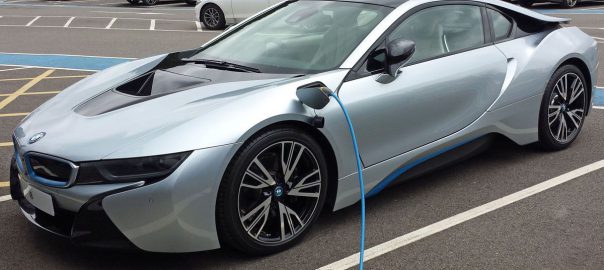
BMW i8 on charge (Image: T. Larkum)

Analysis: winners and losers in the automotive CO2 race

While some car makers will easily hit their EU emissions targets, others are in trouble

The enforced need to dramatically reduce the CO2 emissions of cars sold in the European Union and UK this year has led to expensive stumbles from manufacturers including BMW, Ford and Jaguar Land Rover as new electrified technologies faltered at the crucial moment.

The task to reduce average CO2 emitted to the 95g/km required by the EU (although this differs slightly for each brand based on the average vehicle weight) was always going to be massive. The average was 122g/km in 2019, and it had actually risen over the preceding three years as buyers ditched diesel for petrol.

Many companies chose to wait until this year to roll out expensive new plug-in hybrids and electric cars to comply. They may have been costly but, under the rules, any car sold emitting less than 50g/km not only helped to cut average CO2 but also counted as two sales under the supercredit system, which was designed to help car makers over the line in the first year of the new rules.

Ford had pinned its hopes of reaching its specific target on its new 33g/km Kuga Plug-in Hybrid. But then disaster: it had to recall 21,000 examples to replace their battery packs, due to the risk of contaminated cells causing a fire.

BMW i8 on charge (Image: T. Larkum)

To avoid missing its target and paying substantial fines, Ford paid Volvo an undisclosed sum to pool together the two brands’ average CO2 and take advantage of Volvo’s more successful roll-out of plug-in hybrids, which had put the Swedish firm below its target.

The recall and hook-up with Volvo cost Ford an estimated $600 million (£510m) and wiped out all of its third-quarter European profits.

“We were on track for our CO2 target this year until the Kuga PHEV situation,” CEO Jim Farley said on a call with investors earlier this month.

Meanwhile, BMW suffered similar problems and had to recall 26,900 plug-in hybrids, mostly in Europe. So far it’s confident that it will still reach its target and thus avoid fines.

Not so fortunate is Jaguar Land Rover, which has set aside £90m to pay fines after the launch of its key Range Rover Evoque and Land Rover Discovery Sport plug-in hybrid models was delayed due to problems with achieving the promised electric-only range. JLR halted sales while it worked to solve the issue, which it said was exacerbated by the UK’s first lockdown.

Common to the affected plug-in hybrids of all three manufacturers were battery packs supplied by Samsung, although the Korean firm hasn’t commented on the delays and nor have manufacturers apportioned blame.

Other marques have approached the targets in different ways. Fiat Chrysler Automobiles said in a recent earnings call that it had also suffered a financial loss for the third quarter of 2020, partly due to compliance costs – both rolling out new plug-in cars and paying EV maker Tesla to pool its fleet and thus avoid fines.

The Volkswagen Group, meanwhile, had been expected to hit its target this year after launching the Volkswagen ID 3 EV, but it unexpectedly announced in September that it had pooled with MG to take advantage of the Chinese firm’s strong-selling ZS EV.

Read more: AUTOCAR

It’s Time to Go Green!

If you would like to know more about Solar Panels and the PowerBanx range of home battery systems, and get a free instant quote, please complete our online form:

Hove teenager on mission to get young people driving electric vehicles

A TEENAGER is on a mission to get as many other young drivers using electric vehicles as possible.

Harrison Hughes from Hove is so passionate about electric cars that he saved up to buy a second-hand one before he had even passed his driving test.

The 17-year-old said: “For years I’ve been fascinated that you can drive cars powered by electricity. I got my first job in a supermarket and saved all the money I could to buy a second-hand Renault Zoe.

“Even my driving instructor’s car was electric. I’ve no plans to ever drive a petrol or diesel vehicle.”

Harrison has been following the uptake of electric vehicles from a young age and believes they will become increasingly popular.

However he said cost is a key barrier and insurance prices are still too expensive for many young drivers.

The business student said: “Sadly the insurance prices and car prices haven’t changed much and most people get into an internal combustion engine. This is a step backwards and not where we want to be going.

“My car was just under £5,000, which definitely is not cheap but I’m very passionate about it.

“Obviously not having to pay petrol costs is a huge saving and you don’t even have to pay much in terms of maintenance.

“It costs me 50p to charge my car up overnight.”

Harrison has been sharing his experience of driving an electric vehicle through videos on his Twitter page. He receives a lot of questions about charging points and how much energy is needed for various distances.

Harrison said: “A lot of people who are wrongly informed about electric vehicles think you need to buy a new battery every year for example, or that you can’t drive them through a car wash.

“My battery is six years old and its state of health is still 99 per cent, and the car has done 40,000 miles. It just shows how amazing they are and how long they will last.

“Mine is a nippy city car but there are some which will do 400 miles on one charge.”

Read more: The Argus

It’s Time to Go Green!

If you would like to know more about Solar Panels and the PowerBanx range of home battery systems, and get a free instant quote, please complete our online form:

2020 Renault Zoe (Image: Renault)

Expect car brands to launch half-baked marketing in rush to electric

Consumer demand for electric cars is about to turn a dramatic corner, but how many auto brands will have a real story to tell about innovation?

It’s not long ago that only the Tesla S, Nissan Leaf, BMW i3 and Renault Zoe were the only pure electric cars we’d spot on the roads, year after year. A polite tribe, a peripheral species that was more curiosity than serious contender.
Slow shifts beckon in complacency and now suddenly we’re at a dramatic inflection point. The epicentre of the biggest pivot since Ford set up production lines to fire out Model Ts by the millions. We’re about to witness a bloodbath as the new-starts and incumbents battle for supremacy in automotive’s new era.
Only this year, the UK government slid back its proposed date to blanket ban every vehicle that runs on the black stuff by 10 years to 2030. If a model’s development cycle is 10 years, it just lost a whole cycle.
The apparent snail’s pace of EV adoption so far could easily fool you into thinking the graph will be a gentle sweep upwards. But it’s about to turn a very dramatic corner. In 2021 we’ll see a huge uplift in pure electric launches both from start-ups and incumbents. Serious contenders vying for a place in the new order. Evaluated by market cap, Tesla has graced top spot already, but even relative unknown pure-electric player NIO is at number six already selling more than 20,000 units this year in China.

2020 Renault Zoe (Image: Renault)

The compound pressure created by the rapidly expanding competitive landscape and the squeeze of approaching regulatory timelines leaves a lot of the auto makers with their pants hanging loosely around their tyres. A palpable freak-out is felt in an industry only recently slipping merrily along on the lube of their own hubris.
There’s a huge consequence for marketers at the end of this often mangled chain of decisions. You can’t pivot a product life-cycle mid-way, so, over the next couple of years, we’re going to see lots of premature launches of half-baked concepts in the rush to grab a stake in EV. These about-turns inevitably lead to less than impressive performance stats that appear more and more conspicuous as market awareness grows and latches on to benchmarks set by pure-players that aren’t burdened with the twin-task of shooting an EV rocket into space, while simultaneously managing the gentle palliative care for their huge internal combustion ranges nose-diving toward termination.
Marketing is going to get handed some rotten briefs to prop up poorly conceived product and capabilities, fit only for a sweeping under the rug. The new electric Mini launched this year has only two-thirds of the range of the exclusively electric Fiat 500 that was architected ground up as an EV, a result of many a misstep that cost BMW’s CEO Harald Krueger his job. We’re going to see these disparities open up much wider between marques and models over the coming years as new concepts emerge in the flurry of technological innovation. In one way this means rich pickings for brand builders and storytellers, but only if you’re on the right side of the innovation. On the wrong side and the marketer will have a pretty serious mess to clear up, trying to paper over gaping holes in acceptable standards.

You can’t apply old logic to a new situation. So much is changing in automotive we have to treat this as a revolution rather than an evolution. That means a more radical appraisal of how the products are communicated and how brands will be built to thrive. What we’re selling is fundamentally different, the driving and ownership experience will change fundamentally, if customers are even owners at all in the classic sense. When we (Poke) launched EE in 2012, the brief was to create a digital brand not another telco operator. That didn’t just demand a shift in messaging, but a foundational reappraisal of principle and approach. We launched the brand in social media, before the stores opened, and the TV ads ran nearly two months later. A radical departure from the norm, but an approach that laid the foundations for a very valuable brand as BT demonstrated with its big-ticket acquisition. Auto brands that accept this virgin context will do well.
Revolutions can be moments to lose all focus in the speed of change and the ensuing confusion that comes from accepted truths becoming irrelevant conjecture. But they are also the best moments to take stock, simplify and reinvent brands for the unveiling epoch.
Marketing in automotive can no longer be an auxiliary function, because the brand is baked in to the product story like never before. And with dealer networks being replaced by direct digital channels, the need to integrate brand experience, marketing and service more completely and elegantly has never been more pressing. Even in digital and traditional comms, there is a job to do, revolutionising the way product and brand functions and stories are told.

Read more: Campaign

It’s Time to Go Green!

If you would like to know more about Solar Panels and the PowerBanx range of home battery systems, and get a free instant quote, please complete our online form:

Q&A: What does the 2030 ban for petrol and diesel cars mean? Your electric car questions answered

Like most things, the government’s plan to ban petrol and diesel cars by 2030 wasn’t much of a secret, so its announcement last night won’t come as a surprise to many in the motor trade.
The prime minister Boris Johnson has bought forward the deadline to ban the sale of traditionally fuelled cars in less than a decade, with hybrids allowed to remain on sale until 2035.
But what does it mean for car buyers and dealers? Here we tackle some of the most common questions.

When was the ban initially due to come into force?
In July 2017, Theresa May’s government announced the ban would be implemented in 2040.
May’s successor as prime minister, Boris Johnson, has decided moving the ban to 2030 is vital for the UK meeting its commitment to reach net-zero carbon emissions by 2050.

What will replace the banned cars?
Bringing the ban forward by 10 years will speed up the development of electric vehicles, which are the most common type of alternatively-fuelled vehicle. There are already huge numbers available to buy and they are growing every month, but this will supercharge the brands’ investment.

Will every car manufacturer survive the 2030 ban?
Probably not. The investment needed to design and make electric cars is astronomical and there will be a number of them that simply won’t have the funds. Expect more consolidation and withdrawals from the UK over the coming years, much like Mitsubishi’s decision to call it quits recently.

How popular are electric cars?
Figures published by the Society of Motor Manufacturers and Traders (SMMT) show pure battery-electric new cars held a 5.5 per cent share of the new car market in the first 10 months of the year. In October, alternatively fuelled cars which include hybrids, accounted for 35 per cent of registrations.

Will electric car buyers get a discount?
Currently electric car buyers get £3k off with government support. It is not clear how long that will continue, but the PM did say that £582m in grants will be made available for those buying zero or ultra-low emission vehicles to help reduce the costs. How that translates into a discount at the point of sale is not yet known.

How quickly is the charging network growing?
One of the main things that puts buyers off is the fact there are not as many chargers as needed yet. And many of the public charging points are often broken or busy when you get to them.

But the numbers are growing – more than 1,200 charging devices for public use were installed in the UK between July and September, according to the Department for Transport (DfT).

Read more: Car Dealer Magazine

It’s Time to Go Green!

If you would like to know more about Solar Panels and the PowerBanx range of home battery systems, and get a free instant quote, please complete our online form: