All posts by Trevor Larkum

Grid storage batteries help electric vehicles go truly green

Lower costs and wider take-up promise future where cars supply power to grids

In October 2015 a ruptured well in a natural gas storage facility in Aliso Canyon north of Los Angeles leaked 97,100 tonnes of methane into the atmosphere — making it one of the worst environmental disasters in the US since the Deepwater Horizon oil spill five years earlier. Thousands of people were displaced.

The following year utility Southern California Edison decided to invest in batteries to reduce the region’s reliance on gas for electricity — a contract that was won by Tesla. It was a turning point for electric utilities, which have relied on natural gas plants to provide power for over half a century.

Their greater use of batteries by utilities could help grids better integrate renewable sources of energy that are often intermittent. This in turn would help make electric cars truly green, by reducing their reliance on electricity supplied over the grid that is still often generated from fossil fuels.

Energy storage is set to see rapid growth as the plummeting cost of batteries has made them increasingly competitive with gas plants, providing power at periods of peak demand or when the sun does not shine and the wind does not blow.

“It’s cost-competitive right now,” says Praveen Kathpal, who heads the market applications team at Fluence, a joint venture between AES of the US and Germany’s Siemens. “The declining cost of energy storage is increasing the pace at which those needs will be met by storage. We believe storage is competitive with gas peaking plants almost anywhere.”

The need for energy storage is increasingly critical for states such as California, which has set a target of getting half of its energy from renewable sources by 2030.

Utilities have started to invest in ever larger battery projects over the past two years. Last year Tesla installed a 129 megawatt hours battery in South Australia, to store wind energy from the Hornsdale wind farm. Drax Power in the UK said in September it wanted to build 200MW of battery storage at its power station in Yorkshire.

The case for wider deployment of storage batteries on the grid has been helped by the rapidly declining costs of lithium-ion technology that is also used in electric cars. Invented in 1991 and commercialised by Sony for use in its camcorders, the cost of lithium-ion battery packs has fallen by 79 per cent over the past eight years, according to Bloomberg New Energy Finance.

Analysts at McKinsey estimate that the total costs for energy storage systems should fall by a further 50 to 70 per cent by 2025 due to economies of scale as well as design improvements.

As a result, consultancy IHS forecasts that the grid-connected storage market will grow tenfold to 52GW globally between now and 2025. The International Renewable Energy Agency predicts the market could hit 175GW by 2030.

Getting there may not even require factories to churn out ever more batteries. As the uptake of electric cars grows, their individual batteries could be linked up to provide a source of energy storage for electric grids, according to Chris Wright, co-founder of London-based battery start-up Moixa.

Read more: FT

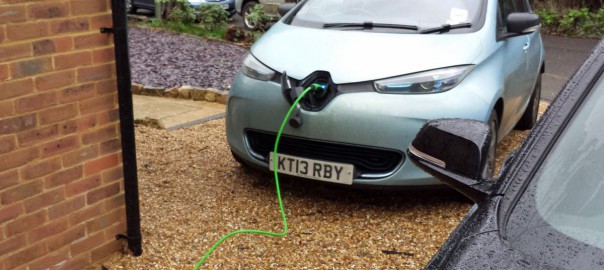
Renault ZOE at our test drive event in Milton Keynes (Image: J. Tisdall)

Renault Zoe R110 2018 UK review

New motor boosts electric car’s performance; it’s no every-occasion car, but it has loads of appeal as an urban runabout

What is it?

Renault’s European battery car sales champion, the Zoe, has just been tweaked and updated again.

This time, you rather suspect, the refresh represents Renault in a counter-punching mood, doing what it can to maintain the car’s market-leading position in the face of, among other rivals, a brand-new Nissan Leaf. Still, if it delivers a better car to anyone who takes the electric plunge this year, those new owners won’t be complaining.

Renault ZOE at our test drive event in Milton Keynes (Image: J. Tisdall)

This isn’t the most wide-ranging of mid-life overhauls. The edited highlights consist of a more powerful electric motor, an update for the touchscreen infotainment system, a new paint colour (Renault calls it Aconite Purple, and it’s the shade of our test car) and a few new pieces of interior trim.

So, having had 91bhp and 162lb ft to offer last year, the Zoe now has 107bhp and 166lb ft with which to tempt your toe, although that still leaves it shy of the outputs of the BMW i3 and Leaf by some margin. Handily, the Zoe’s motor upgrade doesn’t affect its energy efficiency or battery autonomy, with range remaining either 250 or 186 miles, depending on which of the EU’s lab test driving cycles you’re testing it on.

Renault proudly claims this is the market’s longest-range mainstream electric car, and with some credibility, at least as far as UK consumers are concerned. It’s certainly true that none of the Zoe’s current crop of electric rivals (the Leaf, i3, Volkswagen e-Golf and Hyundai Ioniq Electric) has been rated to go quite as far on a single charge.

Read more: Autocar

Ubitricity charging post demonstrator at CENEX show (Image: T. Larkum)

Siemens to deploy London’s street light electric vehicle chargers with ubitricity

Siemens has partnered with electric vehicle charging solutions provider ubitricity to transform hundreds of London’s street lamps into new on street chargers.

The company was one of eight to win a place on a city-wide framework contract hosted by Transport for London (TfL), the Greater London Authority and London Councils.

It will work with the Berlin-based company to deliver ‘Smart City’ EV charging points, which use mobile electricity metering technology to allow existing street lights to share electricity supply with an EV charge point.

Ubitricity charging post demonstrator at CENEX show (Image: T. Larkum)

Drivers connect to it using a cable fitted with a meter that identifies the charging point and turns on the power. The data is sent digitally to a mobile power supplier who would bill for the electricity consumed, while those using a standard cable would be authorised through a mobile site.

Both the boroughs of Wandsworth and Kensington and Chelsea have committed used lamp post charging in their EV infrastructure schemes to overcome the lack of on street parking facilities in the capital.

Chris Beadsworth, director at Siemens Energy Management, said: “By using existing infrastructure, it will provide a quality, convenient and simple charging point to help accelerate the increase in privately owned electric vehicles. Our aim is that charging your car should be as simple as charging your phone.

“Working together with our partners we make a cleaner more modern energy network a reality whilst delivering benefits for UK consumers without compromise.”

Read more: Current News

Union Of Concerned Scientists’ President: Electric Cars Rock

But he also identifies why electric vehicle ownership remains out of reach for many.

Earlier this year Ken Kimmell, President of the Union of Concerned Scientists, purchased a Chevrolet Bolt EV. After about 6 months, he has found electric vehicle ownership to be everything he had hoped. The car is fun to drive, has a low cost of ownership, and far more efficient than a gasoline car.

Mr. Kimmell has uncovered what many EV owners have already come to realize. For a home owner with a garage, an EV is more convenient (not less) than a gasoline-powered vehicle.

“I charge the car once or twice a week overnight. Plugging it in takes about five seconds, and the charging takes between 4-8 hours. When I wake up, the battery is full. No more trips to the gas station. (…) Because of the long range, I rarely need to use public charging stations while on the road. I’ve used them five times since I leased the car, typically to add about fifty miles of range.”

Owning an EV like a Chevy Bolt, Tesla Model 3 or Nissan Leaf is also much more affordable than it appears at first blush. In addition to taking advantage of the $7,500 federal tax credit, $2,500 of his down payment was paid back by the MA rebate program. Similar programs are available in many other states. That is just the upfront savings:

“At the same time, I am saving about $60/month in fueling costs, as electricity cost per mile is less than half of gasoline, even in a state like Massachusetts that has relatively high electricity costs and relatively low gas prices. And not paying for oil changes, air filters, belts, brake pads and many other maintenance expenses for a gas-fired car also saves money.”

Read more: Inside EVs

Figure 4: Charging on Christmas Day (Image: T. Larkum)

E.On revs up new tariff designed for electric vehicle drivers

E.On has launched a 100% renewable electricity tariff designed specifically for electric vehicle drivers, offering a fixed reward equivalent to driving 850 miles for free.

E.On ‘Fix and Drive’ is a two-year fixed price tariff is available to drivers who own or lease a plug-in electric or hybrid vehicle who receive a £30 credit on their electricity account six months after they sign up to the tariff and is earned annually.

Figure 4: Charging on Christmas Day (Image: T. Larkum)
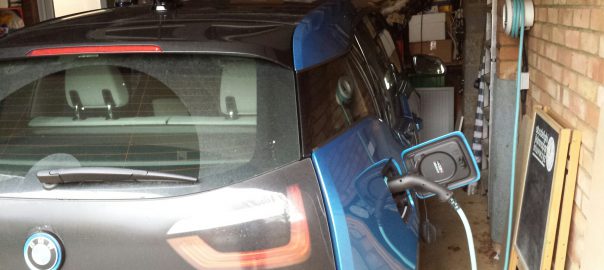
Charging at home (Image: T. Larkum)

Michael Lewis, Chief Executive of E.ON UK, said:

“Sales of electric vehicles are increasing year on year and the UK is now one of Europe’s largest markets for them. Drivers need to be able to charge their cars quickly and conveniently, and for many, that means plugging in at home.

“Our new Fix and Drive tariff has been specifically designed with these customers in mind, who likely have higher electricity bills, to provide competitive pricing, a rebate and clean energy to supply their homes and power their vehicles.”

The tariff comes with 100% matched renewable electricity certified through Renewable Energy Guarantees of Origin (REGO), while E.On will aim to offset the carbon associated with customers’ gas use by funding projects that reduce CO2 emissions.

Read more: Current News

Why Diesel Cars Are Spoiling Your Summer

  • Many antipollution systems deactivate at high temperatures
  • Paris bans older cars after pollution soars in heat wave

Europeans aren’t just sweating through the long, hot summer. City dwellers may be coughing and wheezing more, too.

Diesel vehicles, which still command nearly half the market for new cars, are left with barely any pollution controls when temperatures soar above 35 degrees Celsius (95 Fahrenheit), according to France’s Petroleum and New Energies Research Institute. That means smog-inducing nitrogen oxide emissions that were at the center of the Volkswagen AG scandal spew into the environment unchecked.

“There are higher emissions of nitrogen oxides because the setups don’t work as well when it’s very hot,” said Gaetan Monnier, who heads the unit that led random government probes of cars after the VW scandal. “The atmosphere is also more reactive during a heatwave, making the level of cars’ emissions even more of an issue.”

Carmakers have been under scrutiny since the 2015 scandal that revealed VW had rigged the emissions setup in some 11 million diesel cars globally, the main emitters of nitrogen oxides. While sales have dropped as consumers fret over driving bans, diesels still made up 45 percent of new vehicle sales in Western Europe last year. Excessive emissions of the pollutant linked to premature deaths and respiratory problems have prompted the European Union to sue France, Germany, U.K., Romania and Hungary in May after failing for years to comply.

On-road tests have shown emissions clean-up systems start to reduce their effectiveness in cold temperatures as well as above 30 degrees.

Read more: Bloomberg

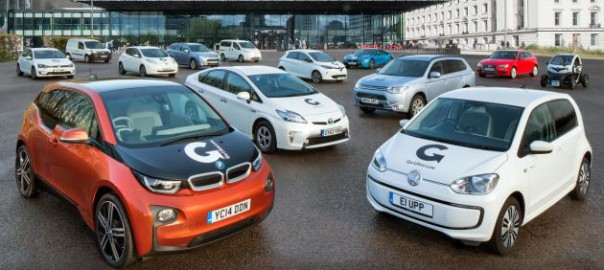
Electric cars charging in Milton Keynes (Image: T. Larkum)

Northern Powergrid to trial vehicle-to-grid charging under range of new initiatives

Northern Powergrid will install electric vehicle (EV) and vehicle-to-grid (V2G) chargers at a number of its own sites as part of a series of new initiatives aimed at growing its understanding of the impact of fleet electrification.

The distribution network operator will begin installation of 16 V2G charging points this month, which will be used to contribute to a trial of the technology when used in fleet operations.

The DNO will also invest in the installation of new EV charging points at 11 of its sites. In addition to the V2G chargers, these will support Northern Powergrid’s efforts to electrify its fleet beginning with its pool cars.

Electric cars charging in Milton Keynes (Image: T. Larkum)

“We have to get hands on and lead by example. We are starting small to begin with, bringing on five Nissan Leaf EVs that will be available for our people to use,” said Jim Cardwell, head of policy development at Northern Powergrid.

“Although colleagues frequently have to take our vehicles to places where there is no electricity, there is huge internal appetite to decarbonise as much of our fleet as possible, as soon as is practical.”

Read more: Current News

Electric cars: What’s happened to the ads?

Something has gone missing in the UK’s drive towards zero-carbon motoring: advertising.

The DNA of the UK’s car fleet is changing. Whereas every car once had a tailpipe, that is no longer the case. Total UK car sales have declined recently, and a more detailed look at the figures reveals some interesting trends.

On the graph electric vehicles (which includes all hybrids) are represented by the yellow curve, while petrol and diesel sales are represented by the red and blue curves respectively. You can clearly see just how dramatic the recent plunge in new diesel sales has been. And it’s equally clear that electrified vehicle (EV) sales are beginning to increase quite dramatically, albeit from a low base.

This rise in EV sales is impressive on a number of levels. Clearly there is a pre-existing level of demand for electrified vehicles; it turns out that some people want environmentally friendly cars that have dirt-cheap running costs and are often quite cool to boot.

However, demand can be induced – in particular, by companies’ marketing efforts. Spend more on advertising a particular product or set of products, and more will be demanded; this is after all what advertising is for.

This leads to interesting questions: are car manufacturers themselves trying to increase demand – and if they’re not, why not?

Read more: ECIU

Ultra-low emission registrations up 386% on first quarter of 2014 (Image: OLEV)

185,000 Plug-In Cars Were Sold In Europe In First Half Of 2018

June was the second-best month all time for plug-in electric car sales in Europe with more than 38,000 units put on the road.

With year-over-year growth of 37% in June, market share jumped to 2.4% (2.2% for the first half of the year).

The total sales in the first six months nearly hit 185,000 (43% more than a year ago) and it’s expected that more than 400,000 is possible in all of 2018.

Ultra-low emission registrations up 386% on first quarter of 2014 (Image: OLEV)
Ultra-low emission registrations up (Image: OLEV)

The top five best selling models in Europe – for the year are:

  • Nissan LEAF – 3,377 and 17,944 YTD
  • Renault ZOE – 3,425 and 17,016 YTD
  • BMW i3 – 2,002 and 11,301 YTD
  • Volkswagen e-Golf – 1,447 and 9,796 YTD
  • Mitsubishi Outlander PHEV – 2,174 and 9,662 YTD

Renault ZOE this time managed to beat Nissan LEAF and close the gap a little bit in the race for the best selling model.

As usual, the last month of the quarter brings some decent numbers from Tesla – 2,105 Model S and 1,829 Model X in June and 7,699 and 5,600, respectively for the year-to-date.

Read more: Inside EVs

HMRC to publish advisory fuel rate for 100% electric cars

HMRC will introduce an advisory fuel rate (AFR) for pure electric cars from September 1 at 4 pence per mile (ppl).

It is a partial victory for fleet representative body ACFO, which has been campaigning for AFRs for both pure electric cars and plug-in hybrids.

The new rate, called the Advisory Electricity Rate (AER), has been set at 4p per mile and will be published alongside AFRs for petrol, diesel and LPG (liquefied petroleum gas) cars based on engine size.

Plug-in hybrid and hybrid cars will continue to be treated as either petrol or diesel models for mileage reimbursement purposes.

AFRs apply where employers reimburse employees for business travel in their company cars, or require employees to repay the cost of fuel used for private travel. They are deemed to be tax and National Insurance-free. AFRs are reviewed quarterly and similarly, the new AER will be kept under review.

In notifying ACFO of the introduction of the new rate, HMRC said:

“HMRC will accept that if employers pay up to the Advisory Electricity Rate of 4p per mile when reimbursing their employees for business travel in a fully electric company car there is no profit – there will be no taxable profit and no Class 1 National Insurance to pay.

“On a similar basis to Advisory Fuel Rates, employers can use their own rate which better reflects their circumstances if, for example, their cars are more efficient, or if the cost of business travel is higher than the guideline rate.

“However, if they pay a rate that is higher than the Advisory Fuel Rate and can’t demonstrate the electricity cost per mile is higher, they will have to treat any excess as taxable profit and as earnings for Class 1 National Insurance purposes.”

For many years, ACFO has been calling on HMRC to publish official tax-free company car AFRs for plug-in vehicles. It has been ACFO’s belief that the absence of defined mileage reimbursement rates was a handicap to some organisations including plug-in vehicles on their choice lists.

Read more: Fleet News