The concerns of the average electric-car buyer are starting to look more like those of any other car buyer. Their biggest worry? How much the cars will cost.
Range anxiety, how far an electric vehicle (EV) can travel before needing to be recharged, has topped the list of prospective EV buyers’ concerns for years. And it remains one, especially for those unfamiliar with the technology. But in August, a survey by Autolist, an online car marketplace, ranked range and price in a dead heat (about 40%) as the most important factors concerning buyers. Recharging time and the proximity of charging stations followed as top considerations.
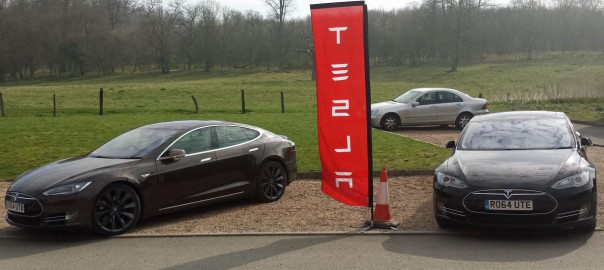
Range anxiety has faded into the rearview mirror for luxury car owners as well. According to another recent Autolist poll, among those deciding between Tesla’s Model S and Porsche’s electric Taycan, range wasn’t even a factor. Instead, brand reputation, performance, charging networks, and styling topped buyers’ list.
Part of the reason for reduced fears is that EVs are shipping with more potent battery packs capable of covering 300 miles or more per charge. The $79,000 Tesla Model S (before tax incentives) promises a 370-mile range, while the 2020 Porsche Taycan ($130,000 estimated) is expected have a range of least 300 miles per charge.
Oil consumption continues to rise in the U.S. and around the world, but as electric vehicles keep growing as a percentage of vehicle sales, there will ultimately be a tipping point on multiple fronts.
The first will be manufacturers investing in more EVs to ultimately overtake internal combustion engines, which is happening today from Tesla (NASDAQ: TSLA) to General Motors (NYSE: GM) to Porsche.
The bigger tipping point will be a peak in oil consumption that the world will (likely) never look back from. We don’t know when peak oil will happen, but given the cost reduction of EVs and the focus on reducing emissions around the world, it’s only a matter of time.
EV sales are still booming
There’s no question that Tesla has led the EV revolution the last decade, and it’s helping drive the industry’s growth. According to the website Inside EVs, Tesla has already sold 99,525 Model 3, S, and X vehicles in the U.S. through July 2019, and total U.S. EV sales across all manufacturers were 176,174 thru seven months of 2018, a 14.5% increase from 153,854 a year ago.
Global electric vehicle sales were 1,105,405 in the first six months of this year, a 46.9% jump from 752,690 a year ago. It’s this growth on a global level that’s going to lead to that tipping point.
No matter where you look, EV sales are going up. And in 2020 and 2021, there will be even more options coming to the market from Porsche, Ford, Kia, Mini, and many more.
Contrary to modern revisionist history, electric cars are not a recent innovation.
The original idea of vehicles powered by an electric motor dates back to the turn of the century – that is, when the 19th century turned into the 20th century.
Between then and now, the interest and innovation in electric vehicles (EVs) have ebbed and flowed. Practicality and curiosity propelled early development. Real-world events such as the Arab Oil Embargo of the 1970s sparked renewed interest in technologies that did not rely so heavily on foreign oil.
Electric Car Line-up (Image: Go Ultra Low)
Today, the boom is fueled by those same considerations, with one critical indigent drawing interest from everyday consumers – affordability.
With new battery technologies improving reliability, practicality, and scalability, electric vehicles are a growth industry.
Growth Spurt
According to the U.S. Department of Energy, 50,000 electric plug-in vehicles (PEVs) were purchased in 2012. In 2018, that number jumped to 400,000.
Globally, the EV market closed 2018 with 1.5 million units sold. By 2025, forecasts expect sales to exceed 10.5 million units.
It’s clear that after a history marked with fits and starts, EVs are no longer just a fad. As the chorus of fans get louder, and sales worldwide continue to increase, it’s clear that EVs are here to stay.
But what’s driving this rebirth of electric cars? What are the vehicles like and how do they compare with conventional, gas-powered automobiles. Which companies are ahead of the EV curve with models currently available to purchase?
It’s Just a Car…Or Is It
Inside and out, EVs, from an atheistic standpoint, offer little distinction from their internal combustion engine (ICE) powered siblings. They’re still cars, and that distinction includes the fundamental traits that have come to identify our primary mode of transportation.
The differences though become starkly apparent when you power up an EV and take it for a drive. The contrast proves even sharper once you account for the change in lifestyle and driving habits that inevitably come when switching to an EV.
Let’s examine three central attributes that make electric cars unique within the automobile segment.
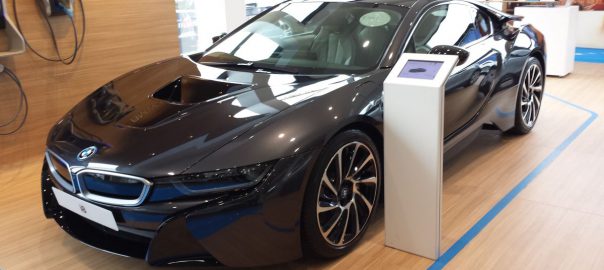
The BMW i8 will be discontinued in April 2020 and to mark the occasion BMW has built a special edition, limited to just 200 units globally
BMW has announced it will cease production of the i8 next year. To mark the occasion, the German brand has built a special edition version of the plug-in hybrid sports car, called the i8 Ultimate Sophisto Edition. Limited to just 200 units globally, the run-out special edition will be available from November 2019 in both Coupe and Roadster body styles.
BMW i8 in Sophisto Grey (Image: T. Larkum)
The BMW i8 Ultimate Sophisto Edition features a set of lightweight, copper-coloured 20-inch alloy wheels, gloss black brake calipers, transparent rear light lenses and fresh gloss black trim for the tailgate. Its bodywork is finished in exclusive “Sophisto Grey Brilliant Effect” paint, which is accented by a range of copper highlights.
Inside, the limited edition BMW i8 features a pair of leather sports seats, an Anthracite- coloured headliner, a head-up display and a Harmon Kardon stereo system. It also comes with a pair of unique treadplates, stamped with the ‘Ultimate Sophisto Edition’ logo, as well as a numbered plaque for the centre console.
The limited edition BMW i8 features the same plug-in hybrid powertrain as the standard car, which comprises a turbocharged 1.5-litre three-cylinder petrol engine and an electric motor, producing a combined output of 369bhp and 570Nm of torque. Its performance is identical, with a 0–62mph time of 4.4 seconds and a top speed of 155mph.
The future is not looking bright for oil, according to a new report that claims the commodity would have to be priced at $10-$20 a barrel to remain competitive as a transport fuel.
The new research, from BNP Paribas, says that the economics of renewable energy make it impossible for oil to compete at current prices. The author of the report, global head of sustainability Mark Lewis, says that “renewable electricity has a short-run marginal cost of zero, is cleaner environmentally, much easier to transport and could readily replace up to 40% of global oil demand”.
The oil industry faces a disruption on the same scale as that which has hit the European utilities sector over the last decade, he adds.
The sun sets on drilling (Image: Pexels)
The report, Wells, Wires, And Wheels… Eroci And The Tough Road Ahead For Oil, introduces the concept of the Energy Return on Capital Invested (EROCI), focusing on the energy return on a $100bn outlay on oil and renewables where the energy is being used to power cars and other light-duty vehicles (LDVs).
“For a given capital outlay on oil and renewables, how much useful energy at the wheel do we get? Our analysis indicates that for the same capital outlay today, new wind and solar-energy projects in tandem with battery electric vehicles will produce six to seven times more useful energy at the wheels than will oil at $60 per barrel for gasoline powered light-duty vehicles, and three to four times more than will oil at $60 per barrel for light-duty vehicles running on diesel,” says Lewis.
As automakers race to electrify their model lineups, the competition to stand out has never been greater.
Luckily, thanks to electrification, the opportunities to develop new designs are abundant. But if automakers want to succeed, designers need to seize these new opportunities and start developing the cars of the future.
Car companies have followed the same evolutionary design path for decades. Now, with electric cars, everything is changing quickly.
Without an internal combustion engine and a fuel tank, there are new design possibilities to explore. In most passenger vehicles, there is a large engine under the front hood and a fuel tank that takes up space somewhere under the vehicle. While there is, of course, a need for battery and electric motor placement in EVs, designers are not locked into this traditional framework and are able to package the batteries and motors differently.
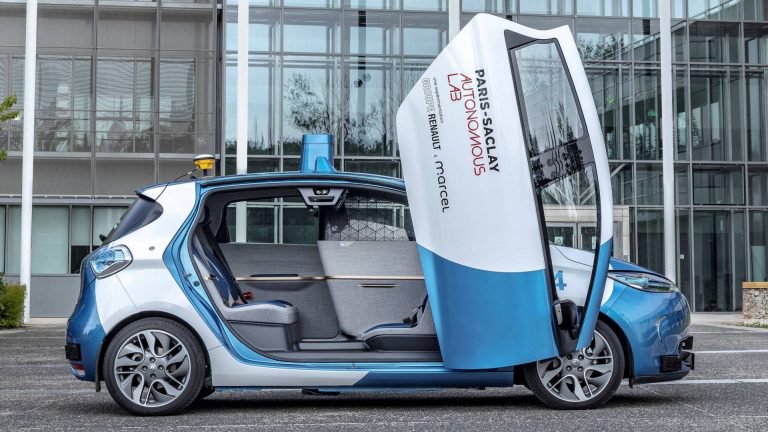
ZOE Cab autonomous vehicle (Image: Renault)
When approaching design for this new era, automakers must introduce revolutionary cars, not evolutionary cars.
Automakers have a history of trying to make their electric cars “look like an EV.” For some reason, many thought an electric car needed to look “different” — and the result was often ugly. Historically, both the media and the general public have expressed distaste for electric car designs that stood out because they were electric, as opposed to just being a well-designed vehicle.
Recently, other brands have come along and proven that what people wanted in an electric car was good design without this niche “electric car” flare. There are several premium car brands right now achieving success with classic car designs for their electric models.
But this new look will be more aerodynamic and futuristic. These cars will need less front air intake and won’t need a grill on the front at all, since there is less need for airflow to cool the engine, and the designs will be more efficient in a quest to preserve battery life. There will be fewer big SUVs and more crossovers, sedans and fastbacks. But amongst all of this exterior adaptation, the interior of the car must also evolve.
In the interior, the screen and voice control become the main concerns, due to strong demand for connectivity. Gone are so many of the gauges needed to monitor a gasoline engine. The idea of a driver’s interior as a pilot’s cockpit with hundreds of switches and buttons is gone. More important to the consumer is the screen and the technology it offers. Brand expression will primarily come through user experience and digital design and less through the interior materials.
Kia introduced the plug-in hybrid versions of the Ceed Sportswagon and the new XCeed. The PHEV versions of the station wagon and the crossover model, which will be available from the beginning of 2020, are based on Hyundai-Kia’s already known tech.
The key data with a 1.6-litre petrol engine, a 44.5 kW electric motor and an 8.9 kWh battery make it clear that the drive train of the Kia Niro PHEV (or Hyundai Ioniq PHEV) is used in both compact PHEV models. The biggest difference: Since the two Ceed derivatives have a lower standard consumption, provisional measurements show a purely electrical range of up to 60 kilometres.
Kia Ceed Sportwagon PHEV and XCeed PHEV (Image: Kia)
The combined fuel consumption is between 1.3 and 1.4 litres, with Kia predicting electricity consumption of 10.4-12.2 kWh/100 km (Ceed Sportwagon) and 10.5-12.2 kWh/100 km (XCeed) respectively. These are, however, values that were determined according to the WLTP but calculated back to the NEDC. Kia did not communicate the pure WLTP values. The same applies to the range.
The hybrid drive with its system output of 104 kW and a maximum torque of 265 Newton metres accelerates the Kombi Ceed Sportswagon to 100 km/h in 10.8 seconds and the XCeed to 11.0 seconds. The electric motor continues to sit between the petrol engine and the six-speed dual-clutch gearbox.
Restyled exterior with a new dynamic look and new colours
Up to 245 miles WLTP – Best driving range in its segment from new 52 kWh battery
Completely redesigned and improved interior – available with a 9.3-inch portrait style multimedia screen
Customisable 10-inch TFT instrument cluster as standard
New, more powerful R135 100 kW motor alongside R110 80 kW motor
Faster charging with option of 50 kWh DC capability, able to recover 90 miles of range per 30 mins of charging
Standard 22 kWh AC charging capability through Chameleon Charger™
100 per cent recycled seat trim on Iconic version
Full LED headlamps standard across the range
Apple CarPlay and Android Auto as standard
Wireless smartphone charging as standard on Iconic and GT Line
Real time charging information using EASY CONNECT App
New regenerative braking B Mode that allows single pedal driving
Prices start from £18,670* OTR including the PiCG – most affordable in its segment
Available as Full Purchase from £25,670 OTR including the PiCG
Free fully-installed (7kWh) fast charging home wallbox for best user experience
Europe’s best-selling electric car, ZOE has sold over 10,000 in the UK since launch
More than 150,000 ZOEs sold across Europe – ZOE accounts for nearly one in five electric cars sold in Europe.
Available to order from mid-September
Customer deliveries from January 2020
The new all-electric Renault ZOE will be available to order from mid-September, with prices starting at just £18,670* and customer deliveries from January 2020. The new generation ZOE features increased power and range, a host of technological improvements, an overhauled interior and distinctive new exterior looks. The launch of the third generation of Renault’s flagship vehicle in its 100% electric range is a major milestone in Renault’s commitment to large scale electric vehicle development. Seven years after the release of its best-selling predecessors, New ZOE has evolved in quality and technology to offer superior features while remaining affordable.
2020 Renault Zoe (Image: Renault)
Up to 245 miles of range – best in the segment Under the skin the New ZOE gets a powerful 52 kWh Z.E. 50 battery that delivers a range of up to 245 miles (WLTP) – the best driving range in its segment and an increase of 32 per cent over the previous 41 kWh pack. Despite the increase in range and capacity, the battery has not increased in size physically, meaning no loss of interior space.
Simplified and faster charging ZOE now also offers fast direct current (DC) charging, in addition to the alternating current charging (AC) options already available at home or on the street. Charging the battery is also made more straightforward by the Renault EASY CONNECT smart services, which allow quick and easy location of charging points.
Located behind the Renault diamond logo charging hatch, the new Combo (CCS) plug is slightly larger than the previous plug and consists of both a European standard socket and a two-pin connector for DC charging. The central location of the socket makes charging even easier, especially on public charging stations which have their own cable.
Thanks to this Combo plug, the New ZOE is able to charge quickly with a direct current (DC) up to 50 kW, simply by inserting the charging cable attached to the terminal into the two-pin connector that’s sited below the type-2 socket. Replenishing the battery in this way can add around 90 miles of range in as little as half an hour.
The standard type-2 cable provided with the car and the Chameleon Charger™ are used for everyday AC charging use, such as at home with a wallbox, at work, in a car park or on public roads using anything up to a 22kW supply. Plugging the ZOE into a public 22kW roadside charger can deliver a useful 78 miles of range in only one hour.
Free home wallbox charger When using a 7kW wallbox, supplied as standard to customers to charge easily at home, the New ZOE can charge from 0 to 100 per cent in nine hours and 25 minutes. This ensures that a complete recharge can comfortably be achieved overnight. Around 190 miles of range can be achieved in just eight hours. Users charging their vehicle at home can also benefit from the programming options, adjusting their recharge to correspond with tariff fluctuations from their electricity supplier.
The choice of two powertrains With the addition of a powerful new R135 100 kW motor option, as well as an entry-level R110 80 kW motor and the inclusion of a new B mode urban driving setting, the New ZOE is even more at home on both the open road and in city. The addition of two motors in line with Renault’s philosophy of sustainable mobility for all, gives customers greater choice and the option to choose a more affordable EV powertrain or combine with increased power.
The new R135 100 kW motor on Iconic and GT Line models delivers the equivalent of 135 PS and improved torque for faster acceleration and greater responsiveness. Engineers have used the increased-capacity battery of New ZOE (Z.E.50) to get the most out of the Renault developed motor, which packs a healthy 245 Nm from zero rpm and drives through a single speed gearbox, helping the ZOE sprint from 0 to 62mph in less than 10 seconds and onto a top speed of 87mph. Highlighting its real world pace, the 100 kW model can accelerate from 50 to 75 mph in just 7.1 seconds, which is 2.2 seconds quicker than the 80 kW 110 PS R110 engine, which is carried over unchanged.
New B mode driving function Both motors now come equipped with the new “B mode” driving function, which intensifies the regenerative braking effect to essentially allow the driver one pedal operation of the car. When B mode is activated, the car decelerates significantly faster as soon as the driver releases the accelerator pedal. B mode makes driving easier, especially in the city or in slow moving traffic.
Its integration is accompanied by a new braking system that offers improved feel through the pedal. As for D mode, it remains particularly useful when the car is moving at a constant speed, on the open road or motorway for example.
The driver can switch on demand between B and D modes with a simple push on the new e-shifter. This replaces the old car’s mechanical lever with an electronic switch. Simple pressure on the knob is enough to send instructions to the motor, while selected driving mode is clearly displayed on the centre console and on the 10-inch driver’s display which is standard across the range.
Exterior At the front of the New ZOE the redesigned contours of the sculpted bonnet converge into a large aligned diamond. The new shape of the bumper incorporates chrome inserts in the grill and around the fog lights, enhancing the lower section.
Set in the centre of the chrome trimmed grille is the large Renault diamond logo, which now features an eye-catching “holographic” design that gives a 3D effect to the flat surface. The badge also doubles as a charging port, which flips open to reveal both a Type 2 AC plug and the connector for the new optional 50 kW DC (CCS) fast charger.
All ZOE models now get full LED headlamps as standard, which feature chrome inserts and are framed by the trademark C-shaped daytime running lights. Not only do the new lamps give the ZOE a bolder look, they significantly improve vision, with 75 per cent more light than equivalent halogen units.
There’s also a new, wider front bumper design that benefits from side vents designed to improve the flow of air around the front of the car and over the wheels. Also included are new LED fog lights, standard across the range, that contribute to the overall improved lighting system.
At the rear of the ZOE are bolder and bigger new LED lamps that help to create a wider look and now include dynamic indicators that sweep from the centre outwards – the repeater indicator signals integrated in the door mirrors also use LED technology.
Other external changes include a completely revamped range of wheel designs, with three different diameters available – 15-, 16- and 17-inches. Regardless of wheel size, all ZOE models get four-wheel disc braking.
Completing the exterior changes are the addition of three new metallic paint finishes – Celadon Blue, Flame Red and Quartz White with a total of nine colours to choose from.
Completely redesigned interior The interior of the New ZOE has been completely overhauled with the designers paying attention to the interior quality, finish, comfort and ergonomics. Soft touch plastics and new sustainable trim finishes help boost premium appeal and comfort.
New 10-inch TFT instrument cluster – standard across the range Ahead of the driver is the new 10-inch TFT instrument cluster, which is standard across the range. This display contains the main driving information including an eco-meter that encourages eco-friendly driving habits. The driver can also customise the lighting and the layout of the different information on-screen and on versions equipped with sat-nav the instrument cluster also relays turn-by-turn instructions for safer, less distracting driving.
The dashboard has been completely redesigned to significantly improve quality. New additions include soft fabric inserts that match those used in the seats, creating a warm and comfortable atmosphere, while LED interior lighting is standard across the range.
100 per cent recycled seat upholstery – a first in the sector On Iconic versions there is 100 per cent recycled seat upholstery. Using the traditional process of carded yarn manufacturing, which creates a quality material “without melting” or chemical transformation, this fabric is made from safety belt scrap and plastic waste (PET) materials. This innovation is a first for the automotive industry, its sourcing and short-loop manufacture helping to reduce CO² emissions by over 60 per cent compared to more traditional materials.
Infotainment The centre of the dashboard houses the Renault EASY LINK 9.3-inch portrait touchscreen multimedia system, standard on GT Line and optional on Iconic, with a 7-inch version on the entry level model. This system controls the main functions of the vehicle and can be enhanced with specific operations, such as the real time availability of charging stations. Smartphone connectivity is taken care of by Apple CarPlay and Android Auto.
Between the driver and passenger is a revised centre console that’s home to a new electronic gear selector, plus the driving mode selector, the chrome switch for which is decorated with the “Z.E.” logo and enables the easy transition between the various driver settings, notably the new B Mode that boosts regenerative braking to encourage single pedal driving.
Standard across the range is a new electronic parking brake, which replaces the traditional handbrake to free twice as much storage in the centre console which now contains the new wireless smartphone charging, standard on Iconic and GT Line models. In the rear, passengers have access to two USB sockets that can be used to charge devices such as mobile phones, tablets and portable games.
Safety and Technology Renault has engineered the New ZOE with a brand-new electrical infrastructure. More modern, it now allows for the integration of all the sensors and automated functions that are essential for the new driver assistance systems (ADAS). They are designed to better inform the driver, simplify driving and enhance safety.
There is a whole suite of safety systems on the ZOE, including the Active Emergency Braking System (AEBS), Lane Departure Warning (LDW), Lane Keeping Assist (LKA), Traffic Sign Recognition (TSR), Blind Spot Monitoring (BSM) and Auto High/Low beam headlamps (AHL).
Further driving assistance features include the hands-free Easy Park Assist (EPA), front and rear parking sensors, Hill-start Assist and an automatic parking brake.
The ZOE’s infotainment system features the Renault EASY CONNECT set-up, which combines with the new Renault EASY LINK multimedia system and the MY Renault app to offer drivers a range of applications and services designed to accompany them throughout their daily activities.
On a smartphone, the MY Renault application includes a variety of useful services to manage a car remotely, such as a remote check on the battery range and charging status. You can also plan charging during off-peak hours, start or schedule heating or air conditioning to reach the ideal temperature of 21°C for the moment of departure without affecting the range.
Another handy feature is the ability to pre-plan your journey with MY Renault. After entering your destination, the app plots your route, including the most suitable charging points and, accounting for the recharge stops, the overall travel time.
On board, Renault EASY LINK’s connected navigation beams the route to the multimedia screen and includes the location and availability of the nearest charging stations. The map is also enriched with real-time traffic information provided by TomTom, plus new features such as Google Search. The EASY LINK navigation map database is regularly updated, automatically and transparently for the user, via the “Map Auto-Update” function.
The navigation and map can be displayed on the 10-inch instrument cluster ahead of the driver, which also houses the trip computer that provides information on regenerative braking performance and driving efficiency, helping to make the most of the battery’s range. The user can also choose the layout of the display, so that it shows their preferred information.
ZOE: Available to purchase in two ways New ZOE is still available to buy both as full purchase, with no mileage limit on the battery and an eight year/100,000-mile guarantee, or as a battery lease option, offering a more affordable purchase route with peace of mind and encouraging sustainable mobility for all.
UK specification and pricing The New ZOE is available in three trim levels: Play, Iconic and GT Line.
New ZOE Play – from £18,670 OTR* (including PiCG)
R110 80 kW motor
Full LED headlamps
Air-conditioning
7-inch EASY LINK multimedia screen with Apple CarPlay and Android Auto
Full 10-inch TFT instrument cluster
DAB radio
Hands Free Key Card
Cruise control and speed limiter
Electric front windows
Automatic wipers and headlamps
15-inch wheels
Free fully-installed (7kWh) fast charging home wallbox (for retail customers)
New ZOE Iconic – from £20,170 OTR* (including PiCG) Specification in addition to Play:
7-inch EASY LINK multimedia screen with satellite navigation
Climate Control
Inductive smart phone charging
Electric rear windows
100 per cent recycled seat upholstery
Advanced Driver Assistance Systems (ADAS) with lane departure warning, lane keep assist and traffic sign recognition
Rear parking sensors
16-inch alloy wheels
New ZOE GT Line – from £21,620 OTR* (including PiCG) Specification in addition to Iconic:
R135 100 kW motor
3-inch EASY LINK screen
Front parking sensors with rear parking camera
GT Line synthetic leather and recycled cloth upholstery
Blind spot warning
16-inch diamond cut alloy wheels
*= plus monthly battery lease
PERFORMANCE INFORMATION
New ZOE version
Power (kW/hp)
Torque
(Nm)
0-62mph (sec)
Top speed (mph)
Play R110 Z.E.50
80/107
225
11.4
84
Iconic R110 Z.E.50
80/107
225
11.4
84
Iconic R135 Z.E.50
100/134
245
9.5
87
GT Line R135 Z.E.50
100/134
245
9.5
87
TECHINCAL INFORMATION
New ZOE version
Battery Capacity
Charge Time
(0-80%, 50kW DC chargepoint)
Charge Time
(0-100%, 22kW chargepoint)
Charge Time
(0-100%, 7kW at home wallbox)
Range
(miles WLTP)
Play R110 Z.E.50
52kWh
n/a
3h00
9h25
245
Iconic R110 Z.E.50
52kWh
1h10
3h00
9h25
TBC
Iconic R135 Z.E.50
52kWh
1h10
3h00
9h25
TBC
GT Line R135 Z.E.50
52kWh
1h10
3h00
9h25
TBC
OWNERSHIP INFORMATION & PRICING
New ZOE version
BIK
(2019-2020)
BIK
(2020-2021)
VED (band)
Ins. group
Congestion Charge
Battery Lease Price OTR
(after PiCG)*
Full Purchase Price OTR
(after PiCG)
Play R110 Z.E.50
16%
0%
A
TBC
£0
£18,670
£25,670
Iconic R110 Z.E.50
16%
0%
A
TBC
£0
£20,170
£27,170
IconicR135 Z.E.50
16%
0%
A
TBC
£0
£20,620
£27,620
GT LineR135 Z.E.50
16%
0%
A
TBC
£0
£21,620
£28,620
*= plus monthly battery lease
KEY OPTIONS
Option
Availability
Price
50 kW DC (CCS) rapid charging
Iconic and GT Line
£750
17-inch diamond cut alloy wheels
GT Line
£310
Winter Pack (heated seats & steering wheel)
Iconic and GT Line
£500
Technology Pack (front & rear sensors with rear view reverse camera & 9.3″ Easy Link screen
Up to one million battery electric and plug-in-hybrid vehicles (EVs) are expected to be sold next year in the EU, consolidating the bloc’s position as the world’s second largest electric car market after China.
In 2020, EV sales will equate to around five per cent of total car sales, and around ten per cent by 2021, analysis released today by campaign group Transport and Environment (T&E) has found. That’s up from only around two per cent today.
T&E cites a 2009 law introducing CO2 targets for new cars as the main driver of the sales boom. Car makers can reach the emissions target of 95 g/km by improving the CO2 efficiency of combustion engines; stopping sales of the highest-emitting cars; pooling efforts with other manufacturers of EVs; or boosting sales of EVs.
Most brands have chosen to increase sales of EVs as their strategy for complying with the law, and, after years of limited efforts, are finally preparing to bring to market a large numbers of more fuel efficient and affordable electric cars, T&E says.
Toyota is best placed to comply with the law thanks to its early investment in hybrid technology, which has resulted in non-rechargeable hybrids reaching 56 per cent of its EU sales.
An alliance between Renault and Nissan is the next closest to compliance, in large part due to an early focus on sales of EVs such as the Nissan Leaf and the Renault Zoé, T&E found.
Mark Lewis is global head of sustainability research at BNP Paribas Asset Management.
The number of electric cars may be increasing, but there are challenges for charging infrastructure and energy storage.
Oil prices will need to fall to between $10 and $20 per barrel if it is to remain competitive in the mobility sector, according to a recent report from BNP Paribas Asset Management.
The report’s author, Mark Lewis, told CNBC’s Squawk Box Europe Friday that such a view reflected how the economics of renewables were changing “very dramatically” and the way in which electric vehicles were becoming more competitive.
The sun sets on drilling (Image: Pexels)
“We have to be very clear here,” Lewis, who is global head of sustainability research at BNP Paribas Asset Management, added.
“What we’re saying is if you’re comparing investing money in renewable energy in tandem with electric vehicles, you can get six to seven times the energy yield at the wheels – useful energy, mobility – for the same capital outlay as you can spending on oil at the current market price of $60 a barrel, and then refining it into gasoline and using it in an internal combustion engine, which loses 80% of the energy as heat.”