Monthly Archives: May 2022

Volkswagen ID 4 (Image: Volkswagen.co.uk)

Volkswagen says its electric cars have ‘sold out’ for 2022 as demand for EVs in Europe doubles

German carmaker Volkswagen has “sold out” of battery-electric vehicles in the United States and Europe, meaning new customers will have to wait until 2023 to get one.

VW Group CEO Herbert Diess told the Financial Times that the company’s brands – which include Volkswagen, Porsche, Škoda and Audi – had a backlog of 300,000 orders for EVs in western Europe alone.

“We have very high order books and… order intake on electric vehicles,” Diess told the FT.

Volkswagen ID 4 (Image: Volkswagen.co.uk)

“We are basically sold out on electric vehicles in Europe and in the United States. And in China, it’s really picking up,” he added.

Volkswagen delivered 99,000 EVs worldwide in the first quarter of 2022, according to a report in the Financial Times.

Top rival Tesla, the world’s biggest electric car maker, delivered over three times that number in the same period, at 310,048.
Read more: euronews

It’s Time to Go Green!

If you would like to know more about Solar Panels and the PowerBanx range of home battery systems, and get a free instant quote, please complete our online form:

SMMT figures show battery electric vehicles bucking the trend of declining new car sales

Battery electric vehicle (BEV) sales have continued to rise year-on-year despite overall declines in the new car market according to the Society of Motor Manufacturers and Traders (SMMT).

The SMMT figures show that during April 2022, 12,899 BEVs were sold, an increase of 40.9% on the same month last year. New car sales overall, however, fell 15.8%.

BEV sales during April 2022 made up 10.8% of the market, up from 6.5% last year.

It follows March being the best ever month for sales of BEVs, with more sold in the month than in the entirety of 2019. This is of particular note as overall new car sales in the UK fell by -14.3%, making it the weakest March since 1998.

The SMMT April figures can be compared to figures from New AutoMotive, released earlier this week, which put the market share of BEVs at a very similar 10.77%. However, New AutoMotive’s figures show there were 11,685 BEVs sold during the month.

SMMT’s figures, meanwhile, show that to date this year, there have been 77,064 BEV sales – a 88.3% year-on-year increase. Sales of BEVs to date this year therefore represent a 14.4% market share, compared to a 7.2% market share this time last year.

Read more: Current+

It’s Time to Go Green!

If you would like to know more about Solar Panels and the PowerBanx range of home battery systems, and get a free instant quote, please complete our online form:

VW e-Golf (Image: Volkswagen.co.uk)

Volkswagen already sold out of electric cars for 2022

Volkswagen is “basically sold out” of electric cars for this year in Europe and the USA, according to Group CEO Herbert Diess, as persistent bottlenecks in the supply chain are affecting global production.

In the first quarter, the Wolfsburg-based group handed over 99,100 BEVs to customers worldwide across all brands. In Western Europe alone, the order backlog for the electric vehicle models stands at 300,000 vehicles, Diess now stated in the context of the announcement of the business figures for the first quarter of 2022. Customers who now place orders for electric cars in Europe and the USA would not receive their vehicles before 2023.

VW’s 99,100 BEVs made it the world’s second-largest EV manufacturer in Q1 in terms of volume – but market leader Tesla delivered more than three times as many vehicles to customers, with over 300,000 units.

VW is targeting a total of around 700,000 electric vehicle sales for 2022 as a whole. However, production has been hampered, especially in China, where only 28,800 electric cars were sold in the first quarter due to pandemic-related lockdowns.


Volkswagen ID 4 (Image: Volkswagen.co.uk)

Despite the restrictions in China and the shortfalls in Europe due to a lack of Ukrainian-made wiring harnesses, Diess said demand had remained robust. “We have very high order books and […] order intake on electric vehicles,” Diess added. “That accounts for all of our models from ID.3, ID.4, the Audi models — [all] are extremely well received in the markets, Škoda models are also very well received in Europe.”

Read more: electrive

It’s Time to Go Green!

If you would like to know more about Solar Panels and the PowerBanx range of home battery systems, and get a free instant quote, please complete our online form:
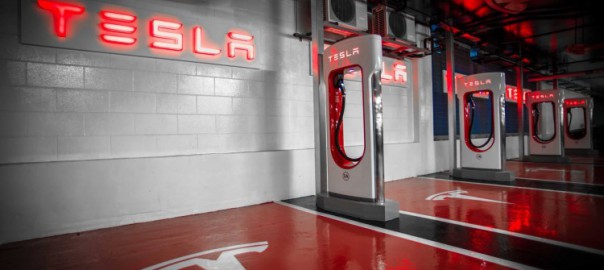
Tesla Supercharging Station at Westfield, London (Image: Tesla)

High Gas Prices Are Pushing Electric Car Sales to a Tipping Point

When Eric Dirksen received his first electric car in December—a new Tesla Model Y—he didn’t know gas prices would spike a few months after. But with fuel costing about $4.20 per gallon on average this week, he’s happy with the decision.

Tesla Model Y (Image: Tesla.com)

“Very fortunate at the timing,” he says. Dirksen spent $62 on charging in the last month, roughly the same amount as 15 gallons of gas. “I wanted to be more intentional with ensuring I was doing what I could to ensure a sustainable future for my daughter. It was the obvious choice,” Dirksen says of his purchase. “The savings are still mind blowing to me.”

With gas prices painfully high for the third straight month, more Americans like Dirksen have been turning to fuel-efficient vehicle alternatives as a way to save money, new data shows.

An unreleased report from CarGurus, an automotive research and shopping firm, shows that 53% of active shoppers say they are considering a more fuel-efficient vehicle in response to high gas prices. The data, shared with TIME, looks at consumer sentiment toward electric vehicles based on an online survey of 2,176 U.S. automobile owners at various points this year. It finds that 40% of Americans now expect to own an electric car in the next five years, up from 32% in February and 30% last year.

 Read more: Time

It’s Time to Go Green!

If you would like to know more about Solar Panels and the PowerBanx range of home battery systems, and get a free instant quote, please complete our online form:

Oil has long been used as a geopolitical weapon. Could electrified transport change that?

Petroleum industry associated with wild price swings and armed conflict

Climate scientists have been clear that if we want to reduce carbon emissions and slow the pace of global warming, one crucial step is moving from a transportation system run on fossil fuels to one powered by electricity.

But it’s possible that doing so might neutralize other toxic aspects of the petroleum industry, such as volatile prices and armed conflict.


The sun sets on drilling (Image: Pexels)

“The ability to electrify transportation and get off combusting fossil fuels, and oil specifically, means we would solve massive geopolitical problems, which have been just a plague for the last 100 years,” said Adam Scott, executive director of Shift, a Toronto-based charity that advocates for sustainable investing.

Oil has always been an impetuous commodity, susceptible to wild price swings owing to a variety of economic and political factors. But between the COVID-19 pandemic and Russia’s invasion of Ukraine, the last couple of years have been especially nervy.

Read more: cbc

It’s Time to Go Green!

If you would like to know more about Solar Panels and the PowerBanx range of home battery systems, and get a free instant quote, please complete our online form:

Electric vehicles: separating the fact from the fiction and scaremongering

The transport industry is currently on the precipice of a revolution. 27% of all emissions in the UK come from transport, meaning it is a race against time to decarbonise. This revolution is most apparent with the fast roll-out of electric passenger vehicles. Data from New AutoMotive shows that over 190,000 electric vehicles (EVs) were sold in the UK last year, making up 11.65% of the new car market, just nudging past the diesel share. 2022 looks set to be another record-breaking year for EV sales, but it could be even higher with the right government policies. Despite the fact that EVs are a hugely popular practical solution to the climate crisis, considerable misinformation is stalling progress.

Common anti-EV myths

The term ‘technology agnostic policy’, for the most part, is the strategy the UK government is implementing in order to reach the Net Zero by 2050 target. They are not choosing a certain technology to get us there but simply pushing the market to reach the target in the most viable way possible. However, a common criticism levelled at the transition to electric is that the market is being artificially pushed by the government and neither the market nor consumers want this change. The reality is that these things are not mutually exclusive and in order for a fairly distributed transition to occur some government intervention is necessary. Over 40 countries have signed up to gasoline and diesel phase-outs and many major OEMs have pledged to transition to an all-electric fleet. And the customers have followed in increasing numbers—an estimated 4.2 million EVs were sold worldwide last year.

Read more: Automotive World

It’s Time to Go Green!

If you would like to know more about Solar Panels and the PowerBanx range of home battery systems, and get a free instant quote, please complete our online form:

Electric car cost advantage over petrol grows amid energy market turmoil

Exclusive: Research finds fuel price surge due to war in Ukraine means it now costs £600 less to drive an electric car for a year

Driving an electric car for a year costs almost £600 less than its petrol equivalent after fuel prices surged more than electricity costs, research by the comparison website Compare the Market has found.

Electric vehicles were already cheaper to run, according to figures shared with the Guardian, but the gap has widened significantly amid turmoil in global energy markets caused by the war in Ukraine.

The average annual cost of driving an electric vehicle is £1,264, Compare the Market found, compared with £1,834 for a petrol car.

Running either kind of vehicle is markedly more expensive than a year ago.

Petrol prices hit record highs in March and have dropped only slightly this month, while the new price cap on domestic energy bills, which came in on 1 April, has brought with it higher electricity costs.

Petrol cars registered the biggest cost increase, up by more than £300 from £1,530, while electric car ownership is £137 more expensive than in 2021. The change means the cost advantage of an electric car has widened from £403 to £570.

The figures take into account average costs for insurance, MOT and fuel, as well as vehicle excise duty of £165 for a petrol car, a tax from which electric cars are exempt.

Read more: TheGuardian

It’s Time to Go Green!

If you would like to know more about Solar Panels and the PowerBanx range of home battery systems, and get a free instant quote, please complete our online form:

Charge Port Door (Image: T. Heale)

EVs dominate 2022 World Car Awards

In a nod to the assured arrival of the battery-electric age, electrified vehicles swept the World Car Awards presented at the New York Auto Show this week.

This year marks the first that EVs dominated the annual awards, which are presented at the show every spring. The awards, which are chosen by 102 jurors from 33 countries (including myself), underscore the industry’s acceleration toward electrification.

The Hyundai Ioniq 5 took top honors, claiming three of the awards’ six categories: World Car of the Year, World Electric Car and World Car Design. Hyundai’s newest EV bested the Ford Mustang Mach-E and Kia EV6 from its sister brand to earn the top title.

The crossover represents the automaker’s next-generation mobility strategy, with efficient powertrain technology, cutting-edge features and futuristic utilitarian design.

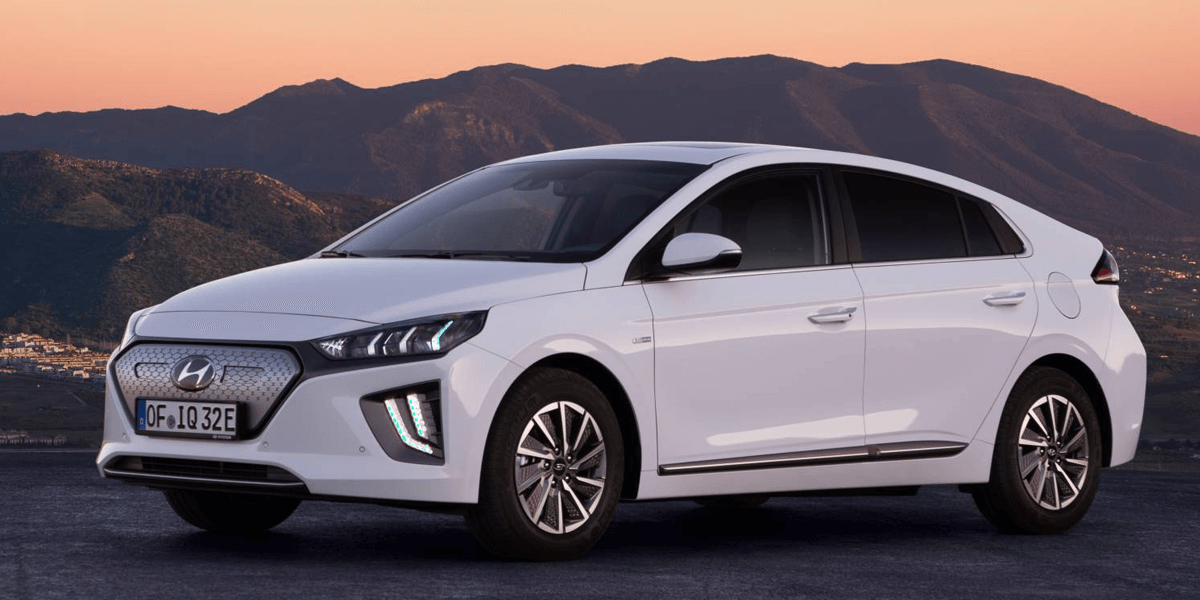
2020 Hyundai IONIQ (Image: Hyundai)

The Mercedes-Benz EQS, the futuristic, electrified version of the automaker’s S-Class executive sedan, was named World Luxury Car for its performance and premium cabin.

As World Performance Car, the Audi e-tron GT couples sporty performance with everyday usability. “Our big goal with the Audi e-tron GT was to reimagine the gran turismo philosophy for the electric age,” says Christiane Zorn, Audi’s head of product marketing.

Read more: TechCrunch

It’s Time to Go Green!

If you would like to know more about Solar Panels and the PowerBanx range of home battery systems, and get a free instant quote, please complete our online form:

VW ID.3 electric car in camouflage wrap (Image: Volkswagen)

The Toyota bZ4X: Solidly middling EV

The bZ4X leaves us wondering who Toyota made this for?

Toyota isn’t the first automotive brand that pops to mind when it comes to battery electric vehicles.

Toyota might be the largest automaker in the world — reportedly selling more than 9.5 million vehicles globally and stealing the crown from Volkswagen Group — but the company has been markedly absent from the battery electric vehicle (BEV) space.

That is, until the 2023 Toyota bZ4X came along.

VW ID.3 electric car in camouflage wrap (Image: Volkswagen)

Toyota has shown off 30 different hybrid, battery-electric and alternative powertrain concepts in everything from a pickup to a sports car and has promised to deliver them all by 2030. The company has even committed a whooping $17.6 billion investment in battery technology and announced that it will build a battery plant in North Carolina.

For now, the 2023 Toyota bZ4X is the lone representative of the company’s EV plans — an awkwardly named crossover that raises some questions about what the company really believes to be the future of battery-electric vehicles and just how committed they are to the entire thing.

TechCrunch, along with other media, had a chance to get a first drive of the Toyota bZ4X. Here’s what we found.

Read more: TechCrunch

It’s Time to Go Green!

If you would like to know more about Solar Panels and the PowerBanx range of home battery systems, and get a free instant quote, please complete our online form:

Charging Hub with eVolt Rapid Chargers (Image: SWARCO eVolt)

Study breaks down electric cars against their petrol equivalents

The LV= Electric Car Cost Index, created in partnership with Euan McTurk of Plug Life Consulting, has explored the purchase price, tax, insurance, fuel, and maintenance costs for 13 pure electric cars against their petrol or diesel equivalents to establish the total cost of ownership. It found that the Nissan Leaf, MG5 Long Range Excite, and the Mini Electric Level 1 were three of the best value electric cars for drivers considering going green.

The same three electric cars turned out cheaper whether bought, leased, or financed via PCP agreement.

Charging Hub with eVolt Rapid Chargers (Image: SWARCO eVolt)

All 13 electric cars analysed were cheaper than their petrol or diesel equivalent models if bought upfront, saving drivers £3,862 over the average ownership period of seven years. Seven of the 13 were cheaper across a four-year lease term, while four were cheaper on a three-year PCP agreement.

Read more: InsuranceBusiness

It’s Time to Go Green!

If you would like to know more about Solar Panels and the PowerBanx range of home battery systems, and get a free instant quote, please complete our online form: