Monthly Archives: June 2021

Renault ZOE Van (Image: Renault)

SSE introduces Renault Zoe Van E-Tech 100 percent electric to its commercial vehicle fleet

SSE, one of the UK’s leading utility providers, has identified the Renault Zoe Van as being the ideal vehicle to help with the electrification of its commercial vehicle fleet and contribute to the company’s commitment to have ‘net zero’ carbon emissions by 2050 at the latest.

SSE has introduced four Zoes into its commercial vehicle fleet after the UK’s only fully electric car-derived van was recognised as the perfect replacement for several ICE vehicles where the range of existing commercial-focused EVs had previously compromised the transition to pure electric power. The company is set to take delivery of a further eight with more in the pipeline.

SSE’s new Zoe Van’s will be used by its supervisors and team leaders to visit the company’s operational sites and developments throughout Scotland. The award-winning Zoe Van has a range of up to 245 miles on a single charge enables SSE’s personnel to visit more remote areas, particular in the north west of the country, where the charging infrastructure can be limited, while enjoying the refinements and drive associated with the Zoe E-tech 100 percent electric passenger car upon which it is based. At the same time, the dedicated load area allows operatives to easily and cleanly transport the specialised tools, wet weather clothing and PPE they require for their roles.

As well as enabling SSE to continue its drive to have 3,500 of its 4,000 commercial vehicles fully electrified by 2030, the Zoe Van will help the company to lower its environmental impact in terms of both emissions and noise. Notably, SSE estimates that over a five-year period each Zoe Van will provide a saving of 23.5 tonnes of CO2.

Renault ZOE Van (Image: Renault)

In addition to the driving range of the Zoe Van, SSE’s decision was influenced by its Whole Life Costs being lower than those of a similar-sized petrol car-derived van, offering significant savings in terms of fuel, VED and servicing costs. The spread and support of the Renault dealer network, plus the standard eight-year battery warranty, further enhanced the appeal of the Zoe Van to SSE, while its flexible charging means SSE’s personnel will be able to charge their vehicles at home without issue.

The Zoe vans were converted to SSE’s specification by Renault-accredited converter, Qi, which added details including a hygiene station and fire extinguisher. All were specified in Business trim, which includes such standard features as full LED headlights, automatic air conditioning, heated electrically adjustable door mirrors, cruise control/speed limiter, EASY LINK radio with 7-inch touch screen and Smartphone integration with Android AutoTM and Apple CarPlayTM. Completing the new Zoe Van is a unique wrap by Mediafleet, which haloes their pure electric power and even glows in the dark to ensure that SSE’s commitment to electrifying its commercial fleet can be seen day and night!

“As an EV100 company that is committed to switching its fleet to electric, and with our focus on renewable energy and making a significant contribution to building low-carbon electricity systems fit for the future, introducing the Zoe Van to our operations fits perfectly with our strategy and ethos” said Neil Chamberlain, National EV Manager, SSE. “The range of electric LCVs has always been a bit of an issue in the past for the roles that these vehicles are used for, so that of the Zoe Van now gives us the option to make the transition and look at other areas where a van is traditionally used but there isn’t a need for a high payload. The comfort is a big benefit to our operatives and, for those that are negotiating the narrower, more demanding roads of the Highlands, the compact dimensions are another welcome bonus. With the Zoe Van we’re further lowering our environmental impact at no detriment to our operational costs or effectiveness.”

The Zoe Van is based on the multi award-winning Zoe electric passenger car, which won the ‘Best Small Electric Car’ category in the 2020 What Car? Awards and which has been honoured at the annual What Car? ceremony for the last seven years. The commercial version is already an award-winner, having recently won the compact van ‘Best Value for Ownership Costs’ category in the new What Car? Van Awards.

Combining the same advanced specification of the Zoe with a load volume of one cubic metre and a maximum payload of up to 457kg excluding the driver (Business specification), the Zoe Van is available in two generous trim levels – Business and Business+.

It offers a WLTP combined range of up to 245 miles on a single charge on Business models and via the 50kW DC charging option can be charged from zero to 80 per cent in just one hour and ten minutes. Its R110 motor delivers zero to 31mph acceleration in only 3.9 seconds – making the Zoe Van electric ideal for urban journeys with stop-start traffic, and a perfect fit for tasks such as multidrop deliveries, and for use by utility companies and local authorities, for example. All of which are completed with zero tailpipe emissions.

As it’s based on the regular Zoe, the Zoe Van benefits from a five-year, 100,000-mile warranty, mirroring the rest of Renault’s car range. The first two years feature unlimited mileage restrictions, while the remaining three have a 100,000-mile limit. In addition, the E-Tech electric 50 battery receives an eight-year, 100,000-mile warranty.

Read more: RENEWABLE ENERGY MAGAZINE

It’s Time to Go Green!

If you would like to know more about Solar Panels and the PowerBanx range of home battery systems, and get a free instant quote, please complete our online form:

ULEZ EXPANSION AIMS TO FIGHT DIESEL FUMES, WHAT DOES IT MEAN FOR SMEs?

From October 25th 2021, the London ULEZ will extend to the North (A406) and South (A205) Circular roads. Diesel vehicles must comply with Euro 6 emission standards, while petrol vehicles must meet Euro 4 standards to avoid the ULEZ charge. The expansion will attempt to improve London air quality and fight transport emissions – the largest polluting sector of the economy.

Lombard wants to raise awareness of the upcoming ULEZ changes and the impact this will have to London SMES.

KEY FINDINGS
• Transport remains the largest emitting sector, responsible for 28% of all greenhouse gas emissions in the UK in 2018, almost entirely through CO2 emissions
• Out of 4.53 million light commercial vehicles (LCVs) in the UK, 61% are based inside the capital. That’s 2.77 million in and around London daily
• To date, pure-electric models accounted for 6.4% of total new car registrations. Plug-in electric vehicles (EVs) make up 7.7% of all new cars sold
• 96.2% of vans on the road are still powered by diesel

ENERGY CONSUMPTION 27x HIGHER FOR DIESEL LCVs THAN FOR PETROL
• Transport emissions are only 3% lower than in 1990, due to increased road traffic. While emissions from passenger cars has generally decreased, this has been offset by increased emissions from LCVs
• The 2,77million LCVs in London would release an approximate of 844,850 tonnes of CO2
• In the capital alone, the road energy consumption for diesel LCVs in 2018 was 27x higher than for petrol LCVs. Diesel LCVs in London, consumed 403,982 tonnes of oil
• HGVs consumed 6,772,424 tonnes of oil in 2018. That’s the weight of around 376,245 packed London Routemaster buses

39 MILLION TREES NEEDED TO OFFSET LONDON’S LCV CO2 POLLUTION
• A mature tree absorbs CO2 at a rate of 48 pounds per year. In one year, an acre of forest can absorb twice the CO2 produced by the average car’s annual mileage
• London has around 8 million trees, covering 330km (21%) of the city’s area
• It would take 39 million trees to absorb London LCVs’ CO2 emissions
• This would cover 1,609km on top of the current area of London, bringing the total area to a whopping 3,181km

ONE VAN COULD COST £3,000 A YEAR FOR BUSINESSES WITHIN ULEZ
• Vehicles up to 3.5 tonnes will have to pay £12.50 if emission standards are not me
• HGVs with diesel engines not meeting Euro 6, will have to pay £100 to enter ULEZ
• A sole trader with one van can expect to pay upwards of £3,000 a year if operating a business within ULEZ
• Bus and coach companies could be affected the worst, as a fleet of 15 heavy duty engine buses could cost upwards of £500,000 a year to run in the extended zone

Read more: Lombard

It’s Time to Go Green!

If you would like to know more about Solar Panels and the PowerBanx range of home battery systems, and get a free instant quote, please complete our online form:

‘No notice’ to be given on future plug-in grant cuts

The Government is warning that it is “unlikely” it will be able to give advance notice of any future cuts to the plug-in car and van grant.

A reduction in the grant for the purchase of electric vehicles (EVs) was announced without any notice in March.

The electric car grant was reduced from £3,000 to £2,500 and excluded models that cost more than £35,000 with immediate effect.

The fleet and leasing industry was critical of not having been given prior notice of the reduction, with some customers missing out because they were part way through the order process.

However, representatives from the Office for Zero Emission Vehicles (OZEV), part of the Department for Transport (DfT) which administers the grant, confirmed they are “unlikely to be able to provide additional notice” given the need to manage the grant budget “on behalf of taxpayers and future grant applicants”.

Attending a meeting organised by the National Franchised Dealers Association (NFDA) to provide retailers with clarity around the grant following recent cuts, OZEV said that going forward, the Government intends to “gradually deliver a managed exit” from the grants (which have been extended until 2022/23) although uptake will continue to be supported through other measures.

OZEV added that the relatively low levels of demand when the grant was first introduced meant they were able to give advance notice of rate changes.

However, when the market was given advance notice of a reduction in the grant in 2018, the news sparked a rush from buyers eager to qualify for the grant at the higher level.

It reported that grant-eligible vehicles were sold at a rate that was more than six times higher than normal, causing officials to bring the original date forward.

When a further cut was announced in the plug-in car grant last year, the industry was just given a few hours’ notice.

OZEV also highlighted they are “unlikely” to offer leeway for grant changes similar to the 28-day, which was offered following the most recent changes.

This allowed dealers and manufacturers to claim at previous rates and eligibility criteria for any orders that were placed by customers in the 28 days before the grant rate change which were not logged on the portal.

Sue Robinson, NFDA chief executive, says that the meeting with OZEV officials was “extremely useful” in providing retailers with further clarity around the plug-in grant, including details on the definition of price cap which not all dealers are aware of.

“Going forward, we will continue to work closely with OZEV to best represent our members’ interests and, in turn, provide franchised dealers with clear and timely guidance,” she said.

The price cap definition to qualify for the plug-in grant says cars must be priced below £35,000 RRP.

In particular, the price cap definition includes “any non-standard option fitted by the manufacturer or dealer affecting the capacity of the battery, drive train configuration or maximum net power”; and it does not include “any non-standard option fitted by the manufacturer or dealer which does not affect the capacity of the battery, drivetrain configuration or maximum net power”.

In response to the new £35,000 qualifying threshold, carmakers have been rushing to adjust electric vehicle (EV) prices, so they remain eligible for the plug-in car grant (PiCG).

Nissan, Vauxhall, Peugeot, BMW and Hyundai, which had electric cars priced just above the new £35,000 threshold, reduced vehicle costs to remain eligible for the grant.

Meanwhile, Volkswagen has expanded the ID4 range, with a new entry-level City model priced below the qualifying threshold.

Read more: FleetNews

It’s Time to Go Green!

If you would like to know more about Solar Panels and the PowerBanx range of home battery systems, and get a free instant quote, please complete our online form:

Ubitricity Electric Avenue project lamppost charging (Image: Siemens)

Electric cars in the UK: are we ready for the EV revolution?

We take an in-depth look at how the UK is getting ready for the switch to electric

The UK car industry has weathered several storms in recent years, with Brexit uncertainty causing significant difficulties, and Covid-19 closing dealerships and factories. But with a free-trade agreement with the EU now in place for cars, and the UK’s vaccine rollout well under way, things – while some way off being ‘normal’ – are more optimistic than they have been in recent times.

The future brings more challenges, though. The Government’s confirmation in November last year that sales of new cars without significant electrification would be banned in 2030, before new internal-combustion-engined vehicles are outlawed entirely in 2035, sets a high bar for the automotive industry, not to mention car buyers.

While we have a Brexit deal that’s largely favourable to the automotive industry, strict rules-of-origin legislation means that by 2027, at least 55 per cent of an electric car must be built in the UK or EU in order for the vehicle to remain exempt from import or export tariffs. Given that batteries and motors tend to comprise a huge proportion of an EV’s value, and these components are typically made outside the UK and EU, the race is on for car makers to produce batteries and motors here and on the continent.

Such challenges present enormous opportunities, and there’s a growing sense that the UK is well positioned to hit its ambitious 2030 and 2035 targets for EV adoption, and capitalise on EU-UK trade conditions that will compel us to build our own EV tech. These targets and quotes will require sea changes both from the industry and consumers, though, so here we ask the simple question: how prepared is the UK for the EV revolution?

Small distances, big market
The UK is a small country. It only takes around two and a half hours to drive the width of England from Liverpool to Hull, or 14 and a half hours to get from Land’s End in Cornwall, to John O’Groats in Scotland.

Ubitricity Electric Avenue project lamppost charging (Image: Siemens)

By comparison, driving across the entire US from New York to San Francisco would involve a minimum of 43 hours on the road without stops, while crossing the breadth of Texas alone is a 12-hour endeavour.

Perhaps unsurprisingly, therefore, drivers in the UK tend to cover lower mileages than those in other countries, with the average Brit covering just 7,400 miles a year. With charge times for EVs significantly longer than filling the tank of an equivalent petrol or diesel vehicle, this means the inconvenience of topping up a car’s batteries needs to happen far less frequently here than it would in the US, for example.

The UK’s small land mass also means that it’s far less work to implement a comprehensive nationwide public charging infrastructure – a key requirement for those who regularly cover distances longer than an EV’s range – than it would be in Russia, for example. When you add in the fact that the average length of each car journey is around 8.5 miles in the UK, plus consider ‘destination chargers’ are becoming increasingly common at supermarkets, hotels, gyms and elsewhere, it’s clear that frequent top-ups, rather than big weekly charges, are likely to be the norm for many, especially those without driveways and garages. One analogy many use, for example, is that charging an EV should be approached more like topping up a smartphone battery – something that’s much easier if you have multiple chargers dotted about your house.

On top of this, we need to consider how keen us Brits tend to be on getting a fresh set of wheels. The UK market is second only to Germany’s for new cars in Europe, so our ability to get EVs on the road is significant, and ably shown by the fact that plug-in cars (EVs and PHEVs) outsold diesel models in January 2021. So while there are around 31 million cars in the UK, our fondness for buying new ones should stand us in good stead for making the eventual switch to electric faster than some nations.

Mike Hawes, chief executive of the Society of Motor Manufacturers and Traders (SMMT), believes the UK “undoubtedly” has advantages in the transition to electric vehicles in these regards. He told us: “UK consumers are often quick to embrace new technologies, we travel fewer miles on average than some other countries and we are a relatively affluent market.”

Rachel Maclean MP, under secretary of state for transport, echoed these sentiments, praising the UK’s “big market” and the fact Brits are “very keen to buy cleaner cars”.

“In 2019, we were the third-largest market in Europe for ultra-low-emission vehicles behind Norway and Germany,” Maclean added. “and that number is going up all the time.”

However small our country may be, and however keen Brits are on new cars, the uptake of EVs goes hand-in-hand with the growth of reliable, affordable and convenient chargepoints. The SMMT’s Mike Hawes said the Government’s commitment to improving rapid charging facilities was “a welcome step”, but argued that “if motorists are to be confident that recharging is as easy as refuelling, significant investment will be necessary.” He added: “In particular, EV drivers need to see a massive increase in public on-street charging, because not every driver has designated off-street parking.”

Read more: AUTO EXPRESS

It’s Time to Go Green!

If you would like to know more about Solar Panels and the PowerBanx range of home battery systems, and get a free instant quote, please complete our online form:

Tesla Model 3 (Image: Tesla.com)

Electric car owner weighs pros and cons amid gas shortage

There are quite a few makes and models of electric vehicles on the market, but, even during a gas shortage, owning one can have its pros and cons.

“I felt like I was in a really good position having an electric car and not having to fill up, but also, made me feel a little guilty passing all the long lines at gas stations,” said Tiffany Alexy, an electric vehicle owner.

Alexy has owned an electric car since 2017, and she knew she could help some people out during a time when many people are struggling to fill up their tanks.

“I was seeing more and more friends asking where gas stations are, what was open and what had gas,” Alexy said. “I posted, ‘hey if any of my friends really need to get somewhere and you don’t have gas, please let me know and I’ll give you a ride.'”

However, Alexy says she knows electric vehicles, or EVs, aren’t immune either.

Tesla Model 3 (Image: Tesla.com)

“The power grid can go down as well, so nobody is really safe. Ideally you would have some sort of renewable energy source, like solar panels, that power your charger, and those aren’t as easily hacked,” Alexy said.

She says there are misconceptions about EVs, but believes all drivers can face similar risks.

“It’s definitely the range anxiety. The fear that, ‘oh my gosh, what am I going to do if I run out of electricity and get stranded?’ Just like someone can run out of gas,” Alexy said.

Alexy says this gas shortage may be the tipping point needed to convince more people to buy an EV.

“They’ve definitely become more and more common in the past couple of years. I feel like that trend is going to continue, especially with different models coming out, price points getting lower. They are definitely more accessible,” Alexy said.

If you’re interested in buying an electric vehicle, Alexy says research is very important. You’ll want to look at range, which means how far the vehicle can travel before the battery needs to be recharged. You’ll also want to consider battery degradation, or how the battery’s maximum charge capacity is reduced over its lifespan.

Read more: SPECTRUM NEWS

It’s Time to Go Green!

If you would like to know more about Solar Panels and the PowerBanx range of home battery systems, and get a free instant quote, please complete our online form:
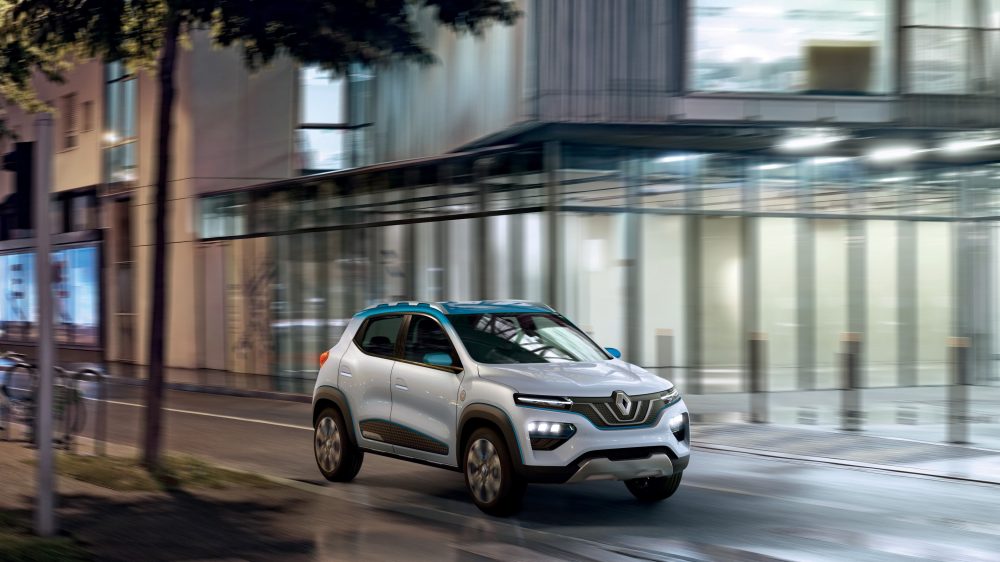
K-ZE All-electric Crossover (Image: Renault)

5 Facts About the Progress of Electric Vehicles

While global car sales took a pandemic-related hit last year, electric vehicles (EVs) bucked the trend.

The number of EVs registered across the globe expanded massively in 2020, according to the International Energy Agency (IEA) – and this is set to continue over the next decade.

Here are five facts about the market from the agency’s first Global Electric Vehicle Outlook report.

1. There Were 11 Million Registered Electric Vehicles on the Road at the End of Last Year
10 million of these were cars. The total number of electric cars, buses, vans and trucks is projected to rise to 145 million, or 7% of road transportation, by the end of the decade under governments’ existing energy and climate policies.

With even bolder climate programs and emission reduction targets, there could be up to 230 million electric vehicles on our streets – 12% of all road transport – by 2030. Motorcycles and mopeds were not included in the figures.

2. Electric Car Buying Remained High in the Face of the Pandemic
Electric car registrations were up 41% in 2020, despite a 16% drop in overall car sales across the world.

Last year was indeed a ground-breaking one for the sector, as Europe overtook China as the centre of the global electric car market for the first time. From global electric car sales of 3 million, registrations in Europe more than doubled to 1.4 million, while in China they increased to 1.2 million.

K-ZE All-electric Crossover (Image: Renault)

3. Consumer and Government Spending on Electric Cars Rose in 2020
A rise in the number of different EV car models available in the market to 370 and the falling cost of batteries saw consumers spend 50% more on electric cars in 2020, to the tune of $120 billion.

Governments also continued to encourage the move to EVs, spending $14 billion on direct purchase incentives and tax deductions – a 25% rise year-on-year. Before the pandemic, many countries strengthened key policies such as CO2 emission standards and zero-emission vehicle (ZEV) directives. By the end of 2020, more than 20 countries had either announced bans on sales of internal combustion engine cars or decreed that all new sales be zero-emission.

Some European countries increased buying incentives and incorporated the promotion of EVs into their post-pandemic economic recovery plans. China postponed the end of its New Energy Vehicle (NEV) subsidy scheme to 2022, to safeguard EV sales from the economic downturn.

4. Electric Bus and Truck Registrations Also Increased Within the World’s Largest Markets
Across China, Europe and North America these rises were mainly due to municipal governments imposing greater emission reductions on commercial vehicles operating within their towns and cities. China, for example, commands a 27% share of all electric bus sales, where new registrations were up 9% in 2020.

Electric heavy-duty trucks, while more established in China, have only recently begun to come on stream further afield, currently consisting of around 1% of all truck sales in both Europe and the US.

5. Widespread EV Adoption Could Significantly Reduce Greenhouse Gas Emissions
The IEA says mass adoption has the potential to cut emissions by more than one-third by 2030 under the existing ‘stated’ green policies

Up to two-thirds of emissions could be slashed in that time if countries endorse more ambitious ‘sustainable development’ targets.

Long Road to Sustainability
While progress is being made, electric cars currently make up 1% of the global fleet. And significant barriers to the wholesale adoption of EVs remain, the report says.

Insufficient charging infrastructure continues to prevent wider use, as does the low supply of appropriate electric vehicles in many sectors, such as heavy industry. Despite falling battery costs, rising vehicle production to meet demand, and the promise of savings over the lifetime of an EV from lower fuel and maintenance costs, upfront prices remain prohibitive for some.

On the supply side, there are also challenges related to the poor sustainability levels associated with EV batteries: the sourcing of raw materials is frequently concentrated in a few developing countries that are often politically volatile and economically fragile.

A related concern is around recyclability. EV batteries consist of multiple Lithium-ion cells that are largely difficult to dismantle and which contain hazardous materials.

But there are some recent examples of the industry responding to this challenge.

Nissan is now reusing batteries from its Leaf cars to power automated guided vehicles used around assembly plants. And while Volkswagen has also redeployed old batteries, it has also opened a recycling plant in Salzgitter, Germany.

Read more: EcoWatch

It’s Time to Go Green!

If you would like to know more about Solar Panels and the PowerBanx range of home battery systems, and get a free instant quote, please complete our online form: