Monthly Archives: May 2021

How Is This A Good Idea?: EV Battery Swapping

Swap this technological dead-end out for better batteries, improved superchargers and more universal EV charging standards

Battery swapping has become a lot like hydrogen fuel cells for passenger cars: They’re automotive ideas that are never quite born, but just won’t die.

Here in 2021, Battery swapping in EVs has become an especially bad idea. It’s a technical and market dead-end that seems more about separating green investors from their money than providing a solution. That’s despite credulous media reports that coo over the (admittedly cool) spectacle of robots switching car batteries like greasy Rube Goldbergs—but tend to avoid asking tough questions about how it’s supposed to work in the real world.

The technology’s troubled history traces to Better Place, or Exhibit A in the case against battery-swapping’s future. The Israel-based Better Place—founded in 2007 by smooth-talking Silicon Valley entrepreneur Shai Agassi—promised to change the world with robotic service stations that would pluck a battery from a car and pop in a fresh one, extending its driving range in a matter of minutes. In those quaint EV days, with Tesla taking baby steps with the Roadster (built from 2008 to 2011), battery swapping seemed to hold hazy promise. Most newfangled EVs (Tesla excepted) could barely get beyond city limits on a charge, including the 2011 Nissan Leaf and its 73-mile range. Once range was depleted, reliable public charging barely existed, as I recall from my own anxious drives in San Francisco when I tested the original Leaf and BMW i3. When you did find a working plug, batteries took forever to charge.

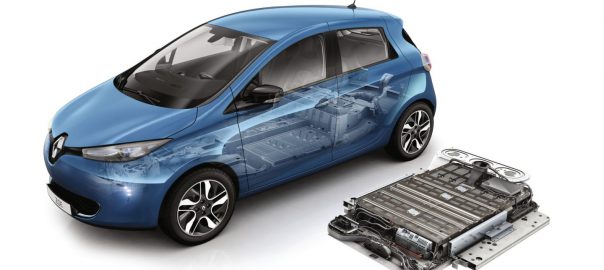
Better Place’s alternative, through a contract with Renault, was the 2011 Fluence Z.E.: An electric sedan whose upright battery ate into trunk space and provided a piddling 80-mile range. But that battery could drop through the Renault’s floor for swaps at Better Place stations in Israel and Denmark, adding another 80 miles in about 10 minutes, rather than hours of recharging.

Renault ZOE, Battery illustration (image: Renault)

But despite raising nearly $900 million from investors, and the media anointing Agassi as an electric savior, Better Place imploded like the Theranos of its day. Robotic swap stations were supposed to cost $500,000 each, but ended up costing $2 million. Critically, Better Place failed to get any other automaker onboard to design and produce standardized vehicles with swappable batteries, with Agassi alienating such potential partners as BMW and GM. Better Place sold fewer than 1,500 electric Renaults before it was liquidated, with Agassi fired in disgrace in 2012. Fast Company magazine called Better Place “the most spectacularly failed technology start-up of the 21st century.”

That debacle didn’t drive the final, automated nail into battery swapping’s coffin. The latest proponents are China’s EV maker Nio, and Ample, a San Francisco-based startup. China’s Nio has taken on the challenge of designing compatible cars, and a few hundred robotic stations that swap out batteries in three to five minutes. Cars roll into a covered bay for a hydraulic lift. Laser-guided wrenches unscrew bolts and lower the battery case from the car. That battery is whisked away on a motorized track, and a fresh one is installed. Despite the whiz-bang tech, Nio’s stations still require a human operator to safely drive the car onto the lift and monitor the process. It’s akin to every public charger coming with its own pump attendant.

Last fall, Nio launched a “Battery as a Service” subscription: Think of it as buying a car with “Batteries Not Included.” Since batteries remain the most expensive EV component, the plan saves owners roughly $10,000 on the car’s price. In return, owners pay about $142 a month to lease a 70 kWh pack with six monthly swaps. In April, Nio claimed it had performed 2 million total exchanges at its Power Swap stations, with users gaining an average of 123 miles of range per swap.

That’s a solid range boost in five minutes. But time, in multiple senses, is still conspiring against battery swapping. Jeremy Michalek, a mechanical engineering professor and director of Carnegie Mellon’s vehicle electrification group, calls battery swapping a relic of a bygone EV age.

Today’s new EVs routinely deliver 200 to 400 miles of range, with a potential 517 miles for the forthcoming Lucid Air. Those EVs charge in 35 minutes or less at Tesla Superchargers and other oases for time-pressed drivers. DC fast charging times have soared by roughly sevenfold, to today’s top 350-kilowatt units. Why do drivers need a contraption to extract the 630-kilogram battery of a Porsche Taycan Turbo, when they can juice that battery in 20 minutes flat? Lucid says its Air will add up to 300 miles of range in the same 20 minutes. That’s enough for nearly five hours of highway driving at 60 mph, before it’s time for a fill-up.

“When you’re looking at 300 miles of range from a fast charge, it changes the game for how convenient EVs are,” Michalek said. “You’re going to spend 20 minutes going to the bathroom and getting coffee anyway.”

In addition, the world has spoken, loudly. Governments around the world are choosing DC charging as the tech winner, including President Joe Biden’s plan to invest $15 billion to install at least 500,000 public chargers. Tesla demonstrated battery-swapping in 2013 on its Model S before abandoning the tech—with reasons including cumbersome stations and tepid consumer interest—in favor of its Supercharger network that now appears a smarter bet.

Read more: IEEE SPECTRUM

It’s Time to Go Green!

If you would like to know more about Solar Panels and the PowerBanx range of home battery systems, and get a free instant quote, please complete our online form:

BMW iX3

Electric car grants: The limited-time Government offer explained – and the best cars to buy

Just as motorists are being urged to switch to eco-friendly electric vehicles, ministers have cut the plug-in car grant designed to make them more affordable – and it could be part of a long-term plan to rescind EV incentives entirely

Four in five motorists think electric cars are still too expensive for them to purchase.

That’s according to a comprehensive survey of more than 15,500 drivers conducted by the AA last month.

The damning verdict comes in the wake of the Government’s recent decision to slash grants designed to make these battery-powered vehicles more affordable.

In March, transport ministers announced that the Plug-in Car Grant – an incentive launched a decade ago to subsidise the cost of pricey electric models – has been cut to just £2,500, trimming the value of the scheme by £500.

But more importantly, ministers also moved the goalposts for eligibility. Previously available to buyers of new electric cars with a value of up to £50,000, only models with an on-the-road price below £35,000 now qualify for the scheme.

It means cars from premium brands like Tesla, Audi and BMW are now further out of reach for the 81 per cent of drivers who told the AA they already couldn’t afford them, but also restricts the scheme to – in many cases – EVs that use older technology, meaning longer charge times and shorter ranges.

Ford of Britain chairman Graham Hoare said the decision – which means the brand’s new Mach-E electric SUV isn’t eligible for the grant – was ‘disappointing’ and ‘not conducive to supporting the zero emissions future we all desire’.

RAC head of roads policy, Nicholas Lyes, had an equally scathing assessment of the Government’s actions, saying ministers like to ‘talk-the-talk when it comes to encouraging people into cleaner vehicles, but cutting the grant certainly isn’t walking the walk’.

BMW iX3
BMW iX3

Mike Hawes, chief executive at the Society of Motor Manufacturers and Traders, described the decision as the ‘wrong move at the wrong time’.

‘New battery electric technology is more expensive than conventional engines and incentives are essential in making these vehicles affordable to the customer. Cutting the grant and eligibility moves the UK even further behind other markets, markets which are increasing their support, making it yet more difficult for the UK to get sufficient supply,’ he added.

Norway is proof that EV incentives can dramatically accelerate the switch to greener cars
The UK Government’s decision is contrary to benefit-driven strategies in other countries that have seen electric car sales surge in recent years.

For example, Norway’s EV-buying incentives include exemptions from all non-recurring vehicle fees, waiving purchase taxes and VAT of 25 per cent, bringing price parity with conventional motors with internal combustion engines.

And such generous schemes have a proven impact on demand, with 54 per cent of all cars registered in Norway in 2020 being electric models.

In contrast, with battery electric vehicles accounting for just 6.6 per cent of all UK registrations in the same year, minsters have already set out plans to scale back existing tax-payer funded offers.

The 2018 Road to Zero strategy – in which government first earmarked a deadline for a ban on sales of new petrol and diesel cars (at the time set at 2040 before being fast-tracked by a decade to 2030 by Boris Johnson) – outlined the intention to wind up incentives as EVs became more mainstream.

The report stated that MPs ‘expect to deliver a managed exit from grants in due course’, promising to support the uptake of ultra-low-emission vehicles ‘through other measures’.

Read more: inews

It’s Time to Go Green!

If you would like to know more about Solar Panels and the PowerBanx range of home battery systems, and get a free instant quote, please complete our online form:

Charging Station in Sunderland (Image: Fastned)

Largest electric-car charging hub in the UK to be built at Brent Cross

Brent Cross shopping centre will soon feature the UK’s largest EV charging hub

A total of 236 electric-car charging points will be installed in London’s Brent Cross shopping centre’s car parks over the next five years, making it the largest charging hub in the UK.

The chargers will be operated by Franklin Energy as part of its LiFe Network. According to Franklin, 50 22kW DC fast chargers and two 350kW DC rapid chargers will be installed in the centre’s car parks by the end of this year, making up the initial phase.

The charging hub will not only serve the shopping centre’s customers, but also aims to provide those travelling on the M1, A41 and A406 via the North Circular Road with easy access to charging points.

Charging Station in Sunderland (Image: Fastned)

Louise Ellison, group head of sustainability at Hammerson, one of main investors in the project, said: “The installation of the UK’s largest EV charging facility will not only attract more visitors to our centres at a time when we’re expecting to see a significant increase in electric vehicles on the roads, but also shows our continued commitment to tackling climate change, as we continue our journey towards becoming net positive by 2030.

“Combined with our renewable electricity contracts, this service has the potential to significantly reduce the carbon footprint of visitors to Brent Cross by supporting the transition to electric vehicles.”

The 350kW DC rapid chargers will be important in future-proofing the Brent Cross hub, as more cars capable of charging at those speeds, like the Kia EV6 and Hyundai Ioniq 5, are starting to appear, so it’s no longer the exclusive preserve of high-end models like the Porsche Taycan or Audi e-tron GT.

Read more: driving electric

It’s Time to Go Green!

If you would like to know more about Solar Panels and the PowerBanx range of home battery systems, and get a free instant quote, please complete our online form:

Nissan Ariya EV SUV (Image: Nissan)

Europe’s lost decade: About the importance of interim targets

The European CO2 regulation for new passenger cars appears to be a complete success story. In 2020, the share of electric vehicles rose from 3% to 11%, the average type-approval CO2 emission level decreased from 122 g/km to about 97 g/km, and none of the manufacturers will be subject to noteworthy penalties as all of them are on track for compliance with the regulatory targets.

That the regulation would be a success was not always that clear, however. In reality, it was a rocky road to get to where the European vehicle market is today. Once it became clear that the European Union would implement its first regulation for new car CO2 emission levels, the rate of emissions reduction increased from about 1.2% per year to 3.5% per year by 2008 (Figure 1). At that pace, it was easy for manufacturers to comply with the first regulatory target of 130 g/km by 2015. Unfortunately, only a part of the CO2 reductions achieved during this first regulation’s time period were real, with the majority attributed to manufacturers aggressively gaming the test procedure.

Once the 2015 target had been met, manufacturers showed little interest in further reducing the CO2 emissions of their vehicles. Between 2016 and 2019, type-approval emissions even increased, from 118 g/km to 122 g/km. It was only from January 2020 onwards that manufacturers changed course. Within one year, the official new car CO2 emissions fell by 20.5%, which is more than during the entire 2008-2019 timeframe. The electric vehicle market share more than tripled within one year, easily outpacing other markets such as China and the United States.

This fluctuation reveals one weakness of the EU’s CO2 regulation: Unlike in the United States, the European policymakers did not set annual targets, but instead opted for five-year target intervals. As a result, the 2015 CO2 target applied during the entire 2015-2019 time period until the next regulatory target took effect in 2020. Manufacturers clearly took advantage of this regulatory weak spot by optimizing their vehicle fleet mix in 2016–2019 towards profits, largely ignoring CO2 emissions and delaying the launch of some electric vehicle models until 2020. At the same time, the breathtaking change in the market composition in 2020 highlights a strength of the manufacturers: With the right regulatory instruments in place, vehicle manufacturers can quickly adapt their product portfolio and marketing strategy in such a way that tripling electric vehicle shares and reducing CO2 more than 1% per month becomes possible.

Nissan Ariya EV SUV (Image: Nissan)

Unfortunately, we Europeans are on a pathway to repeat our mistakes of the past. The currently adopted policies require manufacturers to reduce the average CO2 emission level of new cars by 15% by 2025 and by 37.5% by 2030, all relative to a 2021 baseline. The resulting annual CO2 reduction of about 5% is significantly lower than what manufacturers achieved in 2020 (20.5%) and close to the annual 3.5% reduction in the early years of the first CO2 regulation. These policies fail to account for the significant technological advances in the industry, with electrification enabling much faster emission reductions than combustion engine efficiency improvements. In order to be on a pathway that is compatible with the EU’s longer-term climate protection objectives, what we really need by 2030 is a reduction in average new car CO2 emission levels by at least 70%, instead of 37.5%.

But it is not only the target levels themselves that are problematic. The fact that there are no current interim targets entails the great risk that manufacturers will play games again, delivering the CO2 reductions required only at last minute, while holding technology levels constant in the intervening years. Such an approach is detrimental from a climate protection perspective because the sooner new car CO2 emission levels fall, the faster annual fleet-wide CO2 emissions decline and the higher cumulative CO2 benefits are, relative to a business-as-usual scenario.

Aside from the climate protection angle, there is a very important industrial angle to this as well. At a time when politicians across Europe are working hard to persuade companies to increase battery development and manufacturing capacities within Europe, it is of utmost importance to ensure market stability for planning the necessary investments in factories and workers. Without interim targets, such stability is lacking, as the following assessment shows.

In 2020, the new registration share of zero- and low-emission vehicles (ZLEVs) was 11%. Applying a discount factor for plug-in hybrid vehicles, the weighted ZLEV share was about 9%. Leaving any regulatory credits aside, the average new internal combustion engine (ICE) vehicle in 2020 emitted about 117 g/km of CO2 in the New European Driving Cycle (NEDC).

Manufacturers can meet the current 2025 CO2 reduction target of 15% solely by improving the efficiency of conventional combustion engines and transitioning towards mild hybrid vehicles. Emissions from ICE vehicles would decrease by about 4% per year to 96 g/km in NEDC terms. Credits for eco-innovations and an exploitation of the flexibilities of the new Worldwide harmonized Light vehicles Test Procedure (WLTP) would further help comply with the 2025 target. Following this pathway, an increase in the market share of electric vehicles would not be necessary until as late as 2029.

Read more: icct

It’s Time to Go Green!

If you would like to know more about Solar Panels and the PowerBanx range of home battery systems, and get a free instant quote, please complete our online form:

Renault ZOE 2020 (Image: Renault.com)

Electric car insurance in UK ‘is £45 less than for petrol or diesel vehicle’

Comparethemarket.com analysis shows electric car drivers were charged an average of £566

The average cost of insuring an electric car in the UK is £45 less than the cost of covering a petrol or diesel car, according to research from the website Comparethemarket.com.

Analysis of annual premiums in the first three months of the year showed electric car drivers were charged an average of £566, while petrol and diesel drivers paid £611.

Travel restrictions during coronavirus lockdown periods over the past year have meant fewer claims on car policies, and led to cuts in premiums across the board.

For electric car drivers this meant a £75 drop in the average premium in the first quarter of 2021, while other motorists saw a £101 drop.

Dan Hutson, the head of motor insurance, at Comparethemarket.com, said the difference was explained by a range of factors, including electric cars having fewer complex moving parts to be damaged in an accident.

Renault ZOE 2020 (Image: Renault.com)

He added: “Electric cars are typically less likely to be stolen and more likely to be recovered when they are, due to their limited range and because charging them is relatively time-consuming.”

Electric cars have been growing in popularity with drivers, and UK figures from the Society of Motor Manufacturers and Traders showed 22,000 were sold in March.

As well as lower premiums, purchasers of electric vehicles pay no vehicle excise duty and can get a plug-in grant of up to £2,500 from the government to put towards buying a car costing up to £35,000.

Hutson said: “Drivers making the switch to greener vehicles will be glad that our research shows electric cars could bring significant financial as well as environmental benefits over time.

“If drivers are considering buying a new car, then an electric vehicle could be an appealing option, considering the savings on insurance, fuel and tax.”

Read more: The Guardian

It’s Time to Go Green!

If you would like to know more about Solar Panels and the PowerBanx range of home battery systems, and get a free instant quote, please complete our online form:

Hyundai Ioniq 5 (Image: hyundai.co.uk)

Hyundai prices up new pure-electric Ioniq 5

Hyundai has opened order books for its Ioniq 5 pure-electric car.

The Ioniq 5 is Hyundai’s first bespoke electric car and is the first in a new range of electric cars under its Ioniq pure-electric sub-brand.

It uses a new dedicated electric car platform called E-GMP, as shared with the new Kia EV6, and features a number of clever features including ultra-fast 800-volt charging and Vehicle-to-Load – the latter allowing owners to charge other items by using the car’s battery.

Two battery sizes are available: 58kWh has rear-wheel drive and a range of up to 240 miles, and the 73kWh rear-wheel drive can travel up to 300 miles.

An all-wheel drive version of the 73kWh battery car also be specified and comes with a range of up to 287 miles.

Thanks to the 800-volt charging system, the Ioniq 5 can be zero-to-80-per-cent charged in just 18 minutes from an ultra-fast charger.

Aside from the already sold-out Project 45 special first edition car, the Ioniq 5 comes in SE Connect, Premium and Ultimate trims.

The SE Connect kicks off the range at £36,995. It only comes with the smaller battery and features 19-inch alloys, sliding rear seats, two 12.3-inch displays, wireless phone charging, sat nav-based smart cruise control and host of safety equipment.

Hyundai Ioniq 5 (Image: hyundai.co.uk)

Premium starts at £39,295 for the 58kWh battery and gets an electric driver’s seat, heated front seats and steering, LED projector headlights and the Vehicle-to-Load pack. The Premium also comes in the 73kWh battery for £41,945.

Ultimate tops the range and gets leather seats, electrically-adjustable and ventilated front seats, heated rear seats, a Bose sound system, a head-up display with augmented reality, 20-inch wheels and a sliding centre console.

An Eco pack (a battery heating system and heat pump) and Tech Pack (extra safety kit along with aircraft-style relaxation seats) can also be specified.

Along with the 58kWh and 73kWh rear-wheel drive versions at £42,295 and £44,945 respectively, the Ultimate also gets the 73kWh all-wheel drive option at £48,145.

Nine colour options are available and every Ioniq 5 gets a free one-year subscription to the ultra-fast Ionity charging network.

Ashley Andrew, Hyundai UK MD, said: ‘Hyundai is at the forefront of zero emission vehicle technology and is recognised as a leader in producing highly efficient electric vehicles.

With Ioniq 5, we’ve taken this expertise and combined it with the highest level of progressive design to produce what has already become one of the most desirable models in our history.’

Read more: CarDealer

It’s Time to Go Green!

If you would like to know more about Solar Panels and the PowerBanx range of home battery systems, and get a free instant quote, please complete our online form:

Volkswagen ID 4 (Image: Volkswagen.co.uk)

March registrations: Joining the EV revolution? Drivers warned to compare premiums to get the best insurance deals

Research finds electric cars DON’T have to cost more to insure than conventional cousins

‘Green’ cars outsold diesels for the first time in 2020 with 285,199 models with a degree of electric propulsion (BEV, PHEV and HEV) being registered in 2020 compared to 261,772 diesel engine cars.

Although new car sales in 2020 were around 29% lower than in 2019, electric vehicles have grown in popularity. Market share for all-electric BEV cars grew from 1.6% in 2019 to 6.6% in 2020, an increase of over 400%. Although sales numbers are small compared to petrol engine cars, demand for electric vehicles is growing rapidly.

With car insurance being one of the factors contributing to a car’s overall running cost, GoCompare Car Insurance examined the difference in insurance premiums quoted for an electric vehicle compared to its diesel engine equivalent.

When comparing premiums offered for a Volkswagen e-Golf, the average annual premium offered was £635.92. The most expensive being £787.54 and the cheapest being £495.10 – a difference of £292.44 a year.

When comparing premiums for a Volkswagen 1.6 TDI the average annual premium was £533.16. The most expensive being £659.68 and the cheapest being £459.84 – a difference of just £73.32 a year.

Volkswagen ID 4 (Image: Volkswagen.co.uk)

However, when comparing premiums for the Peugeot e-2008 and the Peugeot 2008 1.5 diesel, premiums for the electric model averaged £605.30 a year, £85.27 a year less than the £690.57 average annual premium quoted for the diesel variant.

Clearly not all electric cars are more expensive to insure than their traditionally powered equivalents.

The advice from GoCompare experts is that drivers switching to electric or hybrid vehicles must compare car insurance premiums carefully as some insurers are far more competitively priced than others. The most competitive insurer for a diesel car may not be the most competitive for the electric version, and vice versa.

Lee Griffin, CEO and founder of GoCompare Car Insurance commented, “The popularity of electric vehicles is growing quickly as all the major manufacturers rush to meet demand with electric variants of existing models and completely new electric cars such as VW’s ID.3 and ID.4. However, like all types of cars some insurers are keener to cover them than others and will quote premiums accordingly. EV drivers must shop around for the best deals as a competitive insurer for their old diesel car may be well off the pace when it quotes for a new EV.

“Some people may also be surprised to learn that electric cars aren’t always more expensive to insure and I think we’ll continue to see prices even out between electric and diesel/petrol vehicles. Insurers still have limited experience of the risk profile of EVs and this will develop as more of them come on to UK roads. For now though, drivers must compare premiums from different insurers carefully to ensure they get the right insurance at the best price and make the most of the savings electric driving can deliver.”

Read more: GoCompare

It’s Time to Go Green!

If you would like to know more about Solar Panels and the PowerBanx range of home battery systems, and get a free instant quote, please complete our online form:

Almost half of UK businesses are planning to install on-site EV charging this year

Nearly half of businesses are planning to install electric vehicle (EV) charging points on their premises over the next year according to a new survey.

Commissioned by Centrica Business Solutions, it found that companies are planning to invest £15.8 billion in EVs and on-site charging points over the twelve months to March 2022. This is a 50% increase year-on-year from the £10.5 billion invested by companies between April 2020 and March 2021.

Of those polled, 46% are planning to install charging points, although 37% have already installed the infrastructure. Additionally, 30% have already invested in on-site generation technologies to charge their EV fleets, such as solar panels. Almost half are planning to invest in such generation in the future.

This follows 40% of companies saying they had increased the number of EVs in their fleets during the last year. Of these, 58% said the biggest driver was an effort to meet corporate sustainability targets, while 51% said it was to reduce operational disruption caused by low and zero-emission zones and 37% were attracted by the lower maintenance and whole-life costs of EVs.

Greg McKenna, managing director of Centrica Business Solutions, said it was encouraging to see investment in EVs was still a priority “despite the disruption of the past year”.

“Now that 2030 is set in stone as the end of new petrol & diesel sales we need to ensure three things to help get us there, sufficient electric vehicles to meet demand, reliable charging infrastructure that’s available to all and a flexible energy system that can deliver green power where it’s needed.”

Barriers to the adoption of EVs remain, and 43% of businesses said they hadn’t increased their EV numbers at all while 10% actually decreased their EV fleet size. The biggest barrier remains range anxiety, with 34% of companies citing it as a chief concern, putting it just ahead of the need to prioritise spending elsewhere during the pandemic, which 32% of companies cited.

But 67% of companies said they were well prepared to operate fully electric by 2030, when the government’s ban on the sale of new petrol and diesel cars is set to come in.

“As we accelerate towards our net zero future, I’m delighted to see UK firms at the forefront of the electric vehicle revolution,” said Rachel Maclean, transport minister.

“With British businesses set to increase their investment in electric vehicles by 50%, the message is clear – the future is electric. With generous government grants and tax incentives which could save drivers over £2,000 a year, there has never been a better or more exciting time to make the switch.”

Centrica Business Solutions launched a Fleet Charging Management System in March to ease the transition to electric for fleets. The app acts as a virtual fuel card, meaning a driver is automatically reimbursed for charging costs, and also includes tariff optimisation.

The company’s UK supplier British Gas is using the app for its fleet. Centrica has committed to electrifying its 12,000-strong operational fleet by 2025, with British Gas ordering an additional 2,000 Vivaro-e vans from Vauxhall earlier this year, the largest EV order for a commercial fleet in the UK ever.

Read more: CURRENT

It’s Time to Go Green!

If you would like to know more about Solar Panels and the PowerBanx range of home battery systems, and get a free instant quote, please complete our online form:

Charging with an Ohme smart charging cable

E.On launches renewables-backed EV charging tariff

E.On Next is launching two new tariffs designed to be climate friendly, one focused on electric vehicles (EVs) and one offering the perk of tree planting.

Both new tariffs – Next Drive and Climate+ – offer 100% renewable energy through Renewable Energy Guarantee of Origin (REGO) certificates, a measure that has been often criticised for being a “shortcut”.

It comes as some suppliers increase their use of power purchase agreements (PPA), allowing them to use renewable electricity directly sourced from generators. This includes OVO signing a PPA with Ørsted’s Barrow Offshore Wind Farm and ScottishPower launching new domestic fixed price tariffs using 100% renewable energy sourced from its own wind farms, whilst suppliers such as Good Energy source 100% of their electricity through PPAs.

As well as using renewables, Next Drive also allows EV drivers to charge their cars at a fixed price of 4p/kWh between midnight and 4am, with the supplier claiming this can save customers up to £188 a year. Outside of these off-peak hours, Next Drive charges drivers 17.6p/kWh.

To be eligible for the tariff, drivers will need to use the free Next Drive app – developed in partnership with ev.energy – to automatically schedule charging during off-peak periods. This app can also be used to monitor the energy use, costs and savings of their at-home charging over time.

Charging with an Ohme smart charging cable

This follows a number of EV tariffs being launched by other suppliers, also offering free or discounted charging during off-peak hours. This includes Bulb’s rate of 4p/kWh between 2am and 6am, EDF’s 4.5p/KWh between 12am and 5am daily, Good Energy’s tariff that offers weekly free periods during excess renewable generation and OVO’s ‘type of use’ tariff, which offers a flat rate of 6p/kWh at any time of day.

The second new tariff to be launched by E.On Next, Climate+, offers carbon offset gas, which is achieved by investing in carbon neutral initiatives including the funding of clean energy projects around the world and through carbon emission reduction certificates. The tariff is priced at £1,075 for a typical dual fuel customer.

For every customer who signs up to Climate+, E.On Next will fund the planting of five new trees with charity One Tree Planted, supporting a project in the Peru Rainforest.

Michael Lewis, E.On UK CEO, said that through E.On Next, the supplier is offering “people simple ways to make their heating and hot water and their driving more sustainable”.

E.On Next was launched in March 2020, with the supplier forming a strategic partnership with Octopus’ tech arm Kraken Technologies as part of a restructure of the company’s online platform.

It came after E.On announced in January 2020 it would be supplying over 100,000 small business customers with 100% renewables-backed electricity, with this in turn following it switching all of its then 3.3 million residential customers to 100% renewables-backed supply in July 2019.

Read more: CURRENT

It’s Time to Go Green!

If you would like to know more about Solar Panels and the PowerBanx range of home battery systems, and get a free instant quote, please complete our online form:

Hyundai Ioniq 5 (Image: hyundai.co.uk)

Global electric car sales grew by 40 percent in 2020

The global electric vehicle market grew substantially in 2020, despite the impact of the coronavirus pandemic on the automotive industry.

According to the International Energy Agency (IEA), a record three million EVs were registered worldwide last year, a 41 percent increase versus 2019. By comparison, the global car market contracted by 16 percent in 2020.

Electric cars’ strong momentum has continued into this year, with sales in the first quarter of 2021 reaching nearly two and half times their level a year earlier, said the IEA.

In total, more than 10 million electric cars are now on the world’s roads. That’s in addition to one million electric vans, trucks and buses.

Hyundai Ioniq 5 (Image: hyundai.co.uk)

Europe overtakes China for first time
For the first time last year, Europe overtook China as the centre of the global electric car market. EV registrations in Europe more than doubled to 1.4 million during the year, while in China they increased by nine percent to 1.2 million.

The IEA says that, based on the current trajectory, the number of electric cars, vans, heavy trucks and buses on the road worldwide could reach 145 million by 2030. However, the global fleet could reach 230 million if governments ‘accelerate efforts to reach international climate and energy goals’.

“While they can’t do the job alone, electric vehicles have an indispensable role to play in reaching net-zero emissions worldwide,” said Fatih Birol, executive director of the IEA.

“Current sales trends are very encouraging, but our shared climate and energy goals call for even faster market uptake. Governments should now be doing the essential groundwork to accelerate the adoption of electric vehicles by using economic recovery packages to invest in battery manufacturing and the development of widespread and reliable charging infrastructure.”

Read more: msn

It’s Time to Go Green!

If you would like to know more about Solar Panels and the PowerBanx range of home battery systems, and get a free instant quote, please complete our online form: