Monthly Archives: March 2021

Charging with an Ohme smart charging cable

Government cuts plug-in car and van grants

The Government has cut the electric car grant from £3,000 to £2,500 and excluded models that cost more than £35,000.

It says grants will no longer be available for higher-priced vehicles, “typically bought by drivers who can afford to switch without a subsidy from taxpayers”.

Tax incentives, including favourable company car tax rates, will remain in place, however.

The changes are expected to allow the funding to last longer and be available for more drivers, reflecting the growth in the number of cheaper electric cars.

Transport Minister Rachel Maclean said: “We want as many people as possible to be able to make the switch to electric vehicles as we look to reduce our carbon emissions, strive towards our net-zero ambitions and level up right across the UK.

“The increasing choice of new vehicles, growing demand from customers and rapidly rising number of charge points mean that, while the level of funding remains as high as ever, given soaring demand, we are refocusing our vehicle grants on the more affordable zero emission vehicles – where most consumers will be looking and where taxpayers’ money will make more of a difference.

“We will continue to review the grant as the market grows.”

Charging with an Ohme smart charging cable

The Government has announced a £20 million research and development competition to find solutions to the challenges associated with increasing the uptake of zero emission vehicles (ZEVs) and the necessary infrastructure

New Government legislation is also set to end the monopoly on electric car charging at motorway services, by ensuring chargers are reliable and accessible by all.

The plug-in vehicle grant scheme was renewed last year when plug-in hybrids and cars costing more than £50,000 were excluded. It was originally introduced in 2011 and has supported the purchase of 285,000 vehicles to date.

Mike Hawes, chief executive of the Society of Motor Manufacturers and Traders (SMMT), believes the decision is the wrong move to make. He said: “New battery electric technology is more expensive than conventional engines and incentives are essential in making these vehicles affordable to the customer.

“Cutting the grant and eligibility moves the UK even further behind other markets, markets which are increasing their support, making it yet more difficult for the UK to get sufficient supply.

“This sends the wrong message to the consumer, especially private customers, and to an industry challenged to meet the Government’s ambition to be a world leader in the transition to zero emission mobility.”

The number of electric cars on UK roads is expected to exceed that of diesel-powered models by 2030, research by The AA has found.

Plug-in van customers had been eligible for a 20% reduction on the vehicle purchase price, up to a maximum of £8,000. However, this has changed to 35% of the purchase price for small vans, up to a maximum of £3,000 and 20% of the purchase price for a large van, up to a maximum of £6,000.

The plug-in truck grant, which had provided funding of up to £20,000, has been cut by £4,000. The new grant covers 20% of the purchase price, up to a maximum of £16,000. It will be available for the first 250 orders placed. Grants at the £16,000 rate are also limited to 10 per customer. After the 250-order limit is reached, a maximum grant rate of £6,000 will apply.

The British Vehicle Rental and Leasing Association (BVRLA) also criticised the timing of the decision to cut the plug-in grant.

Read more: SMART TRANSPORT

It’s Time to Go Green!

If you would like to know more about Solar Panels and the PowerBanx range of home battery systems, and get a free instant quote, please complete our online form:

Dacia Spring 2021 (Image: Dacia.co.uk)

Misinformation is preventing consumer EV uptake

The perceived high cost of electric vehicle (EV) charging is a key barrier to EV uptake, according to research conducted by energyhelpline.com.

According to the survey, almost two-thirds of consumers believe that EVs cost up to £50 to fully charge at home, this is despite analysis showing that they cost between just £6 and £17 to fully charge.

The survey also revealed that many consumers are concerned about mileage and are worried that their EV won’t get them from A to Z without running out of charge.

38% of consumers cited the distance per charge and almost half (44%) cited the lack of charging points across the nation as the biggest barriers to purchasing a fully electric car.

However, energyhelpline.com has found that some EVs can offer an estimated 270 miles per charge – this is more than enough to travel from Sheffield to Edinburgh – and all for a total cost of £12.32 in electricity.

Dacia Spring 2021 (Image: Dacia.co.uk)

Tom Lyon, director of energy at energyhelpline.com, said: ‘Electric-only vehicles have come a long way over the last ten years, but our research reveals that there’s a clear disparity between perception and reality, with BEV cars costing as little as four pence a mile to run using electricity charged at home.

‘To help the UK meet its carbon reduction targets, it’s vital to do even more to boost uptake in the technology. Energy suppliers have a clear role to play in helping motorists make the move to electric vehicles. By offering special tariffs and providing access to competitively priced on-street charging, suppliers can help dispel misconceptions around electric cars to actively encourage uptake.

‘Not only is charging far more cost effective than filling up at the petrol station, switching tariffs will help cut charging costs. Suppliers such as Bulb and OVO offer EV plans aimed at electric car owners, providing benefits such as free access to public charging and lower at home rates for overnight charging, and we’d encourage more suppliers to do the same.’

Read more: Air Quality News

It’s Time to Go Green!

If you would like to know more about Solar Panels and the PowerBanx range of home battery systems, and get a free instant quote, please complete our online form:
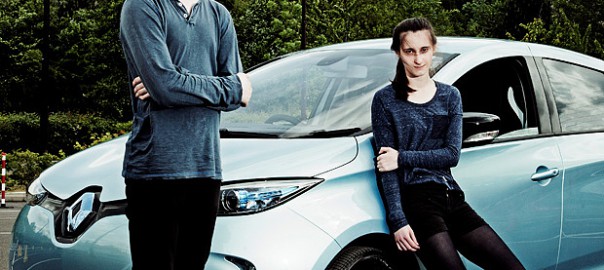
No sweat: first-time learner drivers Joe and Anna found the all-electric Renault Zoe a relaxing car to drive on the closed circuit (Image: L. Csernohlavek)

Time for Green L Plates?

As the Fully Charged blog has documented, the move to electric cars is well underway.

In fact, recent research from LV=General Insurance (LV= GI) found that one in three drivers are considering buying an electric car in the next five years. However, some drivers are still put off by the differences between driving electric and petrol/ diesel cars.

That’s why LV= GI is calling on the DVSA to adapt the UK driving test to meet the specific requirements of electric cars, and we’re not the only ones! Over three quarters of UK drivers agree, especially those who already own an electric car. With the government’s 2035 petrol ban fast approaching, there’s no better time to ease the transition for the next generation of drivers.

So, what would this new “green” driving test entail?
LV= GI recommends that the adapted test should address the top five differences that drivers notice when they upgrade from a petrol/diesel car to an electric one. Our research found that drivers are particularly worried about:

Getting used to the driving range
Noise difference
Getting used to a fully automated car
Difference in acceleration
Difference in braking speed
Despite the growing interest in going green, the vast majority (87%) of drivers have never been behind the wheel of an electric car, and as such are unaware of the many differences between driving and owning one. As more drivers consider making the switch, and more first-time drivers learn to drive an electric, it’s important to make sure that everyone has the right knowledge to make sure they can stay safe on the roads.

No sweat: first-time learner drivers Joe and Anna found the all-electric Renault Zoe a relaxing car to drive on the closed circuit (Image: L. Csernohlavek)

We think the practical test is the place to start!
During the practical section of traditional driving tests, the “show me, tell me” portion of the test will need to be updated. In an electric engine, the use of a battery in the car floor, and the inclusion of regenerative braking reduces the usage of brake pads and in some models means you can drive with just the accelerator. Other elements under the bonnet have changed so you’ll struggle to do a dip check since there’s no engine oil, so EVs look very different to gas and diesel cars under the hood.

The new practical test should also challenge drivers to consider their battery usage and how this may affect overall driving range and distances. It could also help users familiarise themselves with other aspects of EVs, such as modern GPS technology and charging point maps.

What can I do in the meantime?
We believe it’s imperative that the DVSA adapts the test, but in the meantime, there are some steps you can take before setting off in your new electric car.
Firstly, if you’re thinking about making the switch then ask the car dealer to take you out on a drive to help you understand the key differences. If you have a friend or family member with an EV then ask them to talk you through some of the mechanics. While it won’t replace the depth and breadth you would learn as part of a proper driving test, it should help you to feel more comfortable with the concept of an EV.

In particular, ask them to show you under the bonnet, and field your questions about the realities of having to charge your car regularly. For example, your EV may have a setting to warm up the battery before plugging it in, as this allows for a much quicker charge. You can also take an advanced driving course, which will help you feel more at ease and provide helpful tips and tricks for handling an EV.

Read more: Fully Charged

It’s Time to Go Green!

If you would like to know more about Solar Panels and the PowerBanx range of home battery systems, and get a free instant quote, please complete our online form:

SWARCO eVolt is supplying 45 charging units, including 11 of its Rapid Chargers capable of charging two vehicles simultaneously in 30 minutes, across 28 sites in East Lothian (Image: eVolt)

Motor Fuel Group unveils £400m investment into ultra-rapid EV charging

The Motor Fuel Group (MFG) is to install c.3,000 150kW and 350kW electric vehicle (EV) chargers at its forecourts by the end of 2030 in a new commitment to electrification.

This is to be enabled by a c.£400 million investment, with the rollout of the chargers to all suitable remaining locations to be fully completed by 2035.

To date, MFG – which operates refuelling forecourts under the BP, Shell, Esso, Texaco, JET and Murco fuel brands – has installed EV chargers at 108 of its sites through third parties. In October 2019, for example, IONITY installed two 350kW chargers at a Scottish forecourt owned by MFG, laying claim to the fastest charging station in the country.

Alongside this existing network, MFG will self-fund, build and operate its own EV charging hubs, with each hub to consist of between four and eight ultra-rapid 150kW EV chargers.

SWARCO eVolt is supplying 45 charging units, including 11 of its Rapid Chargers capable of charging two vehicles simultaneously in 30 minutes, across 28 sites in East Lothian (Image: eVolt)

These will be augmented with 350kW chargers as vehicle battery technology improves, the company said.

In 2021, it will build EV charging hubs at 40 sites, offering over 200 150kW chargers. The initial focus will be on major trunk roads and urban areas.

From 2022 onwards, MFG plans to build at least 50 additional EV charging hubs per year, with a significant number of these to be on the strategic road network.

William Bannister, CEO, MFG, said the new investment will “help keep UK motorists on the move”, adding that he is “looking forward to engaging with government to ensure this investment best meets the national EV infrastructure requirement to help us all make a contribution to ensuring Britain meets its net zero target by 2050”.

Read more: CURRENT

It’s Time to Go Green!

If you would like to know more about Solar Panels and the PowerBanx range of home battery systems, and get a free instant quote, please complete our online form:

Volkswagen Group and bp to join forces to expand ultra-fast electric vehicle charging across Europe

  • bp and Volkswagen Group agree to strategic collaboration on EV charging in Europe
  • Plan to develop ultra-fast EV charging network at bp retail sites
  • bp’s charging networks to be integrated into VW Group vehicles

Volkswagen and bp today announced they intend to work together on extending and speeding up the deployment of ultra-fast electric vehicle (EV) charging facilities at bp retail sites across the UK, Germany and elsewhere in Europe.

Extensive ultra-fast charging networks are seen by both companies as essential to accelerate the adoption of electric vehicles. The companies today signed a memorandum of understanding for their collaboration and intend to finalize agreements in coming months. This would bring together two leading global players in mobility to develop a network of ultra-fast chargers at convenient and high-quality locations – bp sites, and Aral sites in Germany.

The partnership should give EV drivers greater confidence in being able to access nearby, reliable, quality charging options. bp estimates approximately 90% of people in the UK and Germany live within a 20-minute drive of a bp or Aral site.

The agreement would also make bp the Volkswagen Group’s EV charging partner, with the integration of bp’s charging network into VW Group vehicles to make finding and paying for charging fast and simple. The network would also be available for other EV customers as part of the bp pulse network (Aral pulse in Germany), improving access to ultra-fast charging for EV drivers more widely.

Emma Delaney, bp’s executive vice president, customers and products, said: “Enabling the rapid expansion of electric vehicles is core to bp’s plans to grow our convenience and mobility business, and supports our net zero ambition. Partnering with Volkswagen Group – one of the world’s great automotive companies – we intend to address a key concern for people considering buying an EV: range anxiety. Together we can provide drivers in the UK and Europe with the fast, reliable and convenient charging solutions they need to feel more confident about making the switch. By deploying ultra-fast charging, rapidly and at large scale, we can establish a leading position and help accelerate the take-up of EVs.”

Thomas Schmall, Member of the Board of Volkswagen Group and CEO of Volkswagen Group Components, said: “Ultra-fast charging is the key enabler for e-mobility and therefore a main pillar for Volkswagen´s transformation. Together with strong partners like bp we take this important matter into our hands and will build up to 18,000 new chargers in Europe. That is about 1/3 of the estimated ultra-fast charging demand in 2025.”

Electrification is at the heart of bp’s convenience and mobility strategy and the company aims to grow its network of public EV charging points by 2030 to over 70,000 worldwide. bp pulse is already the most used EV charging network in the UK1 and plans to have around 250 ultrafast chargers operating at bp retail sites by the end of this year. In Germany, Aral pulse is also already rolling out ultrafast charging points across its retail sites – expecting to have 500 installed by year end.

Read more: bp

It’s Time to Go Green!

If you would like to know more about Solar Panels and the PowerBanx range of home battery systems, and get a free instant quote, please complete our online form:

Volkswagen ID 4 (Image: Volkswagen.co.uk)

Volkswagen ID 4 1st Edition Pro Performance 2021 UK review

First impressions on British roads are very favourable – make no mistake, this is VW flexing its muscles after several tough years

What is it?
Like opening one of those brown envelopes from HMRC, climbing aboard the Volkswagen ID 4 for the first time is an ordinary act loaded with trepidation.

Which seems ridiculous, I’ll admit. While this is only the second car after the ID 3 hatchback to be built under the grand banner of Wolfsburg’s ID electric sub-brand, the ID 4 is just (yet?) another crossover, albeit one whose pebble-like curvature hints at something unusual. And as for being an electric crossover, lots of those exist already. Hyundai makes one, as does Ford, as does Vauxhall. So why the suspense?

It’s because the ID 4, fresh to UK roads and tested here in £37,800 1st Edition trim, could do more than any other car to shape the market over the next decade, at least in Europe. With dimensions just inside those of the Volvo XC60 in every direction, it taps richly into the crossover zeitgeist. And coming from the one ‘legacy manufacturer’ whose ambitions in the EV sphere trump all others’ (we’re promised 70 new electric models by 2028 and told that 70% of new Volkswagens sold in 2030 will be EVs), its volume potential is simply colossal. If the ID 4 is properly good, you have to imagine that it will light the fires beneath the ID offensive. And if not? Well, the ghost of Dieselgate still lingers.

As for the hardware itself, under a body that’s somehow bulbous and rakish in equal measure (the ID 4 isn’t exactly handsome, but neither is it unattractive) lies the same MEB platform used by the ID 3, only with the wheelbase and tracks extended. In the forseeable future, both Audi (with the Q4 e-Tron) and Skoda (with the Enyaq iV) will also make use of the MEB platform.

For now, the sole ID 4 derivative is this Pro Performance 1st Edition, which pairs a 201bhp rear-mounted motor with a 77kWh battery for a 310- mile range and 0-62mph in 8.5sec. Expect a 52kWh battery offered with 146bhp or 168bhp motors to arrive later this year, and eventually an ID 4 GTX with four-wheel drive courtesy of another motor on the front axle and more than 300bhp all in. A coupé version, the ID 5, will also sprout.

Volkswagen ID 4 (Image: Volkswagen.co.uk)

What’s it like?
Beyond the exterior design, the ID 4 further departs from traditional Volkswagen fare within its cabin.

The dashboard topography is loosely inspired by that of the Golf but, as with the ID 3, the cockpit is even more minimalistic. The conspicuous lack of buttons and switches might even seem quite shocking to someone coming from, say, a Tiguan.

In our test car, the white plastic that wraps around the dainty 5.2in digital display also seems to be exactly the same sterile-looking, medicinally reassuring material they use for the cases of MRI scanners (absolutely intentional), and it branches off to form the new gear-selector rocker, à la BMW i3.

In addition, the attractive and superbly comfortable ‘Style’ seats, plus organic shapes in the door-card mouldings, and Volkswagen’s modern reluctance to use much in the way physical switchgear, do create quite a special ambience. And, yes, one that is genuinely very relaxing, not least because the scuttle is relatively low and forward visibility thus effortless.

Still, there are some quirks I don’t get. Why, for example, use a (not particularly) touch-sensitive pad to switch the driver’s pair of window switches between controlling the front and rear windows, instead of just fitting four switches?

And if you see the dashboard putting on a light-show, that’s the new ID. Light concept, which blinks in different colours and patterns to relay everything from satnav directions to charging status to incoming calls. It’s moderately useful at times, but mostly a bit distracting.

The fundamental ergonomics are excellent, though, and you might not be expecting to find such generous rear leg room. The ID 4 is akin to the Mercedes-Benz E-Class in the back, and overall it’s clear that Volkswagen has brought all its packaging knowhow to bear with this first electric SUV. You really do get an impression of spaciousness.

And to drive? It’s inoffensive but not inert; far from what you might call engaging but very intuitive. Like so many electric cars, the ID 4 could easily have ended up feeling like an appliance, and it does have appliance-like virtues, such as its high perceived quality and its straight-forward driveability.

But there’s also enough character to ensure that it doesn’t leave you cold: neatly tuned control responses, sharp initial performance, interesting little design cues and a sense of maturity on the move. That the ride quality, even on 20in wheels, is mostly fluid and well-mannered elevates the ID 4’s game further.

Read more: AUTOCAR

It’s Time to Go Green!

If you would like to know more about Solar Panels and the PowerBanx range of home battery systems, and get a free instant quote, please complete our online form:

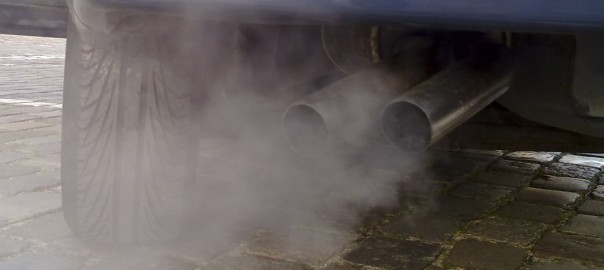
Car exhaust pollution (Image: Wikipedia)

Bath clean air zone goes live

Bath has become the first city outside London to launch a charging clean air zone (CAZ) today (March 15) in order to tackle illegal levels of air pollution.

From midnight the CAZ will be in operation in the city centre 24/7, with all pre-euro 6/VI diesel and pre-euro 4 petrol vehicles, except cars and motorbikes, having to pay to enter it.

Non-compliant vans, taxis and minibuses are charged £9, while non-compliant trucks and lorries, and coaches and buses have to pay £100.

Automatic number plate recognition cameras are installed on all roads leading into the zone. Vehicle number plates will be checked against a DVLA database. Motorists with non-compliant, chargeable vehicles – including those from outside the UK – must declare and pay for their journey at GOV.UK or they will receive a penalty charge notice.

The council secured £9.4 million of funding from Government to help residents and businesses, including coach companies and taxi drivers, to replace polluting vehicles with cleaner, compliant ones.

It has set up a scheme to help owners upgrade their vehicles and already more than 500 businesses have applied.

A further £1.58 million has helped local bus operators to retrofit fleet not already compliant in the zone.

Councillor Dine Romero, leader of Bath and North East Somerset Council, said: “This a landmark day for the city. We’ve put up with unacceptable levels of nitrogen dioxide for too long. This is unfair on residents, particularly vulnerable older people and children.

Car exhaust pollution (Image: Wikipedia)

“We want to reduce NO2 pollution in Bath to within legal limits by the end of 2021 at the latest, and a charging clean air zone is the only way we can achieve this.

“We know this is difficult time for businesses, but we’ve gone ahead with the zone during the pandemic because this is a pressing public health issue.

“However, we are working with residents and businesses to help them replace polluting vehicles with cleaner ones and there is significant financial and practical help available.”

The council has said that although it is not charging private cars, it is currently looking at ways to improve walking, cycling and public transport to encourage people to choose more sustainable ways of getting around.

Councillor Sarah Warren, joint cabinet member for climate emergency and neighbourhood services, said: “The clean air zone is just the start of a concerted effort to promote more sustainable travel.

“We’re also looking at developing liveable neighbourhoods, supporting businesses to use e-cargo bike deliveries, improving our public transport and encouraging more active travel, such as walking and cycling.

“Any revenue from the zone, over and above the operating costs, must and will be reinvested in sustainable transport for the area.”

Andrea Lee, clean air campaigner at ClientEarth, welcomed the launch of Bath’s CAZ.

“Across the UK, illegal and harmful levels of air pollution have been putting people in serious danger for too long,” she said.

“With Bath’s new clean air zone, and others soon to follow, we are finally seeing a concrete step that will protect people’s health in a tangible way.

“It’s important to remember that these schemes are put in place for a reason: to protect people’s health. Toxic air affects virtually every organ in the body. Road transport is the biggest source of illegal pollution in our cities and CAZs are proven to be the most effective way to quickly reduce this pollution.

Read more: SMART TRANSPORT

It’s Time to Go Green!

If you would like to know more about Solar Panels and the PowerBanx range of home battery systems, and get a free instant quote, please complete our online form:
Charging with an Ohme smart charging cable

EV drivers urged to choose right tariff for home charging

Company car drivers charging an electric vehicle (EV) at home could save up to £1,250 a year by choosing the right tariff, says Rightcharge.co.uk.

With energy prices rising in the UK from 01 April 2021, many households will be paying larger electricity utility bills, including those drivers who charge their company vehicles at home.

However, the vehicle home charger and energy comparison site says that this is the perfect opportunity for fleet drivers to find more generously priced EV-friendly energy tariffs that cover charging for fully-electric and plug-in hybrid vehicles – providing a combined home and vehicle charge saving on household energy costs.

For example, a fleet driver covering 20,000 miles annually would expect to pay £2,344 on a standard variable tariff from one of the big six energy suppliers, which would include both household energy use and £1,300 for the charging of the vehicle.

Charging with an Ohme smart charging cable

From April that total will increase to £2,599 a year, including £1,454 for charging the same car, representing an annual price increase faced by the driver of £154 for just the charging alone, potentially impacting any financial benefit-in-kind (BIK) taxation gains drivers may have gained from swapping from a conventional diesel car to an EV.

Yet users who switch to a lower-cost alternative EV energy tariff on or after April 1, could find themselves paying only £1,349 a year – with the charging element representing just £459 of that amount – says Rightcharge.

This represents a massive saving of £995 on charging a vehicle at home, with an additional £255 saved on household energy bills. That’s a total saving of £1,250 a year.

Charlie Cook, founder of Rightcharge, said: “EV-friendly energy tariffs are so incredibly cheap in comparison to a standard tariff, that a homeowner can actually start charging their car at home and reduce their total energy bill at the same time – effectively getting from A to B for free.

“A fleet driver doing 20,000 miles per year can save £1,250. That’s a huge saving EV fleet drivers could be making by simply switching.”

Rightcharge allows users to compare EV-friendly energy tariffs by taking their car into account as well as their home, helping customers to minimise costs for running EVs – plus special payment available for fleets. Rightcharge also helps users to select the correct charger for vehicle and home offering.

Cook said: “We want to help drivers minimise their EV costs – and we suspect many just don’t realise what they can save. Our price comparison website points them in the right direction.”

Read more: FleetNews

It’s Time to Go Green!

If you would like to know more about Solar Panels and the PowerBanx range of home battery systems, and get a free instant quote, please complete our online form:

Rapid Charging Step 1: Access the Rapid Charger (Image: T. Larkum)

GRIDSERVE to spruce up Ecotricity’s Electric Highway with new chargers as it takes 25% stake

GRIDSERVE has taken a 25% stake in Ecotricity’s Electric Highway network of electric vehicle (EV) chargers, with plans to replace the current infrastructure.

Firstly, all existing Electric Highway chargers are to be replaced by GRIDSERVE, offering all three connection types – CCS, CHAdeMO and AC – and doubling the capacity, according to the company. Contactless payment will also be available on all of the new chargers, with this work already underway.

Secondly, six to twelve 350kW chargers will also be installed.

The two companies pointed to how the Electric Highway launched a decade ago in 2011 when “7kW was considered fast”, with Dale Vince, founder of Ecotricity, lauding the network as having “kickstarted” the electric car revolution.

However, in the decade since 50kW, 150kW and now 350kW chargers have become more common, leading to the Electric Highway being ranked the worst public charging network in a survey of Zap-Map users, with common complaints including that the chargers are old, poorly maintained and frequently out of service.

Rapid Charging Step 1: Access the Rapid Charger (Image: T. Larkum)

Now, in addition to the work to replace the chargers, GRIDSERVE is also to bring its front and back-office technology to the network, which is to have 24×7 support.

It comes after BP Pulse this week announced it has made £2 million available for what it described as “radical improvement” in the reliability of older UK EV charging infrastructure, having already agreed £400,000 in infrastructure investment to replace more than 50 legacy chargepoints.

Toddington Harper, CEO of GRIDSERVE, said it is a “huge privilege for myself and GRIDSERVE to take a role alongside Ecotricity in the next evolution of the Electric Highway”, adding that this new phase will “provide the confidence people need to immediately make the transition to a net zero, electric vehicle future”.

Financing for the works is being provided by Hitachi Capital UK, which is also a shareholder in GRIDSERVE. It has funded over £24 million in GRIDSERVE projects such as its Braintree Forecourt in 2020, and made an additional £10 million investment announced in January 2021.

GRIDSERVE is intending to open 100 Electric Forecourts as part of a £1 billion programme, with the Braintree site the first of these. It opened in December, allowing 36 EVs to be charged simultaneously using 350kW chargers.

Read more: CURRENT

It’s Time to Go Green!

If you would like to know more about Solar Panels and the PowerBanx range of home battery systems, and get a free instant quote, please complete our online form:
Renault ZOE Van (Image: Renault)

First there was Netflix. Now you can subscribe to an electric car

New services mean you can have a greener vehicle on your driveway for little commitment

You’ve already got a monthly Netflix subscription, and maybe a veg box delivery service. So why wouldn’t you start leasing an electric car on the same month-to-month terms?

Hot on the heels of bicycle and other monthly subscription services, drivers can now get electric cars on a renewable monthly basis, with everything included – even free charging.

A number of firms are now offering this fresh take on driving, effectively giving people a chance to try electric vehicles without the commitment of buying or entering a lengthy leasing agreement.

For £389 a month – with no up front deposit – Onto will provide a Renault Zoe 135 capable of about 190 miles on a full charge. As with Netflix, the contract automatically renews each month unless you cancel, meaning that as long as you keep paying, the car stays outside your house.

Included in the monthly fee is the insurance, maintenance and servicing, tyres, breakdown cover, the London congestion charge registration – and charging at 11,000 public chargers.

Analysts say it is a great way to try an electric car without a huge financial commitment. Until now, the options were expensive leasing deals, typically lasting a minimum of two years, starting at around £240 a month. Usually, there’s a deposit of three monthly payments upfront, and drivers have to insure and service the car themselves. Those buying a new electric car faced having to hand over a minimum of £25,000.

By the end of this month Onto expects to have a fleet of 2,300 vehicles and is planning to double in size every three months throughout 2021.

Renault ZOE Van (Image: Renault)

Its service is based on its smartphone app. Customers have to be aged 25-85 and have to have a driver’s licence with no more than six penalty points in the last three years. You also can’t have been the cause of more than one crash in the last three years.

However, if you qualify and can pass the firm’s ID and other checks, it will deliver a car to your home (for £49.50) within 72 hours. There are a range models on offer – from the Zoe starting at £389 a month, up to the luxury Jaguar I-Pace at £1,299 a month.

The Tesla Model 3 starts at £799 a month for the standard car, while the long-range version, with a 280- mile range on a full charge, is £999 a month.

The crucial difference between these prices and conventional leases is that they include access to Onto’s fleet insurance policy. Users are allowed to use the car for commuting, social use and occasional business. However, commercial use, as a taxi or similar, is prohibited.

When you consider it could easily cost £800-£1,000 a year for many drivers to insure these cars, Onto’s pricing starts to look like good value. If you want a partner or friend to be able to drive, you’ll pay an extra £9.99 a month.

Be warned, though, that if you have an accident you will have to pay the first £1,000 of any claim.

Hirers get 1,000 miles included in their monthly fee, but you can buy extra if you find your mileage starts adding up.

Rather bizarrely, you don’t get the actual car keys: you will only be able to use the app on your phone to unlock, lock, and start the car.

The best bit is that if you decide you don’t need the car, after three months for instance, you can hand it back with no financial penalty other than the £49.50 collection fee.

Equally you can trade up or down to a better car, or a cheaper model, at any time. All the firm’s cars are 100% electric.

Free charging comes via BP Pulse, Shell and Tesla’s network, which would normally cost 30p per kWh, or around £15 to fully charge a Zoe. There is, of course, nothing to stop you charging the car at home at your own expense.

The other main difference between this service and a conventional lease is that you don’t get a new car: but it will generally have low mileage and be less than two years old.

Read more: The Guardian

It’s Time to Go Green!

If you would like to know more about Solar Panels and the PowerBanx range of home battery systems, and get a free instant quote, please complete our online form: