Monthly Archives: May 2020

Cheap Motoring

The impact of Covid-19 on the electrification of transport: a UK perspective

Will the pandemic set back the work of the last 5 years another 20 years?

The global economy is facing an unprecedented downturn due to Covid-19. All major researchers and banks are forecasting global GDP drops, and the IMF is predicting the worst recession since the Great Depression. Global stock market performance indicators by sector highlight a 35% year to date drop (at time of writing) in share prices in the automotive sector, which has been hit hard by disruptions to global supply chains, the halt of factories, and the sharp drop in demand caused by the lockdown. The expected economic impact is grim, and the global economy faces some tough challenges in the coming years.

Cheap Motoring

Historically, the UK’s —and indeed Europe’s— track record at driving decarbonisation and investment in future emission-reduction measures during a recession, when the focus shifts to jobs and economic recovery, has not been good.

If the EU emission targets are changed, if the automotive sector reduces their focus on Electric Vehicle (EV) production, if the Energy industry does not maintain its drive, innovation and investment to decarbonise transport and if Government scales back its spending or subsidies on EVs (like China has been considering) or delays its ambitions—all of which are possible given the challenges of the current crisis—the UK could see a significant trough in EV adoption.

There is a mounting body of breath-taking evidence indicating that nature is the real winner in this crisis. For the first time we as consumers realise what it could feel like to achieve clean air in our cities. Our perspective on working and commuting has changed as we have rapidly adjusted to working from home. This is why industry and government must not lose momentum. Investment into the electrification of transport can become a lever to stimulate our economies and industry back to life.

Read more: Baringa.com

It’s Time to Go Green!

If you would like to know more about Solar Panels and the PowerBanx range of home battery systems, and get a free instant quote, please complete our online form:

Battery EV sales beat out diesel, scooping up 32% of the market

Battery electric vehicles (BEVs) outsold all fuel types except petrol cars in April 2020 as the new car market saw sales plummet -97.3%.

Only 4,321 new cars were registered in April, according to new figures from the Society of Motor Manufacturers and Traders (SMMT), coming in a 156,743 less than the same month a year prior.

Of these, 1,374 were BEVs, making it the second most popular vehicle type and taking home 31.8% of the market, following closely behind petrol (1,553).

Diesel, however, saw 1,079 registrations, marking the first occasion BEVs have outperformed either petrol or diesel cars in new sales.

Whilst sales of BEVs only dropped 9.7% in the month, sales of petrol and diesel cars fell 98.5% and 97.6% respectively due to COVID-19 restrictions, allowing for BEVs to pip diesel to the post.

The SMMT is predicting that the BEV market will double in 2020 to 77,300 units as a result of new models bolstering the market. In April, the Tesla Model 3 was the best-selling model across all the fuel types, followed by the Jaguar I-Pace. The Nissan Leaf also made an appearance in the top ten as the eighth best selling car of April 2020.

Read more: Current News

It’s Time to Go Green!

If you would like to know more about Solar Panels and the PowerBanx range of home battery systems, and get a free instant quote, please complete our online form:

Electric cars: Have we reached turning point?

Electric cars are coming, but we already know this to be a fact.

Carmakers are ramping up their battery-powered fleets in significant numbers – everyone from Audi to Volkswagen and most brands in between. Until now, the widespread acceptance of them has been relatively minor, but are we about to see a dramatic change?

It’s human nature to try and look for the silver lining in the darkest times. And as the COVID-19 pandemic has engulfed the world, one of the few positives to come from this crisis is the dramatic reduction in air pollution around the world, largely brought on by the drop in traffic as people leave their cars in the driveway and stay inside.

You may have seen anecdotal evidence on your social media feed – pictures of clearer skies over major cities like London and Sydney – but there’s scientific evidence to back this up. Earlier in April, NASA released satellite data that showed a 30 per cent drop in air pollution over the north-eastern corner of the United States. The space agency’s images showed the dramatic reduction around major cities, including New York and Boston as well as regional areas, comparing the average concentration each March between 2015 and 2019 to March 2020.

A report from the BBC cited the UK Department for Environment, Food and Rural Affairs indicating air pollution in some cities had dropped up to 60 per cent in March, after British prime minister Boris Johnson encouraged people to work from home.

The evidence demonstrates what we have all known for some time but have largely ignored: the overwhelming reason for poor air quality is vehicle traffic using internal-combustion engines.

Read more: Cars Guide

It’s Time to Go Green!

If you would like to know more about Solar Panels and the PowerBanx range of home battery systems, and get a free instant quote, please complete our online form:

Tesla showroom in Milton Keynes (Image: T. Larkum)

Is Elon Musk going to war with Britain’s Big Six? Tesla chief plans to supply UK homes with electricity

  • US carmaker Tesla has applied for a licence to generate electricity in the UK
  • The application was made to the UK Gas and Electricity Markets Authority
  • Purpose of the licence may be to introduce the company’s ‘Autobidder’ platform
  • Autobidder is a real-time trading platform currently operating in South Australia

Tesla has applied for a licence to generate electricity in the UK, according to documents, sparking rumours that Elon Musk is going to war with Britain’s Big Six.

Tesla showroom in Milton Keynes (Image: T. Larkum)
Tesla showroom in Milton Keynes with Powerwall behind car (Image: T. Larkum)

The US carmaker is mainly known for its electric vehicles but also has operations in battery energy storage and solar panel and solar roof tile manufacturing.

The purpose of the licence may be to introduce the company’s ‘Autobidder’ platform, according to a company source speaking to The Telegraph.

Having built a significant battery business in recent years, the carmaker is now preparing to enter the UK market with its technology, industry sources claim. The application, made to the Gas and Electricity Markets Authority by Tesla Motors Co. on Tuesday, does not specify the reasons for seeking a licence.

However, it is suspected it will aim to introduce Tesla’s Autobidder – a real-time platform which provides independent power producers currently operating at Hornsdale Power Reserve (HPR) in South Australia – to Great Britain.

Autobidder claims that, through market bidding, it has ‘added competition to drive down energy prices’, according to its website. This looks to give executives at the UK’s Big Six suppliers – British Gas, EDF Energy, E. ON, Npower, Scottish Power, and SSE – a headache.

Read more: Daily Mail

It’s Time to Go Green!

If you would like to know more about Solar Panels and the PowerBanx range of home battery systems, and get a free instant quote, please complete our online form:

Hyundai IONIQ Electric 2020 (Image: Hyundai)

How to drive an electric car: petrol vs EV driving styles

We get behind the wheel of an electric Hyundai Ioniq and petrol Hyundai i30 Fastback to see if their motive power has an impact on the way we drive

Electric cars are different from petrol and diesel ones, and that becomes clear even before you’ve sat in one. From range and charging infrastructure, to government tax breaks and miles per kilowatt hour replacing miles per gallon, moving from fossil fuels to electric power requires a change in mindset.

Hyundai IONIQ Electric 2020 (Image: Hyundai)

When you get behind the wheel of an EV, even more differences emerge. The silent running, the instant torque, the regenerative braking – electric cars have intrinsic character differences when compared with their counterparts, and require different driving styles.

But how do these differences impact drivers and how they drive, and is it a positive change? In the hope of finding answers to these questions, Hyundai came to us with a proposition. The firm presented us with two cars – one a pure-electric Ioniq, the other a petrol-powered i30 Fastback – and asked politely if they could hook me up with a blood-pressure monitor and track my eye movement during a pair of 30-minute drives, one in each car.

It wouldn’t be just me that was wired up. The cars would be rigged with pressure pads on their steering wheels, accelerometers and all manner of other sensors. The measurements gathered by these instruments would, together with the assessments of an observer sitting in the passenger seat, generate category scores in five areas: awareness, ability, confidence, efficiency and calmness. The experiment is called Drive Different and its aim, it almost goes without saying, is to look at how my driving changes as I switched from one car to the other.

The day gets off to a bad start, with the cars held up by traffic on their way to the office and rain pounding London’s streets. But soon I’m hooked up; the heart-rate monitor is an unobtrusive bit of kit like a wristwatch, while aside from pressure-pad covers on the cars’ steering wheels and pupil-tracking cameras on their infotainment screens, all seems fairly normal.

Read more: Auto Express

It’s Time to Go Green!

If you would like to know more about Solar Panels and the PowerBanx range of home battery systems, and get a free instant quote, please complete our online form:
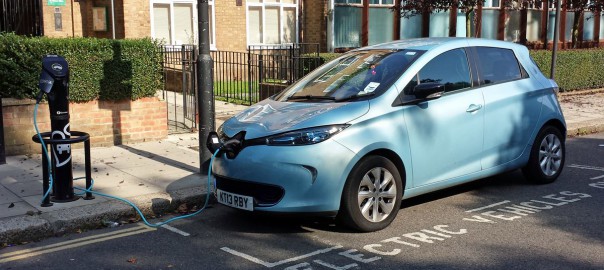
Slow Charging the ZOE at Highgate (Image: T. Larkum)

Make electric car charge point signs green to ‘help them stand out’

An AA survey suggests 85% of drivers think the signs would have ‘more impact’ if they were green.

More than four out of five drivers believe signs for electric vehicle (EV) charge points would be easier to spot if they were green, a new survey suggests.

Some 85% of 17,500 drivers polled by the AA said signs featuring a white “P” in a green box would have “more impact” in indicating the location of charge points.

Slow Charging the ZOE at Highgate (Image: T. Larkum)

This would be instead of a blue box, which is the colour used on designs currently approved by the Department for Transport.

AA head of roads policy Jack Cousens said transforming charge point signage in this “simple” way could make a “big difference” to demand for electric cars by easing concerns over the extent of the charging infrastructure.

He went on:

“Drivers believe there are a lack of charging points, but the case is they are hidden in plain sight. While fuel forecourts have the benefit of large totem poles, charge points can blend into the background.

“Changing to a green parking sign will help them stand out and reassure drivers who are thinking about buying an EV that there are more charge points than they think.”

Read more: Express and Star

It’s Time to Go Green!

If you would like to know more about Solar Panels and the PowerBanx range of home battery systems, and get a free instant quote, please complete our online form:

2020 Renault Zoe (Image: Renault)

Union urges Renault workers at Flins plant not to return to work

PARIS — A trade union representing workers at Renault’s Flins plant near Paris on Sunday urged staff not to return to work before May 11, saying it was still too risky in terms of their health given the coronavirus crisis.

The SUD union said that Renault management had asked workers to return to the Flins plant from April 28/April 29.

2020 Renault Zoe (Image: Renault)

The factory, which builds the Renault Zoe electric small car and the Nissan Micra small hatchback, will be the first Renault assembly plant to start up again after the automaker closed European factories in mid-March. Renault’s other French car plants will resume production in May, Renault has said.

The French government has earmarked May 11 for when it will start to ease a national lockdown imposed in mid-March to tackle the spread of the virus.

Read more: AutoNews

It’s Time to Go Green!

If you would like to know more about Solar Panels and the PowerBanx range of home battery systems, and get a free instant quote, please complete our online form:

Charging Station in Sunderland (Image: Fastned)

EVs and public charging network keep key workers moving in midst of pandemic

  • Zap-Map in partnership with the REA has carried out a survey on EV use during the COVID-19 pandemic
  • 83% EV users still reliant on their EV for essential travel and almost three in ten (29%) are still using the public charging network
  • Almost a quarter of these EV users (24%) identify as ‘key workers’
  • 98% of the public charging infrastructure is operating as normal – although there is an increase on normal reporting rates of issues

A survey by Zap-Map in partnership with the REA has found that EVs and the public charging network are vital for essential travel and keeping ‘key workers’ on the move during the COVID-19 pandemic.

Charging Station in Sunderland (Image: Fastned)

The survey which took data from over 3,000 EV users found that, despite EV use falling significantly in line with the overall reduction in travel, 83% of users are still reliant on their EV for essential travel. Of these, just under a quarter (24%) identify as key workers with the majority of these (36%) working in healthcare with others working across a range of sectors including utilities, food delivery, transport, public safety and education.

Amongst those surveyed, 29% are still using the public and manufacturer-owned charging network. This number increases when looking at key workers, with just under half (47%) reliant on the public charging network. Although this is a reduction in the pre-COVID proportion of usage (which is more than 90%), it demonstrates how important the charging infrastructure continues to be for many EV drivers.

Whilst the vast majority of those surveyed were satisfied with the public and manufacturer-owned network, 21% of users reported experiencing some issues, an increase on normal reporting rates. This number increased to 28% amongst key workers, most likely due to this group utilising the infrastructure more frequently. The two key lockdown-related issues cited are either delays to chargers being repaired and inaccessibility of charge points where a site has been closed or is now behind a barrier.

Zap-Map has also been working closely with the network operators and incorporating direct feedback from EV drivers to identify and highlight the chargers clearly on the map. As it stands, 430 charging points, out of a total of over 18,000 across the UK (2%), have been identified as temporarily non-accessible due to lockdown measures.

In light of the issues identified in the survey, the REA has contacted the Government asking them to classify public and manufacturer-owned EV charging maintenance personnel as key workers. The REA and Zap-Map are also working with the Office for Low Emission Vehicles to fully understanding issues relating to site accessibility.

Read more: REA

It’s Time to Go Green!

If you would like to know more about Solar Panels and the PowerBanx range of home battery systems, and get a free instant quote, please complete our online form:

Renault electric SUV (Image: Auto Express/Playback)

Renault will have new all-electric SUV at the end of 2021

Zoe will no longer be the French brand’s only big bet on the electric market. The SUV will be based on the Renault Morphoz concept

Renault is one of the brands that most bet on all-electric cars – so much so that it simply ignores hybrid cars. But, over time, Zoe has been the French brand’s only major commercial bet in this segment. Now the situation is going to change. According to the English magazine Auto Express, within 18 months a new car with good commercial potential will keep Zoe company. It is an SUV based on the Morphoz concept.

Renault electric SUV (Image: Auto Express/Playback)

Renault’s new electric SUV will be the production version of the Morphoz concept.

According to Auto Express, Renault Group’s head of design, Laurens van den Acker, said: “I hope we can make it look more like a Morphoz. O [conceito] Morphoz was an interesting exercise, because I wanted to make sure that our electric cars had a lot of personality, even if they didn’t have the usual features or elements that a traditional car has, like a large grille; the traditional elements that you encounter in a vehicle ”.

The car uses the new CMF-EV electric car platform from the Renault-Nissan-Mitsubishi Alliance.

Read more: Explica

It’s Time to Go Green!

If you would like to know more about Solar Panels and the PowerBanx range of home battery systems, and get a free instant quote, please complete our online form:

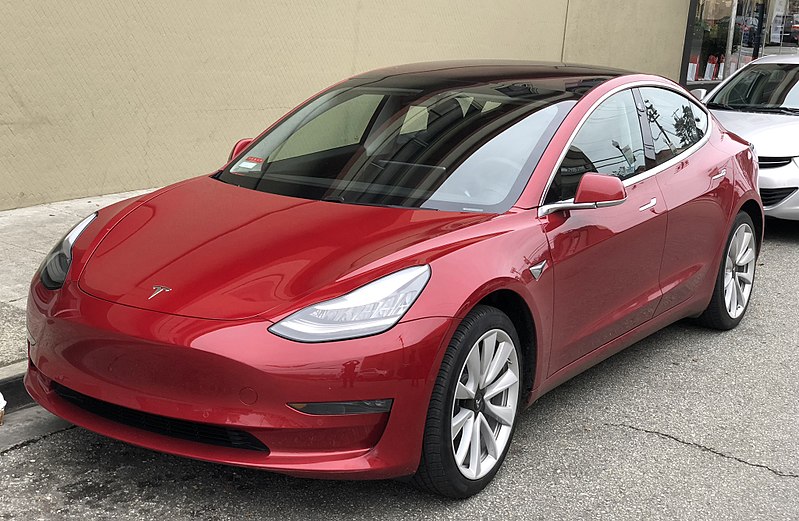
Tesla Model3 (Image: Wikimedia/Carlquinn)

Battery electric cars driven 26% further than petrol models, finds RAC Foundation

Electric cars are driven for 26% more miles in their first three years on the road than petrol models, research from the RAC Foundation has found.

The analysis, which pre-dates the steep fall in road traffic seen since the start of the coronavirus pandemic, is based on the MOT data for 516,936 vehicles.

It found battery electric cars cover an average of 9,435 miles per year over their first three years, compared to a petrol car’s 7,490.

Tesla Model3 (Image: Wikimedia/Carlquinn)

Diesel cars are driven the most, and cover an average of 12,496 miles in each of their first three years.

Steve Gooding, director of the RAC Foundation, said:

“Unsurprisingly people with diesels have been doing most mileage, probably seeking better long-distance fuel economy, but this study is also evidence that battery-electric powered cars are not just trophy vehicles signalling their owners’ green credentials but prior to the lockdown were racking up the miles as everyday transport.

“Tens of millions of people still drive petrol and diesel-powered cars, but this data suggests that owners of electric cars have found them to be a practical proposition, running up the sort of big annual mileages that many of us need to do, challenging preconceptions about their range and the ease of re-charging.”

Read more: Fleet News

It’s Time to Go Green!

If you would like to know more about Solar Panels and the PowerBanx range of home battery systems, and get a free instant quote, please complete our online form: