Monthly Archives: April 2020

Why EV battery recycling is set to take off

Today we look at the matter of recycling batteries – covering why nervousness about their life cycle is overlooking other opportunities, how new efficiencies are being found, and which emerging technologies may influence its future.

Zero to hero

While EV battery recycling is still in its infancy, the industry is projected to be worth over $500 billion by 2050 as the electric car revolution takes off.

In fact, in the past year alone, a number of major global vehicle manufacturers have announced their own recycling schemes alongside the roll-out of their first forays into the EV market, as they understand the potential of this emerging sector. For example, VW’s plant is due to come online in 2020 and will churn out 1,200 tonnes of recovered parts – enough for about 3,000 new batteries, with the potential for greater capacity as EV take-up grows.

59210374 – isometric design of energy efficient house using renewable energy and home energy storage

At present just 5% of all lithium ion-batteries are recycled, and as such the car industry has the potential to revolutionise the way that we recycle everything from smartphones to laptops – with 1.56 billion lithium-ion powered smartphones sold worldwide in 2018 alone, that could have a major impact on reducing mining efforts and supporting a more sustainable, circular economy.

Making gains

As the first generation of EV batteries come to the end of their projected 10-year life cycle, most retain around 70-80% of their capacity. While manufacturers recommend that these are replaced in vehicles, due to the workload that they face and reducing returns for range, these batteries still offer a wealth of capacity which can be used to store solar energy for homes, power streetlights, and as back-up power sources for elevators or data centres.

“A lithium-ion battery never actually dies, it’s just like you can take an alkaline battery out of your flashlight and put it into a remote control, and it’ll still be good enough,” explains Hans Eric Melin, Founder of Circular Energy Storage Research and Consulting.

In short retired EV batteries can immediately begin a second, useful life immediately and offer years more service.

Read more: Fully Charged

It’s Time to Go Green!

If you would like to know more about Solar Panels and the PowerBanx range of home battery systems, and get a free instant quote, please complete our online form:

Electric Car Line-up (Image: Go Ultra Low)

Norway and the A-ha moment that made electric cars the answer

A country fuelled by hydropower has become the world’s electric vehicle leader

In 1995, the lead singer of the 1980s band A-ha and the head of the Norwegian environmental group Bellona climbed improbably into a converted electric Fiat Panda they had imported from Switzerland and set off on a road trip.

Electric Car Line-up (Image: Go Ultra Low)

They drove around Oslo refusing to pay the city’s sky-high road tolls, parking illegally wherever they could, and ignoring every penalty notice they were given. Eventually, the authorities impounded their car and auctioned it off to cover the fines.

But the stunt attracted massive media attention, and the point was made. Soon after, electric vehicles were exempted from road tolls, one of a large raft of incentives that have, over the years, helped make Norway the country with the world’s highest per capita electric vehicle ownership.

Last month, in an economy hit by the coronavirus crisis, fully electric cars accounted for just under 60% of Norway’s new car market, and plug-in hybrids just over 15% – meaning three in four of all new cars sold were either wholly or partly electric.

It still has some way to go, but the country looks on course to meet a government target – set in 2016, with full cross-party parliamentary support – of phasing out the sale of all new fossil-fuel based cars and light commercial vehicles by 2025.

“It’s actually quite amazing how fast the mindset’s changed,” said Christina Bu of the Norwegian EV Electric Vehicle Association. “Even in 2013 or 2014, people were sceptical. Now, a majority of Norwegians will say: my next car will be electric.”

Read more: The Guardian

It’s Time to Go Green!

If you would like to know more about Solar Panels and the PowerBanx range of home battery systems, and get a free instant quote, please complete our online form:

Volkswagen ID.3 electric car (Image: Volkswagen.com)

Electric Cars Fight Off Coronavirus Attack In Europe As Regular Auto Sales Tank

Battery-electric car sales in Europe are holding up well, even as regular internal combustion engine (ICE) demand crashes around them, but forecasters are scaling back much stronger pre-coronavirus predictions.

Projections may yet take a hit if the year’s most important battery electric vehicle (BEV) launch – Volkswagen’s designed-from-the-ground-up to be electric ID.3 – is delayed beyond its promised summer debut date. Delays in software development had threatened that launch, but VW said it still expects an August start to sales.

Volkswagen ID.3 electric car (Image: Volkswagen.com)

And there is a variation on the old adage at work here – it’s an ill-wind that blows nobody any good.

Manufacturers like Audi and Porsche had whipped up a formidable demand for their new electric cars, but shortages of batteries would have led to failures to deliver on time. The fact that the edge has been taken off new BEV demand has spared manufacturers the embarrassment of disappointing these well-heeled customers.

2020 was supposed to be the year when European BEV demand finally accelerated into an unstoppable high gear. These sales are crucial because of European Union (EU) regulations, forcing manufacturers to ratchet up the number of electric cars, with massive fines for those failing to do this. But despite the horrendous market conditions in Europe, where sales of regular ICE vehicles in April might be barely perceptible and most forecasts now reckon overall sales for the year may be down about 20%, BEVs are holding up well.

Read more: Forbes

It’s Time to Go Green!

If you would like to know more about Solar Panels and the PowerBanx range of home battery systems, and get a free instant quote, please complete our online form:

CORONAVIRUS LOCKDOWN GIVES US A TASTE OF A FULLY ELECTRIC FUTURE

More people are considering switching to electric vehicles thanks to improved air conditions during the pandemic.

With less air pollution being documented due to the COVID-19 lockdown, more people are realising the benefits of moving away from petrol and diesel cars according to a study by Venson Automotive Solutions.

Of the participants surveyed by Venson, 45 per cent agreed that the vast improvement in air quality at the current time had made them reconsider owning an electric car (EV) in the future. Another 17 per cent said that it had reaffirmed their decision to buy an electric car.

“Reducing emissions has been a hot topic and a clear government, business and personal target for several years now, but still the growth of electric vehicle (EV) ownership has been slow,” says Alison Bell, Marketing Director at the company. “This is despite evidence that transport is responsible for 23% of global emissions, and driving petrol and diesel fuelled vehicles contributes 72% of the transport sector’s greenhouse gas emissions.”

The global pandemic has given us a taste of the future we could achieve if emissions targets were reached. Urban centres like New York have seen a “sharp reduction” in carbon dioxide, carbon monoxide and methane emissions. With more than half of the world’s population in lockdown, the coronavirus lockdown has even cleared the air in India’s megacities where air pollution often reaches dangerously high levels.

Read more: Euro News

It’s Time to Go Green!

If you would like to know more about Solar Panels and the PowerBanx range of home battery systems, and get a free instant quote, please complete our online form:

IONITY rapid charge points at Leeds Skelton Lake Services (Image: IONITY)

IONITY completes first high-power charging site of Extra MSA deal

IONITY is continuing its rollout of high-power charging (HPC) with the completion of its latest site.

The station – the fourth to be open to the public in Great Britain – is located at Leeds Skelton Lake Services. It is the first UK station to have six of IONITY’s new 350kW chargers, which feature a new design and improved functionality.

IONITY rapid charge points at Leeds Skelton Lake Services (Image: IONITY)

The new chargers use halo lighting to provide customers with information about the charging status of the battery, with illumination to make use in darkness easier. They also have a new position and design of charging cable to make attaching to the car easier than the current units.

IONITY ordered 324 of the chargers from manufacturer ABB in January, with plans to roll them out across 24 countries by the end of 2020.

IONITY also plans to open a further seven HPC facilities with Extra MSA – which operates parts of the UK’s motorway network – during 2020, with the deal between the two announced last year. The other locations have already been selected, with two being the M40 J2 Beaconsfield and M25 J9-J10 Cobham Services.

Read more: Current News

It’s Time to Go Green!

If you would like to know more about Solar Panels and the PowerBanx range of home battery systems, and get a free instant quote, please complete our online form:

Climate crisis: Demand for electric cars triples, as wait times for new vehicles fall

Electric vehicle registrations were up almost 200% year-on-year in March

The demand for electric vehicles is rising dramatically in the UK and the wait time for new electric cars to be made available by manufacturers has fallen significantly.

The findings, from What Car magazine, come after the Society of Motor Manufacturers and Traders (SMMT) announced that new car registrations in Britain fell by 44.4 per cent in March due to the effects of the coronavirus shutdown.

But despite this, electric vehicle registrations were up by 197.4 per cent year-on-year in March, reflecting a surge in interest.

The growing market for electric vehicles comes as the government plans to implement a ban on selling new petrol, diesel or hybrid cars in the UK. In February the government said the ban will be brought forward from 2040 to 2035 “at the latest”.

Experts warned the government 2040 would be too late if the UK wants to achieve its target of net zero greenhouse gas emissions by 2050.

Read more: Independent

It’s Time to Go Green!

If you would like to know more about Solar Panels and the PowerBanx range of home battery systems, and get a free instant quote, please complete our online form:

Charging with an Ohme smart charging cable

How Coronavirus will supercharge the electric vehicle market

There have been plenty of good news stories coming from the automotive sector since the covid-19 outbreak, including car manufacturers switching their production lines to make ventilators.

But, of course, there are concerns about the industry’s economic stability, at the beginning of April 2020 car sales were down 44 per cent.

However, there are three powerful reasons why the electric vehicle market will be supercharged by this dreadful virus and lockdown when it’s over.

Clean refuelling

Firstly, drivers will want electric vehicles because diesel and petrol forecourts will be perceived as unclean. You have to hold the pump the previous person has used, touch the screen or enter the shop to pay. With electricity you can fuel up at your own home for consumers, or at a centralised depot for fleet owners.

Charging with an Ohme smart charging cable
Charging at home

We may all want to get back to normal but some things you can’t unknow, and one of those things is how infection is transmitted.

Preserving environmental gains

Secondly, people will want to do things differently and better. Those who can afford to buy cars will want to play a part in making the world a better, greener place. Already we are seeing how nature is recovery as a result of the lockdown: “This is the first time I have seen such a dramatic drop-off over such a wide area for a specific event,” said Fei Liu, an air quality researcher at NASA’s Goddard Space Flight Centre describing levels of nitrogen dioxide over China.

The nationwide shutdown has led to a big drop in air pollution across the UK’s major cities. For nitrogen dioxide pollution, new data shows that this has almost halved in London, Birmingham, Bristol and Cardiff. Transport contributes 23 per cent of global carbon emissions and driving is by far the largest element of that, contributing 72 per cent of transport carbon emissions.

Read more: Fleet News

It’s Time to Go Green!

If you would like to know more about Solar Panels and the PowerBanx range of home battery systems, and get a free instant quote, please complete our online form:

Ubitricity Electric Avenue project lamppost charging (Image: Siemens)

Ubitricity, Pod Point pause non-essential EV charge point installations

Installations of electric vehicle (EV) chargers are beginning to halt amidst new government guidelines regarding COVID-19.

Ubitricity Electric Avenue project lamppost charging (Image: Siemens)

Speaking to Current± yesterday, ubitricity’s managing director Daniel Bentham said they had received communication from Transport for London and the London boroughs that afternoon, and were told that the installation of EV chargers is not considered to be essential work.

“We’ll be pausing the installation of new charge points under the second phase of the Go Ultra Low City Scheme, but we will still be maintaining and conducting repairs and finishing any works which are currently underway,” Bentham said.

Ubitricity provides “all the hardware and services” for Siemens, which then does the installation works for a number of London boroughs under the Go Ultra Low City Scheme. The pair announced the completion of the UK’s first fully electrified residential avenue of lamppost chargers last week, which Bentham said now feels like “a different world almost”.

“We were on the street last Monday doing the photoshoots and the world changed the next day.”

Read more: Current News

It’s Time to Go Green!

If you would like to know more about Solar Panels and the PowerBanx range of home battery systems, and get a free instant quote, please complete our online form:
Coronavirus lockdown sees air pollution plummet across UK

Air pollution levels in the UK have dropped significantly in the two weeks since the country went into lockdown to stop the spread of coronavirus.

Some cities have seen nitrogen dioxide (NO2) levels fall by up to 60% on the same period last year, analysis shows.

NO2, released from car exhausts, is a serious air pollutant and also indirectly contributes to the warming of the planet.

Campaigners said they hoped it would lead to a permanent change.

Jenny Bates, a Friends of the Earth clean air campaigner, said:

“Seeing this drop in air pollution shows that less traffic can quickly lead to cleaner air.

“Once this dreadful situation is over, we don’t want to rush to go back to where we were or worse, and we can’t have an accelerated return to business as usual.

“We can have a better, cleaner future for ourselves and the planet.”

Read more: BBC

It’s Time to Go Green!

If you would like to know more about Solar Panels and the PowerBanx range of home battery systems, and get a free instant quote, please complete our online form:

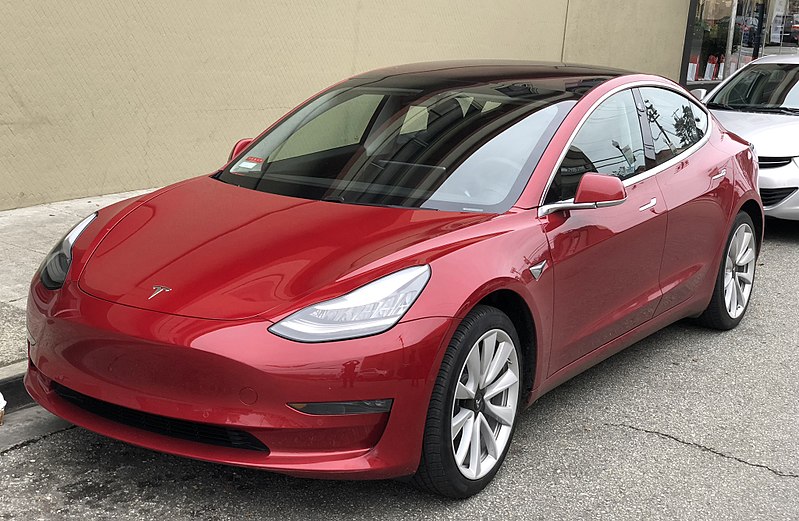
Tesla Model3 (Image: Wikimedia/Carlquinn)

Waiting times for EVs expected to match petrol and diesel as market recovers

The average waiting times for the most popular electric vehicles on sale is expected to match that of conventional petrol and diesel models as the market recovers from the coronavirus crisis, new research has shown.

Though recent figures from the Society of Motor Manufacturers and Traders (SMMT) revealed that new car registrations fell by 44.4 per cent in March due to the effects of the worldwide pandemic, electric car registrations rose by 197.4 per cent year-on-year.

Tesla Model3 (Image: Wikimedia/Carlquinn)

Despite this increase in demand, the average waiting time for electric models has fallen significantly over the last 12 months, with the majority of EVs now available within 12 weeks, according to analysis by WhatCar?.

It contrasts with waiting times in 2019, which often exceeded 12 months.

The research also found that eight manufacturers have stock of their electric models in the UK now, which will allow for even shorter waiting times between ordering and taking delivery. These include the Tesla Model 3 and the Renault Zoe.

Read more: AOL

It’s Time to Go Green!

If you would like to know more about Solar Panels and the PowerBanx range of home battery systems, and get a free instant quote, please complete our online form: