Monthly Archives: February 2020

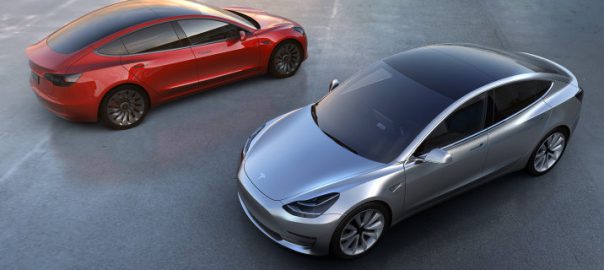
Tesla Model 3 Unveil (Image: Tesla)

How a Tesla Model 3 became safe haven in Australian bushfires

Cooler conditions have dampened the devastating bushfires that have ravaged Australia this summer, even though some areas are still under threat.

But an uplifting story has emerged of how one family’s experience was made easier thanks to owning an electric vehicle.

Rather than being an impediment in a fire emergency and at risk of running out of driving range, electric vehicle owner Garry Thorpe says his Tesla Model 3 was “brilliant”.

Tesla Model 3 Unveil (Image: Tesla)
Tesla Model 3 (Image: Tesla)

Evacuating residents and holidaymakers told tales of fuel, food and water shortages during the bushfire crisis – but this wasn’t the case for Thorpe and his family of 18, including 10 grandchildren.

“Tesla was brilliant. In a disaster, both power and petrol are rapidly unavailable. When power is restored, fuel is hard to come by,” Thorpe said, recounting the experience in Facebook group “Electric Vehicles for Australia“.

“My experience was that I could get a “full tank” before the crisis arrived, and as soon as the power was back on, could get a “full tank” easier than petrol. The car AC (air conditioning) was brilliant, you can run it for hours with hardly any power drain.”

Read more: The Driven

It’s Time to Go Green!

If you would like to know more about Solar Panels and the PowerBanx range of home battery systems, and get a free instant quote, please complete our online form:

Vauxhall Grandland X Hybrid4 (Image: Vauxhall.co.uk)

Vauxhall Grandland X Hybrid4 2020 review

The first PHEV to wear the Griffin badge delivers hot hatch pace – but can it match premium competition for ride refinement and interior finish?

What is it?

Meet one half of Vauxhall’s two-step journey towards electrifying its entire passenger car line-up by 2024 – a journey set to make its other significant stride forward in just a few months with the arrival of the Corsa-e electric supermini.

The Grandland X Hybrid4 is the first ever plug-in hybrid to wear a Vauxhall badge, 2012’s Ampera being, strictly speaking, a range-extender electric car rather than a PHEV. With a 13.2kW battery, it can deliver as much as 35 miles of zero-emissions range – enough, says Vauxhall, for 80% of customers to do the majority of their driving on electricity alone. A 7.2kW wall box can then recharge it in under two hours, though only if you pay £500 for the option.

Vauxhall Grandland X Hybrid4 (Image: Vauxhall.co.uk)

Of more interest to the average Autocar reader? That this is also the most powerful production Vauxhall on sale today, a pair of electric motors and PSA’s familiar 1.6-litre turbocharged four-pot petrol engine sending 296bhp to all four wheels. 0-60 takes a claimed 5.9 seconds, or enough to raise the eyebrow of the average hot hatchback owner.

In the UK, the all-wheel drive Hybrid4 starts with with the well-equipped SRi Nav trim, at £41,500. Our test car, a top-spec Ultimate Nav which adds niceties such as advanced park assist, premium audio and bespoke LED headlights, was an altogether more ambitious £46,650. That isn’t too far removed from premium plug-ins from Audi, BMW and Volvo. Fleet customers may be more tempted by the Business Edition at roughly £37,000, but private buyers may want to wait for the less pricey, front-drive only variant set to follow later in the year, with an equally attractive benefit-in-kind tax rate.

Read more: Autocar

It’s Time to Go Green!

If you would like to know more about Solar Panels and the PowerBanx range of home battery systems, and get a free instant quote, please complete our online form:

Renault Zoe retains its fastest selling used car title

Renault’s electric automatic Zoe electric vehicle (EV) has retained its title as the fastest selling used car in the UK, with the 2016 variant taking the top spot in the first review of the Auto Trader Fastest Selling Index of the year.

The result adds further weight to the prediction from automotive analysts that 2020 is set to be the year of the electric car. The latest figures from the Index, which live tracks the speed at which vehicles sell combined with a 1-100 Retail Rating determined by live supply and demand, showed that the French ultra-low emission vehicle (ULEV) currently has the potential to leave forecourts in just 25 days. Despite the 2016 variant topping January’s list, with just one Zoe featuring on the top 10, January marks a slight decline in popularity compared to December, where three made the list.

2018 – Renault ZOE

“Despite a slight increase of traditional fuelled vehicles on the top 10, it’s impossible to ignore the huge shift in consumer perception towards low emission cars”

said Auto Trader’s director of commercial products, Karolina Edwards-Smajda, commenting on the Index.

“Whilst we’re a long way from mass adoption, every metric on our marketplace indicates an ever-growing appetite for electric. Not only has the ZOE continued its reign into the new year, but over the last 12 months we’ve seen a significant 78 percent increase in searches for EVs on Auto Trader. With more and more new generation models set to reach showrooms this year, coupled with fast improving infrastructure, its looking increasingly likely that 2020 will indeed be the year of electric.”

Read more: Renewable Energy Magazine

It’s Time to Go Green!

If you would like to know more about Solar Panels and the PowerBanx range of home battery systems, and get a free instant quote, please complete our online form:

Honda e Electric Car (Image: Honda.co.uk)

Honda E Advance 2020 review

An eminently likeable and capable small car with good dynamics but a limited range and an ambitious price

What is it?

A theme common to many electric cars is that their weight and architecture lead to them feeling lead-footed and brittle. The Honda E has circumnavigated that issue. So, whatever else comes of this sub-supermini hatchback, attractive but not quite as pretty as the concept that preceded it, one of its plus points will be the way it drives.

Honda e Electric Car (Image: Honda.co.uk)

Its new platform provides allround independent suspension with a MacPherson strut at each corner; dynamically, Honda has targeted much larger cars. For rolling comfort, smoothness and refinement, the E succeeds where others have not.

There is a catch, of course. This is a compact car – 3.9m long – that can be so only because it has a small energy store. While almost every manufacturer strives to fit a capacity of 60kWh or more (the Nissan Leaf e+ has 62kWh), the E has a liquid-cooled battery pack of just 35.5kWh between its axles. Resulting range, in 151bhp form, is a WLTP-certified 125 miles on 17in wheels or 137 miles on 16in wheels. And on our cold test day, it managed even less than that.

The E comes in two flavours: the regular 134bhp model and the 151bhp Advance tested here, which respectively cost a not-insignificant £26,160 and £28,660 after the plugin grant. Both can be slow-charged at a rate of up to 6.6kW or DC rapid-charged at up to 100kW, although a 50kW fill will be almost as quick – 31 minutes from 0-80%, rather than 30. It’s like flying from Birmingham to Newcastle: no sooner than you’re up to speed, it’s time to wind down again.

Read more: Autocar

It’s Time to Go Green!

If you would like to know more about Solar Panels and the PowerBanx range of home battery systems, and get a free instant quote, please complete our online form:
How Soon Will Electric Vehicles Kill The Gasoline Car?

When I talk about exponential growth in clean transportation—or say anything optimistic about climate change—the pessimists baulk.

C’mon, they say, the overwhelming majority of our electricity comes from fossil fuels. Demand for oil is still growing. Electric vehicles (EVs) are a miniscule percentage of cars sold. What good can a few wealthy Tesla owners possibly do for the environment?

To pessimists, the EV revolution seems underwhelming. That’s because they underestimate the power of exponential growth.

Optimists don’t demand instant results from innovation. Rather, they recognize how sudden technological transformation can be. Societies won’t register the full potential of EVs until moments before they sweep gasoline cars into the dustbin of history.

What Exponential Growth Really Means

People say that innovations like the Internet, smartphone and social media grew “exponentially” because they radically changed our lives within a few years of appearing. But what do we mean by “exponential”? The late physics professor Al Bartlett used to demonstrate the shocking power of exponential growth very clearly.

Imagine a glass with one bacterium that divides into two bacteria every minute. In one hour, that doubling process fills the glass. If you started the process at 11 am, at what time would the glass be half full?

Many people assume 11:30 am. In reality, the glass is only half full at 11:59 am. At 11:58, it’s 25% full, and at 11:55, it’s only 3% full! 97% seems like business as usual, with no tipping point in sight. The progress seems unimpressive until the moment the bacteria become ubiquitous. The same is likely true of electric vehicles.

Read more: Forbes

It’s Time to Go Green!

If you would like to know more about Solar Panels and the PowerBanx range of home battery systems, and get a free instant quote, please complete our online form:

Nissan supplies discounted Leaf EVs to Uber in London

Mobility service plans for all 45,000 of its London drivers to use electric vehicles by 2025

Nissan will supply 2000 Leaf EVs to Uber in London, as part of the mobility service’s goal to make its fleet in the capital fully electric by 2025.

Supplied in entry-level 40kWh guise, the Sunderland-built Leaf offers Uber drivers 168 miles of range per charge. Nissan is supplying the electric hatch to the ride-hailing firm at a ‘dedicated transaction price’, offering drivers around £4500 off the car’s £26,345 list price, depending on the number of miles they have driven.

The company has added a 15p ‘Clean Air Fee’ to all journeys made in London, which will be used to help its employees pay for the new Nissan models.

Uber hopes that all 45,000 Uber cars operating in London will be fully electric by 2025, and has so far raised £80 million to “support drivers transitioning to electric vehicles”. After switching into an EV, the Clean Air Fee will go towards the driver’s ongoing operating costs.

Uber’s ‘Clean Air Plan’ to reduce emissions came into effect in January 2019. The company claims 900,000 trips across the capital have been made in electric vehicles since then – a 350% increase over 2018 – and that more than 500 drivers per week are using fully electric cars.

Read more: Autocar

It’s Time to Go Green!

If you would like to know more about Solar Panels and the PowerBanx range of home battery systems, and get a free instant quote, please complete our online form:

Thinking Of Going Green? Cost And Other Realities Of Electric Vehicles

Owning a new compact electric vehicle, based on more than five years and 75,000 miles of driving, is only slightly more expensive – about $600 annually – than its gas-powered counterpart, and the experience of actually having a plug-in car eases a common fear: range anxiety.

Those are the highlights of new research that examined electric vehicle ownership released on Monday by the AAA automotive group.

“Although 40 million Americans have shown interest in buying electric for their next car, actual adoption is happening at a much slower rate,” Greg Brannon, AAA’s director of automotive engineering and industry relations, said in a statement. “AAA wanted to understand what kind of impact the experience of owning an electric vehicle has on perception of these cars and maybe more importantly, if given the chance would consumers choose to go green again.”

The analysis was based on a survey conducted in late 2019 by the AAA of 1,090 plug-in electric vehicle (PEV) owners , 71% of whom had not previously owned an electric car.

From the report:

—prior to owning an electric vehicle, most owners (91%) said that they had at least one concern, like insufficient range and finding a place to charge, but post purchase, many of these worries disappeared. (Previous AAA research found that the top two reasons why Americans shy away from electric vehicles are: not enough places to charge and the fear that they will run out of charge while driving.)

— the majority (96%) of respondents say they would buy or lease another electric vehicle the next time they were in the market for a new car.

– two in five (43%) owners said they drive more now than when they owned a gas-powered car.

— three quarters (78%) indicated that they also had a gas-powered car in the household, but reported doing most of their driving (87%) in their electric vehicle.

Read more: Forbes

It’s Time to Go Green!

If you would like to know more about Solar Panels and the PowerBanx range of home battery systems, and get a free instant quote, please complete our online form:

Electric car sales are rising, but so are emissions. What’s going on?

More of us are buying electric cars than ever before, but our emissions are still going up. Falling diesel and rising SUV sales are to blame

Here’s a misleading statistic: UK electric car sales doubled in 2019. According to market insights firm LMC Automotive, battery electric vehicles made up 1.6 per cent of UK sales in 2019, about double the year before. But this doesn’t mean the UK’s automotive emissions are heading in the right direction. The reality is far more murky.

Last year, the average carbon dioxide (CO2) emissions of cars sold in the UK rose for the third year in a row. And for every electric car purchased in 2019, we bought 37 SUVs. Our growing interest in bigger, heavier vehicles, plus the sudden decline in diesel car sales, has pulled the UK further away from its looming transport emissions targets.

It’s a big step backwards, at exactly the wrong moment. The average CO2 emissions per kilometre for UK cars now stands at 127.9 grams – well past the EU’s new target of 95g of CO2 per kilometre for new cars. If auto manufacturers don’t hit the target, they’ll be hit with big fines.

“It’s going to be a tough couple of years,” says Al Bedwell, head of powertrain forecast at LMC. “At the moment the gap between where CO2 is now and where it needs to be at the end of next year, for some car makers, is pretty big. So there’s a real dilemma.” Car brands may need to start selling electric vehicles at a loss in order to meet the goals, he says. “There is definitely a risk that some of them will miss the target and will end up paying quite big fines to the commission.”

Read more: Wired

It’s Time to Go Green!

If you would like to know more about Solar Panels and the PowerBanx range of home battery systems, and get a free instant quote, please complete our online form:

Norway cracks down: Is “self-charging” a misleading way to pitch hybrids

The phrase “self-charging” has been quite the lightning rod among electric-vehicle enthusiasts—especially in Norway.

Toyota’s Lexus luxury brand has continued—there, and in the UK and elsewhere in Europe—to run an ad campaign describing its hybrids as such.

In this era of wireless charging for our personal devices and on its way to more cars themselves (in BMW plug-in hybrids, for instance)—or with solar becoming increasingly feasible—some of Lexus’ explanations about being charged when you’re ready and never needing to be plugged in are potentially confusing at the least.

What is a Lexus self-charging hybrid?

Despite wide-ranging pushback on social media—some of it suggesting, tongue-in-cheek, that the models must employ some sort of perpetual motion machine—Lexus has continued the campaign with its recent NX and UX hybrids.

Last month, Norway’s national Consumer Authority has stepped in about the campaign and presentation—finding that it is misleading to declare that the cars “produce their own electricity.”

The government agency, in a statement, found that [translated] it’s misleading to say that the electrical power in the hybrid battery is free, since the electricity produced by the car has gasoline consumption as a necessary condition. It issued specific advertising to be removed by December 20, and while it appears that mentions of free charging have been purged, as of January 25 Lexus is still advertising its hybrids on its Norwegian site as self-charging.

Read more: Green Car Reports

It’s Time to Go Green!

If you would like to know more about Solar Panels and the PowerBanx range of home battery systems, and get a free instant quote, please complete our online form:

Renault ZOE 2020 (Image: Renault.com)

Renault Zoe Wins 2019 EV Model Trophy In Germany, BMW Wins Manufacturer Trophy

The German plug-in electric passenger vehicle market ended the year on fire, with registrations more than doubling in December, to 11,328 registrations.

Plug-in hybrids (PHEVs) were up 198% year over year (YoY), pulling the market up significantly and balancing the 2019 BEV/PHEV share to 58% BEV (fully electric) vs. 42% PHEV (51% / 49% in December).

The PEV share climbed to 4% in December, with BEVs alone hitting 2%, while the final plug-in vehicle (PEV) share for 2019 ended at a record 3% (1.8% BEVs).

Renault ZOE 2020 (Image: Renault.com)

Looking at December best sellers, the Mercedes E300e/de twins three-peated the monthly leadership, with 964 units narrowly beating the high tide Tesla Model 3 (926 units). In addition, the Renault Zoe returned to the podium, with 780 units, signaling the return of the French hatchback.

Just off the podium we have the forever young VW e-Golf, with 764 units registered, while the BMW i3 closes this top 5 thanks to 630 registrations, just barely beating the #6 Smart Fortwo EV (623 units) to the finish line.

Read more: Clean Tecnhica

It’s Time to Go Green!

If you would like to know more about Solar Panels and the PowerBanx range of home battery systems, and get a free instant quote, please complete our online form: