Monthly Archives: November 2019

Ford Mustang Mach-E (Image: Ford.co.uk)

2020 Ford Mustang Mach-E electric SUV revealed: price, specs and release date

The Ford Mustang Mach-E has the longest range of any electric SUV and a high-tech interior. Here’s everything you need to know about it…

When it comes to living up to a name, the new Ford Mustang Mach-E has one of the greatest. You see, the original Ford Mustang was such a hit that almost 22,000 of them were sold on the day it was unveiled at the 1964 World’s Fair. Buyers loved the idea of a family car with a big engine that didn’t cost the Earth to buy or run – and those attributes have contributed to the Mustang becoming one of the best-selling nameplates in the world. The Mach-E, however, is a very different type of Mustang.

Ford Mustang Mach-E (Image: Ford.co.uk)

2020 Ford Mustang Mach-E power and range

For one thing, it’s electric. It will be offered with a choice of two battery capacities and three power outputs, plus the option of four-wheel drive. Entry-level models come with a 75kWh battery and 255bhp, while the 99kWh model offers 282bhp as standard but can be boosted to 333bhp. How far you’ll get on a charge depends on which version you go for, but the Mustang Mach-E’s anticipated WLTP range varies from 260 to 370 miles. If you go for the bigger battery and stick with rear-wheel drive, then, the Mustang Mach-E should have the longest official range of any electric SUV.

As well as a long range, Ford is also promising performance that befits the Mustang badge, with the Mach-E able to reach 62mph from a standing start in less than seven seconds. Buyers wanting even more performance won’t have long to wait, either, because Ford has confirmed that a high-performance GT model will be coming later. For now, every Mustang Mach-E model is limited to 111mph.

Read more: What Car 

Get The Right PowerBanx For Your Home

If you would like to know more about Solar Panels and the PowerBanx range of home battery systems, and get a free instant quote, please complete our online form:
2020 Renault Zoe (Image: Renault)

Renault Zoe R135

The Zoe is back, and with improved range and residual value forecast, can it prove itself as a fleet favourite in the EV sector?

It may feel like yesterday that the Renault Zoe burst onto the scene, but in electric car years, being born in 2012 makes you pretty ancient.

Renault has already given the Zoe a few nips and tucks, but noticing the fast-paced electric vehicle (EV) market evolving, it was time for a refresh.

2020 Renault Zoe (Image: Renault)

The revised Zoe has been given a fresh new look, consisting of a tweaked nose, more chrome, and full LED lights front and rear, plus new wheels and colours. It has also been given a bigger, bolder Renault logo (which hides charging ports), and from the front, you could quite easily confuse the Zoe’s more grown up look with the Clio.

Battery boost

It may not come as a big surprise that the main focus of this upgrade is increased battery capacity; the Zoe now offers up to 245 miles of range on a single charge, depending on spec and wheel size. That is around a third more than the previous model could manage, and is a necessary update if the Zoe wants to keep up with rivals.

This new update brings with it the option of a rapid DC charging upgrade, although it is worth mentioning this is a £750 option. We can’t help but feel this is an odd decision by Renault, and perhaps something that should instead be standard. Opting for this means you can conveniently charge from 0-80% in just over an hour using a 50kW DC rapid charger. A regular roadside charger with 22kW will give you 100% in three hours, while an at-home wallbox can do it in about nine and a half hours.

There is also a choice of two electric motors: the Zoe’s existing 109hp unit – badged the R110 and carried over from the previous model, – or this brand new R135 with 135hp and 245nm of torque.

Read more: Business Car 

Get The Right PowerBanx For Your Home

If you would like to know more about Solar Panels and the PowerBanx range of home battery systems, and get a free instant quote, please complete our online form:

VW e-Golf (Image: Volkswagen.co.uk)

THE LIFE ELECTRIC: HOW FIVE YEARS OF DRIVING EVS CONVERTED A HARDCORE ENTHUSIAST

A little disclaimer before we start this article. I don’t consider myself an environmentalist and I don’t constantly talk about things like sustainability or my carbon footprint.

As a lifelong gearheard, I’m also not one of those who feels like every drop of fuel burned in the name of fun is a crime. Nor am I a tech-obsessed Tesla fanboy who kneels at the altar of Elon Musk and praises all things the company does. But after driving about 50,000 miles behind the wheel of EVs, I’m fully sold on electric cars for daily life and I want to tell you why.

I’ve been obsessed with cars of all shapes and sizes since I was a toddler. I love the sounds of engines, the feeling of shifting through the gears and the distinct ways different types of cars deliver their power. I dig big V8s, loud turbos, built engines screaming to redline and fuel-sucking carbs—and I always will.

VW e-Golf (Image: Volkswagen.co.uk)

I’m also a person who is constantly annoyed by the oppressive emission laws in my home state of California, especially the ones that have no real impact on emissions but make it difficult or impossible to enjoy the automotive hobby the same way people in other states do.

But despite all of this, I’ve become a convert of the EV movement, and after half a decade of driving electric vehicles day-in and day-out I’m at the point where I can’t really imagine myself not having at least one of them in the garage.

For me it all started back in the summer of 2014 when I heard from some friends about how cheap you could lease the Fiat 500e EV for. With all of the upfront discounts and post-purchase rebates people were telling stories of driving a brand new electric car for less than they were paying for their cable bill each month.

Read more: Driving Line

Get The Right PowerBanx For Your Home

If you would like to know more about Solar Panels and the PowerBanx range of home battery systems, and get a free instant quote, please complete our online form:
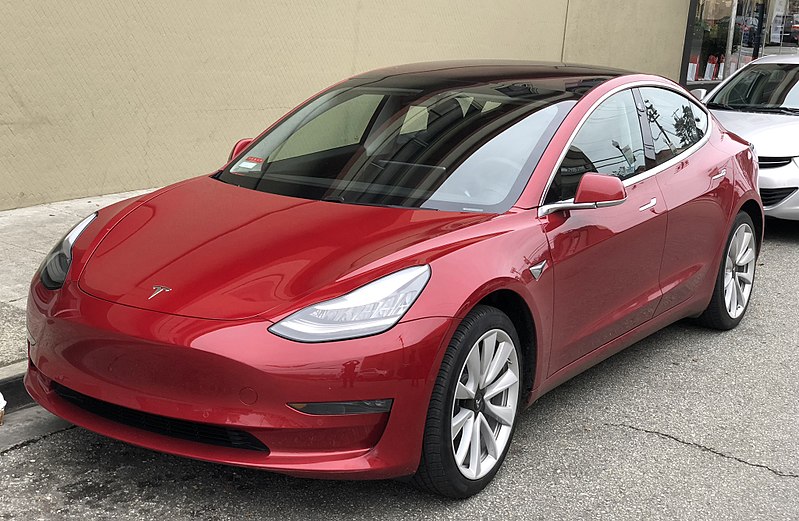
Tesla Model3 (Image: Wikimedia/Carlquinn)

BMW’s Tesla Model 3 Fears Are Already Happening

Model 3 owners are ditching BMWs.

Tesla’s production delays surrounding the Model 3 may have caused headaches for investors, anxious customers, and even CEO Elon Musk, but those days appear to be over. The era of the Model 3 is underway and the all-electric sedan continues to be a phenomenal success. A fascinating new study from Bloomberg has gone into depth about not only the EV sedan’s sales success but, equally important, who is buying them and what brand is suffering the most from the Model 3’s success.

One important fact: no other sedan in America is generating more revenue right now than the Model 3.

Tesla Model3 (Image: Wikimedia/Carlquinn)

Costing around $50,000 on average, the Model 3 continues to significantly dent BMW 3 Series and Mercedes-Benz C-Class sales by outselling them both. Bloomberg asked 5,000 Model 3 owners questions about their previous cars and, interestingly, whether or not they’d buy them again. Which makes and models did these Model 3 owners trade-in?

Examples include the Honda Accord and Civic, Toyota Camry, and the Mazda 3. But the greatest percentage of the Model’s total sales came from former BMW drivers, as the responses indicate. Tesla, amazingly, has succeeded in breaking so-called brand loyalties in a record period of time. Often times, brand loyalties are passed down from generation to generation. But thanks to continued hype, Musk constantly being in the news (for better or worse), and environmental concerns, drivers from various backgrounds and incomes want to try something new.

“I’ve owned three BMW 3 Series and was a diehard BMW fan,” one Model 3 owner responded. “The Tesla blows those cars away.” Not everyone can afford a BMW, but the Model 3 is still affordable enough for many mainstream buyers. “I’m not rich, I’m an ordinary man with an ordinary job. I am exactly the buyer Elon Musk hoped to attract,” another owner responded. Tesla does not even spend money on advertisements, relying instead on product events, social media, and referrals.

Read more: Car Buzz


Get The Right PowerBanx For Your Home

If you would like to know more about Solar Panels and the PowerBanx range of home battery systems, and get a free instant quote, please complete our online form:

Conservatives outline fresh £500 million pledge for electric vehicles

A new Conservative government would plough an additional £500 million into EV charging infrastructure and new electric vehicles, ensuring there was a chargepoint within 30 miles of each home in England and Wales.

That was the central pledge within Conservative leader Boris Johnson’s latest election speech, delivered late Wednesday afternoon, alongside increased investment in R&D and a ramp-up of offshore wind development.

Campaigning for next month’s General Election started in earnest this week, with Johnson delivering a speech at the London Electric Vehicle Company’s manufacturing facility in the West Midlands, a speech billed as one highlighting the Tories’ proposed ‘Green Revolution’.

“Here in the West Midlands – the home of the first industrial revolution – we are seeing a new industrial revolution, a green industrial revolution, creating thousands of jobs of environmentally sustainable technologies and thousands of jobs,” said Johnson.

Much of the talk centred on the damage Brexit hesitancy has caused for the energy sector and more broadly investment, saying “we have to get Brexit done because it is also the best thing for the economy.”

While not explicitly mentioned within Johnson’s speech, further detail supplied by the Conservative Party detailed an additional £500 million of funding for electric vehicles and associated infrastructure, coming on top of the £400 million Charging Infrastructure Investment Fund (CIIF) that is up and running.

Read more: Current News


Get The Right PowerBanx For Your Home

If you would like to know more about Solar Panels and the PowerBanx range of home battery systems, and get a free instant quote, please complete our online form:

SEAT Mii Electric (Image: Seat.co.uk)

SEAT Mii electric 2020 Road Test

At £19,300 (after the £3,500 Plug In Car Grant) the SEAT Mii electric makes a lot of sense to a lot of people, not least the people who actually make it.

It’s a 5-door 4-seater with a maximum fair weather range of 162 miles, which is more than enough for most commuters, suburban drivers and the elderly and disabled for whom a car is their legs.

SEAT Mii Electric (Image: Seat.co.uk)

More importantly, with zero tailpipe emissions, it cuts the maker’s corporate average CO2 to a level that reduces EC fines and avoids some of the 10%-20% price increases that would otherwise have to be passed on to carbuyers generally from 2020 onwards. The more SEAT Mii electric EVs, Skoda Citgo electric EVs and e-Ups that VAG can sell, the less it has to charge for Porsches, Lamborghinis and Bentleys. The entire Mii, Citigo and most Up production line has been switched from petrol engined cars to EVs. In fact VAG is going all out to reduce its corporate carbon footprint with the Golf sized ID3; Golf VIIIs, new model Octavias and Q3 48v mild hybrids; Golf, Passat and Q5 PHEVs. A lot of vehicles.

The Mii electric comes decently trimmed and equipped with electric front windows, central locking, heated front seats, immobiliser as well as side and curtain airbags as standard. All have includes Climatronic a/c, TomTom satnav, lane assist, traffic sign reminder, hill hold and ‘SEAT drive profile’ (normal, eco, eco+).

Smartphone integration with the Drive Mii app includes a universal smartphone cradle that enables you to use the satnav on your phone such as TomTom® in the Drive Mii App, Google Maps, Waze or whatever you want. You also get handwriting recognition, Eco Trainer, USB port and an AUX-in port.

Read more: Honest John


Get The Right PowerBanx For Your Home

If you would like to know more about the PowerBanx range of home battery systems, and get a free instant quote, please complete our online form:

Tesla Model 3 (Image: Tesla.com)

Elon Musk says Brexit made him decide against Tesla electric car Gigafactory in UK

‘Brexit made it too risky to put a Gigafactory in the UK’

Electric car pioneer Elon Musk has picked Germany for his new factory because of Brexit, embarrassing Boris Johnson as he prepares to pledge a “clean-energy revolution”.

The prime minister is due to make a televised speech at an electric-car plant in the West Midlands – but the visit risks being overshadowed by Mr Musk’s change of heart.

Tesla Model 3 (Image: Tesla.com)

At an award ceremony in Germany, the entrepreneur announced: “We’ve decided to put the Tesla Gigafactory Europe in the Berlin area.”

And speaking to Auto Express, he blamed Brexit uncertainty for his decision to drop plans to build a research and development base in the UK, which will now also go to Germany.

“Brexit made it too risky to put a Gigafactory in the UK,” Mr Musk said, referring to Tesla’s new battery and electric vehicle plant.

Mr Johnson has claimed investors are ready to unleash development plans in the UK if his Brexit deal is passed – but is facing renewed criticism that it will be a hard Brexit that will deter companies.

Read more: Independent


Get The Right PowerBanx For Your Home

If you would like to know more about the PowerBanx range of home battery systems, and get a free instant quote, please complete our online form:
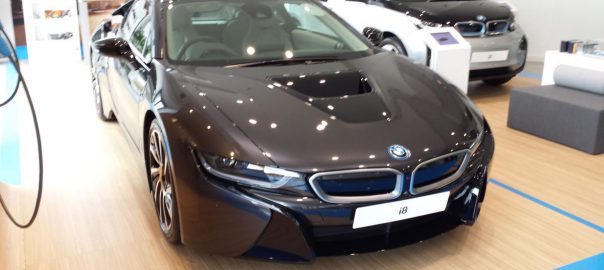
BMW i8 in Sophisto Grey (Image: T. Larkum)

‘No way around electrification,’ BMW says

Consumers are increasingly turning to electric vehicles – and they’re liking it, said BMW’s chief lobbyist in Europe, calling on policymakers to accelerate charging infrastructure deployment to support the roll-out of electric mobility on a mass scale.

“Our customers, what do they do? The good news is that they are starting to buy electric vehicles,” said Andreas Klugescheid, head of external affairs at the BMW Group, referring to plug-in hybrids as well as fully electric vehicles.

The EU’s newly-adopted CO2 emission standards for cars mean “there is no way around electrification,” he told the audience at a EURACTIV event, held in the automaker’s flagship Brussels store on Wednesday (6 November).

BMW i8 in Sophisto Grey (Image: T. Larkum)

In contrast to rival carmaker Volkswagen, BMW has opted for a softer transition to electric mobility. While Volkswagen plans to build 22 million EVs over the next ten years, BMW has hedged its bets on plug-in hybrids as well as fully-electric vehicles. And Klugescheid didn’t rule out other alternatives, saying hydrogen and eFuels will also play a key role in decarbonising transport, especially for long-haul, heavy-duty trucks.

But when it comes to personal cars, the battery electric vehicle stands out as a clear winner.

“People start to buy these vehicles. And they’re happy with them,” Klugescheid said. But the infrastructure does not follow customers’ expectations, he warned, calling on policymakers to accelerate deployment of charging points across Europe.

“The next charging point is 30km away from our house,” Klugescheid said. “And not everybody owns a house with a good charging infrastructure,” he pointed out. “So the message is clear: infrastructure is a topic” if Europe wants electric vehicles to be adopted on a mass scale.

Things are moving forward, however. On Monday, German automakers met with top government representatives and agreed to roll out 1 million charging points for electric vehicles across the country by 2030.

Read more: Euractiv

Honda e Electric Car (Image: Honda.co.uk)

Honda works on second EV, quits diesel, and puts hydrogen on hold

There’s no doubt that Honda fell behind on electric cars. Beat up the company as much as you like about its meager EV offerings to date.

But also consider signs that the Japanese automaker is slowly correcting its course. In addition to introducing the small Honda E in Europe next year, Honda is working on a second EV for about 2022. Other small victories include quitting diesel, putting hydrogen indefinitely on hold, and agreeing with California’s emissions standards.

In late October, at Honda’s “Electric Vision” event in Amsterdam, the company said it was “electrifying” its entire product line, which mostly means hybrids. But hold on. Tom Gardner, senior vice president of Honda Motor Europe Honda, also said, “We will bring further battery-electric products to the market.” The company is starting to talk the talk, a good first step.

The retro all-electric Honda E city car will arrive on European roads in summer 2020. Unfortunately, the $33,000 small EV with a 35.5-kWh pack (offering about 125 miles of range) is not coming to the United States.

Honda e Electric Car (Image: Honda.co.uk)

Honda will focus its EV efforts first on Europe, where electric-car demand is on the rise. Gardner told Driving.co.uk that the electric car market in the UK grew from 2% in 2015 to 7% or 8% today. “It’s beginning to be significant,” he said.

European emissions regulations are also a chief motivator. “The pace of change in regulation, the market, and consumer behavior in Europe means that the shift toward electrification is happening faster here than anywhere else in the world,” Gardner said.

Read more: Electrek

Red Tesla Model S (Image: T. Larkum)

James May: Cars Have to go Electric, Whether You Like It or Not

“I’m convinced that cars ought by right to be driven by electric motors”

WHILE JEREMY Clarkson has gone on record to say he will never, ever buy an electric car, his colleagues on The Grand Tour appear to be more open-minded about motoring minus petrol or diesel.

James May in particular has started to stand out as an especially big fan of zero emission vehicles. As well as owning an assortment of them, including Tesla Model S and leasing a Toyota Mirai hydrogen fuel-cell car (which is also powered by an electric motor), and testing a new electric superbike, he has gone on the record to say that today’s crop of EVs are “already as exciting as petrol-powered cars“.

Red Tesla Model S (Image: T. Larkum)

In fact, writing in today’s Sunday Times, May goes as far to suggest cars will be considerably better once the motoring industry finally decides to ditch fossil fuels for good.

He writes: “We’ve known since we have had the word “car” that the electric motor (which, by the way, predates the internal combustion engine) makes more sense. It’s light, compact, smooth-running, famously reliable, has excellent power and torque characteristics, is easy to produce and is virtually maintenance-free. It’s a bit of a 19th-century no-brainer.”

If those comments weren’t enough for dyed-in-the-wool petrolheads to get rubbed up the wrong way, May adds that he’s convinced cars “ought by right to be driven by electric motors”.

Read more: Driving