Monthly Archives: December 2018

Germany gets huge EV charging station for 4,000 electric cars

German utility vehicle maker Sortimo has embarked upon what it says will be the world’s largest EV charging station on the A8 highway at Zusmarshausen between Stuttgart and Munich.

The completed project, which is set to offer 144 charging stations, will be able to charge up to 4,000 electric cars a day, every day, and will include 24 “fast chargers” rated German utility vehicle maker Sortimo has embarked upon what it says will be the world’s largest EV charging station on the A8 highway at Zusmarshausen between Stuttgart and Munich. 350kW DC and 120 rated at 50kW DC.

Charging infrastructure is one of the key factors in creating a smooth and robust transition to electric vehicles, and the speed with which EVs can charge according to charger capacity (and what drivers do while that happens) must also be taken into account.

A similar but smaller scheme in Holland (Image: FastNed)

Sortimo has recognised this need – while the 350kW will allow EVs to charge in as little as 10 minutes, the 50kW chargers require longer, so Sortimo’s charging station project is complimented by an “Innovation Park” which includes a shopping centre and conference rooms where drivers may book rooms for meetings while they wait.

Sortimo’s plans including storage of surplus renewable energy harvested from a network of surrounding companies and private homes, as well as thermal management to use waste heat to help power the park’s buildings.

When the project is finished, Sortimo states that for each year the station is use, 60,000 tons of CO2 emissions will be saved.

Read more: The Driven

SWARCO eVolt Scoops Top National Award (Image: SWARCO eVolt)

SWARCO eVolt Scoops Top National Award

SWARCO eVolt has been named as Charging Refuelling Infrastructure Provider of the Year in the Green Fleet Awards, capping a remarkable 12 months in which the business has continued to dominate the Electrical Vehicle (EV) charging market.

Recognised not only for the reliability of its technology, but also the quality of its service, SWARCO eVolt has to date installed more than 6,250 commercial charge points throughout the country. This is in addition to in excess of 330 Rapid Charging stations to meet the needs of an expanding customer base that includes more than 88 Local Authorities and a large number of private businesses. It has also expanded its presence within the private sector with customers including Royal Mail, Heathrow Airport, Diageo, Scottish Power, Engenie and many more.

SWARCO eVolt Scoops Top National Award (Image: SWARCO eVolt)

It is perhaps for its most recent work in creating one of the UK’s first ever charging point ‘hubs’ in Dundee, however, that SWARCO eVolt has come to the judges’ attention, scooping its first ever GreenFleet Awards title.

Angela Pisanu, editor of GreenFleet magazine, said: “Recent analysis of 50 rapid-charge points over a six-month period demonstrated that their uptime was an impressive 99.85 per cent. This reliability, together with the cost-effectiveness and ease of use of its charge points, made SWARCO eVolt this year’s winner of the Charging & Refuelling Infrastructure Provider of the Year Award.”

Justin Meyer, General Manager at SWARCO eVolt, confirmed it has been a remarkable year: “Winning this award reflects the hard work and commitment of our nationwide team in delivering best-in-class EV charging solutions to our clients. With an exciting number of new innovations and announcements due in 2019, we will not be resting on our laurels.”

Kia e-Niro EV (Image: Kia)

Kia e-Niro review

The Kia e-Niro is our favourite electric family car. It’s a great compact SUV with a 282-mile official electric range and an affordable price

The Kia e-Niro is a compact family SUV with a claimed 282-mile range (on the WLTP cycle) from a 64kWh lithium-ion battery pack, and single electric motor that powers its front wheels.

If any of this is ringing any bells, that’s because it’s a non-identical twin to the Hyundai Kona Electric, which has shaken up the electric-car market by offering virtually double the driving range of almost any other model in the £30-£35,000 price range. That range is no hollow marketing line, either; we saw 250-260 miles in varied driving, including regular stints on the motorway.

The Kia e-Niro differs from its Hyundai sibling in that it’s a fraction larger and more spacious in the rear seats and boot, and is also only available in one high-spec trim that includes everything from leather seats to a full suite of advanced driver aids. It’s also only available with this large battery pack, whereas the Hyundai offers the choice of a cheaper, 200-mile-range car.

Charging is done using a CCS or Type 2 cable that fits into the port in the car’s nose, hidden behind that conspicuously vent-free, solid nose that’s becoming a telltale sign of many electric cars. Standard cables include a Type 2 public charging cable and a three-pin plug for charging from a wall socket at home. As with any car featuring a large-capacity battery like this, the latter method will be torturously slow, with a full top-up taking some 29 hours. A dedicated 7.2kW charger of the sort that most electric-car drivers will have fitted at home, and are often found in car parks and town centres, will do the same in around nine hours.

Find a 50kW rapid charger in a motorway services and you’ll get an 80% charge in 75 minutes, while the e-Niro is also capable of taking a 100kW charge (chargers of this performance will start to appear in 2019), which will do the same top-up in under an hour.

Read more: Driving Electric

Volkswagen Golf GTE (Image: T. Larkum)

VW Says the Next Generation of Combustion Cars Will Be Its Last

  • Final gasoline, diesel technology to roll out from 2026
  • VW is reducing old-school engines to ‘the absolute minimum’

Volkswagen AG expects the era of the combustion car to fade away after it rolls out its next-generation gasoline and diesel cars beginning in 2026.

Traditional automakers are under increasing pressure from regulators to reduce carbon-dioxide emissions to combat climate change, prompting Volkswagen to pursue a radical shift to electric vehicles.

Volkswagen Golf GTE (Image: T. Larkum)

“Our colleagues are working on the last platform for vehicles that aren’t CO2 neutral,” Michael Jost, strategy chief for Volkswagen’s namesake brand, said Tuesday at an industry conference near the company’s headquarters in Wolfsburg, Germany. “We’re gradually fading out combustion engines to the absolute minimum.”

The world’s largest automaker has started to introduce its first wave of electric cars, including next year’s Porsche Taycan. The rollout across its stable of 12 automotive brands is forecast to comprise about 15 million vehicles, as the company earmarks $50 billion over the next five years to spend on its transformation to self-driving, electric cars.

Production of the VW brand’s I.D. Neo hatchback will start in 12 months in Germany, followed by other models from the I.D. line assembled at two sites in China as of 2020. VW plans to launch fully or partly electric versions across its lineup of more than 300 cars, vans, trucks and motorbikes by 2030.

Read more: Bloomberg

Zappi 2018 EV Charge Point (Image: myEnergi)

Myenergi unveils new zappi charger to ‘bridge the gap’ between renewables and EVs

Energy technology company Myenergi has launched an updated version of its zappi EV charger, one that it says “bridges the gap” between renewable generation and electric vehicles.

The new zappi charger fully complies with new regulations to come into force next year, and professes to be far easier to install due to no earth rod being required.

It is to be available in four models, with capacities ranging from single-phase 7kW to three-phase 22kW in both tethered and untethered variants, and is available to pre-order now.

Zappi 2018 EV Charge Point (Image: myEnergi)

Speaking at the product’s launch event in London last week, co-founder Lee Sutton pointed towards the new zappi’s sleeker design profile and backed some of its new features – including new charging modes – to set it from the pack of domestic EV chargers.

Furthermore, a new myenergi hub device and mobile application will allow customers to connect their devices to the internet, essentially allowing to remotely control their energy consumption based on available data.

The launch event was attended by some of myenergi’s early-stage investors, including former Tesco chief executive Sir Terry Leahy, who heaped praise on the company for having established a consumer brand.

“It’s incredibly difficult to launch a consumer brand, but this team [myenergi] has done it,” he said.

Read more: Solar Power Portal

eVolt Rapid Chargers installed in Aimer Square, Dundee (Image: eVolt)

Marston’s to become the first pub chain to offer a rapid EV charging network

Marston’s Inns and Taverns is to become the first UK pub company to roll out rapid electric vehicle chargers after announcing plans to work with Engenie to install 400 at sites nationwide.

The 50kW chargers will allow up to three cars to charge at each site simultaneously and will be powered by 100% renewable electricity.

Marston’s, which has an estate of over 1,600 pubs across the UK, says the installations will provide the building blocks for a nationwide network of rapid chargers.

eVolt Rapid Chargers installed in Aimer Square, Dundee (Image: eVolt)

Andy Kershaw, head of facilities management and projects at the independent chain, said: “Our goal is to become the UK’s most environmentally efficient pub business. By partnering with innovative and customer-focused organisations like Engenie, we’ll continue to hold ourselves and the sector to the highest possible environmental standards.”

The chargers will be provided by SWARCO eVolt, offering contactless payment for ease of use and are compatible with all EVs currently on the market.

Justin Meyer, general manager at SWARCO eVolt, said: “Marston’s is a forward-thinking company that puts its customers first. Engenie, with its customer-centred approach, is the perfect fit for Marston’s and we are delighted to have been selected as their chosen solution provider.”

Read more: Current News

VW e-Golf (Image: Volkswagen.co.uk)

Tesco and VW plan free electric car charging points

Free charging for electric cars will be available for customers at some Tesco stores from next year.

Tesco, in partnership with Volkswagen, plans to install almost 2,500 charging bays at up to 600 stores by 2020.

A standard 7kW charger will be available for free, but drivers will have to pay for a faster service.

Customers will be able to leave their cars to charge while doing their shopping, which should give time for a “substantial” free charge, VW said.

VW e-Golf (Image: Volkswagen.co.uk)

How long it will take to fully replenish the battery will depend on the type of car. A company called Podpoint will build the charging facilities for VW and Tesco.

Volkswagen has two electric vehicles on the market in the UK, the e-Golf and the e-Up. It has sold about 1,350 of the cars since they went on sale four years ago, but has plans for a massive expansion.

By 2020 it wants to offer an electric version of all its models.

Read more: BBC

Kia Soul EV 2020 (Image: Kia.com)

2019 Kia Soul EV – price, specs and release date

New Kia Soul EV will challenge rival electric cars including the Nissan Leaf and Hyundai Ioniq Electric, and here’s everything you need to know about it…

On sale: Early 2019 | Price from: £32,000 (est)

Treading the fine line between funky looks and being practical for families, the Kia Soul is a boxy small SUV which competes with small SUV rivals including the Nissan Juke, Renault Captur and the current class leader, Seat’s Arona. An all-new version has been revealed at the Los Angeles motor show, but in a sign of the times it will only go on sale in electric Soul EV form in the UK, with conventionally powered versions reserved for the US market.

Kia Soul EV 2020 (Image: Kia.com)

That means that as well as the small SUVs mentioned above, rivals also now include the Nissan Leaf and Hyundai Ioniq Electric.


2019 Kia Soul EV electric motor and range

Described as being “just as quirky, fun-loving and crowd-pleasing as ever,” the new Soul EV is powered by a single electric motor developing 201bhp and 291lb ft of torque. There’s also new suspension designed to give the car more agile handling and a more comfortable ride – both are areas where the old Soul fell down next to key rivals. Drivers can choose from four different modes – Eco+, Eco, Comfort and Sport – which adjusts the accelerator response to potentially conserve energy, as well as adjusting the Soul’s climate control and regenerative braking settings. All of that could lead to you getting more miles out of each full charge, the same as hypermiling in a conventional car.

Read more: What Car

Kia e-Niro EV (Image: Kia)

DrivingElectric 2019 Car of the Year is the Kia e-Niro

DrivingElectric has named its first Car of the Year, the Kia e-Niro, at the first ever DrivingElectric Awards

Our inaugural awards have been won by the all-new Kia e-Niro, and it’s not hard to see why. This pure electric, compact family SUV gets a range of 301 miles, and promises to be comfortable and great value when sales start later this year.

Other success stories from the Driving Electric Awards include the Jaguar I-Pace, our best large electric car for 2019, while the Hyundai Ioniq Plug-In and the Volvo XC60 T8 won the compact and large plug-in hybrid awards respectively. Toyota and Lexus took the prizes for conventional hybrids with the Toyota Prius and Lexus RX winning in the compact and large categories for non-plug-in cars.

Read more: Driving Electric

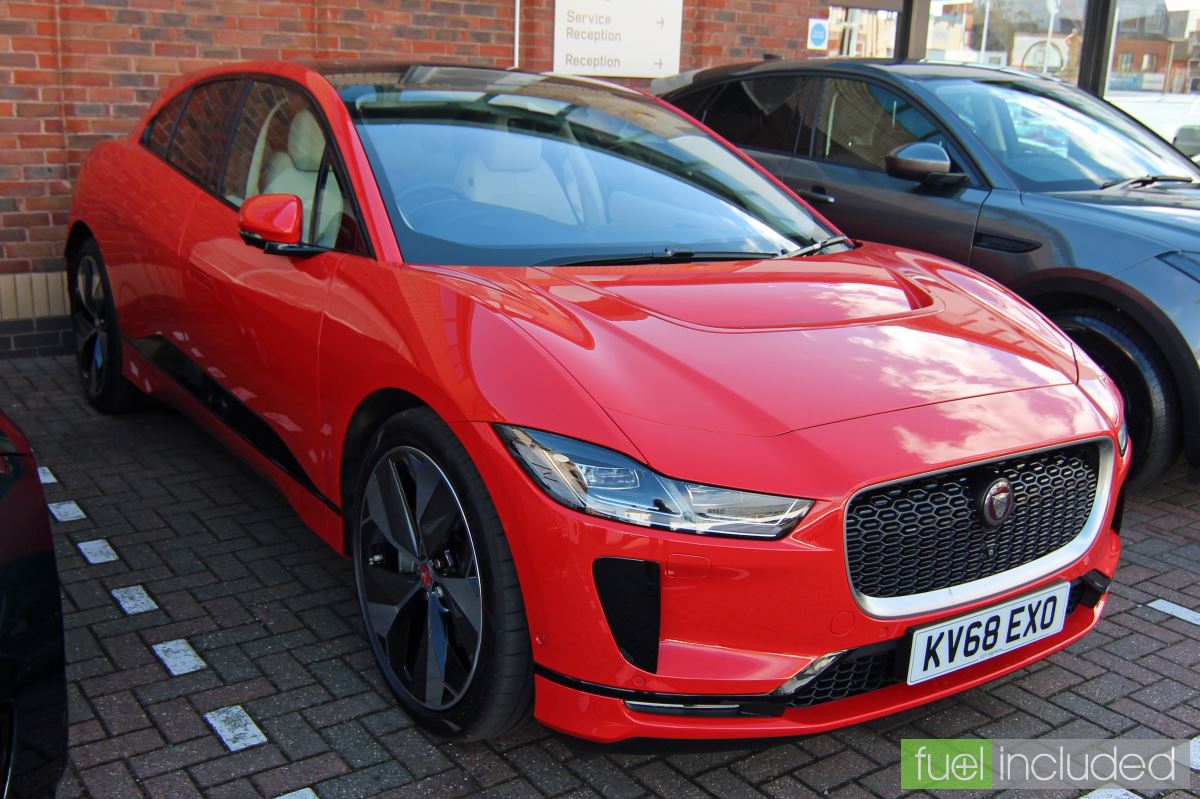
Jaguar I-PACE Electric Car (Image: T. Larkum)

Will SUVs Breathe New Life Into The Electric Car Market?

After decades of ups and downs, electricity is finally emerging as the fuel that will propel the planet into the future as more governments look to address their pollution problems by phasing out vehicles that run on fossil fuels.

As a result, automakers are scampering to flood the market with electric cars, trucks and, especially, SUVs over the next few years.

Nowhere is this more evident than at this year’s Los Angeles Auto Show, which will officially open to the public on November 30. Almost every automaker that is displaying at the downtown convention center, especially in the luxury segment, is looking to discuss its electrification strategy for the next decade with any journalist willing to listen.

Jaguar I-PACE Electric Car (Image: T. Larkum)

Porsche wants 50% of its stable to be electric by 2023. Jaguar Land Rover has announced it will shift production entirely to electric and hybrid vehicles by 2020.

Ford plans to deliver 13 new electrified models over the next five years. General Motors plans to roll out 20 all-electric models by 2023.

BMW will offer 25 electrified vehicles by 2025. Aston Martin expects that EVs will account for 25% of the company’s stable by 2030.

And that’s just the beginning. If projections are correct, there should be 400 electrified models on the road by 2025. That’s 300-plus more EVs and hybrids than are running about today.

Read more: Forbes