Monthly Archives: October 2018

BMW i3 120Ah (Image: BMW)

BMW to cease production of the i3 Range Extender

The i3 REx is forced into extinction in Europe due to the longer range possible from the latest pure-electric variant of BMW’s hatchback

The BMW i3 is now an electric-only model in Europe, as the range extender versions have been deleted from the line-up.

BMW i3 120Ah (Image: BMW)

The range extender, which uses a two-cylinder 650cc petrol engine to provide additional charge to the drive battery, has effectively been made redundant by the improved, longer-range pure-electric version of the i3 unveiled at this week’s Paris motor show.

The i3’s battery has been boosted to 42.2kWh from 33kWh provide 193 miles of range under new WLTP cycle. That’s 34 miles more than the older version could manage and is sufficient, according to BMW, to negate the need for the range extender version, which offered a claimed driving range of 231 miles under the outgoing, less-accurate NEDC test.

In a statement, BMW said: “The Range Extender i3 will cease production and we will only sell the pure-electric version going forward. With the gains in pure-electric range, together with the increasing availability of rapid charging facilities we believe the customer demand is shifting to an pure-electric model.”

Read more: Autocar

Denmark embraces electric car revolution with petrol and diesel ban plan

COPENHAGEN (Reuters) – Denmark has proposed a ban on the sale of new petrol and diesel cars from 2030 and hybrid from 2035, joining international efforts to promote electric-only vehicles to reduce air pollution and combat climate change.

The government has previously come under fire for increasing tax on electric cars in 2016, sending sales down from more than 3 percent of all new cars to almost zero, but now aims to follow the example being set in an increasing number of countries.

“It is a big ambition that will be hard to achieve. But that’s exactly why we need to try,”

Danish Prime Minister Lars Lokke Rasmussen told parliament on Tuesday.

The plan requires parliamentary approval to become law and will be presented to parliament next week.

Britain and France have both pledged to ban new petrol and diesel cars from 2040 in move that could hit the wealth of oil producers and transform a car industry in which global carmakers are scrambling to adapt to the brave new world of electric vehicles.

Read more: Reuters

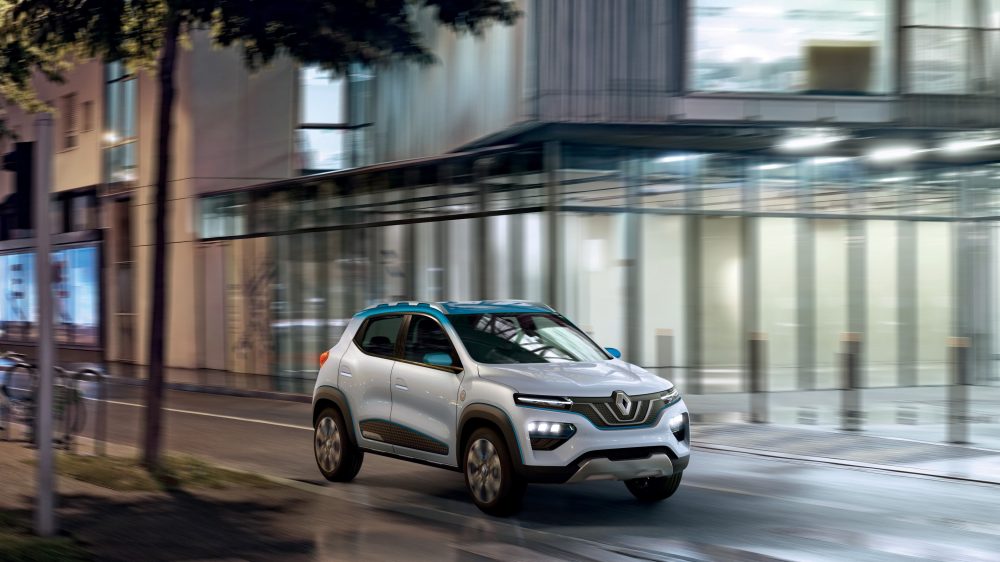
K-ZE All-electric Crossover (Image: Renault)

Renault unveils new ‘affordable’ K-ZE all-electric crossover

Ahead of the Paris Motor Show today, Renault has unveiled a new ‘affordable’ all-electric crossover: the Renault K-ZE.

Carlos Ghosn, Chairman and CEO of Groupe Renault, presented the new vehicle:

“Groupe Renault was a pioneer and is the European leader in electric vehicles. We are introducing Renault K-ZE, an affordable, urban, SUV-inspired electric model combining the best of Groupe Renault: our leadership in EV, our expertise in affordable vehicles and in forging strong partnerships”,

The French automaker announced the vehicle as being “affordable”, but didn’t release any pricing information.

K-ZE All-electric Crossover (Image: Renault)

More information will be available when the vehicle is released next year.

They first plan to make it available in China and Europe will follow a year later.

The only spec that they confirmed is the range, which they claim is 250 km (155 miles), but they used the NEDC cycle for some reason:

“A pioneer and leader in 100% electric mobility, Groupe Renault unveiled showcar Renault K-ZE, a new global A-segment, SUV-inspired electric vehicle, capable of 250km NEDC – the best autonomy in its segment.”

We expect the real world range to be close to 190 km (118 miles).

Read more: Electrek

Electric and hybrid cars: Cuts to Plug-in Car Grant condemned

Motoring groups have condemned the government’s decision to cut subsidies for buying greener cars.

From 9 November, grants for new plug-in hybrids will be scrapped, while discounts on all-electric cars will be cut from £4,500 to £3,500.

Cash incentives have been offered since 2011 to help promote cleaner cars and meet emissions targets.

The RAC and AA motoring groups said the change was a backward step, and the SMMT trade body called it “astounding”.

The Department for Transport (DfT) said that the Plug-in Car Grant was introduced seven years ago to help the market become established.

It was now time to focus support on zero-emission models such as pure electric and hydrogen fuel cell cars, the DfT added.

The change comes three months after the government published its Road to Zero strategy, with a proposal to remove petrol and diesel cars from UK roads by 2050, forcing all motorists to own electric models.

Ultra-low emission vehicles currently available for discounts are placed into three categories:

  • Category 1: CO₂ emissions of less than 50g/km and a zero emission range of at least 70 miles
  • Category 2: CO₂ emissions of less than 50g/km and a zero emission range between 10 and 69 miles
  • Category 3: CO₂ emissions of 50 to 75g/km and a zero emission range of at least 20 miles.

The government said the cut in the support for Category 1 cars to £3,500 reflected recent reductions in the price of electric vehicles.

But motoring groups denounced the changes, saying it would leave the government struggling to meet its emissions reduction targets.

Read more: BBC