Monthly Archives: June 2018

£12.50 London Ultra-Low Emission Zone expansion confirmed

London Mayor Sadiq Khan has confirmed the London Ultra-Low Emission Zone (ULEZ) will be expanded to reach the North and South circular roads from 25 October 2021.

It will be an expansion of the upcoming central London ULEZ, which goes live in April 2019.

Non-compliant vehicles will be charged £12.50 a day to enter the ULEZ – and, unlike the London Congestion Charge, fees apply 24 hours a day, 365 days a year.

Controversially, the ULEZ is particularly onerous for diesel car drivers. Only vehicles meeting Euro 6 emissions standards, introduced in 2014, will be exempt from the charge. The rules are more lenient for petrol vehicles; only those that don’t meet Euro 4 standards, introduced in January 2005, need to pay the charge.

It means that by 2021, says the Mayor of London’s office, petrol cars aged up to 15 years old will be exempt from the charge – but only diesel cars no more than six years old will escape it.

Expanding the 2019 central London Ultra-Low Emission Zone in 2021 will see it become 18 times larger. The Mayor’s office estimates this will affect 100,000 cars, 35,000 vans and 3,000 lorries a day.

Read more: Motoring Research

Electric cars charging in Milton Keynes (Image: T. Larkum)

Electric vehicle growth will start hurt tanker shipping by 2025

Come 2025 the switch to electric vehicles (EV) will start to impact the demand for gasoline, which will be bad news for shipping.

While charging infrastructure and range limits remain a concern for EVs the fact they are much cheaper to manufacture on a large scale than their petrol powered cousins will see a shift in the market by the middle of the next decade according to James Leake, an analyst at NS Lemos.

Electric cars charging in Milton Keynes (Image: T. Larkum)

Speaking at the Bimco Power Panel at Posidonia 2018 Leake said:

“EVs do represent a serious threat but not for the time being, if you ask me to put a date on it 2025 would be the point where it really starts to hurt.

“What is to me the killer fact is ultimately manufacturing an electric vehicle is much cheaper than manufacturing an internal combustion engine when you are producing them on scale.”

An electric powered car requires significant less components than one with an internal combustion engine making the structural production cost lower if the scale is large enough, and this why Leake said the likes of Volkswagen is investing $40bn into electric cars with an aim to be the world’s number one player in electric mobility by 2025.

With lower production costs car manufacturers will be much more keen to sell electric powered vehicles than petrol ones. “We will educated as customers to buy the product that will give them a higher profit.”

Read more: SeaTrade Maritime

Sir Richard Branson: Ditch diesel for electric cars before 2040

Sir Richard Branson says plans to ban the sale of new petrol and diesel vehicles from 2040 need to be brought forward.

The Virgin founder funds a team in Formula E, the motorsport which is pioneering new technologies for electric cars.

He says the deadline should be brought forward to 2025, in line with some other European countries.

Roads minister Jesse Norman says 2040 is a “sensible compromise”.

Newsbeat has spent the last seven months following Formula E, the competition where electric cars reach 140mph racing on streets around the world.

We’ve followed DS Virgin Racing, the team owned by Sir Richard, who says that “every month the technology is getting better and better”.

“The teams want to be the best out there, so they’re pushing for improvements in battery technology.

“That will mean that when more cars are driving on batteries, they’ll be able to go hopefully a few hundred miles rather than maybe 150 or 200.”

Read more: BBC

Volkswagen Golf GTE (Image: T. Larkum)

Volkswagen admits it can’t cope with new emissions tests

Germany’s Volkswagen has warned its main factory in Wolfsburg faces temporary shutdowns later this year, owing to new emissions test standards.

It plans “closure days” to prevent a build-up of vehicles that have yet to be approved for sale.

From September, more rigorous EU standards apply, designed to replicate real driving conditions more closely.

Now VW says it does not have enough testing equipment to cope and fears that a backlog of cars will ensue.

Volkswagen Golf GTE (Image: T. Larkum)

At a meeting with unions on Wednesday, chief executive Herbert Diess admitted that meeting the new requirements, and getting new cars approved for sale, was proving a challenge.

Closure plan

“We will only build vehicles after the works holiday that fulfil the new standards. The deliveries will take place gradually as soon as the necessary approvals are there,” Mr Diess told staff.

“But many vehicles will have to be warehoused in the meantime. To make sure their numbers don’t become too large, we will have to plan closure days through the end of September,” he added.

VW is still facing fallout from the scandal over its emissions cheating, which erupted in September 2015.

Read more: BBC

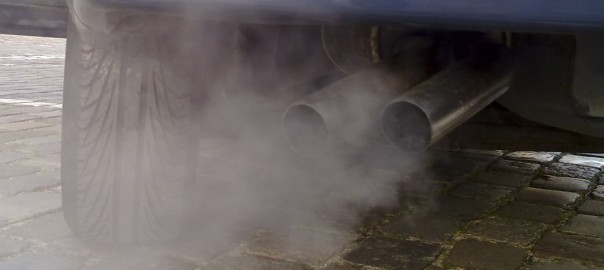
Car exhaust pollution (Image: Wikipedia)

An average car in inner London will be responsible for almost £8,000 in health costs

An average car in inner London will be responsible for almost £8,000 in health costs during the course of its lifetime, researchers say.

Pollution produced by vans and cars costs almost £6 billion in damage to health annually in the UK, according to experts from Oxford and Bath universities.

They said that exposure to nitrogen oxides and fine particulate matter caused by vehicles – particularly those which run on diesel – is linked to about 40,000 premature deaths a year.

Car exhaust pollution (Image: Wikipedia)

This translates into billions of pounds in associated costs for healthcare and “life years lost”, the study, released ahead of Clean Air Day on June 21, found.

On average across the country, health costs from air pollution that could be attributed to a typical UK car running on fossil fuels over its 14-year lifetime amount to £1,640, while a van costs £5,107 over its nine years on the road.

Read more: Standard

Nissan Leaf (Image: Qurren/Wikipedia)

A new Nissan Leaf sold every 10 minutes as total Leaf sales reach 100,000 across Europe

Nissan is celebrating the 100,000th delivery of the LEAF car this month in Europe, in a move hailed as a victory for electric mobility. Globally, over 320,000 Nissan LEAF have been sold, making it the most sold EV in the world.

Susana de Mena, of Madrid, milestone buyer of the 100,000th LEAF said, “I’ve spent two years trying to find an electric car. I knew it would be a Nissan!

“When I saw there was a brand-new model of the LEAF, there were no doubts in my mind it would be the perfect fit. My husband and I agreed that the quality, price and specification made it second-to-none.

“We are very conscious that we must respect and protect the environment, so we knew we’d want to go 100% electric. On top of this, an electric car lets us get to the very centre of Madrid when ordinary vehicles can sometimes be restricted due to pollution issues.”

Nissan Leaf (Image: Qurren/Wikipedia)

Combining sales of the new Nissan LEAF and previous LEAF models, the 100,000 customers across Europe have helped propel the Nissan LEAF to the position of best-selling EV in the world.

With now more than 37,000 new LEAF ordered in Europe, one new Nissan LEAF is sold every 10 minutes in Europe to customers looking to switch to innovative and zero-emission technology.

Read more: Automotive World

Car exhaust pollution (Image: Wikipedia)

Westminster schools to be protected by new ‘no-pollution zones’

The council has promised to invest £1 million in creating pollution barriers around its primary schools.

The clean air fund aims to cut harmful emissions by bringing in road closures, banning polluting vehicles, replacing old boilers and planting gardens around the schools.

The zones will be funded by Westminster City Council’s D-charge — a surcharge of £2.45 an hour for pre-2015 diesel vehicles parking in areas of the city. The surcharge has raised more than £1 million in its first nine months and reduced the number of polluting vehicles driving through the borough by 14 per cent.

Car exhaust pollution (Image: Wikipedia)

The council said it will also extend its D-charge across the whole borough in phases.

Council leader Nickie Aiken said: “As parents we all want to ensure our children can grow up in a safe and healthy environment.

“Air quality is the number one concern for our residents and it is crucial that we tackle poor air quality for the young people in our schools.

“Introducing the first no-pollution zones in Westminster will cut the number of vehicles around schools, encourage cleaner, greener habits and make a big difference locally.”

Read more: EcoBuild

New petrol and diesel cars will be banned from 2040 – but is that too long to wait?

New petrol and diesel vehicles will be banned from 2040 but bringing it forward ten years could help the car industry, it is claimed

Ministers have been urged to bring a ban on the sale of new petrol and diesel cars into force ten years early, to cut air pollution deaths and help the car industry.

The UK is currently set to ban the sale of new petrol and diesel cars and vans from 2040.

But Washington and Sunderland West MP Sharon Hodgson has told transport ministers that the change should come into effect in 2030, partly to drum up business for car manufacturers.

Her constituency includes the Nissan car plant, where 7,000 people are employed. Nissan is one of a number of carmakers to have announced job cuts, following a fall in demand for diesel vehicles and uncertainty about the impact of Brexit on the automotive sector.

Read more: Chronicle Live

Electric cars ready for free test drives in Milton Keynes (Image: T. Larkum)

New Vehicles in Norway Are Now 50% Electric, Favored over Gasoline Cars

The market share of electric cars, which was only a fraction of that of gasoline cars a few years ago, has reached 50 percent in Norway. Over the past 12 months, an identical number of electric vehicles as gasoline cars have been manufactured in Norway, demonstrating the country’s exponential adoption of electric cars.

Electric Cars Favored Over Gasoline Cars

In Norway, a liter of gasoline costs around $2, a rate that is substantially higher than in other places such as South Korea and Japan that are also known to have expensive gasoline. In contrast to high gasoline costs and taxes on conventional vehicles, the Norwegian government does not impose tax on the sale of electric vehicles, allowing consumers to obtain electric cars at around 50 percent of the cost required to purchase gasoline-powered vehicles.

According to a report by the Norwegian government entitled “Sales of Petroleum Products,” the demand for petroleum products have fallen for the first time in history, primarily due to the rapid adoption of electric vehicles and the drop in demand for gasoline and fuel.

“Motor gasoline sales declined by 2.9%, dutiable diesel fell by 2.7%, and duty-free diesel declined by 2.6%. This decline follows sales that were flat in 2014, and then grew by 1% in 2015 and 3.2% in 2016. Overall petroleum product sales declined by 2.2%, although some categories of consumption, such as heavy fuel oil, jet kerosene, and other petroleum products all showed higher consumption,” the government’s report read.

The embrace of electric vehicles in Norway can be attributed to newly implemented policies of the Norwegian government, and its intent to ensure all vehicles sold in the country are electric from 2025 onwards.

Read more: NullTX