Monthly Archives: August 2017

Drop in wind energy costs adds pressure for government rethink

Tories urged to look at onshore windfarms which can be built as cheaply as gas plants and deliver the same power for half the cost of Hinkley Point, says Arup
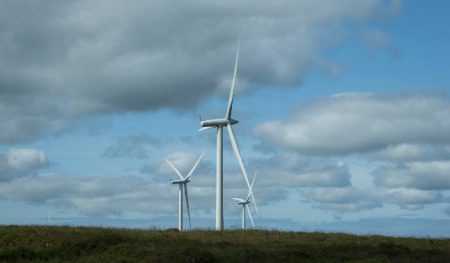
Building windfarms in the windiest places, such as Whitelee in East Renfrewshire, would cut opposition from Tory heartlands in the English shires, says Arup. Photograph: Danny Lawson/PA

Onshore windfarms could be built in the UK for the same cost as new gas power stations and would be nearly half as expensive as the Hinkley Point C nuclear plant, according to a leading engineering consultant.

Arup found that the technology has become so cheap that developers could deliver turbines for a guaranteed price of power so low that it would be effectively subsidy-free in terms of the impact on household energy bills.

France’s EDF was awarded a contract for difference – a top-up payment – of £92.50 per megawatt hour over 35 years for Hinkley’s power, or around twice the wholesale price of electricity.

By contrast, Arup’s report found that windfarms could be delivered for a maximum of £50-55 per MWh across 15 years.

ScottishPower, which commissioned the analysis, hopes to persuade the government to reconsider its stance on onshore windfarms, which the Conservatives effectively blocked in 2015 by banning them from competing for subsidies and imposing new planning hurdles.

Keith Anderson, the firm’s chief operating officer, told the Guardian that onshore wind could help the UK meet its climate targets, was proven in terms of being easy to deliver, and was now “phenomenally competitive” on price.

“If you want to control the cost of energy, and deliver energy to consumers and to businesses across the UK at the most competitive price, why would you not want to use this technology? This report demonstrates it’s at the leading edge of efficiency,”

he said.

The big six energy firm believes that with a cap on top-up payments so close to the wholesale price, onshore windfarms would be effectively subsidy-free – but the guaranteed price would be enough to de-risk projects and win the investment case for them.

Read more: The Guardian

Swing to electric cars will be a quiet evolution

The stone age didn’t end because we ran out of stones. It ended because we learnt how to make and work something even more versatile…metal. Bronze and then Iron.

Those “Ages” took us thousands of years to get through. But things have speeded up a bit as we have harnessed, made and learnt how to use many other things –the Industrial Age (revolution) leading to the Engine Age and then a rat-a-tat-tat of Jet Age, Atomic Age, Space Age, Digital Age (another revolution) and Information Age.

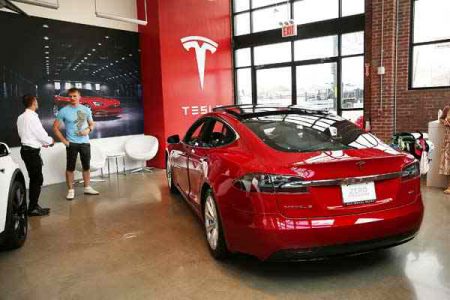
Tesla Model S

Many of those advances have taken place in an overlapping “Oil Age” which has lasted little more than a century. And picking up on the theme of this column last week, that Age is entering the beginning of its end not primarily because we are running out of oil. We could keep using this and other fossil fuels for at least another century, even at gas-guzzling rates.

But it will be replaced by the “Electric Age” because oil-sourced energy is ultimately finite, more expensive to extract, has some end-of-the-world-side effects and above all because we have discovered (but so far grossly under-used) more ways to make something better – electricity – using more powerful methods like nuclear fusion/fission and infinitely more abundant and planet-friendly sources like rivers (hydro power), the sun (solar power), the wind and ocean currents.

HUGE APPETITE

The fundamental point here is that imminent swing from petrol and diesel to electric and hybrid motor vehicles will dominate the headlines for a while, but in practice this change will be a quiet evolution. The real “Revolution” will be how we generate the electricity and how we use what will be massive advances in that process in myriad ways other than the propulsion of your car.

All existing technology for generating electricity will improve exponentially in efficiency, availability and versatility – at prices that get progressively lower and for sure there will be new technologies not yet thought of.

Read more: Daily Nation

UK’s ‘largest solar carport’ – with additional storage – planned for St Ives Park & Ride

Cambridgeshire County Council has received planning permission for what it claims will be the UK’s largest solar carport.

The installation, which will be developed at the site of St Ives’ Park & Ride, is anticipated to be 948kW in size and combined with a battery storage system as part of a wider demonstrator project with collaboration from distribution network operator UK Power Networks (UKPN).

Planning documents associated with the proposals do not include any prospective size of the storage unit.
The council is combining with central government, St Ives town council, UKPN and local businesses in a bid to turn the scheme into a replicable model for future smart grid deployment. Should it prove successful, it is hoped that further systems of similar size and scope could be deployed elsewhere.

The £3 million cost of the project is to be supported by European Regional Development funds, which will provide half, while the council will invest the remaining funds.

The car park will be covered by three main canopies fitted with solar modules. Generated electricity will be used first and foremost to power LED lighting and adjacent electric vehicle charging points.

Any surplus will be stored using the battery system and sold to local customers, helping to finance the project’s development.

Read more: Solar Power Portal

Renault Zoe is best selling plug-in car in Germany

Renault Zoe was the best selling plug-in car in Germany last month, keeping up with its sales trend this year and setting a new record for sales of plug-in (BEV and PHEV) vehicles on German market.

Zoe was followed by Audi A3 e-tron (535 units sold, best plugin-hybrid) in the second place, while BMW 225xe Active Tourer was third with 338 units sold. Renault Zoe was also the most successful plug-in car in the first half of 2017, racking up 2.429 sales.

Second ant third place again goes to Audi A3 e-tron and BMW 225xe Active Tourer. Bavarian PHEV edged out Mitsubishi Outlander plugin hybrid in the fight for third place. With 4.624 registrations in June German plug-in car market recorded 181% on year-on-year growth vs. June 2016, and total year to date sales for first six months are up 115%.

Source: Plugin Magazine

Government Financial Incentives for Electric Cars

Here is the third eBook in our series, and gives a clear overview of the grant and tax benefits of an electric car:

  • Dealer discount at the point of purchase
  • Road tax savings
  • Charge point installation grants
  • Income tax benefits

If you are considering an electric car and you want to understand the various grants and tax incentives that the government offer to encourage electric cars, then this is the guide for you.

Electric Car Benefits - Government Financial Incentives

Click on the image, enter your details, and download your free guide.

Previous titles were:

If it leaves any questions unanswered, just get in touch (contact details here and in the eBook).

Jason Tisdall
FuelIncluded.com

First all-EV car showroom opens in Milton Keynes

The UK’s first multi-brand, electric vehicle showroom has opened in central Milton Keynes, with the ambitious aim of trebling the national take-up of EVs and plug-ins in the local area over the next five years.

The showroom, operated by Chargemaster as part of the Milton Keynes’ £9m Go Ultra Low City programme, won’t sell cars directly, and its 11 EV “gurus” are not salesman. They concentrate instead on educating people about the capabilities and advantages of electric vehicles and on showing them a selection of the latest EVs from VW, BMW, Kia, Renault, Nissan and Mitsubishi, Chargemaster’s partners in the venture.

Q&A, David Martell, chief executive, Chargemaster

Will you be looking to attract visitors who are serious about electric cars?

Not necessarily. We’d like to talk to people who are simply curious about them, and want to reach the truth for themselves. We can help with all kinds of facts and figures, impartially delivered because we’re not selling anything. Or we can take people on a familiarization drive.

How does Chargemaster gain from such an apparently philanthropic exercise?

We’re convinced electric cars will play a vital part in future motoring. If that happens, as the country’s leading provider of charging points we’ll benefit. In the meantime, we’re aware of a lack of general knowledge about electric cars and we want to help address that.

When the number of EVs sold is still so small, how can you be confident about their future?

Three things: they’re a great answer to some of the difficult problems we’re facing, the population of EVs is increasing fast (5000 to 100,000 in five years) and the best models are easy to own yet great to drive. Latest forecasts say EV sales will reach 150,000 a year by 2020.

Read more: Autocar

Kia Niro Not Easing Hyundai IONIQ Production Output

South Korean carmakers are now widely recognized as major players in the automotive industry and they are about to touch new heights after launching new electric vehicles.

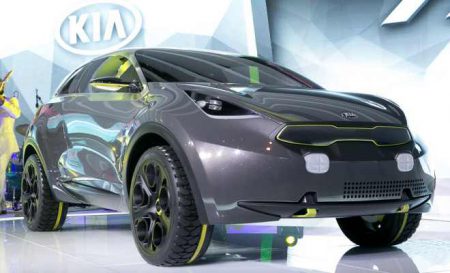
KIA Niro

Hyundai has got the IONIQ whereas Kia has a Niro. Both the IONIQ and Niro are offered with a hybrid system at the moment but they are about to welcome a full EV trim.

While it all sounds positive, the Niro is apparently putting the brakes on the IONIQ EV production output. The Niro is the more popular choice between the two and there is already a great deal of demand for the Niro hybrid.

The bad part about this is that both Kia and Hyundai rely on LG Chem for batteries and the supplier is struggling in meeting battery demand. This is having a negative effect on the Kia Niro and Hyundai IONIQ as their unexpected EV demand has created supply problems due to battery shortage.

With the Niro bagging more sales, the supply priority will be on them and it may leave the IONIQ further delayed.

Source: NSEAVOICE

CitiPark is to lower fees for electric vehicles

Drivers of petrol and diesel cars will face higher charges to use private car parks under a plan to tackle pollution.

CitiPark, which operates car parks across Britain, announced yesterday that it would impose a levy on all but the most fuel-efficient vehicles as part of a national drive to cut emissions.

Under the system, cars emitting 75g or less of carbon dioxide per kilometre — typically only electric cars and some hybrid vehicles — would qualify for a “green tariff”.

This would give them an automatic discount of up to 20 per cent of the price charged for petrol and diesel vehicles.

The change has initially been applied to the company’s Clipstone Street underground car park in Fitzrovia, central London.

Read more: The Times

UK’s First Multi-Brand Electric Vehicle Experience

The UK’s first multi-brand electric vehicle showroom – the Electric Vehicle (EV) Experience Centre, operated by Chargemaster – open[ed] its doors in the Centre:MK shopping centre on Saturday 22 July. It will be run by a team of professionally-trained EV gurus, providing information and advice, and visitors will be able to test drive the latest electric cars.

Open seven days a week, the EV Experience Centre will educate visitors on the benefits of driving an EV, supporting Milton Keynes’ transformation into the UK’s first Go Ultra Low City. From impartial advice on specific models, government grants available, different types of plug-in vehicle and charging options, the centre will cover every aspect of EV ownership.

The role of the 11 EV gurus is purely to educate, inform and advise visitors in a relaxed environment, with no sales pressure. The EV Experience centre is part of Milton Keynes Council’s Go Ultra Low City scheme, funded by government, and supports the town’s aim for electric vehicles to make up 23% of all new car sales in the local area within five years.

Jesse Norman MP, Roads Minister said, “We awarded £9m to Milton Keynes to encourage the take-up of ultra-low emission vehicles and it is great to see the city leading the way. There are now more than 100,000 ultra low emission vehicles on our roads, and it is our ambition that nearly every car and van in the UK is zero-emission by 2050.

“We want to retain our position as a global leader in the development, manufacture and use of ultra-low emission vehicles and have committed to invest more than £600m by 2020. Grants worth up to £4,500 are available off the price of new ultra-low emission cars, and I hope many more people will take up this offer.”

Read more: FleetPoint

Renault Sets New EV Sales Record In June At 4,500

In June, Renault set a new all-time record for electric vehicles sales. The month saw sales of 4,498 EVs, which was 56% higher than a year ago, and 350+ units higher than the previous all-time record set in March.

For the Renault brand, EVs (not including the city Twizy) stand at 1.65% share of all sales in June, and 1.4% for the first half of 2017.

Renault electric vehicle sales in June:

  • Renault ZOE – 4,251 (up 73%)
  • Renault Kangoo Z.E. – 245 (down 42%)

In the first six months, Renault has sold total nearly 18,900 electric cars (up 34%), including nearly 17,300 ZOE.

Cheapest electric car uk

Europe:

“Renault maintained its lead in the electric vehicle segment with a market share of 26.8%. Sales volumes increased 34%. Registrations of ZOE, Europe’s top-selling electric vehicle, rose 44%.”

France:

“ZOE remains the clear leader in the electric vehicle market, accounting for almost 70% of electric passenger car sales in France with over 9,200 registrations – a year-on-year increase of over 42%.”

The Kangoo Z.E. doesn’t account for many sales, but the new longer-range version maybe will enable higher sales.

Source: Inside EVs