Daily Archives: August 22, 2017

Government car ban: which is the best used electric car you should buy?

THE Government has said it will ban all diesel and petrol powered cars from 2040 bringing the curtain down on the era of the internal combustion engine.

Ministers unveiled their court-mandated plans for meeting EU limits on harmful nitrogen dioxide pollution this morning.

They include a £255 million fund to help local authorities come up with ways to improve air quality, ranging from improving public transport and changing road layouts, to charging zones for polluting vehicles if other measures don’t work.
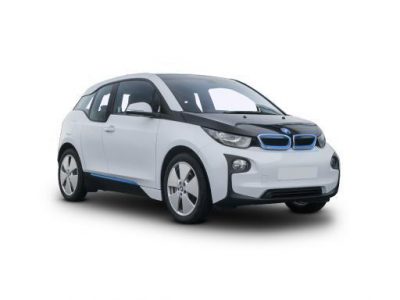
The BMW i3 – one of the UK’s most popular EVs

But much of the focus was on plans to end the sale of all conventional petrol and diesel cars by 2040, to help tackle air pollution and climate change emissions.

The impending shake-up is already having an impact on the electric car market.

Consumer interest in electric vehicles is soaring. The market for alternatively fuelled vehicles (AFVs) saw a record market share of 4.4 per cent in June with more than 10,700 hitting the roads, a rise of 29 per cent.

At the same time the overall used market for electric vehicles has seen values increasing by 7 per cent this year.

Motoring expert Chris Plumb from hpi said:

“Interestingly it appears to be the range extender models which is driving the recent strong performance as values of pure electric have struggled of late. The BMW i3 is a popular choice and is a great second hand buy. It brings a good level of specification and badge prestige.

“The optional range extender can increase the range of the BMW i3 in comfort mode from up to 125 miles to a total of 206 miles. The small, rear-mounted, quiet two-cylinder petrol engine powers a generator that maintains the charge of the battery at a constant level, so that the BMW i3 can continue to drive electrical.”

A used BMW i3 with 15,000 miles on the clock has a used value of £14,650 against a new price of £30,925.

The made-in-Sunderland Nissan Leaf with the 30KWh power train is attracting higher used values than the lower powered 24kWh battery pack as it has a larger range.

According to Nissan, the Leaf has an official range of up to 124 miles (4kWh) or up to 155 miles (30kWh).

Source: The York Press

‘It’s the future of motor travel’: readers on driving electric vehicles

With the UK planning to ban petrol and diesel cars and vans in 2040 we asked you what it’s like to drive the vehicle of the future.

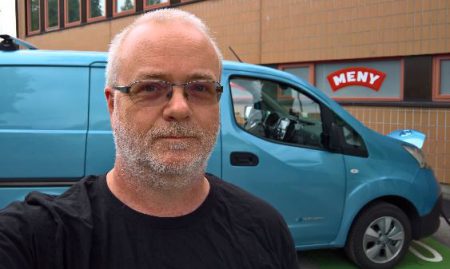
Øivind Johansen with his e-NV200 charging at Teie, Nøtterøy in Vestfold county. Photograph: Øivind Johansen

Amid fears that rising levels of nitrogen oxides pose a major risk to public health, Britain plans to ban all new petrol and diesel cars and vans from 2040. As part of the government’s much-anticipated clean air plan it has said the move is needed because of the unnecessary and avoidable impact that poor air quality was having on people’s health.

With the inevitable demise of diesel and petrol vehicles we asked electric car drivers to tell us what it’s like to drive one, and why they are the future.

Christine Burns, 64, retired, Manchester: ‘The UK government’s policy isn’t really a policy – the market will get there before’
Drives a Nissan Leaf

In an electric car you glide around in virtual silence like a limousine, but it can also out-accelerate the boy racers at the traffic lights! A scheme where I live in Manchester, means I only have to pay £20 a year to have free access to chargers across the city. There are almost a dozen kerbside and car park chargers inside a 1-2 mile radius of my home, plus I can charge from empty to full in around four hours for less than £3 on domestic electricity.

Benefits of electric cars include a low-cost mileage, no road tax, no congestion charge and low servicing costs. They’re also easy to drive with just one pedal, and there’s no smelly flammable refuelling involved. People tend to be curious when they find out I have an electric car and want to know more especially as there are a lot of myths like low acceleration. However, charging infrastructure could definitely be improved in the UK.

The UK government’s policy isn’t really a policy. Saying you’ll ban internal combustion engine car sales in 23 years from now doesn’t make sense, as the market will get there long before that. Norway plan the same by 2025 so why can’t we?

Øivind Johansen, 52, craftsman, Vestfold, Norway: ‘Electricity is much cheaper’
Drives a Nissan Leaf and e-NV200

It’s beautiful to drive. And with just forward and reverse they are not difficult to drive. There is no clutch or shifting of gears. They are peaceful, without any noise and there are no stinking fuels. I just plug it in at home. It’s pre-warmed in the winter and pre-cooled in the summer which is wonderful when going to work. They’re fun. I’ll never go back to fossil fuel cars.

Where I live in Norway, most people have their own houses which makes it easy to install chargers outside. There are normally charging stations every 50km with most places having at least two. What it comes down to though is money. It’s expensive to pay for diesel and electricity is much cheaper. I can drive 10km for around 10p. They’re also so much cheaper, both in parts and repair. We save around £6,000-7,000 a year by not using a diesel car.

I think the UK government’s plan is too little too late. It’s crazy when you think about how much oil is burnt every day by internal combustion engine cars. I’m just glad to be able to do my bit for the environment.

Read more: The Guardian

Inventing electric cars is easy – now UK needs to reshape itself

The UK faces a challenge to prepare for a new automotive revolution, with electric vehicles set to overtake petrol ones from 2040.

Electric car sales are expected to overtake petrol by 2040

When the automotive revolution kicked off at the beginning of the 20th century, the dominant technology wasn’t petrol – it was electric.

The cars were slow, with a top speed of around 20mph, but – unlike petrol – they didn’t smell, they didn’t need gears and they didn’t need starting with a hand crank.

For pottering around the city, they were unbeatable.

However, by the 1920s, they were in decline. Petrol became much cheaper and the road network expanded, meaning the limited range of electric cars became a problem.

The combustion engine took over – a lead it wouldn’t relinquish until today.

Two companies, aided by governments around the world, have pushed the revival in electric: Toyota and Tesla.

The Toyota Prius made hybrid vehicles mainstream. Then Tesla terrified traditional automakers by fully embracing electric.

The breakthrough was batteries. As smartphones became more popular, the lithium-ion technology they use kept on improving. That could be applied to vehicles too.

Today, all manufacturers are competing to squeeze as much juice as possible from the battery.

The price of buying an electric vehicle will be the same as a petrol one from next year, according to analysts at UBS, and by 2024, one in three cars sold in Europe will be electric.

Morgan Stanley estimates electric car sales will overtake petrol globally by 2040 – meaning the UK Government’s ban on the sale of petrol and diesel isn’t as drastic as they’d like you to think.

But governments worldwide have been crucial to electric’s growth.

California provided nearly $5bn (£3.8bn) in grants to Tesla while, across Europe, electric car sales have been driven by subsidies. When Denmark scrapped them in 2016, sales fell by 60%.

The European Union is also imposing tougher emissions standards from 2019.

Read more: Sky News