Monthly Archives: July 2017

BMW and PG&E Prove Electric Vehicles Can Be a Valuable Grid Resource

Nearly 100 plug-in cars and a stack of second-life EV batteries successfully responded to dozens of demand response calls.

The concept of using electric vehicles as a grid resource is no longer just theory. A pilot program recently conducted by BMW and Pacific Gas & Electric successfully demonstrated that electric vehicles can serve as reliable and flexible grid assets, which could eventually save money for both utilities and EV owners.

The BMW i ChargeForward Project is one of the best examples to date of a utility and an automaker working together to develop new technologies and use cases for electric vehicles (EVs) and their batteries.

“One of the things that we really wanted to test here was, how can we work closely with an automaker?”

said David Almeida, electric vehicle program manager at PG&E.

“We are an old company, and we’re a large company. Automakers are old companies, and they’re large companies. We both have our own internal bureaucracies. And so, one of the challenges I wanted to understand when we were setting this up was, how do we make those two independent entities work well together?”

“By and large, we didn’t have any of those institutional challenges that I was [worried about],” he said. “We ended up working very closely, I think partially because we’ve got this common shared goal of increasing electric transportation.”

With the i ChargeForward pilot, BMW was required to provide PG&E with 100 kilowatts of grid resources when called upon, through a combination of delaying charging for nearly 100 BMW i3 vehicles in the San Francisco Bay Area and drawing from a second-life stationary battery system built from reused EV batteries, for the duration of 1 hour. The grid services demonstrated in the pilot included day-ahead and real-time signals that were modeled after existing proxy demand resources from the California Independent System Operator (CAISO), in order to test whether these resources could eventually participate at the wholesale level.

Read more: Green Tech Media

EVs are ‘clearly’ the future despite slow start, Renault’s Normand says

The global market for electric vehicles has not grown as fast as Renault expected when CEO Carlos Ghosn announced a bold investment of 4 billion euros ($4.5 billion) six years ago to develop the technology, said Gilles Normand, the automaker’s senior vice president for electric vehicles.

Although most EV buyers are in cities or suburbs, increasing numbers of people in rural areas are choosing battery powered cars, Normand says.

However, electric vehicles are “clearly” the future of the automotive industry, Normand told attendees of the 2017 Automotive News Europe Congress here on Wednesday.

In 2011, Ghosn had predicted that the Renault-Nissan alliance would have the ability to produce half a million electric vehicles by 2013. Last year, total sales of electrified vehicles including pure electric and plug-in hybrids from all automakers were about 465,000.

While overall sales figures have not hit Ghosn’s early target, the alliance is the global leader with its Renault Zoe and Nissan Leaf electric cars.

Normand pointed to a number of technological and regulatory trends, including stricter clean air and emissions regulations. In China, Normand said, the “airpocalypse” is a real fact and is driving government regulations that aim to have 5 million zero emissions vehicles on the road by 2015. In India the government has announced “massive” investments and wants to see 100 percent electric vehicle use by 2030.

“Electric vehicles are a good short term answer for particulate emissions, and a long term solution for climate and CO2 emissions, together with cleaner energy generation,”

he said.

The spread of fuel economy standards around the world — 83 percent of the global automarket is bound by such standards, Norman said — is forcing automakers rethink their product offerings, he said.

Read more: Automotive News

Ford wins contract to make 2,500 all-electric vans for Deutsche Post

Ford has won an important contract to further electrify Deutsche Post’s fleet of delivery vehicles.

Deutsche Post has already been deploying electric vehicles in its fleet, but this new contract should quickly add 2,500 all-electric vans on the roads.

The company has already been producing its own all-electric delivery vehicle, the Streetscooter (left), but the new vehicle built on the Ford Transit will be significantly bigger, Streetscooter XL (right)

They will use the chassis of the Ford Transit, which will be equipped with a new battery-electric powertrain.

Ford had already announced plans for a plug-in hybrid version of the Ford Transit for 2019, but it looks like this new contract is changing the plan by using an all-electric version built on the same chassis.

Production is set to start next month and expected to be completed by the end of 2018.
Jürgen Gerdes, member of the executive board of the Deutsche Post AG, commented on the news:

“I consider this partnership another important boost for electro-mobility in Germany. This step emphasizes that Deutsche Post is an innovation leader. It will relieve the inner cities and increase the people’s quality of life. We will continue working on completely carbon neutral CO2-neutral logistics!”

Along with the new contract, Deutsche Post plans to double its production of the Streetscooter to 20,000 units per year – making the logistic company a significant EV manfacturer.Read more: electrek

First electric vehicle charge point set up in Brent as council looks to tackle poor air quality

The first of 33 electric vehicle charge points has gone up as the council looks to have them placed in 24 different locations throughout Brent

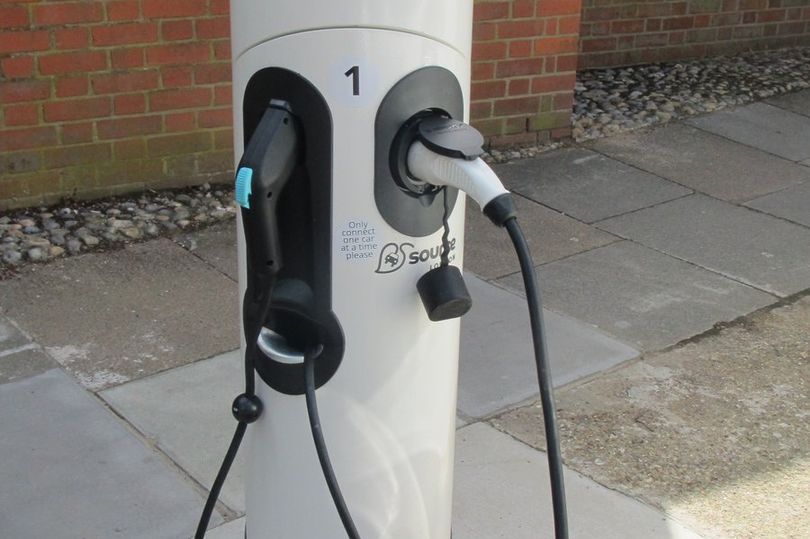
Brent’s first Electric Vehicle Charge Point is up and running on Dudley Road (Photo: Brent Council)

Brent council has erected its first electric vehicle charge point in the borough as it looks to tackle poor air quality.

Dudley Road is the home to the first of 33 charge points for electric cars in the area as the council aims to set them up in 24 locations.

Cabinet Member for Environment, Councilor Eleanor Southwood, said:

“This is a really proactive step forward in the move towards greener energy sources in the borough.

“We want to make it easier and more convenient for existing owners of electric vehicles in the borough and create the infrastructure so that more people are able to switch to electric vehicles in the future.

“Poor air quality is one of the biggest issues facing London and we will work hard to find innovative ways to improve air quality in Brent.

“Everyone has a part to play when it comes to reducing air pollution and we will continue to work with residents, schools and businesses to improve things in all parts of the borough.”

Source: GetWestLondon

Polestar becomes fully standalone brand alongside Volvo to take on Tesla

Volvo is to turn its Polestar unit into a global standalone brand for higher-performance electric vehicles (EVs) as it sets its sights on creating a Tesla rival.

With its product and commercial plans to be revealed in the autumn, Polestar’s brand will now be placed at the same level as that of Volvo, and its cars will no longer bear the Volvo logo. This places the brand alongside high performance, high-margin EV brands such as Tesla, and could therefore give it a marketing edge over EV sub-brands such as BMW’s i and VW’s ID. Its motorsport credentials will also likely gain new momentum, which will probably see it entering Formula E.

The brand previously was a sub-brand for Volvo’s high-performance models, acting in a similar way to sub-brands such as Mercedes’ AMG and BMW’s M. Establishing Polestar as a full brand alongside Volvo forms part of Chinese Volvo parent Geely Automotive’s ambitions to create a vast portfolio of brands to rival that of global sales leader Volkswagen Group.

Volvo CEO Hakan Samuelsson said:

‘With Polestar, we are able to offer electrified cars to the world’s most demanding, progressive drivers in all market segments.

Polestar will be a credible competitor in the emerging global market for high-performance electrified cars.’

Volvo veteran design chief Thomas Ingenlath, who helped realise Volvo’s sales renaissance through leading the design of models including the XC90, will be the new CEO of Polestar.

Samuelsson said:

‘Thomas heading up the Polestar organization shows our commitment to establishing a truly differentiated stand-alone brand within the Volvo Car Group.’

Ingenlath added:

‘I am really excited to take up the challenge of establishing this exciting brand, developing a fabulous portfolio of bespoke products and channelling the passion we have throughout the Polestar team.

‘The next chapter in Polestar’s history is just beginning.’

Read more: Autovista Group

Smart electric range launched in the UK

Smart has announced UK prices for its electric drive range, with the EV model line-up starting from £16,420 including OLEV’s Plug-in Car Grant (PiCG).

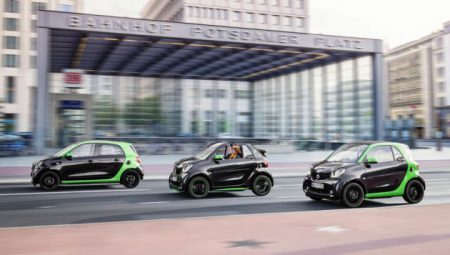
The smart fortwo, forfour, and fortwo cabrio are all available to order as EVs

The smart fortwo electric drive is the entry point to the range, with the larger forfour electric drive starting at £16,915, and the fortwo cabriolet electric drive starting at £18,650 – both including PiCG.

On sale now, smart is the only brand that has an entire portfolio with a choice of internal combustion or fully electric drivetrains. Powering the rear wheels, a 60kW (81hp) electric motor is used in all three models, with an official range of 99 miles for the fortwo electric drive and 96 miles for the other two models.

All versions have a top speed of 81mph, and complete the 0-62mph sprint in 11.5 seconds. A standard 7 kW on-board charger will be able to charge the 17.6 kWh battery used in all three models in around two and a half hours, or six hours from a three-pin plug.

Standard kit includes heated front seats, cruise control, leather seats, 15-inch alloy wheels, rear parking sensors, and sat-nav with infotainment system. EV specific elements include a sound generator for pedestrian safety at low speeds, cables for home and public charging, and use of the smart control app for pre-conditioning and charging use through a smartphone.

The smart electric drive range is on sale now, with deliveries expected from July.

Source: Next Green Car

Queen’s Speech introduces an Electric Vehicles Bill

New Bill unveiled in Queen’s Speech to require charging points to be fitted at services and fuel stations, support driverless cars and keep insurance claims simple

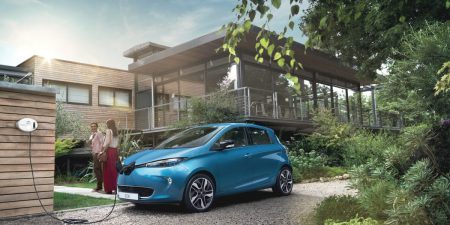
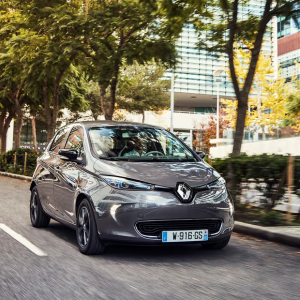
Renault ZOE

Motorway services and petrol stations may be forced to install electric charging points as part of Government plans to ensure the UK

“remains a world leader in new industries”.

An Automated and Electric Vehicles Bill will be introduced to encourage the use of electric and self-driving cars, the Government announced in the Queen’s Speech.

The first all-electric car to be built in the UK rolled off of the production line in 2013, and the Government wants

“almost every car and van to be zero-emission by 2050”.

Of more than 36.7 million licensed vehicles in the UK, just over 100,000 have been purchased with help from a government plug-in car grant.

Registrations of electric vehicles are increasing, with 13,800 being registered in the first quarter of 2017, a 17% rise on the same period the year before.

Plans to fund the additional electric charging points have not yet been announced, although the Government said it was committed to spending £600m during this Parliament to support the ultra-low emissions market.

The new law also aims to support British manufacturing and innovation by allowing self-driving cars to operate in the country.

Source: Platts Garages

VW to launch electric minivan as part of its planned EV range

Volkswagen (VW) is to send its microbus-styled minivan, previewed at the Detroit Auto Show early in 2017 as a concept named the I.D Buzz, into production as an electric vehicle (EV).

The news comes as part of the German manufacturer’s push to market a wide range of EVs under the I.D electric car sub-brand.

The concept is based around an update of the classic VW Transporter, and VW brand chief Herbert Diess told UK magazine Auto Express:

‘Emotional cars are very important for the brand. We are selling loads of Beetles still, particularly in US markets. But we will also have the Microbus that we showed, which we have recently decided we will build.’

The production version will be based on the company’s Modular Electric Drive (known as MEB) platform, which was first shown at the Paris Motor Show in 2016, where the I.D branding was launched with a compact car. The Buzz concept features an electric motor at each axle, which produced around 369bhp total, with a claimed range of 372 miles and an 80% recharge time of 30 minutes. It is unknown how these figures will hold up in the production version.

The concept version also featured extensive autonomous technology, which is currently not ready for use on roads in Europe, but is under development. The model is expected to arrive in showrooms by 2022, with multiple versions likely to be offered, and could include a camper and pickup truck version to tie in with the original Bus model of the 1960s. It will join the I.D CROZZ, an electric SUV planned for launch in 2020.

Read more: Autovista Group

Ridesharing may not replace personal vehicle sales, but supplement them, says report

OEMs have been concerned for some time that the rapid rise of mobility services such as Uber and Lyft will lead to a fall in the number of vehicles purchased by consumers. However, a new report has found that, for current vehicle owners, this assumption may simply not be true.

Strategy Analytics’ new report ‘Impact of Ride Sharing Frequency on Vehicle Purchase Intention’ discovered that, for current vehicle owners, increasing ridesharing usage actually raises the likelihood they will purchase another vehicle within the next five years. This is in part because current frequent rideshare users, who also own their own vehicle, have greater transportation needs than those that do not.

The ridesharing service therefore fills a niche of convenience, but does not supplant the user’s need for their own personal vehicle. This may be due to mindset – for example, with a user used to the comfort of cars preferring to use a service like Uber rather than public transport in situations when using their own car is not possible (such as due to a lack of parking or when intoxicated).

However, the report does follow consensus evidence that desire for car ownership is weakening at the lower, younger end of the market, with millennials with no children that use ridesharing at least once a week being much less likely to purchase another vehicle within the next five years, compared to all respondents that had children.

Report author and director of syndicated research at Strategy Analytics’ UXIP (User Experience Innovation Practice) Chris Schreiner said:

‘The question of how emerging transportation options like ridesharing and car-sharing will impact vehicle sales is a very complex one to answer. Issues of cost, convenience, usability, privacy, type of journey, and length of journey all impact transportation choices.
‘Frequent ridesharing users do not seem likely to delay their next vehicle purchase, but it is still possible that they might choose a less expensive or lower class vehicle.’

This could lower the residual values of more premium vehicles, and raise demand in the volume segment. This is because private consumers tend to buy used cars (with fleets buying new).

Read more: Autovista Group

Should you join the charge and buy an electric car?

Green motoring is becoming financially attractive thanks to a drop in leasing prices and lower running costs

Renault ZOE ZE40

Is now the time to buy an electric car? Falls in financing costs mean that switching to a zero carbon-emitting vehicle won’t just help the environment, it can be cheaper than buying and running a conventional car.

When Guardian Money last looked at electric cars, the price premium for most models meant they made most financial sense to central London drivers keen to avoid the £11.50-a-day congestion charge – but for other motorists the case for going electric was less obvious. However, a drop in leasing costs, plus much lower running costs, have made the financial package much more attractive.

The popular Nissan Leaf, with a large 30kWh battery, can now be leased for about £240 a month with a deposit of £2,000. This is just £70 a month more than the larger, petrol-engined Nissan Juke and many supermini class vehicles.

When you consider that someone who uses their car to commute each day could easily be spending £70 on petrol a month, the green option is starting to look as good for your wallet as for the environment. The cost of an overnight charge that delivers a typical 100 miles of driving is about £3-£4 depending on your electricity tariff. To go the same distance in a petrol car would typically cost £15 – more if your journeys are all around town. This in part is why there are now 100,000 electric cars on UK roads, and 2m worldwide.

“Once you’ve got used to living with an electric car, most people say they’d never go back to a conventional one. You are driving the future,”

says Melanie Shufflebotham who runs NextGreenCar, a website dedicated to low-carbon vehicles. An enthusiastic Nissan Leaf owner, she says improvements to the charging infrastructure, a greater awareness of the benefits of going electric in cities, and the fact that the technology is now proven have all allowed electric cars to move into the mainstream.

“Range anxiety is largely a thing of the past. The newest Renault Zoe, with its bigger battery, now offers a range of about 180 miles from a single charge – more than enough for most users who drive to and from work or similar,”

Shufflebotham says.

“I wouldn’t necessarily want to drive to Edinburgh, but I regularly drive my Leaf from Bristol to London with one fast 30-minute recharge at one of the Ecotricity charging points on the motorway network. For that I pay £6 – a fraction of the cost of filling a tank with petrol.”

Read more: The Guardian