Daily Archives: July 3, 2017

Norway is a leader in EV sales but has subsidised itself into a corner

When it comes to leaders in electric vehicles (EVs), Norway is top of the list. Around 35% of new cars sold in the country have some form of plug-in electrification, while the Government there has a target for all cars to be zero emission by 2025.

However, much of this adoption has been built around a program of subsidies, as current EVs are not able to compete with petrol vehicles in terms of price. While the country’s Government believes that price parity will come about by 2025, due to the falling cost of batteries and rising demand, many manufacturers believe it more likely to be 2030 before petrol and electric achieve price parity.

However, to ensure that the take up of EVs continues, there needs to be a point where public finances are not required for their purchase. If Norway wants to highlight to the rest of the world that the market for these vehicles can grow, it needs to do so organically. Penalties on fossil fuels and subsidies may drive many to plug-in power but it cannot then be claimed as free choice of the consumer.

EVs in Norway are free from any purchase tax and the country’s 25% VAT. However, a proposal to raise their road tax while cutting it for petrol cars caused a crisis within the government in 2016. This raises the challenge of how the country can raise taxes while still offering incentives. Otherwise if the proposal of an all zero-emission network is realised, it could cost the government dearly, losing out on taxes and VAT in vehicle sales, while investments in charging stations are also not being made back due to free charging.

Norway wants to be a leader in plug-in technology, however many will now be watching to see how it is able to ensure that zero-emission sales can grow when it starts to wean its drivers away from any subsidies.

Read more: Autovista Group
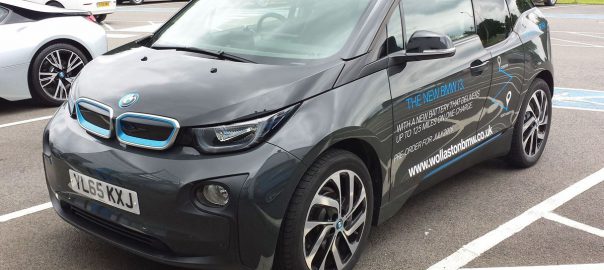
The i3 waiting for us (Image: T. Larkum)

Falling costs, new revenues fuel Britain’s big battery boom

Britain is emerging as a hotbed for utility-scale battery development, with two of Europe’s three biggest projects under way there and several companies joining a race that could shake up the energy market.

The i3 waiting for us (Image: T. Larkum)
The BMW i3 (Image: T. Larkum)

Rapid growth of solar and wind energy means power supplies depend increasingly on whether the wind is blowing or the sun shining. As a result, utilities are looking for new ways to store renewable energy for release into the grid when supplies are low.

In the UK the challenge is especially acute because the buffer between supply and demand is tighter than in other European countries as old fossil fuel plants close, while Britain lacks Germany’s supply lines to import power and maintain grid frequency – the change in direction of the electrical current – when local supplies drop.

“(Renewables) intermittency means the frequency on the grid changes more quickly than before so we need faster technology which can react to that,”

said Cathy McClay, commercial head at the British National Grid system operator.

Last year, National Grid held one of the world’s first tenders to supply rapid grid balancing services on four-year contracts.

“The National Grid tender required such a fast response it almost exclusively created a market for batteries, which isn’t something we have seen elsewhere in Europe,”

said Andy Houston, senior analyst at UK-based consultancy Poyry.

Swedish utility Vattenfall [VATN.UL] is developing battery projects in the Netherlands and Germany but chose Britain for its largest — 22 megawatts (MW) — at the Pen y Cymoedd wind farm in Wales after winning a National Grid contract.

“Britain’s National Grid tender is one of the best opportunities for batteries,”

said Sebastian Gerhard, Vattenfall’s head of battery projects.

Vattenfall is using lithium ion batteries purchased from German car manufacturer BMW (BMWG.DE), the same as those used in its i3 electric cars, stacked together in portacabin-sized units. Vattenfall estimates the drive to create commercially viable electric cars has sent battery costs tumbling by around 40 percent since 2010.

Energy trader Vitol [VITOLV.UL] is building two battery plants in Cumbria and Kent through subsidiary VPI Immingham after winning two National Grid contracts with joint venture partner Low Carbon, and aims to hook them up to the grid by the end of the year.

Read more: REUTERS

All-Electric Taxi To Be Rolled Out Across The Uk

The innovative all-electric Dynamo Taxi, which has been developed in Coventry, is to be rolled out across the UK following its official launch.

The taxi has been created by the Dynamo Motor Company – a division of ADV Manufacturing – in conjunction with Nissan – and was unveiled at the Private Hire & Taxi Exhibition at the MK Arena in Milton Keynes last week.

(l-r) Andy Wood, John Paterson, John Heath from Dynamo Motor Company with the new Dynamo Taxi.

The vehicle has been developed to be used in UK towns and cities. Within Dynamo’s vehicle line-up is a fully working demonstrator London Taxi that, pending approvals, will comply with Transport For London’s stringent Conditions of Fitness as well as exceeding new zero emission capability legislation coming into force in January.

The five-seat Dynamo electric taxi, with full side wheelchair access, will have a range of 100 miles between charging and can be re-charged in only 30 minutes when using a Rapid Charge Post which are growing in numbers around the UK.

Brendan O’Toole, chairman at Dynamo, said this was an exciting development in the move towards all-electric powertrains.

“We’re at the start of the biggest change in the motoring world since the era of Henry Ford because most of us will be driving electric vehicles in the future,”

he said.

“This is a pioneering new chapter in motoring and, if anything, driver selection of electric cars will continue to accelerate since they provide zero emissions for the environment which is important as we all continue to learn more about the damage to our health from pollution.

“We have spent several years developing the Dynamo Taxi and we are really proud of it. Our taxis are ideal for urban driving and we believe will play a leading role as regards electric vehicle adoption.

“By 2018, all new taxis bought in London must be zero emission capable and with more and more charging posts being installed throughout the country, I think within a short space of time drivers of electric vehicles will no longer need to make detailed plans for longer journeys because the UK’s major cities and towns will be connected by charging hubs.”

Read more: BQ