Daily Archives: May 28, 2017

InstaVolt signs multi-million-pound deal with ChargePoint

InstaVolt has signed a multi-million-pound deal with the world’s largest electric vehicle (EV) charging network.

The Basingstoke firm has signed an agreement with Silicon Valley giant ChargePoint to purchase more than 200 of its electric vehicle rapid charging solutions. They will be installed later this year, marking the first time the rapid charging systems will be deployed in the UK.

InstaVolt, which installs and maintains electric vehicle charging points at places such as forecourts and service stations, will begin installing the first of the ChargePoint ‘Express Plus’ rapid charge systems this summer. They will be strategically placed close to popular routes across the country, enabling drivers to easily charge their vehicles during long journeys.

The Express Plus charging systems, which can add hundreds of miles of range in as quick as 15 minutes, have been designed to be future-proof. The modular charging platform is built to scale as demand grows.

The deal between InstaVolt and ChargePoint comes after the American company secured $82 million in investments as part of its latest funding round to help it break into Europe.

Read more: Instavolt

Hyundai Ioniq Plug-in 2017 review

The delayed Hyundai Ioniq Plug-in promises eyebrow-raising fuel economy at an appealing price.

The Hyundai Ioniq, new to showrooms only last year, has been rightly proclaimed unique among environmentally friendly family hatchbacks because it’s the only car on the market available as either a normal hybrid, a plug-in-hybrid, or a full battery-only electric option.

The third Hyundai Ioniq derivative is ostensibly the same as the lesser hybrid but for a much larger and more powerful lithium-ion drive battery and the ‘Type II’ electrical charging socket needed to charge it from the mains. The battery’s capacity is 8.9kWh, and the Ioniq Plug-in charges from a typical 16-amp driveway wallbox charge in a little over two hours. Petrol power comes from a 104bhp 1.6-litre petrol engine, and electrical and piston power are juggled onto the road through the front wheels via a six-speed twin-clutch automatic gearbox.


What’s the 2017 Hyundai Ioniq Plug-in like to drive?

The car can be driven in ‘EV’, ‘HEV Hybrid’ and ‘Sport’ modes, and truncated testing suggested it should be good for around 30 miles of mixed driving on battery power alone: not quite equal to Hyundai’s 39-mile claim, but certainly up there with the Toyota on electric-only range. Over a total 100-miles of testing at mixed pace, we averaged 85.6mpg in the car overall: also a very creditable result.

The Ioniq’s 60bhp electric motor feels potent enough around town and up to about 50mph. The car is happy to cruise on electric power at motorway speed, but you need to rouse the combustion engine for meaningful acceleration here.

What’s the 2017 Hyundai Ioniq Plug-in like inside?

The cabin’s almost identical to those of its Ioniq rangemates. This is a fairly large and spacious hatchback with good accommodation for adults in the back row but for slightly limited headroom. Boot space relative to the standard Ioniq is eaten into slightly by that larger drive battery, but a fairly long, wide and deep loadbay is left that should swallow pushchairs and the like easily enough.

Hyundai adds functions to the car’s infotainment system over and above what that of the Ioniq Hybrid that allow you to search for nearby charging stations and monitor the car’s energy usage that bit more closely. Overall, though, the car’s infotainment system is a way from being the most intuitive, usable and advanced-looking of its kind.

Read more: What Car?

People are really starting to embrace electric cars

Sales of green vehicles in the US and Europe are spiking.

As with any new transportation technology, it’s not as simple as building your first vehicle and expecting the whole world to change. And yet, it appears as if the world is finally cottoning on to this whole electric cars are better and cheaper to run thing.

The European Automobile Manufacturers Association has revealed that EV sales in the first quarter of 2017 are spiking. Overall, sales of so-called “Alternative Fuel Vehicles” have increased by an overall 37.6 percent compared to the first quarter of 2016.

Those figures seem to mirror Bloomberg’s research into the state of the US electric market, which has seen demand trend northward. In the same period, American sales of electric vehicles jumped 49 percent, with sales totaling 40,700.

As heartwarming as the stats are, it’s worth noting that the law of small numbers makes them sound a little more impressive than they actually are. For instance, Germany’s 117 percent rise in EV sales reflects a jump from 2,332 cars in Q1 2016 to 5,060 now.

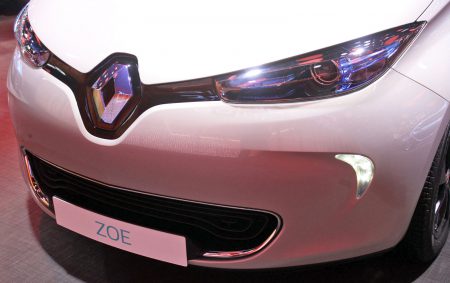
Around a quarter of European greenhouse gas emissions come from transportation, as well as it being the primary cause of air pollution in cities. So there’s something of an imperative to get on with getting everyone to make the switch, which should be helped by cheaper, newer EVs, like the Renault Zoe.

Source: Engadget

BMW Going All In on Electric Cars After EV Sales Jump 50 Percent

BMW announces massive electric vehicle sales growth in the first quarter of 2017—and it’s on track to sell a record number of EVs this year.

In announcing its sales data for 2017’s first quarter, BMW has shown substantial growth in its electric car department. Sales for BMW’s i3 and i8 plug-ins doubled from 2016’s report, totaling deliveries of nearly 20,000 units in just the first three months of 2017. Currently, EV sales account for three percent of BMW’s overall sales—and that number is expected to continue to climb.
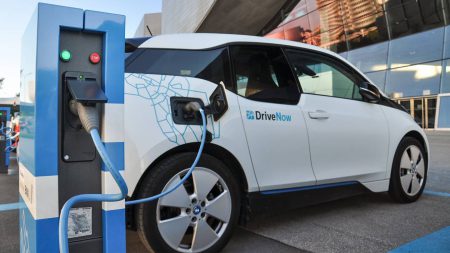
We Are Therefore Well On Course To Delivering More Than 100,000 Electrified Vehicles For The First Time In 2017.

-HARALD KRÜGER, CHAIRMAN OF THE BOARD OF MANAGEMENT OF BMW AG
SHARE.

It certainly seems that BMW is in it for the long haul now when it comes to electric cars. It has become evident this is the shared thought amongst many manufacturers, as they invest more money into the infrastructure of electric charging and begin to pump out more and more EVs in the coming years. BMW has announced its plans to release several new EVs in the near future, including a new i8 roadster in 2018, a fully electric Mini in 2019, a fully electric X3 in 2020, and BMW’s autonomous electric iNext concept in 2021.

Why is BMW investing so much in electric cars? BMW recognizes the growth in sales, sure. But from a marketing perspective, BMW states that, from experience, they know customers prefer to have choices. And BMW has taken that to mean EVs, so it is prioritizing electrification of its vehicle lineup to meet this demand. BMW currently has eight variations of electric vehicles available for consumers to purchase.

Another realization that the manufacturer has attributed to the adoption of EVs is that the vehicles’ usable range is constantly increasing. This could be why BMW agreed to invest in a considerable sum in peppering the nation with more chargers in previously-unutilized spots.

With BMW on pace to sell 100,000 electric vehicles in 2017, the charging infrastructure will continue to grow. The luxury brand shifting focus towards electrifying its fleet will only help to push this agenda, as well as help grow the brand’s sales numbers during the upcoming months. Large players like Tesla will continue to push the limits of adoption, as their vehicle offerings compete with an emerging market. BMW has shown its intent to compete in this rapidly changing market by offering more options to consumers.

Source: The Drive