Monthly Archives: May 2017

Could Electric Vehicles Kill Alberta Oil Sands Industry?

A new study from author and Stanford University lecturer Tony Seba has raised eyebrows in the Canadian oil patch. He forecasts that by 2030, electric vehicles will account for 95% of the miles traveled in the U.S., which is the sole market for Canadian oil exports.

As if that prediction isn’t remarkable enough, Seba said global oil production will fall from 100 million barrels per day (MMbbl/d) to 70 MMbbl/d, which, if true, would possibly devastate the high-cost 2.7 MMbbl/d Alberta oil sands industry.

The trigger for what Seba calls

“one of the fastest, deepest, most consequential disruptions of transportation in history”

will be the perfection of electric vehicle (EV) self-driving technology. Companies such as Uber and Lyft will buy fleets of autonomous cars and charge users to ride, a business model known as “transportation as a service.”

After more than a century of private auto ownership, families and businesses will give up their cars because transportation costs will simply fall off a cliff, said Seba, who co-authored “Rethinking Transportation 2020-2030: The Disruption of Transportation and the Collapse of the ICE Vehicle and Oil Industries” with Bryan Hansel and James Arbib.

The new way of getting around town will be 4x to 10x cheaper per mile than a new car, and 2x to 4x cheaper than a paid-off vehicle, with the average American household saving a whopping $5,600 annually.

In an interview, Seba said that under the right conditions, he can even foresee

“free transportation” supported by advertising revenue:“There is nothing magical about it. This is driven by the economics.”

The economics are that at present, Americans use their vehicles only 4% of the time. The study estimates transportation-as-a-service companies will have their EVs on the road earning money at least 40%—and maybe even 50% to 80%—of the time.

And EVs will seemingly run forever, lasting 500,000 miles while requiring far less maintenance and repair than internal combustion engine (ICE) autos, whose life on average is only 140,000 miles.

“Many automakers are working on million-mile electric vehicles, which drives down costs even lower,”

Seba said.

As fewer cars travel more miles, the number of passenger vehicles on American roads will drop from 247 million to 44 million.

Read more: E&P

LG CHEM OFFICIALLY LAUNCHES HOME BATTERIES IN NORTH AMERICA

The lithium-ion battery manufacturer LG Chem has officially launched its residential battery systems line in the North American market. This news follows the completion of UL certification.

The company’s residential battery systems line in North America is comprised of a variety of AC- and DC-coupled solutions, with system capacities ranging to up to 9.8 kilowatt-hours (kWh).

There are two different voltage options available (which are paired with compatible inverters). These are a low-voltage 48V option and a high-voltage 400V option. The low-voltage option is available in system capacities of 3.3 kWh, 6.5 kWh, and 9.8 kWh. The high-voltage option is available in system capacities of 7 kWh and 9.8 kWh.

The press release provides more:

“The 400V RESU10H (9.8 kWh) product is compatible with SolarEdge’s StorEdge, which is a DC coupled storage solution based on a single inverter for both PV and storage. Additional inverter compatibility options will become available later in 2017 to provide homeowners with a range of pre-tested solutions from the industry’s leading suppliers.”

The LG Chem lineup of residential energy storage products will, according to that pares release, be “available via a number of leading solar/storage providers in North America. Following last year’s announcement of a partnership with LG Chem, Sunrun — one of the leading US-based residential energy system providers — will be supplying LG Chem’s RESU systems. Sunrun already has installed initial systems in both Hawaii and California.”

In addition, LG Chem is reportedly in “advanced negotiations” for further distribution channels. The company claims that it will be offering the systems in all US states and Canadian provinces.

Briefly showing the company’s wide range of work in the automotive and stationary battery field, LG Chem notes that it

“has been awarded 82 projects from 28 global automotive OEMs as of September 2016, and deployed Gigawatt-hours of global stationary battery projects.”

Read more: Powur

THE SURGE IN ELECTRIC CAR USE

The growing popularity of electric vehicles makes it difficult to remember when the environmentally friendly automobiles were considered appropriate solely for short local trips.

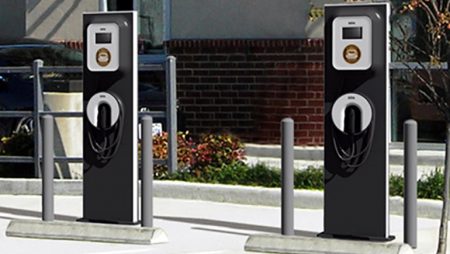
Today, an increasing awareness of the connection between cars and climate change, coupled with a growing number of electric car charging stations is inspiring a surge in electric car use around the world.

Europe is the current frontrunner in the global race to increase electric car use, with Norway leading the charge. Having stated that they plan to eliminate using all fossil fuel powered vehicles by 2025, the Scandinavian country offers residents an array of incentives designed to make the switch to electric vehicles easy.

While Europe is embracing electric vehicles, the current world leader for electric car use is China. With their sights set on the future, China is focused on achieving their reported goal of deploying 5 million electric vehicles by 2020. To date, there are approximately 600,000 electric vehicles on the road in China.

The surge in electric car use has prompted the rapid installation of electric car charging stations worldwide. Once limited to a radius of approximately 100 miles per charge, some new generations of electric vehicles are promising that a full charge will last for approximately 200 miles.

In addition to the increased power of electric vehicle charges, electric car charging stations are also improving. A full charge, which can take approximately eight hours, can now be accomplished in little over 15 minutes by using quick charging stations.

While there are still challenges, such as under supported power grids, obvious next steps will be for countries to enhance their power grid to prevent brownouts due to the high volume of people charging vehicles.

Read more: Sparta Capital

Electric superminis to cost the same as petrol cars by 2020

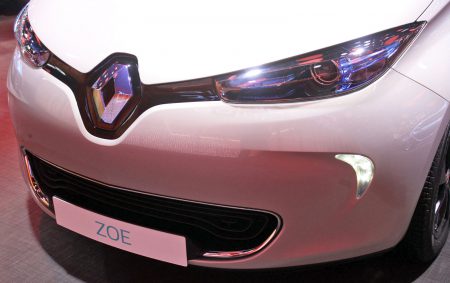
Renault’s EV boss says the cost of electric cars such as the ZOE will drop, bringing them in-line with conventionally-powered cars

Renault’s head of electric vehicles believes EVs like the ZOE will cost about same as similarly sized, conventionally-powered cars by the year 2020.

Gilles Normand, senior vice-president for electric vehicles at Renault, said that sales of the firm’s small EV, the ZOE, have jumped 90 per cent between 2016 and 2017, thanks to the introduction of a larger battery capacity. And he believes that as more manufacturers and suppliers invest in battery development and manufacturing, the prices of EVs will take only a couple of years to reach the same level as petrol-engined cars.

Speaking at the Financial Times Car of the Future Summit in London, Normand said, “We are moving faster than we expected. When we introduced the first ZOE back in 2012, we didn’t think the new battery capacity would come in 2016; we expected it by 2018.

“There’s now a huge amount of money being invested by OEMs and by suppliers, tier one suppliers. This will bring further technology breakthroughs in battery tech. And then it’ll further help sales, because it’ll be more affordable.

“So we mustn’t forget that the prices of combustion-engine cars will go up, and EV prices will come down. If you go for B-segment [cars like the Ford Fiesta], by early next decade we consider the prices of EVs will be on par with combustion-engined cars. With the C-segment [cars like the VW Golf], it’ll be the middle of the next decade. And in industry terms, the year 2020 is like tomorrow morning at 8am, right? And this will be another trigger point for more and more adoption.”

Source: Auto Express

Time to get switched on to electric vehicles

It is still early days for electric vehicles (EV), but with more motorists reaping the benefits of electric driving, the market is growing.

Total plug-in car registrations for 2016 passed the sector’s 2015 total, while the Government’s pledge to invest £35m in the ultra-low emission vehicle sector will help ensure that development of the UK’s EV charging infrastructure keeps pace.

Improvements in battery technology mean that pure EVs can now travel around 100 miles on a full charge, while plug-in hybrids (PHEVs) and range extenders enable vehicles to travel several hundred miles.

Phil Gilbert, director of energy solutions at E.ON, says:

“We’re seeing huge growth in the number of new electric vehicles on the road, including hybrid technologies and pure electric vehicles from manufacturers such as Tesla, BMW and Mitsubishi.

“As this growth continues, we want to offer our business customers the ability to take full advantage of the financial and environmental benefits of charging their fleets or their employees’ cars at work, or offering a charging service to their customers.”

To do that, the company (which has a well-established network of charging points across Europe), is launching a range of charge-point solutions. It’s part of a wider drive from E.ON to work with clients to help maximise the benefits of investment in EV infrastructure.

Read more: The Telegraph

The Predicament of Venice

I’m currently enjoying a short stay in Venice. It’s a beautiful place with an astonishing amount of priceless art and architecture.

The fumes from the tourist boat merge with the fumes from a berthed cruise ship in Venice (Image: T. Larkum)
The fumes from a tourist boat merge with the fumes from a berthed cruise ship in Venice (Image: T. Larkum)

However, it is clearly dying. Over the centuries it has suffered from regular flooding. Most of the buildings have long-term damp. This has led to inevitable deterioration of the art, particularly murals and frescoes.

Now with climate change the problems are accelerating. There are plans being made to save the island and its art. However I think they can only delay the day that Venice goes under permanently, not prevent it.

Venice is in a predicament; if it were a problem it could be solved. A predicament you have to manage the best you can.

Part of the issue, of course, is that Venice itself is itself a contributor to climate change. It is a major hub for tourism. People come here from all over the world by plane, train, bus and car.

Once here everyone travels around in a range of boats, all of which (with the exception of the famous people-powered gondoliers) appear to be diesel powered.

Anywhere near the waterways has the smell and often haze of diesel fumes and black smoke. And this place receives massive cruise ships.

There were four berthed yesterday morning, and we saw one tugged past St Michael’s Square yesterday evening. It appeared to dwarf the Basilica and bell tower.

A vast cruise ship goes past St Mark's Square, Venice (Image: T. Larkum)
A vast cruise ship goes past St Mark’s Square, Venice (Image: T. Larkum)

Of course, none of that will change. It’s tourism that pays to keep Venice going and to repair the ongoing damage. It also allows for planning of additional flood defences.

Hence the predicament of Venice, a problem that can’t be solved.


[Update: Since getting back home I’ve found some interesting related articles:


InstaVolt signs multi-million-pound deal with ChargePoint

InstaVolt has signed a multi-million-pound deal with the world’s largest electric vehicle (EV) charging network.

The Basingstoke firm has signed an agreement with Silicon Valley giant ChargePoint to purchase more than 200 of its electric vehicle rapid charging solutions. They will be installed later this year, marking the first time the rapid charging systems will be deployed in the UK.

InstaVolt, which installs and maintains electric vehicle charging points at places such as forecourts and service stations, will begin installing the first of the ChargePoint ‘Express Plus’ rapid charge systems this summer. They will be strategically placed close to popular routes across the country, enabling drivers to easily charge their vehicles during long journeys.

The Express Plus charging systems, which can add hundreds of miles of range in as quick as 15 minutes, have been designed to be future-proof. The modular charging platform is built to scale as demand grows.

The deal between InstaVolt and ChargePoint comes after the American company secured $82 million in investments as part of its latest funding round to help it break into Europe.

Read more: Instavolt

Hyundai Ioniq Plug-in 2017 review

The delayed Hyundai Ioniq Plug-in promises eyebrow-raising fuel economy at an appealing price.

The Hyundai Ioniq, new to showrooms only last year, has been rightly proclaimed unique among environmentally friendly family hatchbacks because it’s the only car on the market available as either a normal hybrid, a plug-in-hybrid, or a full battery-only electric option.

The third Hyundai Ioniq derivative is ostensibly the same as the lesser hybrid but for a much larger and more powerful lithium-ion drive battery and the ‘Type II’ electrical charging socket needed to charge it from the mains. The battery’s capacity is 8.9kWh, and the Ioniq Plug-in charges from a typical 16-amp driveway wallbox charge in a little over two hours. Petrol power comes from a 104bhp 1.6-litre petrol engine, and electrical and piston power are juggled onto the road through the front wheels via a six-speed twin-clutch automatic gearbox.


What’s the 2017 Hyundai Ioniq Plug-in like to drive?

The car can be driven in ‘EV’, ‘HEV Hybrid’ and ‘Sport’ modes, and truncated testing suggested it should be good for around 30 miles of mixed driving on battery power alone: not quite equal to Hyundai’s 39-mile claim, but certainly up there with the Toyota on electric-only range. Over a total 100-miles of testing at mixed pace, we averaged 85.6mpg in the car overall: also a very creditable result.

The Ioniq’s 60bhp electric motor feels potent enough around town and up to about 50mph. The car is happy to cruise on electric power at motorway speed, but you need to rouse the combustion engine for meaningful acceleration here.

What’s the 2017 Hyundai Ioniq Plug-in like inside?

The cabin’s almost identical to those of its Ioniq rangemates. This is a fairly large and spacious hatchback with good accommodation for adults in the back row but for slightly limited headroom. Boot space relative to the standard Ioniq is eaten into slightly by that larger drive battery, but a fairly long, wide and deep loadbay is left that should swallow pushchairs and the like easily enough.

Hyundai adds functions to the car’s infotainment system over and above what that of the Ioniq Hybrid that allow you to search for nearby charging stations and monitor the car’s energy usage that bit more closely. Overall, though, the car’s infotainment system is a way from being the most intuitive, usable and advanced-looking of its kind.

Read more: What Car?

People are really starting to embrace electric cars

Sales of green vehicles in the US and Europe are spiking.

As with any new transportation technology, it’s not as simple as building your first vehicle and expecting the whole world to change. And yet, it appears as if the world is finally cottoning on to this whole electric cars are better and cheaper to run thing.

The European Automobile Manufacturers Association has revealed that EV sales in the first quarter of 2017 are spiking. Overall, sales of so-called “Alternative Fuel Vehicles” have increased by an overall 37.6 percent compared to the first quarter of 2016.

Those figures seem to mirror Bloomberg’s research into the state of the US electric market, which has seen demand trend northward. In the same period, American sales of electric vehicles jumped 49 percent, with sales totaling 40,700.

As heartwarming as the stats are, it’s worth noting that the law of small numbers makes them sound a little more impressive than they actually are. For instance, Germany’s 117 percent rise in EV sales reflects a jump from 2,332 cars in Q1 2016 to 5,060 now.

Around a quarter of European greenhouse gas emissions come from transportation, as well as it being the primary cause of air pollution in cities. So there’s something of an imperative to get on with getting everyone to make the switch, which should be helped by cheaper, newer EVs, like the Renault Zoe.

Source: Engadget

BMW Going All In on Electric Cars After EV Sales Jump 50 Percent

BMW announces massive electric vehicle sales growth in the first quarter of 2017—and it’s on track to sell a record number of EVs this year.

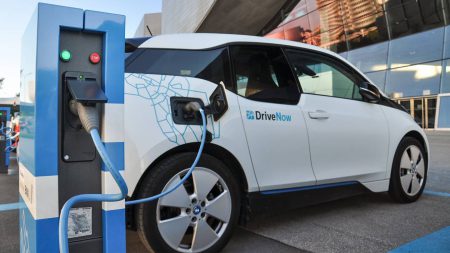
In announcing its sales data for 2017’s first quarter, BMW has shown substantial growth in its electric car department. Sales for BMW’s i3 and i8 plug-ins doubled from 2016’s report, totaling deliveries of nearly 20,000 units in just the first three months of 2017. Currently, EV sales account for three percent of BMW’s overall sales—and that number is expected to continue to climb.

We Are Therefore Well On Course To Delivering More Than 100,000 Electrified Vehicles For The First Time In 2017.

-HARALD KRÜGER, CHAIRMAN OF THE BOARD OF MANAGEMENT OF BMW AG
SHARE.

It certainly seems that BMW is in it for the long haul now when it comes to electric cars. It has become evident this is the shared thought amongst many manufacturers, as they invest more money into the infrastructure of electric charging and begin to pump out more and more EVs in the coming years. BMW has announced its plans to release several new EVs in the near future, including a new i8 roadster in 2018, a fully electric Mini in 2019, a fully electric X3 in 2020, and BMW’s autonomous electric iNext concept in 2021.

Why is BMW investing so much in electric cars? BMW recognizes the growth in sales, sure. But from a marketing perspective, BMW states that, from experience, they know customers prefer to have choices. And BMW has taken that to mean EVs, so it is prioritizing electrification of its vehicle lineup to meet this demand. BMW currently has eight variations of electric vehicles available for consumers to purchase.

Another realization that the manufacturer has attributed to the adoption of EVs is that the vehicles’ usable range is constantly increasing. This could be why BMW agreed to invest in a considerable sum in peppering the nation with more chargers in previously-unutilized spots.

With BMW on pace to sell 100,000 electric vehicles in 2017, the charging infrastructure will continue to grow. The luxury brand shifting focus towards electrifying its fleet will only help to push this agenda, as well as help grow the brand’s sales numbers during the upcoming months. Large players like Tesla will continue to push the limits of adoption, as their vehicle offerings compete with an emerging market. BMW has shown its intent to compete in this rapidly changing market by offering more options to consumers.

Source: The Drive