Daily Archives: March 29, 2017

Can an electric van work for your business?

An electric van could be the perfect opportunity to cut running costs, but do they make sense for your business? We look at the key issues

There’s something of a revolution going on in the UK van market. While diesel definitely isn’t dead, manufacturers are branching out to provide alternative fuels for buyers. That means petrol vans are making a comeback, while hybrids are in the pipeline, too. But perhaps the most intriguing option that’s available in the UK today is the electric van.

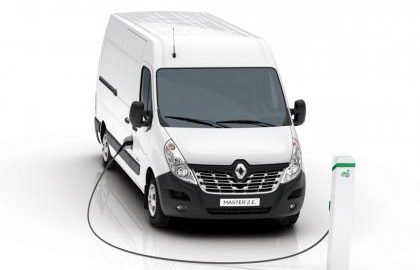
Renault Master Z.E 39

If you need a van to keep your business moving, then the running costs for that vehicle will be a key factor in your monthly outgoings. While the latest diesel vans can deliver running costs on a par with large MPVs that will help to reduce your running costs, there is another way to help slash your outgoings, and that’s by plumping for an electric van.

Battery range

The distance that you can travel on a single charge is going to be a major factor in deciding whether an electric van is right for you. At the moment, the two leading electric vans on sale in the UK are the Nissan e-NV200 and Renault Kangoo ZE. As both models use a similar electric drive system, they both have a claimed range of up to 106 miles.

Charging

The second major factor when evaluating electric van ownership is whether you have the ability to charge it up. The first thing you need is a convenient place to park the van so that you can access a charging point, whether it’s in a garage or an off-street parking space near an electricity supply.

The best way to charge a van is by using a wall box, as this can deliver a faster charge than if you plug into a conventional plug socket. Do this, and whenever you leave your van parked up overnight, you can plug it in and have a fully charged van ready to go in the morning.

Payload

Adding weight to any van has a negative effect on energy consumption, whether it’s powered by a diesel engine or an electric motor. However, just because a van runs on electricity, it doesn’t mean it’s any poorer at carrying big loads.

Price

One area where electric vans are competitive is on list price, and that’s because the Government’s Plug-in Van Grant is bigger than it is for electric cars. You can get £8,000 off the list price of an electric or hybrid van that is able to travel at least 10 miles on zero emissions electric power alone. That means the Nisan e-NV200 starts from around £15,000, which is about £400 less than the NV200 with a 1.5 dCi diesel.

Running costs

Another factor to consider is the overall running costs of an electric van. While you’ll never be at the mercy of fuel station prices, you won’t be accessing free energy. If you’re charging a van overnight, then the cost is estimated to be around £1.50 to fully charge a flat battery. As a rough estimate, you’d need to spend around £15 on diesel to cover 100 miles, so the savings an electric van can deliver are plain to see. If you’re registered as a company, you should also be able to write off some of your household energy bills against VAT, as the energy used to recharge your electric van is a legitimate business cost.

Read more: Auto Express

Vattenfall wind farms to use BMW energy storage

Sweden’s state-owned utility Vattenfall will use 1,000 lithium ion batteries supplied by BMW Group to provide energy storage at some of the power company’s wind power facilities.

The batteries, which are of the same type the auto maker uses in its BMW i3 electric car, will have a capacity of 33 kWh. They will function as back-up energy storage for when the wind power resource isn’t available.
Vattenfall will build the first 3.2 MW energy storage at the Princess Alexia wind energy project near Amsterdam, which generates 122 MW.

A larger 22 MW energy storage project will be built at the 230 MW Pen y Cymoedd wind farm in South Wales.
In August, Vattenfall won a contract with UK-based National Grid under which it will supply electric balancing services for the Pen y Cymoedd wind farm.

Source: Electric Light & Power

Is 2017 THE year of the Electric Car?

Electric Car Sales Boom As UK Vehicle Sales Hit a 12-Year High

The popularity of the electric car has increased exponentially in recent years, with projections of 2 million electric cars shortly on the world’s roads (Guardian, 2016). This in turn has seen many adaptations such as charging points at service stations and even fast-food chains – benefiting those already owning an electric car, as well as attracting those thinking about making the switch. Further evidence of this rise is the news of the record sales of vehicles and a 12 year high in car registrations – which was aided by the surge of purchases in electric vehicles.

January 2017 saw 174,564 cars being registered across the UK, up 2.9 per cent when compared with the previous year, and the highest monthly level since 2005 (Guardian, 2017). The Society of Motor Manufacturers and Traders (SMMT) also announced that electric vehicles took a record share in the sales market. Looking at the underlying figures, it is clear to see how alternative fuel cars are helping with this surge, especially electric cars like the new Nissan Leaf. This increased by a fifth and reached its greatest share of new vehicles registrations at 4.2 per cent, passing its previous 3.6 per cent high of November last year (Guardian, 2017).

“With the fluctuating cost of fuel, it is clear to see why motorists are opting for alternative fuel vehicles, where electricity prices are more stable”

There are a multitude of reasons why electric vehicles are leading the charge and steadily growing in the overall sales market. One of the main reasons, and alluded to earlier with the Nissan Leaf, is that no longer are electric cars a simplistic eyesore, but instead have increased in both style and scope. Drivers are now more attracted to alternative fuel cars as their appearance has evolved to be more like that of standard cars, as well as being cleaner and cheaper to run.

Almost mirroring the persistent rise in the cost of fuel is a further advantage to those thinking about purchasing an electric car: battery costs are down by 65 per cent from prices 5 years ago (CityAM).

As well as being cheaper, cleaner and more environmentally friendly, electric cars outclass internal combustion vehicles on a multitude of levels. Electric cars run more smoothly and have improved acceleration over their fuelled counterparts, as well as having significantly lower maintenance needs, and the scope for manufacturer modifications to be completed via software updates.

With four major world cities now actively moving to ban diesel vehicles by 2025 (BBC, 2016), and London looking increasingly likely to join this, alternative fuel vehicles will certainly continue to grow their share in the market. Major car companies are already altering their strategies to put electric vehicles at the center of their ranges, with Volkswagen planning to invest $11.2 billion over the course of the next decade to make electric cars 25 per cent of its total sales (CityAM, 2016). These latest trends and figures suggest that the sales of electric cars will continue to rise, with Bloomberg New Energy Finance (BNEF) forecasting that the sales of electric vehicles will account for 35 per cent of all new car sales by 2040.

Source: TryMyEV

Mexicans Lining up Electric to Beat Pollution

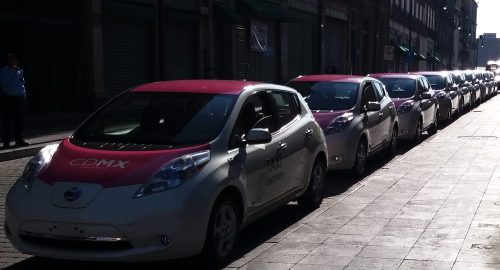
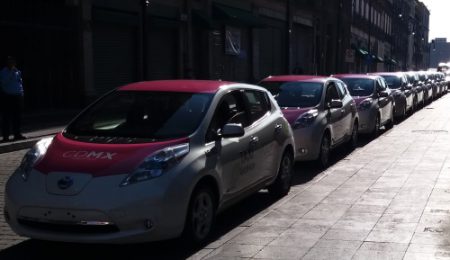
On a trip to Mexico City this week, I have just seen a lovely sight. A long row of all-electric Nissan Leafs lined up in a taxi rank ready to start the day.

Electric Taxi Rank in Mexico City

If you have ever been to Mexico City, then you will know that air pollution is a major issue here, as it is now becoming in all large cities. The taxi rank is not yet a full solution, and the city is still filled with diesels and petrol guzzlers blasting out noxious fumes, but it is a step in the right direction. I hope for many more.