Monthly Archives: January 2017

Bill McKibben: The Question I Get Asked the Most

The questions come after talks, on twitter, in the days’ incoming tide of email—sometimes even in old-fashioned letters that arrive in envelopes. The most common one by far is also the simplest: What can I do? I bet I’ve been asked it 10,000 times by now and—like a climate scientist predicting the temperature—I’m pretty sure I’m erring on the low side.

It’s the right question or almost: It implies an eagerness to act and action is what we need. But my answer to it has changed over the years, as the science of global warming has shifted. I find, in fact, that I’m now saying almost the opposite of what I said three decades ago.

Then—when I was 27 and writing the first book on climate change—I was fairly self-obsessed (perhaps age appropriately). And it looked like we had some time: No climate scientist in the late 1980s thought that by 2016 we’d already be seeing massive Arctic ice melt. So it made sense for everyone to think about the changes they could make in their own lives that, over time, would add up to significant change. In The End of Nature, I described how my wife and I had tried to “prune and snip our desires,” how instead of taking long vacation trips by car we rode our bikes in the road, how we grew more of our own food, how we “tried not to think about how much we’d like a baby.”

Some of these changes we’ve maintained—we still ride our bikes, and I haven’t been on a vacation in a very long time. Some we modified—thank God we decided to have a child, who turned out to be the joy of our life. And some I’ve abandoned: I’ve spent much of the last decade in frenetic travel, much of it on airplanes. That’s because, over time, it became clear to me that there’s a problem with the question “What can I do.”

The problem is the word “I.” By ourselves, there’s not much we can do. Yes, my roof is covered with solar panels and I drive a plug-in car that draws its power from those panels, and yes our hot water is heated by the sun, and yes we eat low on the food chain and close to home. I’m glad we do all those things, and I think everyone should do them, and I no longer try to fool myself that they will solve climate change.

Because the science has changed and with it our understanding of the necessary politics and economics of survival. Climate change is coming far faster than people anticipated even a couple of decades ago. 2016 is smashing the temperature records set in 2015 which smashed the records set in 2014; some of the world’s largest physical features (giant coral reefs, vast river deltas) are starting to die off or disappear. Drought does damage daily; hundred-year floods come every other spring. In the last 18 months we’ve seen the highest wind speeds ever recorded in many of the world’s ocean basins. In Basra Iraq—not far from the Garden of Eden—the temperature hit 129 Fahrenheit this summer, the highest reliably recorded temperature ever and right at the limit of human tolerance.

July and August were not just the hottest months ever recorded, they were, according to most climatologists, the hottest months in the entire history of human civilization. The most common phrase I hear from scientists is “faster than anticipated.” Sometime in the last few years we left behind the Holocene, the 10,000 year period of benign climatic stability that marked the rise of human civilization. We’re in something new now—something new and frightening.

Read more: Ecowatch
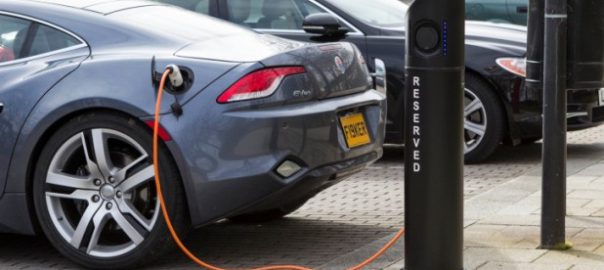
Electric charge point CMK (Image: One MK)

Number of electric vehicles in Milton Keynes triples

The number of electric vehicle (EV) users in Milton Keynes has tripled over the summer.

Electric charge point CMK (Image: One MK)

In January 2016, Milton Keynes Council was awarded Go Ultra Low City status which through funding support from central government for infrastructure is designed to increase the use of EVs in the city. The number has now increased from 220 in July to 661 by the end of September.

Milton Keynes has more than 170 standard and 56 rapid charging points, with more being installed in the near future.

July saw the launch of the new ‘Green Parking Permit’ for ultra-low EVs which allows them to park for free in purple bays, the red/black employee spaces (Mon-Fri) and in the specified EV spaces. To date, the council has issued 157 permits.

The Green Permit is free if your vehicle fits the criteria of producing 75g/km or less of CO².

Chargemaster, who run the vehicle charging points across MK, has recorded a four-fold increase in their usage.

These latest figures indicate that EVs are becoming more popular in MK and less of a niche choice by motorists.

Cllr Liz Gifford, cabinet member for transport said

“These latest stats are very encouraging and show that people are turning more and more to electric vehicles.”

“It’s important to us to reduce our carbon footprint as much as possible and these ultra-low vehicles are the way to do just that.”

David Martell, chief executive of Chargemaster PLC, the operators of the Milton Keynes charging network commented:

“The policies of Milton Keynes Council encouraging electric vehicles are clearly working. By having a high quality network of charging points, low cost electric charging and with free parking in many areas Milton Keynes is a great place to own an EV.

“In addition, the new initiatives under the Milton Keynes Go Ultra Low plans will keep this momentum going helped by many new electric models coming along from key manufacturers like VW, BMW, Jaguar and Audi. This all bodes well for a high proportion of electric vehicles in Milton Keynes over the next decade which will keep emissions low and air quality at a high level.”

Read more: One MK

f

Workplace charging (Image: J. Kalb/Plug In America)

£35 million boost for ultra low emission vehicles

Funding committed to low emission taxis and motorbikes, plus more chargepoints for workplaces and residential streets.

Workplace charging (Image: J. Kalb/Plug In America)

A major £35 million package to boost the uptake of ultra-low emission cars and scooters was unveiled by Transport Minister John Hayes today (13 October 2016).

The fresh funding commitment will see thousands more electric vehicle chargepoints installed on streets and at workplaces across the UK – after the number of new ultra low emission vehicles registered rose by 250% in just 2 years.

The government is also buying 2 brand new Nissan LEAF electric cars for the Government Car Service – on top of 4 that are already in use.

The vehicles are built at the Nissan motor manufacturing plant in Sunderland – a symbol of our world-leading automotive industry which the government is committed to supporting.

The announcement is part of the government’s plans to improve air quality, and it comes as Defra launch a new consultation on introducing clean air zones in Birmingham, Leeds, Nottingham, Derby and Southampton by 2020 – delivering on the government’s commitment to create cleaner air and reduce emissions.

Transport Minister John Hayes said:

No matter what mode of transport you need – a scooter to get to work, a car or a van to run your business – we are here to help you do it with zero emissions.

The number of ultra-low emission vehicles on our roads are at record levels and new registrations have risen by 250% in just over 2 years.
We are committing £35 million to help install new chargepoints and offer new grants as we aim for nearly all cars and vans on our roads to be zero emission by 2050.

The funding announced today includes:

  • next steps of a £20 million competition that will help councils roll out chargepoints for ultra-low emission taxis
  • up to £10 million funding for chargepoints outside workplaces and homes where there is no off-street parking
  • launch of an initial £3.75 million scheme to encourage uptake of zero emission motorcycles and scooters
  • £2 million awarded to public and private sector organisations to deploy hydrogen fuel cell vehicles

Plans for an electric car charging point in every new home in Europe

Car manufacturers welcome plans by the EU to boost the convenience of electric cars by increasing recharging facilities

Every new or refurbished house in Europe will need to be equipped with an electric vehicle recharging point, under a draft EU directive expected to come into effect by 2019.

In a further boost to prospects for the electric car market in Europe, the regulations due to be published before the end of the year state that by 2023, 10% of parking spaces in new buildings in the EU zone will also need recharging facilities.

The EU initiative is intended to lay the infrastructure for the sort of electric car boom envisaged by Norway and the Netherlands, which both plan to completely phase out vehicles with diesel engines by 2025.

As well as extending the driving range and convenience of electric cars, the mushrooming number of recharge stations would allow vehicles to feed their electricity back into the grid.

That in turn would open the door to a futuristic world in which cars supply energy to Europe’s power network at all times of the day and night, balancing shortfalls from intermittent renewable energies when the sun is not shining and the wind not blowing.

“This kind of market stimulus is not just positive, it is mandatory if we want to see a massive rollout of electric vehicles in the near future,”

said Guillaume Berthier, sales and marketing director for electric vehicles at Renault, which recently unveiled an electric vehicle with a 250-mile range.

“The question of how you recharge your car when you live in an apartment within a city is a very important one.”

Read more: The Guardian

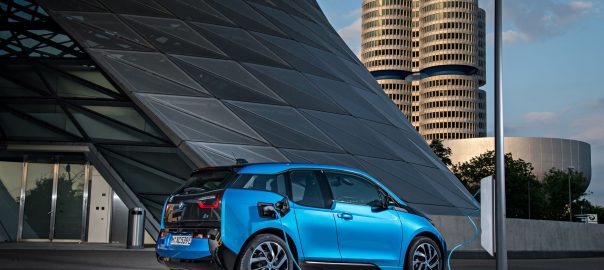
BMW i3 94Ah

German Lawmakers Vote to Ban the Internal Combustion Engine

The modern internal combustion engine first came from Germany and now Germany wants to put a nail in its coffin. The Bundesrat has passed a resolution to ban the ICE beginning in 2030.

BMW i3 94Ah
BMW i3 94Ah

[10/8/16] Germany’s Spiegel Magazin reported this morning that the country’s top legislative body was able to reach a bi-partisan agreement that hopes to allow only zero-emission vehicles on EU roads in 14 years. For the resolution to be instituted across Europe, it will have to be approved by the EU. But according to Forbes, “German regulations traditionally have shaped EU and UNECE regulations.”

Greens party lawmaker Oliver Krischer told Spiegel,

“If the Paris agreement to curb climate-warming emissions is to be taken seriously, no new combustion engine cars should be allowed on roads after 2030.”

The resolution calls on EU automakers to “review the current practices of taxation and dues with regard to a stimulation of emission-free mobility.” Creating a tougher tax burden could encourage manufacturers to push electric vehicles into production sooner, rather than later.

While larger approvals will still need to go through the legislative process, the fact that the country with the fourth-largest auto industry in the world is spearheading such sweeping change is a big sign of where we’re headed. It’s a road paved with slow-moving politicians making incremental changes and hoping the industry will warm up to the idea of not killing us all.

Source: Gizmodo

Charging at Cherwell (Image: T. Heale)

Rapid Charging an Ioniq eMotor?

Where were we? Ah yes. I have my Ecotricity* Android App and my Chargemaster Polar RFID card. I’m ready for the big leagues. Rapid high current charging here I come. “Gather yourself woman!” I said. “We’re off into the countryside”.

An hour out from Milton Keynes, we’re tootling down the M40 on a misty Saturday afternoon and the Memsahib challenges Satnag to guide us home. Duly programmed Satnag does its thing and Ioniq interrupts proceedings with a message of gloom and disaster.

“You will never see your destination. Doom! Doom again! Woe betide the fool that tries to… ”.

Well that’s what it felt like and now I know what Range Anxiety (RA) can do to a fella. It’s not nice.
The actual message? “You have insufficient charge to reach your destination”. And then as an afterthought “Would you like to know the nearest defibrillator?” or did it say “charge point”? You get how I’m feeling.
Five miles later we arrive at Moto Cherwell Valley. Some semblance of cognition kicks in as I remember that electric charge points aren’t located near the liquid fuels and we play hunt the charge point in the car park.

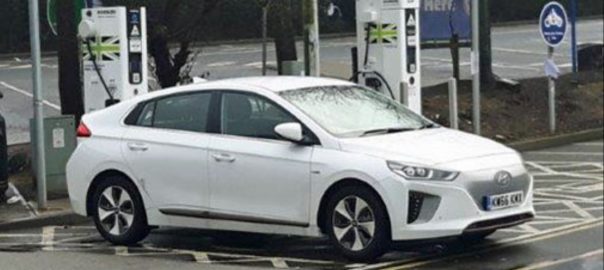
Look, as evidenced in this image…  We won 🙂

Charging at Cherwell (Image: T. Heale)

We didn’t know yet but something was wrong. Not the process, no, that was fine. Introductions went well:

  • Phone, App – Say hello to – Charge point.
  • Charge point – Phone App.

Electronic handshaking takes place. This is so much easier than I expected. “Do you accept the cost?”. I accepted. Grudgingly. I don’t have my free charges yet but £6 is still a bargain.
Found the AC connector. It looked exactly like the one at home (some of you are jumping ahead) and Click! The blue charging lights coming on the App assures me I’ll be told when to come back.

RA sorted, I notice that my back teeth are floating and the cold isn’t helping. Time to get in out of the cold and find the toilets.

Just consider that a moment. Find the toilets.

Why would I have to try to find the toilets? More to the point why would any public place hide the ^%$%ing toilets? I have visited facilities in many service stations. They’ve always been near the entrance and clearly labelled. Moto Cherwell Valley believe otherwise**. Plan accordingly if you stop there.

Mind, body and spirit at ease we look dotingly out of the window at eMotor suckling at the Ecotricity teat. All is well with the world. You know it isn’t but we don’t. Yet.

Let me offer you some simple advice for these times. Bring a book or magazine or something. If it’s going to be a flask and some sandwiches stay in the car so as to avoid being turfed out for not buying anything.

Forty minutes later, I’m feeling concerned. There has been no word from App. We go back to eMotor and the charge lights are off. I’m not concerned any more. We can be on our way and I’ll take App to task later.

In five minutes time I will be talking to a helpful young man (Victor) at ecotricity.

Pre-launch checks show we now have sixteen more miles than what we came in with.
What? Sixteen? One six? Not six zero? Grrrrr at all things electric!
“Breathe” She says. I breathe.
“That cost me six quid!” I breathe again.
“Where’s my phone?” I breathe again.
There’s a number on the charge point if you have any problem.

Turns out that there were two charge points and I parked at the wrong one. You live and learn.

This is for slow charges (Image: T. Heale)
This is for rapid charges (Image: T. Heale)

BTW – The Ioniq eMotor? It is a fantastic machine. Pure pleasure to drive.

Bye for now. I’ll be in touch.


*Yes their logo is ecotricity but I believe in Capitalization for proper nouns.

** Enter building***. Fight through crowd. Pass the hot drinks turn right. Fight through crowd armed with hot drinks and food. Look into the distance on the left side there is a small sign about two thirds of the way down.  Small sign with even smaller logos representing the genders.

***If you exit the building to the outdoor seated area the doors open automatically so you can look at you eMotor unobstructed. When you walk back in mind your nose (or other protuberance), the doors do not open of their own accord.

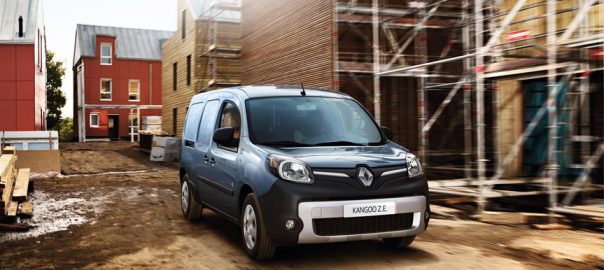
Kangoo Z.E. 2017 electric van (Image: Renault)

New Renault Kangoo Z.E. van to add 50% more range

  • Renault Pro+ is to present the all-electric New Kangoo Z.E. on 13 January at the 2017 European Motor Show in Brussels, Belgium.
  • Renault Pro+ will equip the latest Kangoo Z.E. with a new motor and battery package that will increase the model’s driving range by more than 50 per cent, from 106 miles (170km) to 168 miles (270km) NEDC. That is equivalent to 124 miles (200km) in real world driving conditions.
  • The New Kangoo Z.E. will offer the longest available driving range in the small van market.
Kangoo Z.E. 2017 electric van (Image: Renault)

The Kangoo Van Z.E. is a completely practical solution for environmentally-conscious business customers who have praised the driving enjoyment it delivers, as well as its carrying capacity and competitive operating costs.

This announcement to increase the range on Kangoo Z.E. follows on from Renault recently launching at the 2016 Paris Motor Show the New Renault ZOE available with a new Z.E.40 battery that increases its NEDC driving range to 250 miles (186 miles in real world driving conditions) – the longest of any mainstream electric car.

Renault is Europe’s leading manufacturer of both all-electric LCVs and passenger cars.

More information about the New Kangoo Z.E. will be provided on 13 January 2017.

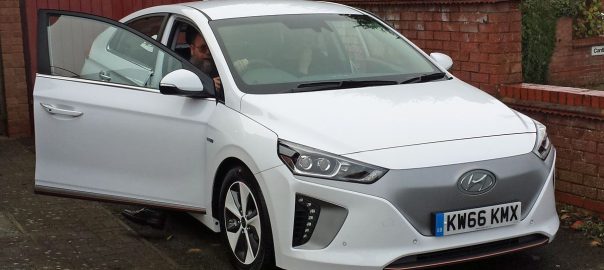
Trevor Heale at home in his new Ioniq Electric (Image: T. Larkum)

So I Own an Ioniq eMotor (Electric Vehicle)

One week into the new and exciting world of my new eMotor and I’m looking to venture further afield.

Trevor Heale at home in his new Ioniq Electric (Image: T. Larkum)

Home charging is easy, if a little long with a 13amp plug and I eagerly await my 32 amp POD Point to take advantage of cheap night rate electricity. It’s still called Economy 7 you know, just like it used to be way back when.

I mentioned in my previous post I was tackling range anxiety. Doing so within the confines of Milton Keynes (MK) seemed sensible. It was fun using sport mode to drain the battery 🙂
At eighteen miles range remaining all the appropriate warning lights went off (came on?) and…

I continued driving!

Yup. I continued. I’m that kind of chap.
Brave huh? Yes, for a given value of brave. Eco mode made me feel a little more secure.
After a couple of miles of tormenting lights, prudence reared her head and I agreed with her. It was time for me to tackle my first rapid charge.

Dear reader please forgive me as I wave my ignorance at you in the following.

I pulled over, stopped and pressed lots of buttons* (no manual yet). Within moments I had a map of Milton Keynes and dozens of choices to hoover up some power. Ooh how happy and clever I felt.

It didn’t last.

Broughton is a newer area in MK so I chose to explore it and fill up there. Yes, since you ask, it happened to be the nearest point. Remember, I’m working on my range anxiety.

If I’d known the area I would’ve stayed on the main road and seen the chargers by the local shops. I didn’t. Satnag** said turn right into Cavan Way and I did. The location of the charger and the satnav were at odds by approximately one road and two hundred yards. I’ll remember that in future searches.

I parked (reversing cameras are great) and tackled the Monolith. Which cable/connector to use? Easy I know my plug options. Now, where do I pay? Ok. Sigh. I’ll read the instructions. Bu**er!

One of the many Polar rapid charge points around Milton Keynes, this one is in Central MK (Image: T. Larkum)

Yeah, I knew somewhere in the back of my mind you needed a card but surely I can just buy some electric? Just a little bit for cash? Eh? Hole in the wall technology right? Wrong. Holes in the wall are mostly for getting money out not for putting it in.
I closed my recharging flap (that’s not a euphemism) and did the walk of ignorance and shame back to my comfy leather seat. It felt further than the three paces. The heated seat and steering wheel cheered me until I was back at home with my three pin plug.

So take heed brave new adventurers, preparation is required to charge away from home.

I have now joined the Chargemaster Polar Network and Ecotricity (for the motorway free charges). Currently the Polar network has a six month offer free of standing charge. I’ll review my use of their service in May 🙂

One other thing. eMotors are eligible for free parking in MK once you have a green permit. Apply on line at the MK Council website.

BTW – The Ioniq eMotor? It is a fantastic machine. Pure pleasure to drive.

Bye for now. I’ll be in touch.

* The next day I noticed a horrible whining noise. My shock and disappointment convinced me a motor bearing was on the way out. Hang on what’s that light? Virtual Engine Sound System (VESS) active. Not now it isn’t.

** Thank you Lewis Randall for “Satnag” 🙂

[The next part is here.]

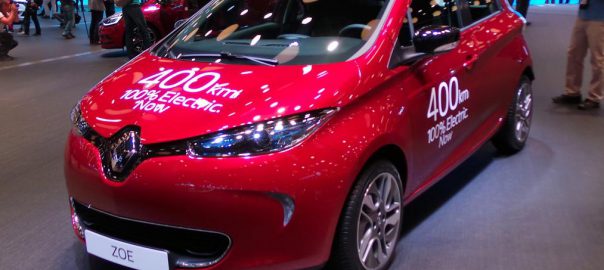
Renault ZOE Z.E.40

The End of an Era (Renault ZOE 2015)

I heard the news from Renault in about the middle of December that there were just 11 of the Renault ZOE ‘Dynamique Nav’ still in ‘stock’, i.e. available to sell across the UK dealer network or in Renault’s south coast import yard. That is the 2015 model of the ZOE, the one with the 22kWh battery and the Renault motor (so with 80-100 miles of range). It is effectively the definitive model of the Renault ZOE so far.

Well I learned today that all stock has been sold – there are no more new 2015 ZOE’s available to order from stock anywhere in the UK (there is just one example of the lower ‘Expression’ model remaining in stock, but that model doesn’t get PCP support from Renault so has never been popular or successful – it represents something like just 1 in 20 of ZOE’s sold). What remain at dealers are just the few ZOE’s that have already been ordered (e.g. on ‘spec’ by a dealer, or cancellations) and we are currently tracking down the last ones for keen customers.

So the Renault ZOE as we have known it in the UK is no more. From now on all new orders taken will be for the 2017 model ZOE – the Renault factory in Cléon retooled to manufacture this model during last autumn and deliveries are due to customers from February/March.

Renault ZOE Z.E.40
Renault ZOE Z.E.40

Virtually all new orders will be for the long-range Z.E. 40 (41kWh) ‘Dynamique Nav’ and ‘Signature Nav’ models as, again, the new ‘Expression’ model (which only comes in the old short-range 22kWh form) gets so little PCP support that it is unlikely to sell in meaningful numbers in the UK.

I see this, then, as the end of an era. From now on the Renault ZOE will – in any meaningful sense – only be available in Z.E. 40 form. Renault have ditched sub-100 mile EVs (except, perhaps, on paper) and from now on will only produce 200 mile* EVs. That is a major milestone in the development of European EVs with meaningful ranges.

The king is dead – long live the king!


*well, 180-190 miles so close enough to 200 miles to count!

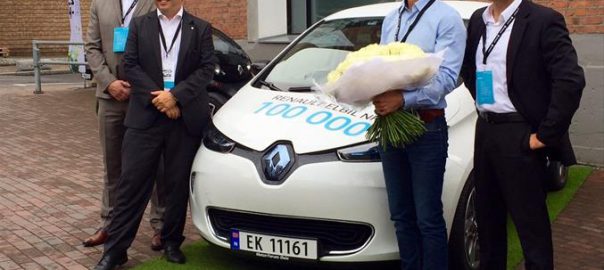
Renault has handed over the keys to its 100,000th electric car, a ZOE (Image: Renault)

Renault Hands Over the Key to its 100,000th Electric Vehicle

[From 13 September 2016]

  • Renault has handed over the keys to its 100,000th electric car, a ZOE, in the Norwegian capital of Oslo, today
  • A pioneer of all-electric vehicles, Renault is the European leader with 27% market share for electric cars

Five years since the launch of its first electric vehicle, Renault has handed over the keys to its 100,000th electric car customer.

The Renault ZOE – the brand’s all-electric supermini – was sold to 41 year old Norwegian, Mr. Åsmund Gillebo. To truly complement his purchase of a ZOE, he has been presented with five years of Fortim recharging and 100,000 minutes of recharging time from Grønn kontakt, two local energy suppliers.

Renault: the European leader for electric cars

Renault has handed over the keys to its 100,000th electric car, a ZOE (Image: Renault)

In the first half of 2016, Renault sold more than 15,000 electric vehicles (excluding the Twizy), an increase of 32% on the previous year. This success confirms Renault’s status as the European market leader, especially for LCV. Indeed, on European roads, one in every four electric vehicles is a Renault. In France, half of all electric cars are Renaults. Renault’s main markets for electric cars are France, Norway, the UK and Germany. In the UK, Renault Z.E. sales grew to 1,199 in the first half of 2016 – an increase of 26.1 per cent. Of this, 1,069 of the vehicles were the all-electric ZOE – a 39.4 per cent increase on the first six months of 2015. Since the launch of its Z.E. vehicles in the UK in 2011, Renault has sold 5,977 electric vehicles to date comprising of Fluence, Kangoo Van Z.E, Twizy and ZOE.

Eric Feunteun, Director of Renault’s Electric Vehicle Division, said:

“Every year there are more customers for electric cars and Renault is making a major contribution to this with its constant innovation and dedication to developing infrastructure. Our customer satisfaction, which stands at 98% for the ZOE, encourages us to keep pushing onwards”.

Renault boasts the most comprehensive range of 100% electric cars on the market, enabling it to meet a variety of needs. The range is made up of the compact ZOE city car, the Kangoo Van ZE, the compact urban two-seater Twizy (and its utility version, the Twizy Cargo), and the stately saloon the RSM SM3 ZE (the best-selling electric vehicle in Korea).

The ZOE, the best-selling electric vehicle in Europe, dominates the market for electric private cars with over 23% market share. The Kangoo Van ZE, the leading electric LCV in Europe for the third year running, sets the benchmark for professionals and has won a number of tenders, including the French Post Office, and the French electricity provider ERDF in Norway. Lastly, with 17,000 models sold, the Twizy is the trailblazer for new ways to get around all over the world, and is extremely popular in car-sharing initiatives in both Europe and North America.

Renault, a key player in electric innovation

With cutting edge electrical technology, proven by its performance in Formula E, Renault is naturally winning over an increasing number of users. Since it began its electric adventure Renault has adopted a global strategy for electric mobility, and the development of infrastructure in particular. Renault is involved in a number of projects to install public recharge points, working with public bodies and other players in electric mobility like energy technicians. There are currently over 100,000 public recharge points around the world, 80,000 of which are in Europe, and they are constantly growing in number. As an example, Renault supports European Commission projects for the TEN-T fund (Trans European Transport Network), which has installed over 2,300 quick charge terminals along highways and major roads in over 15 countries.

In the UK, the ZOE has won numerous awards including What Car?’s ‘Best Electric Car Under £20,000’ for three consecutive years and was most recently voted second in the 2016 Auto Express Driver Power vehicle ownership survey out of 183 cars – Renault’s best ever ranking in the survey for one of its vehicles.

Source: Renault