Monthly Archives: February 2016

The Leaf 30kWh has an official range of 155 miles - with 124 miles of real world range

Nissan Leaf 30kWh UK launch

Next Green Car was invited along to the UK launch of the Nissan Leaf 30kWh at Silverstone yesterday (Tuesday 26th January), giving us another chance at an early test for the new longer-range model.

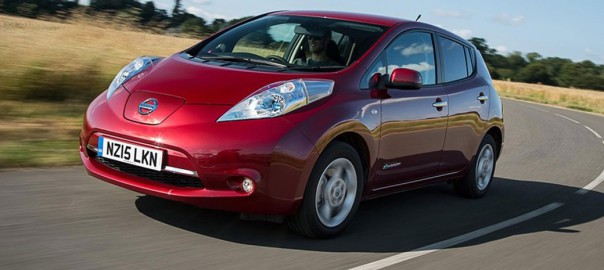
The Leaf 30kWh has an official range of 155 miles - with 124 miles of real world range
The Leaf 30kWh has an official range of 155 miles – with 124 miles of real world range

With around 12,000 UK sales, the current Leaf is the best selling electric vehicle (EV) on the market and has played an important part in increasing the growth of plug-in vehicles in the country. Since its UK launch in 2011, the Leaf has been been joined by the likes of the Renault Zoe, BMW i3, and VW’s e-Golf and e-up! in terms of pure-electric models, and a number of plug-in hybrid vehicles also to increase ultra-low emission vehicle (ULEV) sales dramatically in the last five years.

As a market leader then, Nissan is keen to maintain its position as a familiar EV manufacturer to the general public, and this new version of the Leaf shows its commitment to improving the offering available to consumers.

The previous generation of Leaf – the 24kWh battery model – had a quoted range of 124 miles, and a real world ability to cover around 99 miles on a single charge. The 30kWh model extends that official range to 155 miles which, although it is highly unlikely that drivers will ever achieve this figure, the real world range only drops to 124 miles – or the official range of the previous model.

When we attended the European launch towards the end of last year, we had an extended and challenging test route set up which took us up into the Alpes Maritime, with some long climbing making the range plummet before a downward section that saw us recuperate a large amount of energy. This tested the Leaf’s range to extremes and it coped very well, averaging some impressive figures. However, it was worth seeing how well the new Leaf would do on a cold and wet January morning in Britain, with muddy surfaces, pot-holes and a wide range of different roads available to deal with.

In terms of testing the biggest change to the Leaf – the increased range – the Nissan again performed well. The route was less obviously demanding, there are no mountains to climb in Northamptonshire after all, but conditions and roads represented a far more typical journey.

The car we were allocated came with a full charge and an indicated 99 miles worth of range. This low figure was explained by both a cold night and, of greater impact, the fact that the car had been used for press images the previous day, with the Leaf having weighted its indicated range to some spirited driving.

Deciding to treat the Leaf without any deference normally due to an EV, we set off on the route and drove exactly as if we were in a petrol or diesel model. The only difference was the use of the Leaf’s Eco button once acceleration was completed and we were largely up to speed. This meant sitting at around 70 mph on dual carriageways and motorways for about a third of the 55 mile route.

Read more: Next Green Car
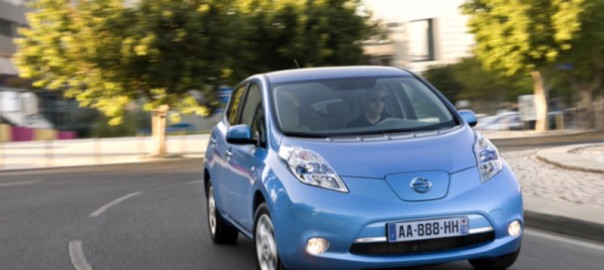
Nissan LEAF Sales Rose 29% In UK In 2015

Nissan LEAF sales in the UK continued their fast rise last year — with 5,236 registrations of the popular electric vehicle being reported in 2015.

image18-e1453683418820_Nissan_Leaf_unk

That means that Nissan LEAF sales in the UK rose roughly 29% in 2015 — as compared to 2014’s sales of the all-electric (EV) car.

According to company reps from Nissan, that means that the LEAF outsold other all-electric vehicles in the UK in 2015 by a more than 2-to-1 margin. The Nissan LEAF has now been the top-selling all-electric vehicle in the UK for the last 4 years — a winning streak that looks likely to continue for at least one or two more years.

“This record year for Nissan highlights once again the importance of our investment in the UK and commitment to electric vehicles,” stated James Wright, Nissan Motor GB Managing Director. “We’re proud to be leading the industry when it comes to 100% electric vehicles and with our new longer range LEAF and e-NV200 there are options available to everyone.”

Also worth noting here is that Nissan’s partnership with the renewable energy electricity supplier/utility company Ecotricity has been going well, and that EV charging stations are now spread across over 95% of the UK’s highway (motorway) system.

Read more: Clean Technica

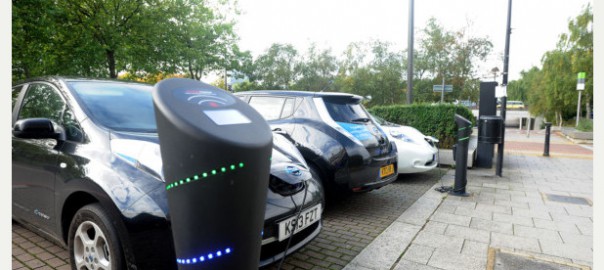
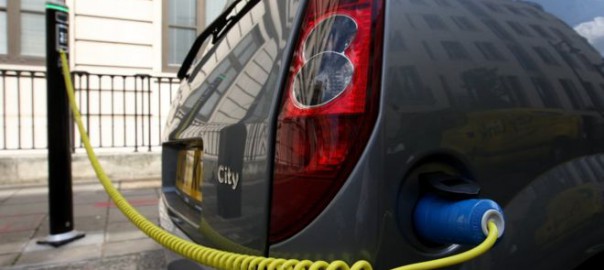
Electric cars charging in Central Milton Keynes

MILTON KEYNES RECEIVES £9MILLION GOVERNMENT FUND TO PROMOTE ELECTRIC CARS

MILTON Keynes has been named as one of several UK cities to receive funds worth millions of pounds to promote electric cars.

Electric cars charging in Central Milton Keynes

£9million has been allocated to MK to construct a Electric Vehicle Experience Centre that promotes electric cars and can arrange short-term loans. Funds will also be used to make the city’s 20,000 parking spaces available for all electric cars, and to allow them to use bus lanes in the city, which will be re-designated as “low-emissions lanes”.

Transport Secretary Patrick McLoughlin made the announcement earlier today, which is part of a £40million scheme.

He said,

“These Go Ultra Low Cities have proposed exciting, innovative ideas that will encourage drivers to choose an electric car. I want to see thousands more greener vehicles on our roads and I am proud to back this ambition with £40 million to help the UK become international pioneers of emission cutting technology.”

At present, a number of parking areas in Central Milton Keynes are designated for electric vehicles, and charging points have become an increasingly common site in the city. Milton Keynes will also pay host to a trial for driverless vehicles.

The other cities to receive a share of the money are London, Bristol and Nottingham/Derby, while further funds have been established for new projects in Dundee, Oxford and North East England.

Poppy Welch, who is the head of advocacy group Go Ultra Low, said,

“We’re excited to see the innovative ideas put forward by each of the winning Go Ultra Low Cities become reality over the coming months. The £40 million investment by government, combined with funds from each winning area, will transform the roads for residents in and around the 4 Go Ultra Low Cities.”

Source: Citiblog

f

Figure 4: Charging on Christmas Day (Image: T. Larkum)

Renault ZOE Charging Curve (2.3kW ‘Granny’ Cable)

Soon after I bought our Type 2 ‘granny’ cable I did some testing to see how long it would take to charge the ZOE (when set to 10 Amps, about 2.3kW). Previously I’ve done some detailed monitoring of charge curves, specifically for 7kW home charging and 43kW rapid charging. Given that I knew this method would take much longer than either of those I chose to not monitor the whole charge, instead just one hour to get an idea of its behaviour.

Figure 1: ZOE 2.3kW Charge Curve (Image: T. Larkum)

As before, at regular intervals I noted the percentage state of charge and the predicted time to complete; these are shown in Figure 1 and Figure 2 respectively. With such a short test it is difficult to draw any firm conclusions, but it appears to be safe to deduce:

  • The ZOE dash predicts a charge time of about 10.5 hours from a start charge of 46%, so about 23 hours for a complete charge.
  • The ZOE is actually charging at about 6% per hour, so it should reach full charge in about 16 hours.

These findings are not inconsistent with each other, and the charge time is probably about 17-18 hours. Firstly, the previous analyses of charging curves show that the predicted charge time decreases over time, so it will likely decrease towards an actual lower charge time. Secondly, the predicted time includes time for battery balancing where the simple linear charge estimation does not, in other words there’s probably an hour or two of balancing ‘charging’ when the charge curve hits 99% – hence the estimation of 17-18 hours.

Figure 2: ZOE Charge Completion Prediction (Image: T. Larkum)

Of course, it’s obvious that this is a very slow way to charge compared to 3.5 hours on the usual home charge point (or half an hour on a rapid charger). This may be partly due to the charger being a generic, non-ZOE specific one and it may be partly due to the ZOE being an older Q210 model which is well known for inefficient charging at low powers.

So, if any readers are keen to volunteer, it would be interesting to repeat the test on other setups, for example:

  • A ZOE Dynamique Nav R240 with the Renault 13A cable
  • A ZOE Dynamique Nav Rapid Q210 (or older Intens) with the Renault 13A cable

If anyone sends me the details I’ll post them.

Meanwhile, despite the slow speed of charging, I have made good use of the cable a number of times to grab a ‘top up’ while spending time visiting family.

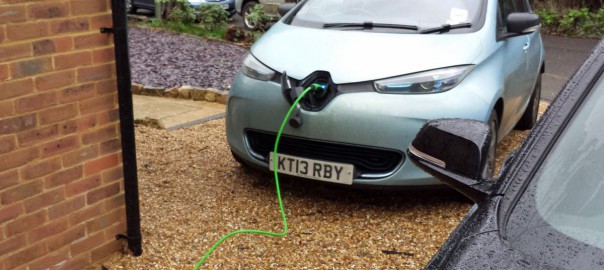
Figure 3: Green granny lead just visible going from front of ZOE under black car to garage (Image: T. Larkum)

Most recently it got used on Christmas Eve while visiting the in-laws during one of our regular trips to Oxford.

Figure 4: Charging on Christmas Day (Image: T. Larkum)

Then on Christmas Day we visited my brother’s family in Surrey for Christmas dinner, using a new route from Northampton down the A34. This meant using the Ecotricity charge point at the Reading M4 Eastbound services, which worked fine and took less than half an hour.

Figure 4: Another view, showing the benefit of a 10m rather than usual 5m cable (Image: T. Larkum)

Returning back, having charged with the granny cable, we skipped using the Reading M4 Westbound services which turned out to be a mistake. The next one at Chieveley was down and we had to retrace our steps to Reading Eastbound – thus a timely reminder to always charge early and have a backup in mind in the direction you want to go.

Figure 5: Charging on the Ecotricity rapid charger at Reading Eastbound services (Image: T. Larkum)

Anyway, enough about rapid charging. I would recommend that any ZOE owner considers getting a granny cable for home charging. Although expensive they do give some peace of mind, particularly when public chargers can’t be relied on (which has been the case for us at least twice during Christmas holidays).

The UK government just gave electric cars a £40m boost

From street lights that charge your car to ULEV-only spaces, the UK is about to get even more EV-friendly

https://youtu.be/Z_2KbeWTrSA

[From 26 January] Figures show low-emission transport in the UK is already on the rise, but the government has given it a £40 million helping hand. Yesterday, the transport secretary Patrick McLoughlin announced cities including Nottingham, Bristol, Milton Keynes and London will get a total of £40 million to help encourage drivers to use ultra-low emissions vehicles (ULEVs). The prize fund came courtesy of the Go Ultra Low City Scheme, a competition that awarded grants to cities with the most eco-friendly proposals.

Although Go Ultra Low has awarded £40 million to eight separate cities, the money won’t be shared equally. So what is each city doing with the money?

  • London plans to use its £13 million share to help form “Neighbourhoods of the Future”, a multilateral programme that intends to prioritise ULEVs over traditionally-powered vehicles. Hackney will dramatically increase its charging infrastructure by building power points into existing street lights, while Harrow will offer priority traffic lanes and parking spaces to those in low emissions vehicles.
  • Milton Keynes will use £9 million to open an advice and loan centre, meaning prospective buyers can get advice about ULEVs – and even test-drive selected models. The city will also make its 20,000 parking bays free for EV-owners.
  • Bristol is set to use £7 million of the fund offer three ULEV-only lanes, and 80 additional charging points.
  • Finally, Nottinghamshire and Derby will use £6 million to install 230 charging points – as well as giving ULEV owners cheaper parking and access to selected bus routes.

Read more: Alphr

f

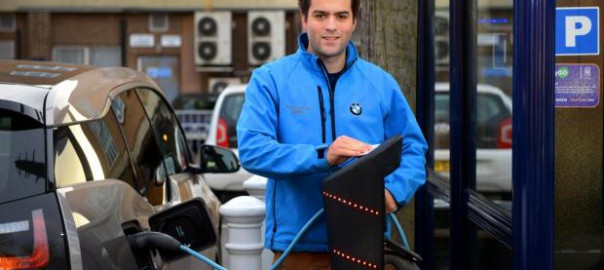
James Brown, from BMW I sales, with a BMW i3 electric car at a charging point at the Tesco car park off Cowley Road

100 electric car charging stations to be installed around Oxford

ONE HUNDRED new charging points will be created in residential streets in Oxford to make electric vehicle ownership possible for 16,000 extra homes.

James Brown, from BMW I sales, with a BMW i3 electric car at a charging point at the Tesco car park off Cowley Road

The largest pilot of its kind in the world will begin when 30 trial points of various kinds are installed in pavements and lampposts by the end of this year.

The most successful types of charger points will then be rolled out in 100 residential streets around the city, probably from 2018.

Oxford City Council and Oxfordshire County Council hope to encourage thousands more people to buy electric cars to help cut emissions in the city.

City executive board member for climate change, John Tanner, said:

“Climate change and poor air quality are two of the biggest issues facing Oxford and we all need to do everything we can to cut vehicle emissions.

“However, for people living in Oxford’s beautiful but narrow terraced streets, charging an electric car is a real problem. This project aims to remove that barrier.

“By installing 100 electric charging points, we are going to turn the Oxford into a city filled with electric avenues.”

Read More: This is Oxfordshire

Nissan Leaf 30kWh Tekna (2016) review

The electric Nissan Leaf now has a greater range thanks to a boosted 30kWh battery pack. But is a bigger charge enough to tempt you away from cheaper, conventional petrol and diesel hatchbacks that don’t suffer from range anxiety in the first place?

0_nissan_leaf01_CM

Read our first drive review to find out whether – five years after becoming the first credibly mainstream EV – it can still make a viable argument for the silent but saintly genre.

What’s new on the 2016 Nissan Leaf?

The Leaf has evolved slowly since launch in 2010, gaining a tidier interior here, cleverer electronics there, and now a bigger charge capacity to stretch the (theoretical) range by as much as a quarter. Nissan claims the 30kWh battery pack means you can now drive up to 155 miles on a single charge.

The battery is the same size as the old one, but weighs around 21kg more, thanks to a different cell architecture inside and uprated power management systems on top. Buyers can still choose the cheaper 24kWh Leaf if they prefer.

There’s a refreshed 7in touchscreen multimedia system, too, and Nissan has overhauled its smartphone app, rebranding it NissanConnect EV and adding new features such as guidance to the nearest unused charging stations. You can still remotely warm your Leaf up from the breakfast table – handy for those cold winter mornings. Relying on electricity for heat means it defrosts in a jiffy.

How does the new Leaf EV drive?

The Leaf hasn’t changed much since we first drove it earlier this decade; the car is still a paragon of saintly silence – wafting quietly around city streets, the soft, floaty ride smothering away the worst road acne rolling under those eco-tilted Dunlop Enasave 215/50 R17 tyres. There are few more relaxing cars to drive.

Read more: Car Magazine

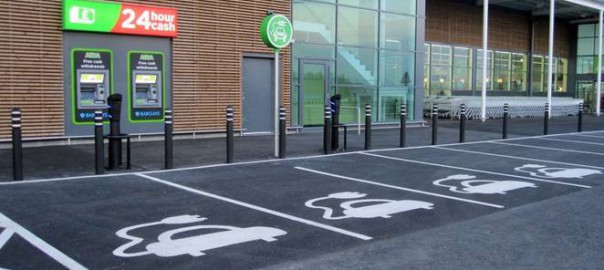
Electric car charging and parking (Image: G. Wallace)

Free parking, bus lane access for electric cars

This is becoming a perennial topic here on TreeHugger. The Guardian reports that eight UK cities are being awarded funds to provide major electric vehicle (EV) perks in an effort to increase adoption.

Electric car charging and parking (Image: G. Wallace)

Those perks will include a solar-powered charger at a York park-and-ride, free parking in Bristol and Milton Keynes, as well as bus lane access in Milton Keynes and Derby.

Cue the environmentalist handwringing.

On the one hand, I am sure Lloyd will be worrying about electric cars making it harder to fix our cities. After all, cars driving in bus lanes will inevitably impact public transit. And free parking for private automobiles seems to be the antithesis of reclaiming the ridiculous amount of space we devote to the motor car. With a demographic shift away from the car apparently underway, we do need to keep an eye on where we spend our resources.

In the other hand, I tend to be a part of the “it’s not this or that” crowd. Given our current dependence on private vehicles, and British’ cities on-going battle against life threatening smog, I’d suggest that speeding up the transition to emission-free cars is a significant step in the right direction.

The only caveat to that is the fact that the £40m pot being shared between these eight cities should not detract from other, non-car based efforts to slash emissions. From electric buses to treating cycling as mass transport, we must also continue our shift away from the car.

But surely, if done right, increased use of EVs should help us on this front too? As our streets get quieter, and as our air gets cleaner, it becomes easier and more pleasant for us to walk and cycle. And that can only be a good thing for everyone.

Read more: Treehugger

Sales of alternatively fuelled vehicles rose by 40% in 2015, according to figures from the Society of Motor Manufacturers and Traders (Image: D. Lipinski/PA Wire)

Electric cars to be allowed in bus lanes

Electric car drivers will be allowed to travel in bus lanes as part of plans to boost usage of low-emission vehicles in England.

Free parking spaces for plug-in car owners and streetlight charging points are also set to be introduced.

The government awarded cash to four areas which successfully bid for a share of £40m funding.

Transport secretary Patrick McLaughlin said the councils had shown “exciting, innovative ideas” for electric cars.

Nottinghamshire and Derby, Milton Keynes, Bristol and London qualified for a share of the cash.

‘World leader’

Bus lanes in Milton Keynes will be re-branded as low emission lanes giving plug-in vehicles the same priority as buses at traffic lights.

The town, which has been awarded £9m, will also build an advice centre offering short-term loans for electric car purchases.

It is also proposing to open all its 20,000 parking bays for free to electric cars.

Nottingham City Council will also open up some of its bus lanes, and use part of its £6m grant to install 230 charge points.

Read more: BBC

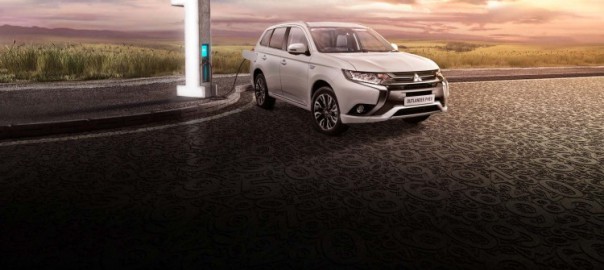
2016 Mitsubishi Outlander PHEV

Mitsubishi Outlander PHEV Was Top Selling Plug-In Car In Europe In 2015

Mitsubishi did it again – their Outlander PHEV was the best selling plug-in electric car in Europe for 2015, just like it was in 2014.

2016 Mitsubishi Outlander PHEV

Mitsubishi stated that 30,873 Outlander PHEV (up 55% year-over-year) were sold in 2015, which is some 59% of all Outlander sales in Europe. The conventional version accounted for just 41% (obv).

But even more amazing is that nearly 18% of total Mitsubishi sales in Europe were plug-ins.

In total, some 59,000 Outlander PHEVs have been sold in Europe to date, including over 6,000 in December 2015, according to our estimations. The Outlander PHEV arrives in the US (finally) in August of this year.

Source: Inside EVs