The oil cartel is living in a time-warp, seemingly unaware that global energy politics have changed forever
OPEC remains defiant. Global reliance on oil and gas will continue unchanged for another quarter century. Fossil fuels will make up 78pc of the world’s energy in 2040, barely less than today.
There will be no meaningful advances in technology. Rivals will sputter and mostly waste money. The old energy order is preserved in aspic.
Emissions of CO2 will carry on rising as if nothing significant had been agreed in a solemn and binding accord by 190 countries at the Paris climate summit.
OPEC’s World Oil Outlook released today is a remarkable document, the apologia of a pre-modern vested interest that refuses to see the writing on the wall.
The underlying message is that the COP21 deal is of no relevance to the oil industry. Pledges by world leaders to drastically alter the trajectory of greenhouse gas emissions before 2040 – let alone to reach total “decarbonisation” by 2070 – are simply ignored.
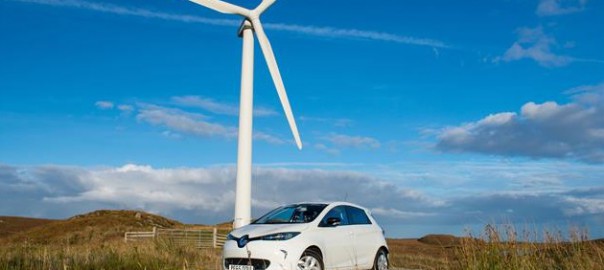
The Renault ZOE is unusual amongst electric cars in that it doesn’t come with a 13 Amp home charge lead as standard, a so-called ‘granny cable’. There are two likely reasons for this: firstly, the ZOE’s on-board Chameleon charger is less efficient at lower powers, which is the reason Renault insists on only funding higher power home charge points (32A rather than 16A). Secondly, it’s a simple fact that the ZOE’s 13A lead is rather pricey – at about £500 for the official Renault cable.
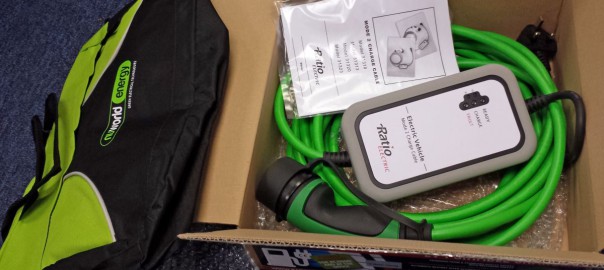
Unboxing the ZOE Type 2 charge cable (Image: T. Larkum)
I didn’t order one originally with my ZOE and for a long time was rather sceptical of the benefit of it (I guess ‘you can’t miss what you haven’t had’). It takes a long time to charge (8-10 hours), more than twice as long as the home charge point, so I could never see myself getting much use from it. However, bad experiences with using public charge points when away from home, particularly a fateful Christmas Day, changed my mind. I eventually bought one ‘just in case’ and have had some good use out of it when spending long periods with relatives, in particular while visiting parents and in-laws.
I bought mine from nuWorld Energy (trading then as nuCharge, now as ChargedEV). It is a standard Type 2 cable so as well as the ZOE it should fit most non-Japanese (i.e. non-Type 1) electric cars such as the Volkswagen e-Golf, BMW i3, etc. There were two options: 5m long for £372 or 10m for £414. I went with 10m to make it easier to reach a socket when visiting relatives, and also bought a storage bag. They claimed 5 working days for delivery, though I had to wait more than a month for mine due to supplier issues.
The cable turned out to be a Ratio Electric product; it has a Type 2 connector at the car end, a three-pin ‘13A’ plug at the house end, and a waterproofed electronics box a short distance from the house end. It has the flexibility of being able to charge at 6A, 10A or 16A, with the selection made by a button on the side of the electronics box. The cost of this flexibility is that you need to manually set your preferred charge rate (up to the level available from the socket you use). The ZOE appears to start charging at 6A but in fact the battery level never goes up – it needs to be set to at least 10A to work.
The Ratio Electric Type 2 granny cable and storage bag (Image: T. Larkum)
This means that sometimes you have to awkwardly plug in at the house end, plug in to the ZOE, then dash back to the house to select the 10A setting before it times out and tries to charge at the default of 6A. Another awkward thing is that the electronics box is rather heavy, so when using any socket a distance off the floor it hangs down and can exert a significant force on the plug.
However, despite these minor issues, it has never failed to charge when connected to a good supply, and I have no regrets about purchasing it. Further, the 10m length option – something not available from most suppliers – has been a godsend. It doesn’t just allow for reaching sockets that might otherwise be unobtainable, but also provides the simple convenience of charging on a drive while parked behind the homeowner’s car (and so not requiring it to be moved out the way).
I have now used the cable a number of times, and I intend to write further about it (and give more details of the rate of charge).
After the Great Smog of 1952 killed up to 12,000 Londoners, the country cleaned up its act. But today, pollution of another kind may be just as insidious – and almost as lethal.
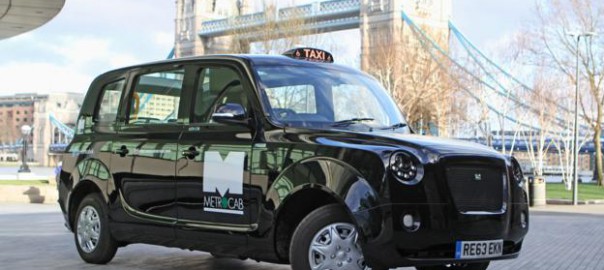
The release of the Metrocab, a battery-powered taxi capable of zero emissions, is one of the efforts to clean up the city’s transport (Image: Metrocab)
Imagine smog so thick that you can’t see your feet as you walk through it; so impenetrable that it blots out the sun; so toxic that it stings your eyes and leaves you gasping for breath.
It may sound like the backdrop to some post-apocalyptic nightmare, but on 5 December 1952, this terrifying scenario became the reality for the people of London. That day’s incident alone killed thousands and prompted a global transformation in the way we deal with air pollution.
On that cold, clear day in 1952, Londoners huddled around their coal fires for warmth. But while the smoke would normally disperse into the atmosphere, an anticyclone hanging over the region created an inversion – trapping the pollution close to the ground and leading to the formation of a sulphurous, toxic shroud that would blanket the capital for the next five days.
Before the weather conditions changed and the smog retreated, thousands had died. Official estimates at the time put the number of fatalities at 4,000 – more civilian casualties than were caused by any single incident during the war – while recent research suggests that it may have caused as many as 12,000 deaths.
Watch what happened when fruit delivery company Fruit 4 London and Tommy Walsh accepted Nissan’s £2 challenge. How many deliveries could they complete on one charge using the e-NV200?
The potential of electric cars seems to be higher now than ever before.
Traditional automakers including General Motors, Volkswagen, Daimler AG, and others are all investing heavily in electric vehicles. And Tesla, of course, has built its entire business off of battery powered cars.
But electric automobiles are nothing new. They actually have a rich history in the US and, at one point, were even the dominant type of car.
Here’s a look at how battery powered cars evolved over time.
As oil prices fall further, China slows and Brazil risks collapse, cracks will be papered over and the scene set for a new implosion
The sun sets on drilling (Image: Pexels)
Economic forecasting is a mug’s game. One thing that has been learned from the financial crisis and Great Recession is that even those equipped with the most sophisticated models get it wrong, sometimes spectacularly.
So it is with both humility and trepidation that I will try to fulfil a promise made last week and make predictions for what is going to happen in 2016. In all honesty, the future is unknowable and anybody who says otherwise is lying.
So, with that caveat, here’s what I think might happen. At some point, a recovery built on booming asset prices, weak growth in earnings and rising personal debt is going to lead to another huge financial crisis – but not in the next 12 months.
Instead, 2016 will be a year of living dangerously, papering over cracks and buying time before all the old problems resurface.
2015 saw the UK destroy its position as a climate and energy leader, and now faces some tough questions in the wake of a successful Paris climate agreement.
Despite a big year in 2014 which saw a number of renewable energy records broken and strong momentum created for the country’s renewable energy industry, following 6 months of baffling policy decisions and a lacklustre attendance in Paris, the UK has a long way to go if it is to accomplish its role in tackling climate change.
If we don’t cut greenhouse gases, it’s not just storms and rising seas we’d have to worry about. The heat alone could kill a lot of us.
In India last May, temperatures rose to 120°F (50°C), killing more than 2,300 people—and melting this street in New Delhi (Image: H. Tyagi/EPA)
If greenhouse gas emissions are not reduced, rising temperatures and humidity wrought by global warming could expose hundreds of millions of people worldwide to potentially lethal heat stress by 2060, a new report suggests.
The greatest exposure will occur in populous, tropical regions such as India, Southeast Asia, the Middle East, and Africa. But even in the northeastern United States, as many as 30 million people might be exposed at least once a year to heat that could be lethal to children, the elderly, and the sick, according to the new study.
It’s the first study to look at future heat stress on a global basis, says Ethan Coffel, a PhD candidate in atmospheric sciences at Columbia University, who presented the results on Monday at the American Geophysical Union meeting in San Francisco. Coffel and his colleagues used climate models and population projections to estimate how many people could face dangerous heat in 2060—assuming that greenhouse gas emissions continue to rise sharply on a “business-as-usual” course.
Hedge fund manager and Kynikos Associates President, Jim Chanos was interviewed on CNBC on Thursday, and had a couple interesting (and uncharacteristic) observations worth noting.
The first being bullish on solar, but still maintaining a short position in Solar City (of whom Chanos says is not a tech company, but a finance company); despite the recent surge in PV stocks thanks to the pending 5 year renew of the 30% federal tax credit.
The second point of interest was a message to all the oil pumpers out there:
“I think if you were to look out five or 10 years, if I was a member of OPEC, I would be pumping as much as I could today while it’s worth something, because it might not be worth a whole lot by 2030.”
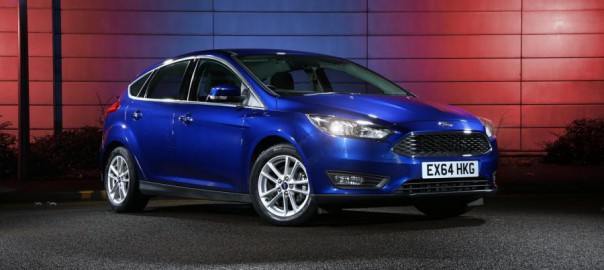
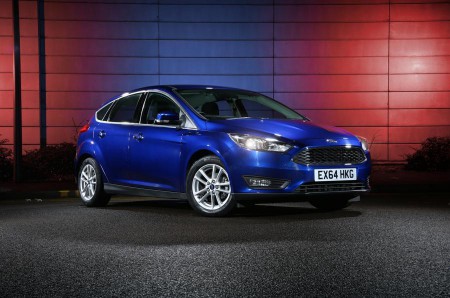
Ford will launch a Focus EV during 2016 – and add another 13 such cars within the next five years
Soon, Ford dealers will have an electric focus
The only place to find an electric focus used to be your camera. But soon, Ford dealers will have them too.
During the next 12 months, the new Ford Focus Electric will go on sale. And it’ll be the first of many such cars, as Ford aims to be offering electric options across 40% of its product range by the end of the decade.
There’s already an electric Focus in the US. Its 143bhp motor is good for 85mph and a range of something like 100 miles on between two and three hours’ charge – but Ford says the new one will do much better.