Monthly Archives: November 2015

Turbines tower over corn fields in Iowa (Image: D. Graham)

House Of Lords Rejects Discontinuing Onshore Wind Subsidies

After many months of bad news for the country’s renewable energy industry, the House of Lords delivered some unexpected good news.

Wind farm in Europe (Image: EV World)
Wind farm (Image: EV World)

In deliberations on Wednesday, the UK Government’s House of Lords voted to remove a section of the country’s Energy Bill that would end subsidies for onshore wind from 31 March, 2016. This had been an integral part of the newly re-elected Conservative Government’s plans to reshuffle the UK renewable energy industry in a so-called attempt to “keep bills as low as possible for working families and businesses” by ending Government subsidies for onshore wind.

Specifically, Baroness Worthington, the Shadow Energy and Climate Change Minister, moved for the offending clause in the Energy Bill to be removed, which was approved with a vote of 242 to 190.

Read more: Clean Technica

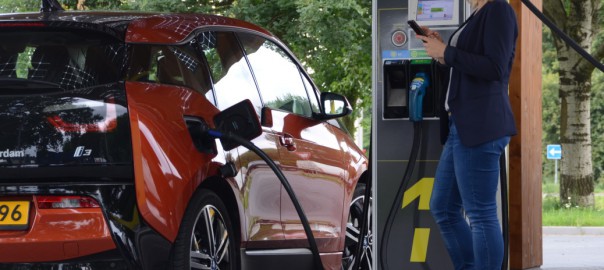
Will everyone be driving electric cars in 10 years?

People working in automotive development labs today see cars which will hit the road in a couple of years time and know their internal combustion counterparts cannot compete: they see the tipping point today.

For most of us, it is still a future event. Today’s electric vehicles need to become more affordable. They need longer range and an infrastructure to support them. Fastned’s CEO, Michiel Langezaal, says everything will move quickly after these issues are addressed. Everybody may be driving EVs in 10-15 Years.

164338-DSC_Fastned_Charging_Fastned

Phase One: The Netherlands

Fastned is currently in what Langezaal calls phase one, building up a network of charging stations in the Netherlands.

“Every light is green. There is no red light, or even yellow signal. Revenues are growing; usage of the network is growing. The signs that we see at the Tesla superchargers – waiting lines – are indications of what we will see in the coming year at Fastned as well. We have to work hard on procuring permits, building the infrastructure and finance it,” said Langezaal.

Read more: The Eco Report

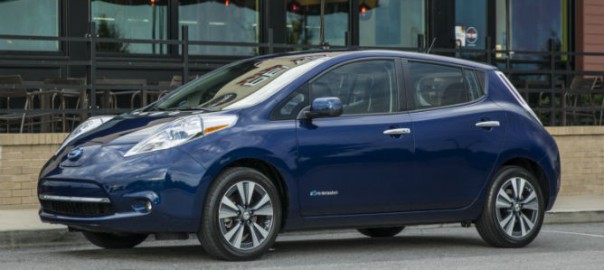
2016 Nissan Leaf

How the Nissan Leaf has blazed a trail

Sales may not knock you off your feet, but the Nissan Leaf’s creator says it is a crucial car that will leave a lasting legacy

Nissan Leaf
Nissan Leaf

“A lot of people underestimated just how big a commitment the Leaf was from Nissan,” says Tom McCabe, a senior engineer who’s been working on the world’s best-selling electric car for the past six years.

He’s right: here is a major car manufacturer that didn’t just flirt with electric car technology with an out-there concept car at a far-flung motor show, but went out and made a full global model built on three different continents.

“It was a huge commitment to move the game on and change the conventions of the industry,” McCabe adds. “Competitors are now realising this is something that needs to be done properly. More people are following now.”

Nissan is approaching the fifth anniversary of Leaf production, and it is the sixth anniversary of the model’s appearance at the 2009 Tokyo motor show after its debut earlier that summer. At this year’s show, the next-generation Leaf is being previewed with a new concept car that also introduces autonomous technology to the model.

It feels fitting, then, to look back on the impact the world’s first mass-produced electric car has had on the industry – and, autonomous tech aside, just what the future has in store for the Leaf.

The Japanese manufacturer has now sold close to 200,000 Leafs globally and 10,000 in the UK, almost 3000 of which were in the first half of this year alone, an achievement that was good for a 63.3% market share of electric vehicles.

Read more: AutoCar

A Low-Carbon World – Are We Finally Getting It?

As we move closer towards the Paris climate talks, something interesting is happening.

imageR_climate_change_unk

Ever more stakeholders seem to be ready to be part of the solution. Negotiations that were earlier bogged down in zero-sum confrontations suddenly have a new fluidity and a ring of can-do optimism about them. Why? … Actually, the new question seems to be: “Why not?” Creating a low-carbon world is seen less as a burden and more as an opportunity.

In developed economies, we are ready to revamp existing industrial and resource infrastructures. In developing economies, we are realising the incredible opportunity of directly building a low-carbon infrastructure. What is clear now is that we have achieved technological as well economic convergence: building a low-carbon world is both technologically feasible and economically attractive. In addition, now we finally seem to reach cognitive convergence: recognising that changing now is a smart choice.

We have all the technologies we need to combat climate change: resource efficiency, renewable energies, and carbon sequestration. There are, of course, challenges. For example, maintaining grid stability when using large amounts of fluctuating renewable energy sources is tricky. However, these challenges are procedural, not fundamental. They can be addressed and solved as we move along. It is worth remembering, that such a piecemeal approach is the very essence of what we know as progress. We expand the Internet, we conquer space, we improve agriculture, and we speed up communication and movement. Transitioning to a low-carbon future is just one more area of progress that is already happening.

Read more: Clean Technica

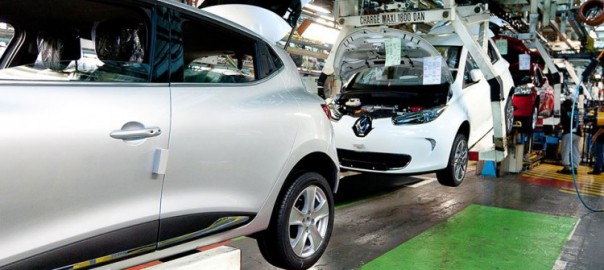
Renault ZOE Rolling Down Assembly Line

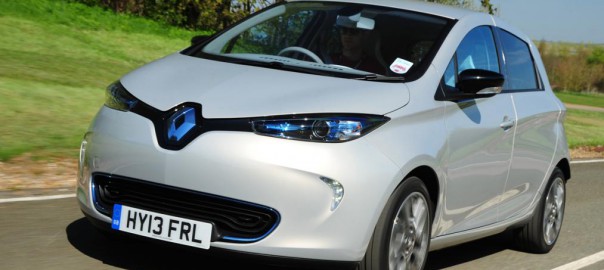
Renault To Increase ZOE Production

Renault believes in the strong potential growth for ZOE electric car sales, and as such is gearing up for increased production.

Renault ZOE Rolling Down Assembly Line

The Flins factory (in France) is already producing about 120 ZOE a day (up from 90 in the Spring, when the Superbonus was launched in France).

Now the company says that production will expand again – to 150 units a day by the end of November. The sudden change is probably adjusting for expected growth from the expanded diesel scrapping scheme in France next year and also higher demand throughout Europe.

To date, over 18,000 ZOE were sold in just France alone (nearly 7,000 in the first nine months of 2015) and 32,000 in total worldwide.

At 150/day, Renault would be able to deliver 3,000 ZOE a month (considering the French employees on the single shift working 20 days a month). Annual production would be ~36,000, a level of sales that the ZOE has never experienced such high volumes in the past.

Source: Inside EVs

Renault Electric Car Sales Up 25% In September

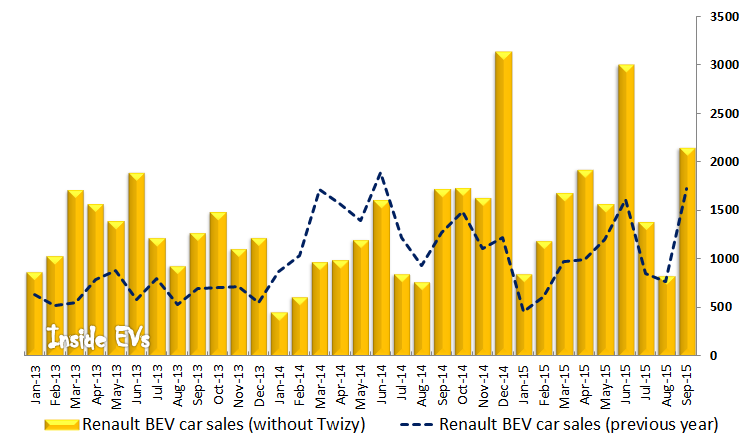
Renault, thanks to having one of the most popular pure electric cars in Europe – the ZOE – increased its BEV car sales in September by 25% year-over-year.

Renault BEV Sales Worldwide – September 2015 (Image: InsideEVs)

Most of the total 2,149 (1,665 for ZOE) car sales worldwide obviously come from Europe (over 97%) where the company makes its home.

With an additional 169 Twizy, total BEV sales hit 2,318 (up 19% because Twizy is down 25% YoY).

1,665 ZOE’s sold stands for nearly 72% of all electric Renaults.

In the first nine months of 2015, the French manufacturer sold nearly 12,000 ZOE, compared to just over 6,000 year ago.

Source: Inside EVs

How come another economic crash is on its way?

David Cameron says a second financial crash is imminent. If he’s right, it’s because the government bailed out the wrong industry, argues Renegade Economist host Ross Ashcroft. He says the last recession was brought on by too much debt. Today private debt is at the greatest level in recorded human history. By ignoring this and instead focusing on the banks, we are heading for economic armageddon.

Source: The Guardian

Call for charging point road signs

  • Nissan and Ecotricity join forces to call for official EV charging point road signage
  • There are more than 9,000 electric vehicle charging points across the UK, but still no official signage
  • Campaign calls on government to take action and raise awareness of UK EV infrastructure
  • Latest Society of Motor Manufacturers and Traders’ (SMMT) stats reveal over 11,500 all electric Nissan LEAFs have been sold since its launch in early 2011
ev_signage_call_Ecotricity
London, 22 September 2015 – Nissan, manufacturer of the world’s best-selling electric vehicle (EV), the Nissan LEAF, and Ecotricity, who operate Europe’s biggest and most comprehensive rapid charging network, the Electric Highway, have today called on the UK government to introduce official road signage for the UK’s growing number of standard and rapid EV charging points.

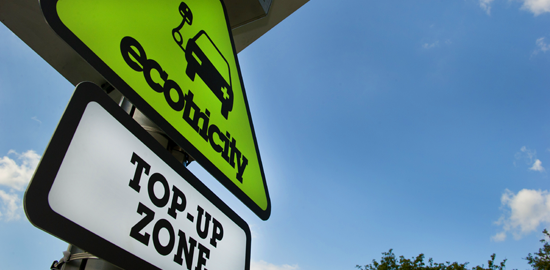
Despite there being more than 9,000 EV charging points nationwide, there is still no official, recognisable signage available to direct motorists to them – even though there are official signs for “migratory toad crossings”, of which there are only 140 across the UK.

Nissan and Ecotricity claim the time is right for the new UK Government to take action and raise awareness of the UK’s EV infrastructure by introducing universal symbols that can be used to designate the different types of EV charging points available on Britain’s roadways, notably standard and rapid chargers.

The campaign will be calling on key influencers in the motoring and sustainability sector to share their views on the UK’s electric vehicle charging network in order to encourage the Department for Transport and Office for Low Emission Vehicles to take action.

Speaking at the campaign launch, Jim Wright, Managing Director, Nissan Motor (GB) Ltd, explained:

“At Nissan we believe that all electric driving offers a number of benefits to UK motorists and should be made accessible to all. That is why we have partnered with Ecotricity to call on the new Government to give electric vehicles the prominence they now deserve and introduce official signage for charging points across the UK.”

Ecotricity founder Dale Vince said:

“Both the cars and the infrastructure are in place to support the electric car revolution in Britain – there are Electric Highway pumps at almost every motorway services, while companies like Nissan are developing top quality electric cars.

“It’s time to introduce charging point road signs in Britain – they’ll provide necessary direction for the thousands of electric car drivers in Britain as well as increasing public awareness that the infrastructure is ready for them to make the move to an electric car.

“Over the past four years, we’ve installed Europe’s most advanced electric car charging network right here in Britain – it has 250 pumps, 20,000 members and nearly 15 million emission free miles driven since its inception.

“The growth so far in 2015 has been phenomenal – nearly two million miles driven on the network every month. The argument for road signs could not be stronger.”

Ecotricity recently revealed that Electric Highway members have now driven over 15 million miles since the charging network’s inception in 2011, with that number now growing by nearly 2 million miles a month and over 1,000 new registrations each month.

Nissan has sold more than 11,500 all electric Nissan LEAFs since the vehicle was launched in the UK, and almost 200,000 worldwide, in 2011 and 2010 respectively.

Nissan’s current electric vehicle line-up includes the 100% electric Nissan LEAF and the e-NV200 van, providing a sustainable solution in the commercial vehicle sector. To date, Nissan LEAF and e-NV200 owners have covered more than one billion all-electric miles.

Read more: Ecotricity