Monthly Archives: April 2015

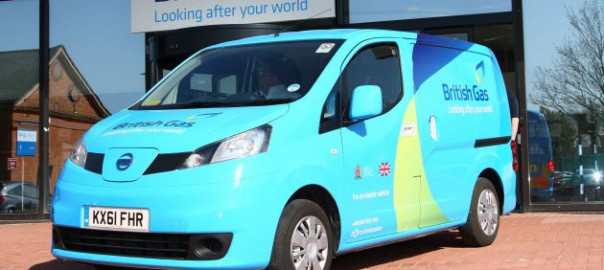
British Gas has a fleet of 100 e-NV200s

Plug-in van grant extended

British businesses will be able to continue saving money and cutting their carbon footprint as the government announced that the ultra-low emission plug-in van grant will be extended.

Transport Minister Baroness Kramer confirmed that the grant, which launched in 2012 and provides purchasers with a 20% discount off the upfront cost worth up to £8,000, would be extended to meet continued demand.

British Gas has a fleet of 100 e-NV200s

In addition to lower running costs, the scheme also allows businesses that purchase the vans to take advantage of a range of tax incentives, including zero vehicle excise duty and no congestion charges in London.

Transport Minister Baroness Kramer said:

“Ultra-low emission vans are cheaper to run and with a variety of models now eligible for the grant, there has never been a better time for business to take advantage and start saving money. The government is supporting UK companies that are leading the way on cleaner and greener transport.”

Since 2012 the initiative has supported over 1,250 vans, with vehicle running costs potentially as low as 2 pence per mile. Gnewt Cargo is one company which has benefited from the plug-in van grant and it now has the largest 100% commercial electric fleet in the UK.

Co-founder and CEO Sam Clarke, said:

“As a business we have grown significantly over the last few years in London and are expanding nationally in 2015. Our fleet of over 100 plug-in vans are economical to run and also help improve air quality in the capital.

“The plug-in van grant is a great way to encourage other fleets to take this same step. We are therefore delighted to hear that support for electric commercial fleets is set to continue.”

Source: Newspress

Car exhaust (Image: BBC)

‘Idling’ motorists in Westminster to face £20 fines

Motorists in Westminster who sit in a stationary car with the engine running and refuse to turn it off are to be fined £20.

The move reflects concerns from local residents and businesses about air quality, Westminster City Council said.

A team of traffic marshals will patrol the borough and ask car idlers to switch off their engines, it said.

The London Taxi Drivers’ Association (LTDA) said the move would not help abate London’s air pollution problem.

‘Ironic’ move

The penalties will come into force on 1 May, as a “last resort”.

The new policy follows Camden Council’s fines for buses which idle for too long, introduced in 2011, and Islington Council’s fines for idling vehicles introduced in August last year.

Westminster has the highest proportion of deaths attributable to air pollution, excluding the City of London, in the country, a report by the council said.

An air pollution monitoring station in Oxford Street, in the borough, recorded the acceptable limit set for air pollution – 200 micrograms per cubic metre – was broken 1,503 times in 2014.

A comparable station in Sutton did not break the limit at all last year.

Steve McNamara, general secretary of the LTDA said the fines were “absolute tosh” and a public relations and money raising exercise from the council.

He said:

“It is not going to do anything constructive to tackle the pollution crisis in London. When was the last time you saw someone idling in the city? It doesn’t happen.
Patrolling traffic marshals will ask drivers to turn off their engines

“One of the real problems is cars stuck in traffic – research has shown pollution is up by 30% in areas of heavy traffic. Do something to help get the traffic moving.”

Mr McNamara said another key factor was the number of diesel cars in the capital which emit greater levels of nitrogen oxides – which can cause health problems.

He said the move was “ironic” considering Chancellor George Osborne’s incentives to diesel vehicles which were exacerbating the problem.

Neil Greig, director of policy and research at the Institute of Advanced Motorists, said the “key issue” would be how the marshals enforced the fines.

He said:

“If they target private car drivers pulling up for a moment in relatively clean, modern cars in a draconian way – whilst ignoring old buses, coaches, large trucks, utility company vans or taxis idling for long periods – then it will quickly be seen as yet another revenue-raising exercise.”

Source: BBC

BMW Group: More Than 50% Of Electricity Use Worldwide From Renewables

BMW Group is now, for the first time in its history, receiving more than half of its electricity worldwide from renewable energy infrastructure, based on comments made by company representatives at the recent 2015 Annual Account Press Conference.

Bmw“More than half” in this case means 51%. 🙂 So, just above half. Still, considering where the company was only a few years ago, and compared to most other companies that is commendable. The company is reportedly aiming to receive around 100% of its electricity via renewable energy infrastructure over just the next few years, which could put it in competition with IKEA.

8-2411p_i8_wind_NewEnergyNews

That goal will be achieved via a step-by-step plan that will see the company first greatly improve energy efficiency at its various facilities around the world. After this step is completed, the company will then oversee a renewables generation buildout, and then, finally, a third step involves purchasing the remainder of its needed electricity from various energy companies.

The Head of Sustainability & Environmental Protection at the BMW Group, Ursula Mathar:

“We have a clear objective and a concrete plan for the transition to renewable energy. However, economic viability is essential for implementation. Only under the right framework conditions can we put our plans into action step by step in individual markets worldwide.”

A recent press release provides further details:

Some 51% of the electricity supplied to the BMW Group worldwide is already being drawn from renewable energy sources. In Leipzig, Germany, the BMW Group is using wind power. In mid-2013, four wind turbines started operation on the premises of the plant, with 100% of the power produced going into the production of the BMW i3 and BMW i8. At the Spartanburg plant in South Carolina, USA, a methane gas system provides around 50% of the energy required for production. At the Rosslyn plant in South Africa, the foundation stone for a combined heat and power unit fired by biogas was laid at the end of 2014. The gas used is sourced from the waste products created on cattle and chicken farms. Commissioning of this system will already enable the company to cover over 25% of the energy required by the production plant this year.

Good steps, for sure. It’ll be interesting to see how long it’ll take BMW Group to achieve its goal.

Source: Clean Technica

Coalition branded climate-change deniers over North Sea oil boost

[From 19 March 2015]

Plans to boost the North Sea oil industry, announced in the budget, could lead to the UK emitting tens of millions more tonnes of CO2 over the next five years, Guardian analysis reveals.

The chancellor, George Osborne, this week announced a package of measures in the budget designed to help boost North Sea oil production in the face of plummeting global oil prices. The moves include tax cuts on profits for oil producers, a new investment allowance, and funding for seismic surveys to help find oil deposits. In all, the measures will cost the exchequer £1.3bn over the next five years.

The budget document states that the aim is for the measures to lead, in the next five years, to at least 120m barrels “of oil equivalent, of additional production”.

The assumption prompted the Green party to question why the “greenest government ever” was providing additional support for burning fossil fuels.

“This Lib Dem, Conservative coalition government started claiming to be the ‘greenest government ever’, and ended giving huge subsidies to the oil industry,” said Andrew Cooper, the party’s spokesman on energy. “More investment is really needed in energy efficiency and renewable energy, precisely the areas this government has cut … this government are climate-change deniers in all but name.”

Figures published by the US Environmental Protection Agency suggest that on average each barrel of oil burned emits 0.43 tonnes of carbon dioxide, suggesting that if the UK budget measures succeed in producing an extra 120m barrels of oil in the next five years, these will add 50m tonnes of carbon dioxide to the UK’s emissions, if burned domestically.

Ed Davey, the energy secretary, last week pledged his support for the Guardian’s “keep it in the ground” campaign, which urges keeping most of the discovered fossil fuel deposits in the ground to avoid catastrophic climate change. However, Davey defended supporting North Sea oil extraction in the short-term as a solution to the UK’s dependence on Russia and the Middle East for energy resources.

“I have been clear that coal assets are very risky but you are not going to get rid of cars and gas heating systems overnight and so we are going to need quite a lot of oil and gas,” he said. “The question is, would you like that to come from Russia and Qatar or locally where it is well regulated, gives us jobs and provides tax revenues?”

The non-partisan Green Alliance noted it was possible for the UK to produce more oil without increasing global emissions, but said this relied on another country cutting back its own extractions in response to Britain’s increased activity.

Dustin Benton, the Green Alliance’s head of energy and resources, said:

“From a climate perspective, as long as UK oil production displaces production elsewhere, there’s no effect – other oil producers will just lose market share. But if new oil production increases the total amount of oil that gets burnt, then there’s an inconsistency with our climate aims.”

Benton also said there was a risk that subsidy and investment in North Sea oil could be a waste of money, due to the relatively high cost of extracting oil from those fields as opposed to elsewhere in the world. If oil prices stayed low, or if serious policies were enacted to tackle climate change, the investment and infrastructure could easily be wasted.

“From the perspective of financial prudence, the question is whether changing tax treatment to shift infrastructure investment towards high cost oilfields increases the risk that these will become stranded assets – even the Bank of England is concerned at this prospect,” he said.

A spokesperson for the Department of Energy and Climate Change said:

“The UK will continue to need oil and gas as a part of our energy mix even as we cut our carbon emissions over the coming decades. That includes working to maximise home-grown energy sources rather than relying on imports from volatile markets like Russia and the Middle East, which is why the government continues to work hard to support the future of the North Sea industry.”

Source: The Guardian
TTAC Video Review Of BMW i3 REx

The Truth About Cars (or TTAC if you will) are not known for holding their tongue when it comes to anything automotive that doesn’t ring true to themselves, so it was with heightened interest we saw the online magazine had done a review on BMW’s most “love it or hate it” plug-in offering – the i3 REx.

Which way would review Alex Dykes take us, and the i3? Will the plug-in BMW be the worst offering the Bavarian company has unleashed on humanity this decade, or one of the better ones?

Surely in TTAC-style there could be no in between right? Wrong. Overall the review is quite comprehensive and balanced – even when testing the infamous “battery exhaustion going up a hill” chestnut we have all been subjected to quite often.

Source: Inside EVs

Tesla Motors Adds Range Assurance and Trip Planner

[From 19 March 2015]

As promised by Tesla Motors CEO Elon Musk on Sunday, the Californian automaker has just revealed a new over-the-air software update for owners of its Model S luxury electric car which it hopes to push to all customers in around ten day’s time. What’s more, it includes two brand new features which Tesla hopes will not only tackle the real spectre of range anxiety among first-time owners but also make it ‘impossible’ for a Tesla Model S owner to run out of charge in their car without intentionally setting out to do so.

These two features, called Range Assurance and Trip Planner, make use of the wireless Internet connection built into every Tesla Model S, along with Tesla’s integrated network of super-fast Supercharger stations.

Other features included in the 6.2 updates include mainly improvements to accelerator and brake mappings, but also mark the inclusion of a Valet Mode and improved top speed for owners of Tesla’s latest car, the Tesla Model S P85D, as well as the switching on of active safety features such as automatic safety braking, side collision warning system and blind spot warning system.

Read more: Transport Evolved

Tar Sands in Alberta (Image: Wikimedia/Howl Arts Collective)

Population controls ‘will not solve environment issues’

Restricting population growth will not solve global issues of sustainability in the short term, new research says.

A worldwide one-child policy would mean the number of people in 2100 remained around current levels, according to a study published in the Proceedings of the National Academy of Sciences.

Even a catastrophic event that killed billions of people would have little effect on the overall impact, it said.

There may be 12 billion humans on Earth by 2100, latest projections suggest.

Concerns about the impact of people on the planet’s resources have been growing, especially if the population continues to increase.

‘Can’t stop it’

The authors of this new study said roughly 14% of all the people who ever existed were alive today.

These growing numbers mean a greater impact on the environment than ever, with worries about the conversion of forests for agriculture, the rise of urbanisation, the pressure on species, pollution, and climate change.

The picture is complicated by the fact that while the overall figures have been growing, the world’s per-capita fertility has been declining for several decades.

The impact on the environment has increased substantially, however, because of rising affluence and consumption rates.

Many experts have argued the best way of tackling this impact is to facilitate a rapid transition to much lower fertility rates.

To work out the impact on population, the team constructed nine different scenarios for population change up to the year 2100, using data from the World Health Organization, and the US Census Bureau’s international database.

They also used “catastrophe scenarios” to simulate the impacts of climate disruption, wars or global pandemics on population trends.

According to the study, attempts to curb our population as a short-term fix will not work.

If China’s much criticised one-child policy was implemented worldwide, the Earth’s population in 2100 would still be between five and 10 billion, it says.

Read more: BBC

Volvo XC90 PHEV (Image: GCR)

Hidden benefits of electric vehicles revealed

Electric vehicles are cool, research shows. Literally. A study in this week’s Scientific Reports by researchers at Michigan State University (MSU) and in China add more fuel to the already hot debate about whether electric vehicles are more environmentally friendly than conventional vehicles by uncovering two hidden benefits.

They show that the cool factor is real – in that electric vehicles emit significantly less heat. That difference could mitigate the urban heat island effect, the phenomenon that helps turn big cities like Beijing into pressure cookers in warm months.

Moreover, the cooling resulting from replacing all gas-powered vehicles with electric vehicles could mean city dwellers needing less air conditioning, another environmental win.

“It’s easy not to see the big picture on issues like electric cars and global warming, but when we look with a holistic approach, we find these unexpected connections,”

said co-author Jianguo “Jack” Liu, who holds the Rachel Carson Chair in Sustainability at MSU and is director of the Center for Systems Integration and Sustainability (CSIS).

“Heat waves kill, and in terms of climate change, even one degree can make a difference.”

The research was led by Professor Canbing Li of Hunan University in Changsha, China, who was a visiting scholar at CSIS. The electric vehicles’ benefits of reduced greenhouse gas emissions are countered by the expense and pollution from producing the vehicles, leading to debate on whether they are the best replacement for conventional vehicles.

In the paper, Li and his colleagues take a wider view to find new positives for plug-ins. Conventional vehicles and air conditioners are the two biggest contributors to the heat island intensity – the difference between urban temperatures and the cooler temperatures of rural areas. In that arena, electric vehicles are cooler – giving off only about 20 percent of the heat a gas vehicle emits.

The researchers used Beijing in summer of 2012 to calculate that switching vehicles from gas to electricity could reduce the heat island intensity by nearly 1 degree Celsius. That would have saved Beijing 14.4 million kilowatt hours and slashed carbon dioxide emissions by 11,779 tons per day, according to the paper “Hidden Benefits of Electric Vehicles for Addressing Climate Change.”

The authors caution that several factors can influence the urban heat island effect, not all of which were addressed in the study. For example, there are conflicting reports regarding the impact of reduced aerosol pollution on heat island intensity. These factors may need to be considered when weighing the benefits and disadvantages of replacing conventional vehicles with electric vehicles.

Read more: Phys.org

Climate change: UN backs fossil fuel divestment campaign

Framework convention on climate change says it shares aim for strong deal on fighting global warming at Paris summit

The UN organisation in charge of global climate change negotiations is backing the fast-growing campaign persuading investors to sell off their fossil fuel assets. It said it was lending its “moral authority” to the divestment campaign because it shared the ambition to get a strong deal to tackle global warming at a crunch UN summit in Paris in December.

“We support divestment as it sends a signal to companies, especially coal companies, that the age of ‘burn what you like, when you like’ cannot continue,”

said Nick Nuttall, the spokesman for the UN framework convention on climate change (UNFCCC).

The move is likely to be controversial as the economies of many nations at the negotiating table heavily rely on coal, oil and gas. In 2013, coal-reliant Poland hosted the UNFCCC summit and was castigated for arranging a global coal industry summit alongside. Now, the World Coal Association has criticised the UNFCCC’s decision to back divestment, saying it threatened investment in cleaner coal technologies.

Several analyses have shown that there are more fossil fuels in proven reserves than can be burned if catastrophic global warming is to be avoided, as world leaders have pledged. Divestment campaigners argue that the trillions of dollars companies continue to spend on exploration for even more fossil fuels is a danger to both the climate and investors’ capital.

“Everything we do is based on science and the science is pretty clear that we need a world with a lot less fossil fuels,” Nuttall told the Guardian. “We have lent our own moral authority as the UN to those groups or organisations who are divesting. We are saying ‘we support your aims and ambitions because they are fairly and squarely our ambition’, which is to get a good deal in Paris.”

Read more: The Guardian

Siemens EV Charging (Image: Siemens)

Siemens delivers EV infrastructure packages in South Tyneside and Dorset

[From December 2014]

Siemens is supplying and installing two electric vehicle (EV) rapid charging networks in South Tyneside and Dorset in early 2015.

The charging points will be connected to the Charge Your Car network and back office system as part of two complete EV packages with three years maintenance support provided by Siemens.

Funded by the Office for Low Emission Vehicles (OLEV), the network in South Tyneside will consist of 20 QC45 triple-outlet, rapid chargers.

In Poole and throughout Dorset, Siemens’ local field services team will be responsible for project management, installation and commissioning of 19 QC45 rapid chargers.

The project will be the first rapid charging network installed and operating with fully integrated bay sensors providing real-time detection of both the availability of bays and information for parking enforcement teams of any non-charging vehicles.

Siemens EV Charging (Image: Siemens)

Siemens will also install two rapid charging points in Cirencester and Moreton-in-Marsh for Cotswold District Council (CDC) in 2015.

New rapid charging projects in Scotland include five new multi-standard chargers installed and commissioned for Scottish Borders Council and a further two new chargers in Stirling as part of the Scottish Government’s commitment to delivering a network of public charging points for electric vehicles across Scotland.

The scheme, which includes Transport Scotland grants through the Energy Saving Trust, will deliver charging points within every 50 miles on trunk roads and an integrated network will join electric vehicles with public transport.

The company’s largest EV project to date is also well underway in Bristol, South Gloucestershire and Gloucestershire.

Source: Fleet News