Category Archives: Opinion

Vauxhall Corsa-e (Image: Vauxhall.co.uk)

Vauxhall Corsa Electric review

Vauxhall’s electric supermini offers brisk performance and over 200 miles of range, but some rivals are better value for money

It might not be the most exciting electric car we’ve tested, but the Vauxhall Corsa Electric (formerly the Vauxhall Corsa-e) is still one of the best small electric cars around. Certain buyers will appreciate how ‘normal’ it looks and feels – ideal for anyone who’s nervous about driving an EV for the first time – while others will be charmed by the circa 200-mile real-world range and rock-bottom running costs. However, the electric Corsa’s price tag has now ballooned to the point where rivals offer much better value for money.


Vauxhall Corsa-e (Image: Vauxhall.co.uk)

About the Vauxhall Corsa Electric

The Vauxhall Corsa is one of Britain’s motoring institutions, and the latest version of the best-selling supermini is the best and perhaps the most important yet. Not only does the sixth-generation Corsa share its platform with the Peugeot 208, like its French sister car there’s also a fully electric variant. While the Peugeot e-208 has kept its name, Vauxhall’s equivalent was Corsa-e at launch but now has been rather unimaginatively renamed the Corsa Electric.

Read more: AutoExpress

It’s Time to Go Green!

If you would like to know more about Solar Panels and the PowerBanx range of home battery systems, and get a free instant quote, please complete our online form:

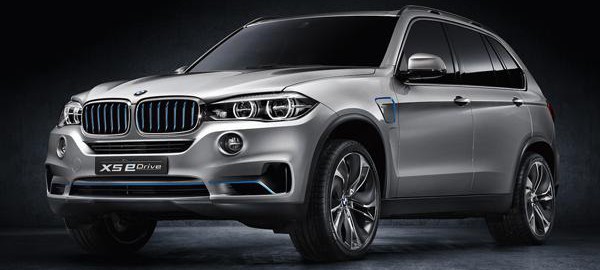
BMW X5 e-Drive PHEV (Image: BMW)

On the hunt for the best plug in hybrid cars for 2023? I’m a car expert and these are my top picks

If you read our guide to the best electric cars, you’ll know that here at Marie Claire UK, we’re passionate about protecting the planet and investing in vehicles that cause less pollution.

Interested in a more sustainable vehicle but not ready to go full-bore electric just yet? There are other options available, like plug in hybrid cars, which are cars with a decent electric range alongside a petrol or diesel engine for longer trips.


Why is it important we start investing more sensibly now and taking care of our planet? Well, because global warming is increasing at a rapid rate that even scientists didn’t predict. Not only that but petrol and diesel cars will be banned from sale in the UK in 2030, asking consumers to seriously consider where they invest their money.

As a car expert and Editorial Director at AutoTrader UK, I know a thing or two about what makes a car good, taking into consideration its sustainability credentials, affordability, and how enjoyable it is to drive, too. For my edit of the eight best plug in hybrid cars for 2023, keep scrolling.

Read more: MarieClaire

It’s Time to Go Green!

If you would like to know more about Solar Panels and the PowerBanx range of home battery systems, and get a free instant quote, please complete our online form:

ZS EV (Image: MG)

‘Perfect’ electric vehicle beats out petrol and diesel to win Car of the Year 2023

An electric car has won the UK Car of the Year award for 2023, with judges calling the vehicle “perfect” and hailing it as being affordable.

The MG4 has been crowned the UK Car of the Year 2023, in another major triumph for . However, unlike 2022 when the top four cars were battery-powered, the MG’s closest competition came from internal combustion engined models at either end of the performance spectrum.

The five-door hatchback comes with an impressive 281 miles of electric range in the standard model or 360 miles (579km) with the Long Range MG4.

As with all new cars, the MG4 comes with a range of features to make the motoring experience easier and smoother.

ZS EV (Image: MG)
ZS EV (Image: MG)

The Trophy Long Range model comes with a 360 parking camera, a 10.25” colour touchscreen and iSMART app connectivity.

Battery life is often cited as an issue for drivers, but the MG can charge from 10 to 80 percent in as little as 35 minutes, and the car starts from as little as £26,995.

The budget seven-seat Dacia Jogger was a deserved runner-up, while third place outright went to Toyota’s GR86, which claimed the Best Coupé category in this year’s awards.

The Dacia Jogger was hailed as prioritising cost-conscious motoring, starting at a cost-effective £17,175.

Read more: Express

It’s Time to Go Green!

If you would like to know more about Solar Panels and the PowerBanx range of home battery systems, and get a free instant quote, please complete our online form:

Government buys more diesel cars than electric despite zero emission pledge by 2027

A Freedom of Information request has revealed just 3.5% of the Home Office fleet is electric despite a 2021 pledge for a zero-emission fleet by 2027 – just years away

Tories have been accused of talking hot air over cars – after we found the Government still buys more diesels than electric models.

That is despite a 2021 pledge for a zero-emission fleet by 2027.

Since then, one department has bought nearly three times as many diesel vehicles as electric ones.

The Home Office added 168 diesel guzzlers to its fleet of 1,617 vehicles, and 62 electric motors.

Just 3.5% of its fleet is electric, data obtained under Freedom of Information laws revealed.


Motoring writer Quentin Willson, who founded the FairCharge campaign to make electric cars affordable, said: “These figures show the massive hole between what the Government say and what they do.

“If the UK is going to reap the benefits of electric cars, with high-paid jobs, cleaner air and less reliance on foreign oil, the Government needs to be leading the charge.”

Our research also found that since 2021, the Department for Transport has added 67 diesels compared with 54 electric vehicles, which make up 9.5% of its fleet.

Shadow Transport Secretary Louise Haigh said: “Hapless Tories are stuck in first gear. Labour’s plans will turbocharge electric vehicle manufacturing and bring good jobs back to industrial heartlands.”

Read more: Mirror

It’s Time to Go Green!

If you would like to know more about Solar Panels and the PowerBanx range of home battery systems, and get a free instant quote, please complete our online form:

Electric cars are ‘significantly cheaper’ to service than petrols and diesels – but we’re on course to have a shortage of qualified mechanics to work on them

  • Average servicing costs for an EV is £103 – petrol car is £151 and diesels is £163
  • Experts suggest lower bills for EVs is a result of having fewer moving parts
  • IMI is concerned the uptake in technicians earning qualifications to work on battery cars isn’t keeping pace with the growth in EV sales 

While many drivers still have their concerns about switching to electric vehicles (EVs) – from high prices to the lack of charging points and battery range anxiety – one benefit is more affordable servicing costs, according to a new report.


Analysis of 280,000 garage quotes given to drivers last year revealed fully-electric models are ‘significantly cheaper’ to service than all other fuel types.

An electric car costs an average of £103 to service, whereas diesels are most expensive at an average of £163, followed by hybrids (£159) and petrols (£151), according to BookMyGarage.com.

While owners of EVs will welcome the findings, the Institute of the Motor Industry is concerned that the number of technicians gaining qualifications to safely work on them won’t keep pace with electric car sales before the end of the decade.

Based on these figures, it suggests electric cars are almost a third (32 per cent) less expensive to service than petrols and 37 per cent cheaper than diesels.

Read more: ThisisMoney

It’s Time to Go Green!

If you would like to know more about Solar Panels and the PowerBanx range of home battery systems, and get a free instant quote, please complete our online form:

Octopus Energy launches new combined solar, battery and EV tariff

Octopus Energy has launched a brand new tariff for customers with solar, a battery and an electric vehicle at home.

Octopus Flux will be able to save customers more than £326 a year compared to the suppliers next more appropriate tariff, it noted.

“We’re delighted to launch our next generation import/export tariff, ‘Octopus Flux’, for those with solar panels and a battery at their home,” an Octopus spokesperson said.

“Octopus Flux customers will receive the best rates for both the power they use and the power they sell back, benefiting from three hours of cheap rates overnight and generous peak export rates.”

It builds on the company’s previous export tariff options, which include;

  • Agile Outgoing – Export rates are linked to wholesale pricing, changing daily to reflect the wider energy market. Over the last six months, Octopus has paid customers an average of 32.05p/kWh during peak times. In December, customers were paid up to £1.48/kWh for electricity exported back to the grid amid the wider high power prices.
  • Fixed Outgoing – This tariff offers customers a fixed 15p/kWh for electricity exported back to the grid, this is three times more than any other supplier in the UK, according to Octopus.
  • Octopus Energy’s Smart Export Guarantee (SEG) tariff is set at  4.1p/kWh for every unit of power customers export.

Read more: SolarPowerPortal

It’s Time to Go Green!

If you would like to know more about Solar Panels and the PowerBanx range of home battery systems, and get a free instant quote, please complete our online form:

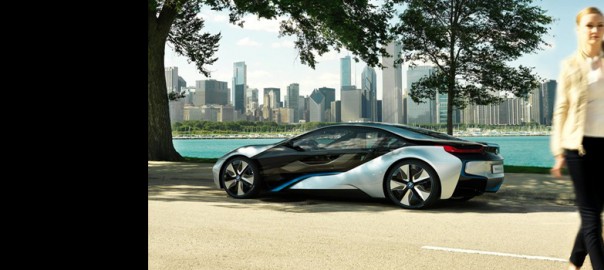
BMW i8 Concept (Image: BMW)

Surprise! Electric cars are already making California healthier

From the “duh” department, California is already becoming more healthy because of electric car penetration, which has resulted in cleaner air in areas where electric cars are more prevalent, according to a new study.

The study was published last week by the Keck School of Medicine at the University of Southern California. It tracked real-world pollution levels, electric car penetration, and emergency room visits across California between 2013 and 2019, and controlled against overall improvements in California air quality during the study period.

Completely unsurprisingly, the study found that clean air vehicles actually resulted in clean air, with the benefits being stronger in areas where there were more of them. Amazing. Who knew.

Each increase of 20 cars per 1,000 people (which is roughly equivalent to 2% of cars – since CA has 840 cars per 1,000 people) was associated with a .41ppb (parts per billion) drop in nitrogen dioxide concentrations in the atmosphere. California law sets average NOx standards at 30ppb, so a drop of .41 is a pretty big chunk, especially when compared to just 2% of EV penetration.

It stands to reason that taking gas cars off the road would reduce NOx, because nitrogen dioxide is a form of pollution particularly associated with vehicle tailpipes, and is the major contributor to the formation of smog, with a variety of negative health effects.

Read more: Electrek

It’s Time to Go Green!

If you would like to know more about Solar Panels and the PowerBanx range of home battery systems, and get a free instant quote, please complete our online form:

Mythbusting the world of EVs: are energy prices killing electric cars?

With electricity prices on the rise, what’s cheaper? And what’s the underlying issue at play here?

MYTH: “Energy prices are killing EVs”

Spiking electricity prices have brought a spate of screaming headlines: “Shock – charging an electric car is as expensive as refuelling a diesel.” Yes, on average, the electricity price has gone skyward. But it’s still easy to travel cheaper per mile than diesel, and actually the public charger price is falling from its peak. Like the diesel price, which you might have noticed also had a convulsion.

Actually you could have done an ‘electricity dearer than diesel’ trip any time in the past three years. Underlying all this is the extreme – and extremely upsetting – variability at any given time of electricity prices. The dearest high power DC chargers, Ionity, have been 69p/kWh since they began trading three years ago. That’s well over 20p a mile, meaning if a diesel is doing better than 40mpg it’s cheaper.

But no one regularly charges at those. If you use public (not home) 7kW AC you’ll probably be around half that Ionity rate. If you plug in at home and have a tariff that responds in real time to local demand, you might still pay perhaps 10p/kWh overnight, or about 3p a mile.

Read more: TopGear

It’s Time to Go Green!

If you would like to know more about Solar Panels and the PowerBanx range of home battery systems, and get a free instant quote, please complete our online form:

Tesla Model 3 (Image: Tesla.com)

Hyundai Ioniq 6 UK first drive

Sleek Ioniq 5 sibling finally reaches the UK to take on the Tesla Model 3

Last year, the Toyota GR86 famously sold out in just 90 minutes, giving Glastonbury a run for its money in the popularity stakes. But there was another fast-selling in-demandcar that slipped under most people’s radar: the Hyundai Ioniq 6 First Edition, which was all gone in just 24 hours.

Granted, that’s not quite Billie Eilish fast, but for an electric car, and a Hyundai at that, it’s still some statement. As a result of its global popularity and the (yawn) ongoing supply problems, we’re only just getting into a first review of the car in the UK, despite it being available in Korea back in October. The proper dealer allocation won’t even come through until March, with UK prices for the Ioniq 6 starting at £46,745


Hyundai Ioniq 5 (Image: hyundai.co.uk)

What can people expect when it does finally arrive? Certainly one of the more individually styled cars on the road. I was in the design preview briefing for the Ioniq 5 with Hyundai chief creative officer Luc Donckerwolke and thought at the time that car was punchy, but on the road the 6 is arguably even more distinctive, with its streamliner profile and twin-deck rear.

Read more: Autocar

It’s Time to Go Green!

If you would like to know more about Solar Panels and the PowerBanx range of home battery systems, and get a free instant quote, please complete our online form:

Truth about electric cars running out – how often it happens, and how it’s fixed

Helen Skelton reignited fears of electric car blackouts this week with an Instagram post

TV presenter and Strictly star Helen Skelton this week reignited questions over electric cars when she posted a video to her Instagram account showing she had broken down after running out of charge. Some people are put off switching from petrol and diesel to electric because of fears over how, where and how often they will have to stop to ‘top up’.

Those fears were also realised before Christmas when there were pictures of huge queues of electric cars waiting to charge at motorway service stations.


Posting to her social media on Monday, Helen Skelton revealed her car had run out of charge. She wrote: “I thought electric cars were the future,” followed by mind-blown and angry emojis. She said: “I had an electric car over a decade ago – a Nissan Leaf. It didn’t work out. I could never charge it and it was really impractical.”

She continued: “Over a decade later, an electric car – not working out. Can’t charge it and not for the first time…stranded.”

Read more: WalesOnline

It’s Time to Go Green!

If you would like to know more about Solar Panels and the PowerBanx range of home battery systems, and get a free instant quote, please complete our online form: