Category Archives: FAQ

Sales of used electric vehicles reach record highs – but rest of the market feels full impact of stock shortage

According to a new report published by the Society of Motor Manufacturers and Traders (SMMT), used battery electric vehicle (BEV) demand reached record levels in Q3, as sales grew by 44.1% to 16,775 vehicles.
However, the UK used car market saw transactions fall 12.2% in Q3, with only 1,785,447 vehicles changing hands.

This is the second consecutive quarter of decline as new car supply shortages are being blamed for the drop in sales.


This is the first time that Q3 transactions have fallen below two million since 2015.

The SMMT believe that semiconductor shortages that are impacting a healthy supply of stock is the core issue.

This is further shown in the year to date information, as sales are now down 9.7% to 5,319,482 compared to the previous year.

Electric car charging – how it works and how much it costs
The road to electric – in charts and data
Electric cars – a definitive guide and tips for buyers

Despite the challenges facing the wider industry, there is positive news for the electric vehicle market.

Used BEV sales have now reached 48,032 in the year to date (January to September 2022).

The market for used hybrid electric vehicles (HEVs) also grew, up 2.5% in the quarter with 41,479 transactions.

Read more: RAC

It’s Time to Go Green!

If you would like to know more about Solar Panels and the PowerBanx range of home battery systems, and get a free instant quote, please complete our online form:

ZS EV (Image: MG)

First Drive: Is the MG4 EV the car to tempt buyers away from well-established brands?

MG is broadening its EV line-up with the new MG4. Ted Welford gets behind the wheel.

The modern-day MG is a far cry from the one that produced classic British sports cars, but it’s proving no less successful. Owned by Chinese automotive giant SAIC Motor, MG is the fastest-growing car brand in the UK and sales have grown by 70 per cent in 2022 alone (up to the end of October).

It now sells more cars here than the likes of Land Rover, Mini and Skoda, and much of its success has come from its electric models – the ZS EV crossover and MG5 estate. The brand is now expanding further with the new MG4, its first electric hatchback and one that’s set to grow this brand even further. But is it set to succeed?

What’s new?

The MG4 is the first model to be based on a new electric car platform. (MG)

The MG4 is the first model from the firm to use a bespoke EV platform that will go on to be used in a number of electric MGs in future years – the key advantage to this being that it’s rear-wheel-drive and uses a thin battery that takes up minimal space.

ZS EV (Image: MG)
ZS EV (Image: MG)

The MG4 also shows a more adventurous design direction for MG, though more on that later. But crucial to the appeal of the MG4 is its price, which starts from £25,995, and undercuts rivals by a significant chunk of money.

Does It Cost More To Run An EV Or An ICE?

Along with the environmental benefits, one of the main advantages of owning an electric vehicle (EV) is their relatively low running costs.

Charging a battery is much more affordable than filling a tank, and EVs are often more reliable than petrol and diesel cars since they have fewer moving parts that can fail.

However, a single tank of fuel will take you much further than even the most efficient EV battery. Add to that the jump in electricity prices that took place on 1 October, and you may need to consider the cost of owning an EV more carefully.

How much does it cost to charge an EV?

The price of charging an EV depends on where you do it.

At home 

Charging an EV at home is usually the most cost effective option. You can charge the car using a domestic three-pin socket, but installing a dedicated EV charger will deliver power much more quickly.

Installing an at-home EV charging point typically costs around £1,000.

With the government’s Energy Price Guarantee capping the cost of electricity at 34 pence per KWh in October 2022 (until April 2023), fully charging an EV at home will cost:

  • £12.51 to fully charge a small EV (VW e-Up!)
  • £13.60 to fully charge a medium sized EV (Nissan Leaf)
  • £24.14 to fully charge a large EV (Audi e-tron)

Read more: Forbes

It’s Time to Go Green!

If you would like to know more about Solar Panels and the PowerBanx range of home battery systems, and get a free instant quote, please complete our online form:

E.U. plans for only electric new vehicles by 2035 ‘without precedent’

After months of negotiations, the European Union reached a political agreement this week to effectively ban new nonelectric cars from 2035 onward.

The agreement, reached at 9 p.m. on Thursday in Brussels and announced by the Council of the European Union and the European Parliament, amounts to a 100 percent carbon dioxide emission reduction target for new cars and vans by 2035.

“This agreement will pave the way for the modern and competitive automotive industry in the EU. The world is changing, and we must remain at the forefront of innovation,” Jozef Sikela — the minister of industry and trade in the Czech Republic, which holds the rotating council presidency — said in a statement.


The legislation still needs to be approved formally to become law in the E.U., one of the largest automobile markets and home to some of the biggest manufacturers. However, approval by the Council and European Parliament is expected, with only minor changes.

Many climate change campaigners, who hoped other governments would follow in the E.U.’s footsteps in effectively banning new gas and diesel vehicles, welcomed the news.

Read more: WashingtonPost

It’s Time to Go Green!

If you would like to know more about Solar Panels and the PowerBanx range of home battery systems, and get a free instant quote, please complete our online form:

What is electric car preconditioning and why does it matter?

Preconditioning is one of the lesser-known but brilliantly useful features of electric cars. On both cold winter days and hot summer days, you can benefit from it.

Put simply, preconditioning allows you to pre-heat or pre-cool the car’s cabin before you start your journey. Not only will you feel more comfortable, you’ll maximise the car’s driving range and prolong the life of its battery.

It’s a win-win-win situation, in other words.

Copyright: maridav / 123RF Stock Photo

How does preconditioning work?

Preconditioning can be activated via the car’s infotainment system or a connected smartphone app. By scheduling your daily departure times, the car will heat or cool its interior to optimum temperature – you just climb in and go.

Crucially, when the car is plugged in, electricity is drawn from the mains and not the car, so this has no impact on driving range. You start your journey with a full battery.

Also, because the car’s windows will be free of mist and ice when you enter the cabin, you won’t waste time waiting to clear or defrost them.

Read more: motoringelectric

It’s Time to Go Green!

If you would like to know more about Solar Panels and the PowerBanx range of home battery systems, and get a free instant quote, please complete our online form:

Ultra-low emission registrations up 386% on first quarter of 2014 (Image: OLEV)

Ford plows ahead with electric vehicle rollout, scrapping Ford Fiesta production

Ford drops Fiesta to focus on electric vehicles

It’s the end of an era, as the Ford Fiesta will be dropped from the automaker’s lineup sooner than expected. Ford says it will be saying farewell to the iconic little model that 22 million drivers trusted to get them where they need to go over five decades.

Meanwhile, Ford is gearing up for one of the most significant transformations in the automaker’s rich history, a fully electric one. The American automaker is scrapping production of its Ford Fiesta model next summer to focus on the next generation of electric vehicles in Europe.


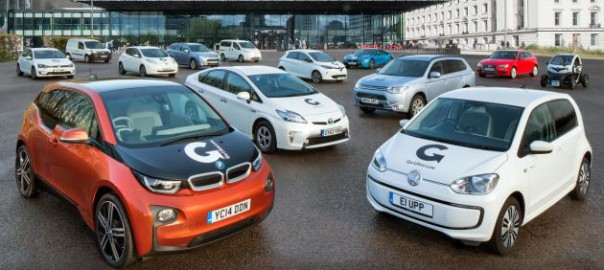
Electric Car Line-up (Image: Go Ultra Low)

The move comes a year earlier than expected as Ford begins rolling out all-electric models across its lineup.

Earlier this year, Ford released plans to become an all-electric brand in Europe by 2035, introducing nine EV models by 2024. The EV rollout started with the successful launch of the Mach-E and Mach-E GT and the E-Transit commercial van.

Read more: electrek

It’s Time to Go Green!

If you would like to know more about Solar Panels and the PowerBanx range of home battery systems, and get a free instant quote, please complete our online form:

Ford Mustang Mach-E (Image: Ford.co.uk)

‘Huge wave’ of electric cars expected on UK roads ahead of 2030 petrol and diesel car ban

The UK is set to see major growth in electric car sales in the coming years once supply chain issues have been resolved.

The UK Government plans to ban the sale of new petrol and diesel vehicles from 2030, followed by a similar ban on plug-in hybrid vehicles five years later. Petrol, diesel and hybrid HGVs over 26 tonnes could be banned from 2040, subject to a Government consultation.

The Government first introduced the “historic step towards net zero” in November 2020.

Ford Mustang Mach-E (Image: Ford.co.uk)

Norway is set to ban the new sales of petrol and diesel cars from 2025, with electric vehicles accounting for more than 50 percent of car sales in the nation.

The European Union has also agreed to an effective ban of internal combustion engine vehicles by 2035, following a European Commission vote earlier this year.

Casper Rasmussen, CEO of Monta, spoke about how the various petrol and diesel car sales bans will take effect and impact drivers.

Speaking to Express.co.uk, he said: “If you look at it from a CO2 and emissions point of view, you want it to be as fast as possible.

“For an adjustment point of view for the different countries, I think it’s a fair place to put it.

Read more: Express

It’s Time to Go Green!

If you would like to know more about Solar Panels and the PowerBanx range of home battery systems, and get a free instant quote, please complete our online form:

Electric cars are ‘much cheaper’ to run compared to petrol and diesel – ‘key benefits’

Electric cars can be half as cheap to run as petrol or diesel vehicles, according to new data.

Drivers charging at home on electric vehicle (EV) tariff save just over 56 percent compared to petrol or diesel per-mile costs. They are nearly a quarter cheaper (24 percent) for those who charge at home on a standard energy tariff.

The data, from New Automotive, found that electric vehicles are now more than half as cheap to run than a petrol or diesel vehicle when charged at home on a dedicated EV energy tariff.

The organisation has launched a fuel cost tracker to measure car running costs.

Renault ZOE in contactless car vending machine (Image: Taylor Herring)


It found that home-charged electric cars can be more than half as cheap as petrol and diesel.

It converts the latest available energy prices into a cost-per-mile figure and compares the difference in running costs between fuel types in an interactive chart.

Energy prices rises have made it harder to monitor changes to the relative running cost of petrol, diesel and electric cars – but the tracker solves this problem.

Read more: Express

It’s Time to Go Green!

If you would like to know more about Solar Panels and the PowerBanx range of home battery systems, and get a free instant quote, please complete our online form:

 

Charging with an Ohme smart charging cable

Demystifying the switch to EVs: the key considerations when buying an EV

Electric vehicle drivers are missing out. This is according to a recent European study conducted by Delta-EE which discovered that:

  1. 42% of electric vehicle (EV) drivers are not on the best charging tariffs for their vehicles because they are not using a dedicated home charging point to charge their car
  2. Less than 50% of people have a time-of-use tariff, enabling them to take advantage of cheaper overnight electricity prices, and
  3. Just three in 10 EV owners have a specific EV tariff with their energy provider

The research points to significant missed opportunities in engaging new EV owners in smart charging and maximising their car’s potential to cut their costs and carbon emissions. By charging their vehicle through a smart domestic charger able to optimise charging to times of low demand when energy is cheapest and greenest, customers can not only save on their energy bills but reduce their carbon footprint.

In fact, if a customer buys an EV and home charger they typically reduce their car running costs by ~50% and triple their CO2 savings per kilometre. Add smart charging or bidirectional vehicle-to-grid technology and emissions can be decreased by a further 30% with customers able to actually earn money – up to £800 a year – for importing cheap energy and selling it back to the grid. At scale, this technology can accelerate the energy transition by increasing the use of renewable power and preventing fossil fuel backup generation to be switched on at peak times, and do so in an affordable way for customers.

Read more: Current+

It’s Time to Go Green!

If you would like to know more about Solar Panels and the PowerBanx range of home battery systems, and get a free instant quote, please complete our online form:
New UK charge points (Image: Department for Transport)

One millionth plug-in car registered, strong September for EV sales

September showed to be a strong month for electric vehicles (EVs) with the one millionth plug-in car registered in the UK.

This year alone represents a quarter of total plug-in EVs registered, according to the latest data from the Society of Motor Manufacturers and Traders (SMMT).

While battery electric vehicles (BEVs) registered its second highest monthly volume in history with 38,116 units, a 16.5% rise year-over-year (YoY).


New UK charge points (Image: Department for Transport)

The strong performance of BEVs registrations in September comes after recent figures from RAC Foundation, released this week, showed that pure the number of BEVs sales exceeded half a million at the end of June 2022.

Mike Hawes, SMMT chief executive, said: “September has seen Britain’s millionth electric car reach the road – an important milestone in the shift to zero emission mobility. Battery electric vehicles make up but a small fraction of cars on the road, so we need to ensure every lever is pulled to encourage motorists to make the shift if our green goals are to be met.”

Read more: Current+

It’s Time to Go Green!

If you would like to know more about Solar Panels and the PowerBanx range of home battery systems, and get a free instant quote, please complete our online form: