Category Archives: FAQ

‘Owning an electric car is now cheaper than a petrol car’

That includes the total cost of maintenance, according to new data

In almost all of Europe, owning an electric car is now cheaper than a petrol or diesel one.

That’s according to analysis by LeasePlan, claiming that although electric vehicles (EVs) cost more to buy, this is offset by lower running costs, less maintenance and less to charge up.

The report revealed that “EVs in nearly every segment and European country are now the same price or cheaper on a total cost of ownership basis than petrol or diesel cars.”

The only nations where an EV was still considerably more expensive were the Czech Republic, Italy and Poland.


Smart FourTwo

From a UK perspective, the total monthly cost of running a new EV stood at £790, whilst a petrol car cost £820 and a diesel vehicle £809.

This was even more stark in the nation’s neighbours France – with a cost of £632 for an EV, £778 for diesel and £747 for petrol.

The study also revealed that charging at home was always cheaper than public chargers.

Read more: EnergyLive

It’s Time to Go Green!

If you would like to know more about Solar Panels and the PowerBanx range of home battery systems, and get a free instant quote, please complete our online form:

Bp pulse to provide rapid EV charging for M&S customers

Marks & Spencer (M&S) has signed an exclusive agreement with bp’s electric vehicle (EV) charging business, bp pulse, to install 900 EV chargepoints across 70 of its national stores over the next two years.

The announcement follows the successful pilot installation of 12 rapid (50kW) chargepoints at M&S stores in Eclipse, Southgate and Maidstone.

The roll-out will include a combination of ultra-fast (≥150kW) and rapid (≥50kW) chargepoints that will add 40,000kWhs of charging capacity to the EV infrastructure in the UK, said the retailer.

Each chargepoint will have a minimum capacity of 50kW with either standard grid connection or a battery-integrated solution. M&S have said that as many sites as possible will also include at least one ultra-fast 150kW chargepoint.

Bp pulse will supply, install, operate and maintain these chargepoints.

Commenting on the agreement, Sacha Berendji, director of operations at M&S said: “EV charging is the latest feature to ensure we have a store estate fit for the future, to help our customers live lower carbon lives. We know that services like EV charging are in demand from our customers, so we’re delighted to be offering this service and give more reasons for customers to shop with us.”

Read more: Current+

It’s Time to Go Green!

If you would like to know more about Solar Panels and the PowerBanx range of home battery systems, and get a free instant quote, please complete our online form:

Electric vehicles: if the UK is serious about being a major player, here’s what needs to happen

The UK’s efforts to become a global player in electric vehicles (EVs) are back in the spotlight with two government announcements: a £500 million loan guarantee for Ford and a £73 million package to support various smaller clean transport projects.

The loan guarantee is enabling Ford to spend £230 million on its Halewood plant near Liverpool to nearly double output of EV powertrains to 420,000 units a year. Powertrains are the motor and other parts that propel EVs forward.

It is also helping Ford to invest £370 million in its global R&D headquarters in Essex to help support EV development. Ford’s Mustang Mach-E SUV is one of the best selling EVs in the world, though it is currently made in Mexico.

The government’s second £73 million package is a 50-50 investment with the auto industry. Among five projects receiving support is one aiming to develop a more efficient way of manufacturing EVs.

While these announcements are very welcome, we have seen numerous similar ones in recent years. But what’s the the big picture? How far is the UK from being a powerhouse in global EV?

Assembly lines

The UK currently produces over 850,000 cars a year, the vast majority petrol and diesel. Over 700,000 are exported, more than half to the EU.

Read more: TheConversation

It’s Time to Go Green!

If you would like to know more about Solar Panels and the PowerBanx range of home battery systems, and get a free instant quote, please complete our online form:

You’re Being Lied to About Electric Cars

Science has repeatedly shown EVs are better for humans, despite the meme you just retweeted.

I’ve heard all the supposed arguments. It seems every time anything even tangentially related to electric cars is published, certain people feel compelled to share their own research. You’ve probably heard it all, too: A Prius is worse for the planet than a Hummer. EVs are coal-powered cars. Electric cars produce more CO2 than internal combustion engine (ICE) vehicles. Lithium mining is uniquely bad for the environment. Cobalt mining relies largely on slave labor, if not child slave labor. Actually, that last part is sadly true. But the rest? Lies. And I’m not even going to get into the hypocrisy of posting anti-EV rhetoric from a lithium-ion-battery-powered phone or laptop.

Gear Selector (Image: T. Heale)
 The first thing we should talk about is direct versus indirect emissions. Gas-powered vehicles have both direct and indirect emissions, while electric cars—I’m specifically talking about battery-powered vehicles, or BEVs, but we will just call them EVs—only have indirect emissions. How so? Both types of cars/trucks/SUVs are manufactured, and the process of building cars involves a global manufacturing effort that uses energy from all sorts of sources. This includes everything from the diesel fuel used to mine and transport metal to the electricity used to manufacture tires. A big knock on EVs is that because most battery production is centered in China, itself a notorious coal-burning country, battery-powered cars begin their service lives with more indirect emissions to their credit.

Read more: MotorTrend

It’s Time to Go Green!

If you would like to know more about Solar Panels and the PowerBanx range of home battery systems, and get a free instant quote, please complete our online form:

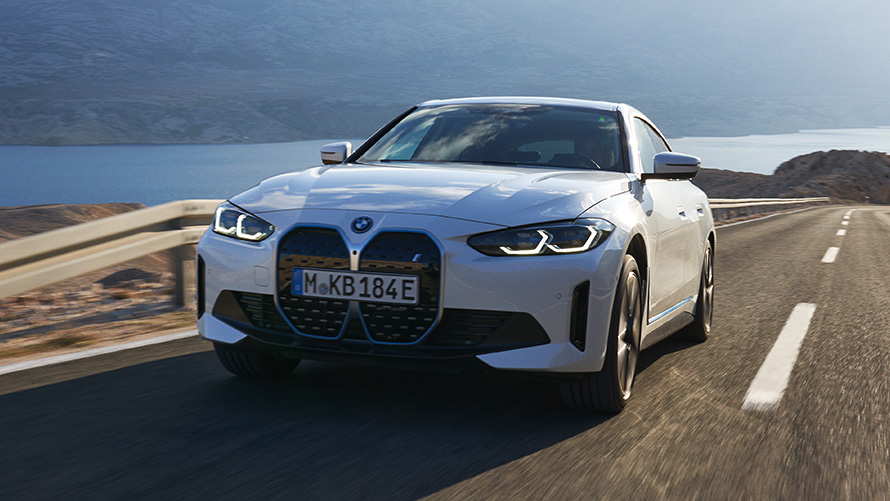
BMW i4 (Image: BMW.co.uk)

The best electric cars in 2022

Sales of electric cars are booming, and no wonder: the best are quiet, cheap to run and smooth to drive. But which are the brightest sparks – and which are the loose connections?…

Electric cars have now entered the mainstream, accounting for around 15% of new car registrations last month. What’s more, their rise is only going to accelerate as rules are introduced to limit the kind of vehicles allowed into major cities and we get closer to the 2030 ban on the sale of new petrol and diesel models.

The main thing that has traditionally prevented them selling in greater numbers is range anxiety – the fear that you won’t have enough juice to get to where you’re going. However, with plenty of models now capable of covering more than 200 miles between charges, this is becoming less of an issue.

Seat el-Born Concept electric car (Image: Seat)

So, which electric cars should you consider? Here, we count down our top 10 and reveal the ones to avoid. If any of the models on the list take your fancy, just click on the relevant link to find out more or see how much of a discount you could get by using our free New Car Buying service.

Read more: WhatCar

It’s Time to Go Green!

If you would like to know more about Solar Panels and the PowerBanx range of home battery systems, and get a free instant quote, please complete our online form:

EV charging: Saving the environment or breaking the bank?

There’s no doubt that electric vehicles can be beneficial for the environment. In fact, one electric car can save up to 1.5 million grams of C02 every year. We all know EVs are good for the planet, but are they economically viable?

The true cost of electric charging is the question on everyone’s mind, but the answer is anything but simple. This can depend on multiple things, including whether or not the charging station is public or private.

Here, with the help of Northern Powergrid, we take a closer look at the price of charging an EV.

How much does it cost to use public charging stations?

Let’s start with public charging stations. These are spread across the nation, but you might be able to use some of the standard charging stations for free, whereas Rapid or Ultra Rapid might require a fee for use.

Free public charging stations

According to figures collected at the end of April 2022, there are a reported 5,715 free public charging points in the UK. These are placed in a number of handy spots, such as supermarkets. In fact, Tesco is home to 600 free charging stations across 300 locations. The National Trust also offers several free electric chargers, and a two-hour top-up on their 7kW chargers takes you about 56 miles. Not bad!

Read more: SmartEnergy

It’s Time to Go Green!

If you would like to know more about Solar Panels and the PowerBanx range of home battery systems, and get a free instant quote, please complete our online form:
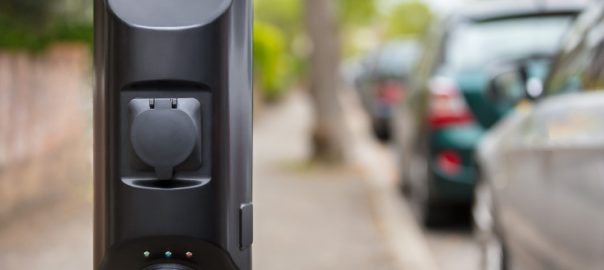
Oxfordshire’s charging network for electric vehicles finished

A network of 250 electric vehicle (EV) charging points has been completed in Oxfordshire.

The hubs in 20 car parks which allow people to park and charge their vehicle can also be booked overnight to aid residents without off-street parking.

The £5.4m scheme to install the chargers county-wide started in May – they have been installed by Bicester-based firm EZ-Charge.

It was funded through government grants.


An online map shows the locations of all the council-owned car parks with chargers.

The scheme has been supported by the University of Oxford, Oxfordshire county and district councils.

In July, a £41m energy hub with 42 EV charging points opened at the Redbridge Park and Ride in Oxford.

The Pivot Power site can recharge a car in as little as 20 minutes.

Read more: BBC

It’s Time to Go Green!

If you would like to know more about Solar Panels and the PowerBanx range of home battery systems, and get a free instant quote, please complete our online form:

Electric car servicing and repairs in the UK: costs, pitfalls and finding a local garage

The popularity of electric cars is growing exponentially. But with more and more on the road, where do you go to get your pride and joy maintained and repaired?

Electric cars are here to stay. Before too long, they’ll be the only option open to new car buyers in the UK and a little while after that they’ll be the majority of all cars on the road. That, of course, means people are going to need to service, maintain and repair electric cars in rapidly increasing numbers.

The environmental angle is a big selling point for electric cars but to get the full benefit the car needs to be used for a long time, not treated as a disposable commodity. That means we need the availability of high quality servicing and maintenance from dealers and independent garages that know what they’re doing.


Kia Niro PHEV, Plug In Hybrid, Geneva Motorshow 2017 (Image: Kia)

This is a big challenge for the car industry. Electric cars are different to the internal combustion engined vehicles we’ve been using for a century. The right training and tooling are needed before mechanics used to petrol and diesel cars can turn their hand to EVs or even plug-in hybrids. Right now, electric car owners can take their cars to main franchised dealers where the investment in the necessary skills should have happened but in the future we will also need cheaper, independent options to keep older EVs on the road.

Read more: AutoExpress

It’s Time to Go Green!

If you would like to know more about Solar Panels and the PowerBanx range of home battery systems, and get a free instant quote, please complete our online form:
Hyundai Kona Electric (Image: Hyundai)

IT’S COMING OHM I travelled around Qatar in an electric car – where the chargers are free but nobody uses them

“I HAD David Beckham in the car a few weeks ago,” says our guide Manu, as we buzz past Qatar’s Lusail stadium. 

“To be honest I am not a big football fan, so we talked about our families instead.”

This quietly spoken IT engineer has a job for the next few weeks chaperoning the stars of the beautiful game around Doha in a fleet of Hyundai Ioniq 5s.

Spilling the beans on his celebrity clientele would not go down well so he discreetly refuses to spill Beckham’s beans.

We agree Lusail is an impressive stadium, but our favourite is the one close to Doha airport, through which 1.2million fans will pass over the next a month and a half.

The stadium we like most is 974, a structure made from 973 shipping containers. The 974th sits out front as a gate guardian.

From 974 to Lusail is 18 miles. The furthest any two of the eight stadia are apart is 25 miles. It is the most compact World Cup ever.

Qatar, the UK’s second-largest supplier of natural gas, is still wedded to gas-guzzling V8s

The immaculate streets of Doha are populated with Toyota Land Cruisers, V8 Land Rover Defenders and giant Chevy Escalades made popular by Hollywood’s red-carpet brigade.

Read more: TheSun

It’s Time to Go Green!

If you would like to know more about Solar Panels and the PowerBanx range of home battery systems, and get a free instant quote, please complete our online form:

Vauxhall Grandland X Hybrid4 (Image: Vauxhall.co.uk)

Comment: What will electric car tax mean to EV drivers like me? How much will it cost?

After any budget announcement there is always a great deal of hand-wringing from those who are suddenly being taxed more, or feel that incentives don’t go far enough.

This time, it is the turn of electric car drivers like me.

The chancellor stood up today and said that the zero rate for road tax on electric cars is going to end. In addition, benefit-in-kind rates for company car drivers making the switch are going to rise 1% per year from 2025.

There are concerns, of course, but generally the reaction from electric car drivers across social media has been much less angry than expected.


Vauxhall Grandland X Hybrid4 (Image: Vauxhall.co.uk)

Drivers seem to acknowledge that the change was inevitable as electric cars became more popular and the hole in the government’s finances became bigger.

Battery electric vehicles have accounted for 14.6 per cent of the total new car sales so far this year, outstripping the demand for diesel.

The share is growing fast, with registrations up nearly 40 per cent this year, meaning there are now more than a million plug-in vehicles on British roads. That’s a lot of tax to give away for free.

Read more: CarDealer

It’s Time to Go Green!

If you would like to know more about Solar Panels and the PowerBanx range of home battery systems, and get a free instant quote, please complete our online form: