Category Archives: Cost of ownership

ENERGY SAVER I’m a car expert – here’s the top five used EVs you can buy for less than £15k

ONE of the biggest gripes about switching to an electric car is the hefty price of battery-powered models.

With more low emission zones appearing all over the UK, many motorists are finding that they need a cleaner car like an EV or a hybrid – but the problem is they just can’t afford to make the change from their petrol or diesel motor.

Recent research by carwow, the online platform for buying and selling cars, found that cost is a significant barrier to EV adoption – with 56% of consumers saying that the purchase price of an electric car is too high.

Handily, carwow’s automotive expert and YouTube star Mat Watson has shared his top picks for used EVs you can get your hands on for under £15k right now.

Nissan Leaf – £14,500

One of the original electric cars for the masses, the Nissan Leaf is a smart EV that comes with an impressive safety kit, a comfortable interior and a big, practical boot.

At this price you’ll probably only find the lower-range models, but an official 168 miles between charges should be enough for most.


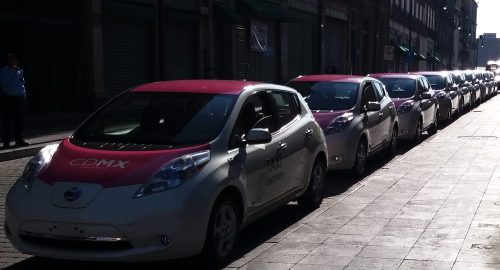
Electric Taxi Rank in Mexico City

The interior can feel a bit cheap in places, but a good driving position and good visibility make the Leaf easy to drive in town – the punchy electric motors certainly help here, too.

Read more: TheSun

It’s Time to Go Green!

If you would like to know more about Solar Panels and the PowerBanx range of home battery systems, and get a free instant quote, please complete our online form:

Mr. Bean says ‘our honeymoon with electric cars is coming to an end.’ It’s just the beginning.

Mr. Bean loves cars.


Over the weekend, the respected British comedian Rowan Atkinson, famous for his portrayal of a clueless social misfit in his eponymous British series, wrote about “feeling duped” for buying an electric car.

“Our honeymoon with electric cars is coming to an end,” he lamented in an opinion piece in the Guardian. “Sadly, keeping your old petrol car may be better than buying an EV.”

I can see why Mr. Bean might suggest that. I’ve been driving a 2010 Honda Fit for quite a while, and I’m sure it will keep chugging well after my odometer’s recent lap of the 100,000-mile mark.

But Atkinson, who says he has a “lifelong passion for the motorcar” and an undergraduate degree in electrical engineering, argues that people should consider keeping their internal combustion engines as long as possible, while we develop hydrogen and synthetic fuel alternatives.

On one front, Atkinson is right. EVs are not perfect. The industry, for example, has a lot of room to improve on how it sources battery materials, whose mining has ravaged communities and ecosystems around the world. Prices are high. Charging infrastructure is spotty. Supplies are tight. He points out some real problems in the current market.

But based on what we know about emissions and automobile engineering, EVs are the better choice for millions of people right now.

Read more: WashingtonPost

It’s Time to Go Green!

If you would like to know more about Solar Panels and the PowerBanx range of home battery systems, and get a free instant quote, please complete our online form:

Mazda MX-30 EV (Image: Mazda)

The biggest myths about electric cars, debunked

  • Electric vehicles are gaining momentum.
  • But drivers still have a lot of misconceptions about going electric.
  • From range to charging challenges, here are some of the biggest EV myths, debunked.

Electric cars are gaining traction, bolstered by efforts from the federal government, billions of dollars of investment from the auto industry, and momentum from sustainability advocates all over the globe.

But the US’ transition to electric has been slower than other parts of the world, hitting just about 6% EV adoption in 2022.

Some of that can be attributed to real hurdles, with infrastructure, cost, and more. But more people than might think can probably go electric, so long as some major myths are demystified and their questions answered.

Here are 8 of the biggest myths about EVs, debunked:

Myth 1. All EVs are expensive.

Most consumers who aren’t very familiar with electric vehicles or weren’t early adopters have the perception that all of them are costly.


Honda E 2021 (Image: honda.co.uk)

It’s true that the average price paid for a new EV hit $55,089 in April — higher than the average for a new gas-powered vehicle of $48,275, per Kelley Blue Book. Most US consumers have indicated they don’t want to spend more than $50,000 on one if they opt to electrify. It’s also true that EVs haven’t yet hit scale (at least in the US), and EV batteries are generally a really costly component. Plus, most of the EVs that have hit the market so far have been luxury products and bigger vehicles.

Read more: Insider

It’s Time to Go Green!

If you would like to know more about Solar Panels and the PowerBanx range of home battery systems, and get a free instant quote, please complete our online form:

Do electric vehicles really cost less than ICE cars to maintain?

While many organisations are electrifying their fleets with the main aim of reducing carbon emissions, cost still matters.

Traditionally, the typically higher purchase or lease rates of a battery electric vehicle (BEV) compared with an internal combustion engine (ICE) model have been mitigated by factors such as lower fuel and/or charging costs.

However, this advantage has been eroded significantly through the soaring cost of electricity.


Another traditional benefit for BEVs has been lower service, maintenance and repair (SMR) outlay.

It has been widely supposed they will deliver uniform SMR benefits over petrol and diesel vehicles because they have fewer mechanical parts, minimising the likelihood of breakdown and requiring less routine maintenance.

But with growing numbers of BEVs on the road giving more data in this area, does this expectation still hold true?

Yes, says Vincent St Claire, managing director of Fleet Assist, which has a network of 5,200 franchised and independent garages, but with a caveat.

“All the indicators are strong that SMR for BEVs will continue to be less than that for ICE vehicles,” he adds.

“However, while we are now in a period after the pandemic where BEVs are in proper real world use and we are seeing vehicles doing higher mileage than they’ve ever done, it is still a small sample and until we get a bigger data set in terms of numbers of BEVs, we can’t say with a high degree of conviction the issue is settled.”

Read more: FleetNews

It’s Time to Go Green!

If you would like to know more about Solar Panels and the PowerBanx range of home battery systems, and get a free instant quote, please complete our online form:

Renault ZOE in contactless car vending machine (Image: Taylor Herring)

10 Advantages Of Electric Cars

As EV technology continues to improve, electric cars are become more and more viable, and here are some advantages to owning one.

Fiat 500 Electric (image: fiat.co.uk)

Electric vehicles have been around for many years, but they have only recently started to gain more traction in the market. They offer a lot of advantages compared to conventional gas-powered cars. They are known for their low operating costs compared to gas-powered cars. In addition to them being cheaper to maintain and more efficient, they also provide an environmentally responsible mode of transportation. And, you can’t deny they look fascinating too with a wide variety of stylish designs, proving that eco-friendliness doesn’t have to come at the cost of great and futuristic design. They help in saving money on fuel costs, reducing carbon emissions (which is particularly important because climate change is rapidly becoming a global concern), and more. The advantages of driving an electric car are hard to ignore. They provide better performances and are more reliable than ever before. As EV technology continues to improve, the benefits of driving an electric car are becoming more and more clear. With a large variety of available technology features, improved charging infrastructure, and more options to choose from, the shift toward electric vehicles is inevitable, and there are many excellent reasons to make the switch.

Read more: TopSpeed

It’s Time to Go Green!

If you would like to know more about Solar Panels and the PowerBanx range of home battery systems, and get a free instant quote, please complete our online form:

Best electric car discounts: how to save money on a new EV

It’s currently possible to save up to £4188 on a new electric car. And you don’t even have to haggle, thanks to our free New Car Buying service…

Electric cars have been hugely popular and demand has traditionally been so strong that discounts on them were virtually impossible to find. That has started to change, though, with the average saving on an electric vehicle (EV) now standing at 3.1% or £1805 per car. That’s up more than 25% year on year.

The catalyst for the discounting was Tesla’s big price reduction of its models in January 2023. A number of other factors have also had an influence on prices, including the slowing of new car sales due to the cost-of-living crisis, a drop in resale values of EVs, and the impending Government directive that 22% of all cars sold by manufacturers must be all-electric from next year.

Renault ZOE 2020 (Image: Renault.com)

Even though electric car sales are growing more rapidly than those of other fuel types – with registrations up 18.8% compared with 18.4% for petrol models – the discounts available on them are also increasing, according to data compiled by What Car?’s Target Price team.

Read more: WhatCar

It’s Time to Go Green!

If you would like to know more about Solar Panels and the PowerBanx range of home battery systems, and get a free instant quote, please complete our online form:
How much does charging an electric car cost? Is it cheaper than petrol?

Your electric car charging costs are simple to calculate. Here’s how to work it out

There are plenty of reasons for going electric: that pesky CO2 stuff, for one thing. But there’s another incentive for making the switch other than doing your bit for the polar bears: electric car charging costs.

You see, charging an electric car has been – historically, at least – cheaper than filling up with conventional fuel. And that means over the course of electric vehicle ownership, you could save yourself a lot of money in running costs. Really.

There are, of course, a couple of important caveats: to make the numbers work, you will need to do the majority of your charging at home. This is where electricity is most affordable (even with energy costs ballooning) and some tariffs will allow you to make the most of cheaper overnight rates when demand is low.

Public charging points – including the so-called ‘rapid’ chargers popping up at motorway service stations – tend to be a lot more expensive. And while they’re a godsend for topping up quickly on a long journey, you will be paying for the privilege. So much so that the price per mile of driving might not be that much different to that of a petrol or diesel car. Boo! Hiss!

Read more: TopGear

It’s Time to Go Green!

If you would like to know more about Solar Panels and the PowerBanx range of home battery systems, and get a free instant quote, please complete our online form:

Tesla cuts prices for its most expensive electric vehicles to drive demand

Cuts range from 4% on performance version of Model S to 9% on more expensive Model X

Tesla has cut prices on its two most expensive electric vehicles in the United States, according to the company’s website, days after its chief executive, Elon Musk, said recent price cuts on other models had stoked demand.

The price cuts, Tesla’s fifth adjustment since the start of the year, ranged from 4% on the performance version of the Model S to 9% on the more expensive Model X.

Musk has said repeatedly in recent months that Tesla would focus on bringing prices down to drive demand and that it had seen success in sparking orders with global discounts introduced in January.

“The desire for people to own a Tesla is extremely high. The limiting factor is their ability to pay for a Tesla,” Musk said last week at Tesla’s investor day.

Tesla did not immediately respond to a request for comment on the most recent price cuts.

Tesla slashed prices on its cars across all its markets in January, offering discounts of up to 20% in what many analysts saw as the start of a price war by the electric vehicle market leader.

Read more: TheGuardian

 It’s Time to Go Green!

If you would like to know more about Solar Panels and the PowerBanx range of home battery systems, and get a free instant quote, please complete our online form:

Petrol and diesel drivers issued ‘word of caution’ before electric car switch

A majority of drivers around the UK believe petrol and diesel cars are cheaper to run than electric vehicles, a new poll has found

According to new data, 54 percent of motorists think  and  vehicles are now the cheapest to run. As the cost of electricity continues to rise, just 18 percent of drivers thought a fully  would be cheaper.

This is in stark contrast to 2022, when a survey found 57 percent said cheaper running costs were an incentive to switch to an EV.

Only one in 10 motorists believe that a plug-in hybrid vehicle would be the cheapest to run.

Despite the findings, experts are trying to show drivers that electric vehicles are still significantly cheaper to run when charged economically.

The data, from NFU Mutual, found that the cost of living crisis had a huge impact on drivers wanting to commit to an electric car.

The energy crisis has hit public perception of the cost benefits of electric vehicles, with most now thinking petrol and diesel cars are cheaper to run.

The survey results come as high electricity wholesale prices have pushed up the cost of household electricity bills and public electric vehicle charging.

Jade Devlin, motor insurance expert at NFU Mutual, said EVs still have cheaper running costs than petrol and diesel cars.

Read more: Express

It’s Time to Go Green!

If you would like to know more about Solar Panels and the PowerBanx range of home battery systems, and get a free instant quote, please complete our online form:

Electric cars are ‘significantly cheaper’ to service than petrols and diesels – but we’re on course to have a shortage of qualified mechanics to work on them

  • Average servicing costs for an EV is £103 – petrol car is £151 and diesels is £163
  • Experts suggest lower bills for EVs is a result of having fewer moving parts
  • IMI is concerned the uptake in technicians earning qualifications to work on battery cars isn’t keeping pace with the growth in EV sales 

While many drivers still have their concerns about switching to electric vehicles (EVs) – from high prices to the lack of charging points and battery range anxiety – one benefit is more affordable servicing costs, according to a new report.


Analysis of 280,000 garage quotes given to drivers last year revealed fully-electric models are ‘significantly cheaper’ to service than all other fuel types.

An electric car costs an average of £103 to service, whereas diesels are most expensive at an average of £163, followed by hybrids (£159) and petrols (£151), according to BookMyGarage.com.

While owners of EVs will welcome the findings, the Institute of the Motor Industry is concerned that the number of technicians gaining qualifications to safely work on them won’t keep pace with electric car sales before the end of the decade.

Based on these figures, it suggests electric cars are almost a third (32 per cent) less expensive to service than petrols and 37 per cent cheaper than diesels.

Read more: ThisisMoney

It’s Time to Go Green!

If you would like to know more about Solar Panels and the PowerBanx range of home battery systems, and get a free instant quote, please complete our online form: