Category Archives: Tesla

News and reviews of Tesla electric cars (including plug-in hybrids).

Tesla Model3 (Image: Wikimedia/Carlquinn)

Finally! The Tesla Model 3 has British prices and specs

Tesla’s entry-level saloon starts at a whisker under £40,000

UK order books are open for the Tesla Model 3, and we finally have a price: £38,900 for the rear-wheel drive Standard Range Plus (SRP) model, inclusive of the government’s £3,500 plug-in car grant. Deliveries start in June.

Maybe not as cheap as we were initially led to believe (Tesla promised prices would start at $35,000, which in today’s money is £26,600), but not bad. For a bit of context, £38,900 is around £3,000 more than a top-spec Nissan Leaf, and about the same as a 2.0-litre petrol BMW 330i.
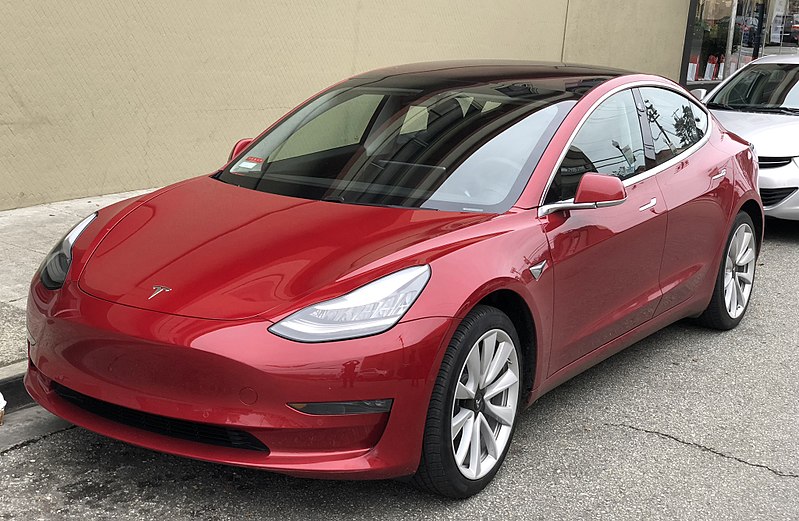
Tesla Model3 (Image: Wikimedia/Carlquinn)

The SRP Model 3 manages 0-60mph in 5.3 seconds, will hit 140mph and claims 258 miles of range. Next up is the Long Range model, which gets dual motors for all-wheel drive. It takes 4.5 seconds to hit 60mph, has a top speed of 145mph and costs £47,900. Finally there’s the Performance. Also dual-motor, it does 0-60mph in 3.2 seconds and tops out at 162mph. It will cost from £56,900, and has a claimed range of 329 miles.

Read more: Top Gear

Tesla Model 3 (Image: Tesla.com)

Tesla Model 3 saloon

The Tesla Model 3 is the first affordable, mass-produced model in the American manufacturer’s all-electric range, offering customers something very different from conventional rivals such as the BMW 3 Series, Audi A4, Jaguar XE and Alfa Romeo Giulia.

The Model 3 has no direct electric rivals for now; it’s more expensive than EVs like the Nissan Leaf and Hyundai Kona Electric but smaller and cheaper than the Jaguar I-Pace. It’s closer to the Jaguar in nature, however, thanks to its minimalist but luxurious high-tech interior, massive desirability and incredible performance.

The newest Tesla is a clear evolution from the design of the Model S but with extra emphasis on the amount of interior space that can be gained owing to the absence of a conventional combustion engine. This has resulted in a bonnet that is much shorter and a rear window that stretches almost to the tail, maximising room for passengers and their luggage. There are myriad clever features, from the key that’s actually your smartphone to a single-slot air-vent that can somehow adjust airflow and direction as if by magic.

Tesla Model 3 (Image: Tesla.com)

Three versions are available initially, starting with the rear-wheel drive Standard Range Plus that’s capable of 258 miles from a full charge and 0-60mph in 5.3 seconds. Long Range AWD and Performance versions gain an extra motor and four-wheel drive, giving the Performance almost supernatural acceleration – 0-60mph takes 3.2 seconds. These more expensive versions have 348 and 329 miles of range respectively.

The Model 3 Long Range AWD feels addictively fast and relaxing, thanks to near-silence from its electric motors. The car’s handling belies its weight, with excellent grip and good resistance to body roll, and the suspension is comfortable enough to allay our fears the Model 3 would feel too stiff on British roads.

Read more: Car Buyer

Tesla Model3 (Image: Wikimedia/Carlquinn)

Tesla Model 3 Accelerates Past European Electric Cars

Tesla’s Model 3 stormed to the top of the Western Europe battery electric car sales charts in the first quarter of 2019, outselling the second best Renault Zoe with almost twice as many sales.

This is all the more remarkable because the Model 3 was only available for sale from February, and the price of the Tesla is probably more than twice and maybe occasionally even 3 times that of the little Zoe city car.

According to data compiled by Berlin-base automotive industry analyst Matthias Schmidt www.schmidtmatthias.de, Tesla sold 19,482 Model 3s in the first quarter compared with the second placed Zoe’s 11,049 and the Nissan Leaf with 10,315.

Tesla Model3 (Image: Wikimedia/Carlquinn)

Direct competitors to the Model 3 were way off the pace, with the Jaguar I-Pace in 7th place at 3,012 and the Audi E-Tron 11th with 2,526, according to Schmidt’s data.

Schmidt said the European competition may in fact be holding back its sales because next year, European Union (EU) carbon dioxide (CO2) regulations tighten sharply. Manufacturers may want to have the biggest number of electric cars in their fleets in 2021, to bring down the average emissions, and mitigate or avoid big fines. Meanwhile, the Tesla Model 3 has the chance to rack up big sales because its all electric fleet won’t suffer fines.

Read more: Forbes

Tesla Model3 (Image: Wikimedia/Carlquinn)

Tesla Model 3 Performance Crushes Fossil BMW M3 Around Race Track

Top Gear magazine has track tested the Tesla Model 3 Performance head to head against fossil fans’ favorite sports saloon, the BMW M3.

The track times were conducted on the 2 mile Thunderhill Raceway Park West circuit, with the Tesla coming in a significant 2 seconds ahead of the (more expensive) BMW. Fossils must now accept all-round inferiority in the performance realm.

Top Gear Magazine’s head-to-head also found — unsurprisingly — that the Tesla beat the BMW on pure acceleration, as well as on their 0–100–0 mph acceleration-and-braking tests. It’s worth noting also that the price of the Tesla came in at more than a thousand dollars below that of the BMW M3.

Tesla Model3 (Image: Wikimedia/Carlquinn)

A lead of almost 2 seconds on a 2 mile track (with lap times around 85 seconds in total) is significant. Both vehicles were stock without modifications, and were lapped by the same driver.

On the feel of the two vehicles around the track, the testers found that for the BMW, compared to the Tesla:

“when you floor it, the throttle response is glacial by comparison, and the accompanying racket isn’t quite as glorious as you remember — more of a distraction from listening to what the tyres are doing and getting on with the business of going fast.”

They also noted the superiority of the Tesla’s ride for normal daily driving, away from the track:

“Where the BMW’s comfort and refinement is conceded quite a bit to unlock its track potential, the Tesla is utterly uncompromised…”

Read more: Clean Technica

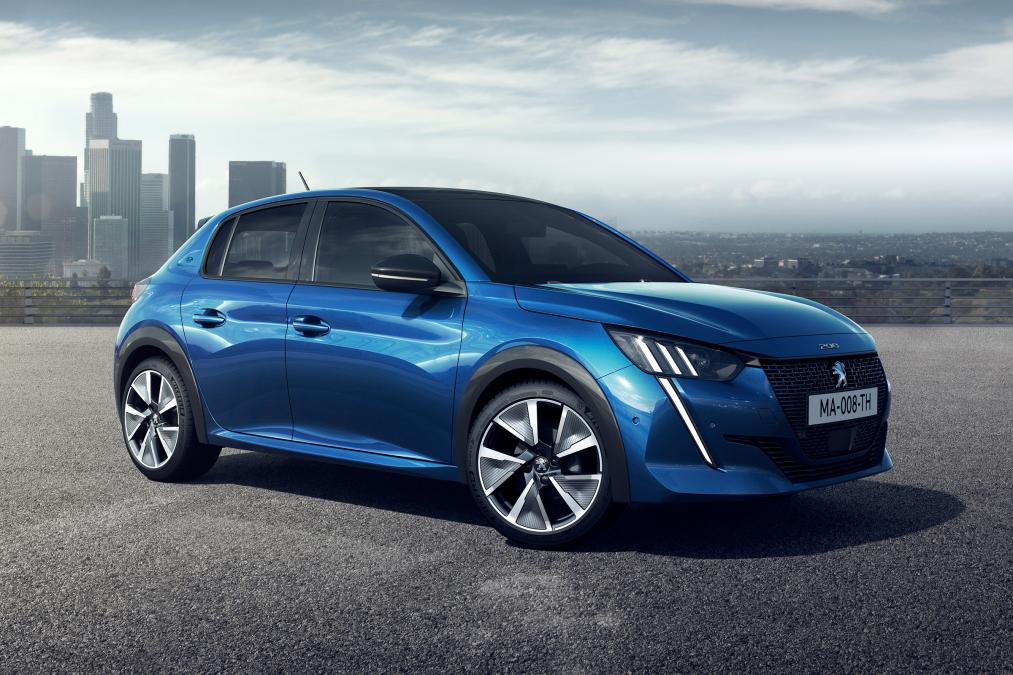
Peugeot e-208 (Image: Peugeot)

More new models, tougher CO2 rules poised to boost EVs, plug-in hybrids

A lack of choice has been one reason that buyers in Europe have not fully embraced full-electric and electrified plug-in hybrid cars.

But that is quickly changing as automakers prepare to launch more models to prepare for tougher CO2 emissions regulations that start to take effect in 2020.

The number of EVs on sale in Europe will increase to 24 this year from 18 last year as new vehicles such as the Audi e-tron, Tesla Model 3, Mercedes-Benz EQC, Mini EV and full-electric Volvo XC40 crossover hit the market, according to LMC Automotive data — which excludes very-low-volume niche models. The number of plug-in hybrids will nearly double to 53 this year from 27 in 2018, LMC says.

But the real jump will come in 2020, when the number of full-electric cars on sale doubles to 48 and plug-in-hybrid choice reaches almost 100, according to LMC data.

Peugeot e-208 (Image: Peugeot)

Next year battery-powered cars underpinned by Volkswagen Group’s flexible MEB electric-car platform and aimed at the mass-market will go on sale. VW brand’s Golf-sized I.D. hatchback will come first but it will soon be followed by MEB cars from the Audi, Skoda and Seat brands. They will have ranges of more than 550 km (342 miles), to ease range anxiety fears among car buyers.

It’s no coincidence that 2020 is also when the EU will start fining automakers if they miss their stricter CO2 reduction targets that are being implemented to help reduce greenhouse gas emissions blamed for contributing to climate change.

“We have only one target, which is to be compliant for CO2 targets for 2020, so 2019 will be the launch of all our electric and plug-in hybrid vehicles,” Maxime Picat, PSA Group’s operations director for Europe, told journalists in January.

Read more: Auto News

Tesla Model Y (Image: Tesla.com)

Tesla Unveils Model Y

Tesla last night unveiled the latest member of its passenger vehicle family, the Model Y crossover SUV, which sports a range of up to 300 miles, seats seven, and has a price tag of US$47,000.

Chief executive Elon Musk has predicted the model will sell better than the other three combined.

Tesla Model Y (Image: Tesla.com)

Deliveries of this long-range base-model version of the car will begin in the fall of 2020, but the car is available to pre-order, of course, with a deposit of US$2,500. A cheaper, shorter-range, version of the Model Y, at US$39,000 will be made available to customers in the spring of 2021. Its battery would have the capacity to last for 230 miles.

There will also be a more expensive version of the Model Y, The Verge reported, with a price tag of US$51,000 that will feature an all-wheel drive and a dual motor. A third, even more expensive version will be a performance Model Y that will sell for US$60,000. Both of these will be made available to customers at the same time as the base model.

Read more: Oil Price

Tesla Model3 (Image: Wikimedia/Carlquinn)

Tesla Model 3 takes over Europe

A few weeks after its arrival on the old continent, the Tesla Model 3 is already becoming the best-selling electric car in several European markets.

It has now been a month since Tesla officially started Model 3 deliveries in Europe and the automaker has already delivery thousands of units in Several markets.

In Norway, Tesla delivered hundreds of Model 3 vehicles last month, but March is proving to be the month during which the Model 3 is taking over the automotive market in the country.

In the first week of March, over a thousand new Model 3 vehicles were registered in Norway — three times more than any other car.

Tesla Model3 (Image: Wikimedia/Carlquinn)

Considering that there’s another shipment of over one thousand Model 3’s expected in Norway any day now, the new electric vehicle is going to become the best-selling car in the country by a wide margin.

In Germany, which is a market where Tesla had difficulties in the past, the automaker delivered almost 1,000 Model 3 cars last month — increasing its sales by over 500% in the market.

The Netherlands has also been an important market for Tesla and with 472 Model 3’s delivered last month, it was enough for the vehicle to become the best-selling EV in the country – beating other newcomers like the Kona EV and Niro EV as well as longtime bestsellers, like the Nissan Leaf.

Read more: Electrek

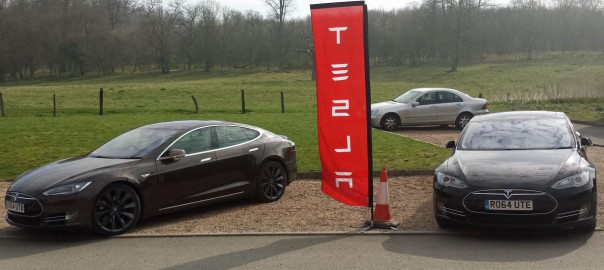
Tesla showroom in Milton Keynes (Image: T. Larkum)

Electric Vehicles and the Future of Oil

Just two percent of all auto sales today are electric. It is estimated that over 3.5 million electric cars are on the road today, and there may be as many as 36 million electric cars by 2025.

By 2040, 30 percent of all new car sales will be electric, according to analysts at IHS Markit. What does this massive increase of electric vehicles mean for the future of oil?

China Matters

The largest disrupter to the future of oil may be coming from China. Elon Musk has big plans in China where electric vehicle sales are three times higher than they are in the United States. Tesla (TSLA – Get Report) has just broken ground on a massive gigafactory that will have capacity to manufacture 500,000 cars per year.

Tesla showroom in Milton Keynes (Image: T. Larkum)
Tesla showroom (Image: T. Larkum)

Since tariffs have driven up the price of importing these vehicles, Tesla will now be able to build locally and bypass tariffs. In addition, BP Ventures just invested in the Chinese electric vehicle (EV) charging start-up PowerShare.

China is targeting sales of more than 7 million EVs by 2025, up from just 350,000 over the last 12 months. By 2030, China will overtake the United States as the largest consumer of oil with net imports reaching 13 million barrels per day, (the U.S. currently consumes about 20 million barrels per day).

Transportation Still Dominates Crude Demand

Global oil demand is forecast to stall within the next decade and the rise of EVs may accelerate the decreased demand. According to the Energy Information Administration, global oil demand is expected to average over 101 million barrels per day in 2019. But growth may have already peaked. The EIA’s estimate is a reduction of about 100,000 from its previous outlook.

The 101 million barrels consists of approximately 80 percent crude oil and 20 percent natural gas liquids. According to EIA, about 55 percent of the crude oil demand is for transportation while 35 percent is for industrial use and the remainder in other categories such as electricity. IHS also estimates that roughly a third of global oil demand is from cars: 40 percent of the growth since 2000 has come from cars. Again, the growth of EVs, especially in China, may greatly affect this number.

Read more: The Street

Could an electric car work for your business?

We meet the businesses who’ve taken the plunge by buying Teslas to deliver goods – and find out how they’ve never looked back since

We hear a lot about electric cars being the future of transport, but it’s easy to forget there are over four million vans on the UK’s roads, delivering vital goods to homes, businesses and institutions up and down the land.

But while the number of electric vans on sale continues to grow, there has been a wider choice of electric cars for some time. Similarly, although early EV vans had limited ranges, often of 100 miles or less, Tesla’s Model S could travel up to a claimed 300 miles from launch in 2012.

Now the likes of the Jaguar I-Pace and Audi e-tron have caught up, but for years if you wanted a large EV with a long range, the Tesla was the only real option.

Small wonder, then, that instead of a van, some forward-thinking business owners saw the financial and environmental advantages a Tesla could offer, and took the plunge. Auto Express met the owners of two such businesses to see how an EV works as a delivery vehicle.

Amore Bakery

For seven years, Amore Bakery has been selling personalised cupcakes on a business-to-business basis from its rural Buckinghamshire HQ. And the company’s in-house delivery service has been a tremendous success for owner, Paulo Benfeito.

“Cupcakes are quite delicate,” he says. “If you use a courier service, they often end up getting damaged on their way to the customer. What sets Amore apart from our competitors is that we deliver all of our goods ourselves.”

But Benfeito wondered if there were a way of streamlining the cost of running the delivery side. So, in 2014, he bought a Tesla Model S to join his conventional diesel delivery van. He admits this sounds extravagant, joking: “Often, when we want something, we tell ourselves we need it.”

Read more: Auto Express

Tesla Model3 (Image: Wikimedia/Carlquinn)

Tesla Model 3 Has Arrived In Europe

It was 6 weeks ago, early December 2018, that European reservation holders were asked to configure their Tesla Model 3’s.

The expectation was deliveries would begin somewhere in second half of the first quarter of 2019, but many were also doubtful of that timeline.

Last week, reservation holders received an invitation to experience the Model 3 at a local showroom. I was one of those reservation holders, and after years of reading and writing about the Model 3, after just sitting in it at the Paris Motor Show, we could not wait for the change to drive it.

Tesla Model3 (Image: Wikimedia/Carlquinn)

A small number of Model 3 Performance cars for test driving were sent ahead of the first shipload of customer Model 3’s that will arrive in early February in Zeebrugge, Belgium. Those cars arriving soon are for those who did not wait and ordered their cars untested, as will be the case for the next 2 or 3 shiploads of cars. (And as many a Wall Street analyst can explain, selling thousands of the highest trim levels sight unseen is clear proof that there is no demand for the Model 3 in Europe, but that is for another article. </sarcasm mode>)

Let us state that it is not fair to have the Long Range Performance with the Premium Upgrade Package for a test drive when your budget would really like a Standard Range basic version. Now, there are serious questions. For example: Is the Standard Range with rear-wheel drive just as sticky to the road as the all-wheel drive? Is the cornering just as effortless as in this Performance model? Is the Performance chill mode comparable to the Standard Range normal mode?

Read more: Clean Technica