Category Archives: Sales

Hyundai and PSA announce trade-in bonuses in Germany

Following in the footsteps of their German competitors and fellow importers, Hyundai and the PSA Group have now also introduced discounts on the purchase of new vehicles in Germany when an old Euro-1 to Euro-4 diesel car is traded in.

In the case of Hyundai, a bonus of between €2,500 and €10,000 is available until the end of 2017 when an older diesel car which conforms to the Euro-1 to Euro-4 emission standards is traded in. The only key condition of the ‘Green Deal’ scheme is that the car to be traded in must have been registered in its owner’s name for at least six months. All petrol and diesel Euro-6 compliant Hyundai cars are eligible for the bonus, including the hybrid version of the Ioniq. However, in an approach which mirrors that taken by other brands such as Ford and Opel, Hyundai’s electric vehicles (EV) – namely the plug-in hybrid and pure electric versions of the Ioniq – are not included in the offer. Nevertheless, these vehicles are of course still entitled to the German electric vehicle incentives, which amount to €3,285 for the Ioniq plug-in-hybrid and €4,380 for the fully electric variant.

The incentives on offer start at €2,500 for a Hyundai i10 and an ix20 and rise to €3,800 and €4,000 respectively for the i20 and Ioniq hybrid. For the Hyundai i30, Tucson and H-1, customers are entitled to a discount of €5,000 on the purchase price and the maximum €10,000 discount is available for buyers of the Hyundai i40 estate and Santa Fe or Grand Santa Fe SUVS. As with most other schemes, the bigger the car the greater the incentive. One additional noteworthy point, however, is that customers who trade in a Euro-4 compliant diesel are, according to the Hyundai press release, entitled to ‘a fair market value for the end-of-life vehicle from the participating Hyundai dealer beyond the promotional premium.’

Markus Schrick, managing director of Hyundai Motor Deutschland GmbH, said in Wednesday’s release that:

‘Environmentally-minded drivers are guaranteed to find the right vehicle at Hyundai. Whether you choose a petrol, diesel or hybrid powertrain. A modern powertrain is part of the DNA of every new Hyundai. And in comparison to many other manufacturers, our customers can top up the campaign bonus with the trade-in payment for their old Euro 4 diesel.’

Read more: Autovista Group

EVs reach best ever market share in July

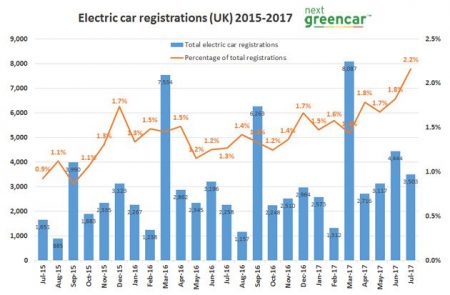
July saw the UK’s electric car market have its best performing month ever, taking a little over a 2% market share for the first time.

Significant growth for both pure electric models and plug-in hybrids combined with an overall decline in sales for the 2% figure to be reached. Pure EVs had an exceptional month, up 105% on July 2016 with 860 models registered. PHEVs still fared well, with a growth of 43% vs last year.

The strong performance of plug-in vehicles contrasts strongly with diesel’s performance, which continues to fall significantly. With 20% fewer sales than last year, the UK’s drop in new car registrations across all fuel types is largely attributable to this. Petrol cars were down 3% too though, and it is only alternatively fuelled cars – including hybrids – that was positive performances.

To date, there have now been more than 107,000 plug-in car grant eligible vehicles registered, 3,277 of those in July 2017. Last month’s figures were 50% up on the year before, and almost 25,000 PiCG-eligible models have been registered so far this year, up around 4,000 units compared to the same period in 2016.

In terms of EV market share, PHEVs had a far stronger month than in recently, with three quarters of plug-in car sales. Total electric car registrations came in at 3,503 for June, which also shows that more than 6% of plug-in car sales were not eligible for the PiCG. Whether that’s because of price or emissions/electric range, we don’t know.

All in all, July was a very positive month for electric cars and further typifies the shift away from diesel in the public consciousness. With recent news pieces about a ban on non-electrified new car sales in the UK from 2040, plus other announcements from manufacturers, it seems as though drivers are looking at plug-in models more than ever before.

Although July’s registrations were the sixth highest figures ever for the UK plug-in car market, the far more important aspect is how many are sold in comparison to conventional internal combustion cars.

July is typically a fairly quiet month for the market, only a little ahead of February and August – the months before the new registration plates – in terms of overall sales. It is encouraging then to see that plug-in cars are actually increasing in popularity while petrol and diesel sales – the latter especially – drop.

Source: Next Green Car

Recent research shows unrivalled value of electric and hybrid cars

Buying a car can be fun but also a little overwhelming. It’s easy to get swept up in choosing makes, models, colours, and added extras for your car. However, in the rush to find something you like in the moment, you can often overlook long-term costs.

There are certain things that you just can’t be sure of. For example, car insurance will vary greatly depending on the type of car you have, your age, your driving history, and numerous other factors. But you can inform yourself of long-term maintenance costs. Choosing the right model could save you a huge amount of money over the lifetime of your car.

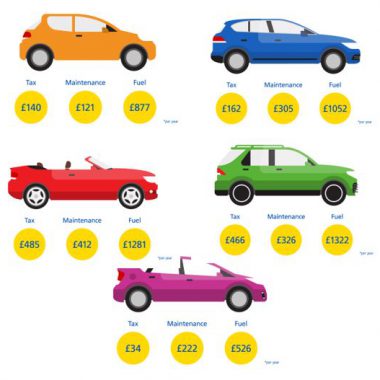
Aviva Insurance recently looked at how much hatchback, estate/saloon, convertible, SUV and electric/hybrid cars cost over their lifetimes. Their research assessed the main expenses of popular models for each category of car in current dealerships.

Stuart Masson from The Car Expert has reviewed each of these models with us to provide some invaluable advice when choosing your next car.

Hatchback

Masson says,

“Hatchbacks are still the most popular type of car sold in the UK, every day, week and month of the year. They are generally very practical and fuel efficient, and relatively inexpensive for servicing and repairs.”

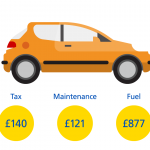
Hatchbacks are the cheapest for maintenance at an average of just £121 annually, however, as with all non-electric vehicles, the cost of fuel can really add up over time.

Estate/Saloon

Estate and saloon cars fared worse than hatchbacks, due to the fact that they’re larger and use more fuel. At an average of £1519 for tax, maintenance and fuel, they’re nearly £400 a year more expensive than their hatchback cousins. Masson adds that

“depreciation is usually worse so you will lose more money over the first few years.”

Convertible

According to Masson,

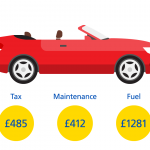
“UK drivers buy more convertibles than anywhere else in the world. But you do pay for the privilege of dropping the top; convertibles cost more than equivalent coupés, and driving at speed with the roof down will seriously affect your fuel consumption.”

Tax is significantly higher than other types of car on the list, and this could increase under new tax rules if the car is worth more than £40,000.

SUV

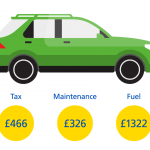
Masson states that buying an SUV for most people is “a case of style over substance.” He states, “most so-called SUVs have little to no off-roading abilities and will never see anything more challenging than a gravel driveway.” As you can see, their costs are very high in each category. Masson says this is because

“they are often based on normal hatchback models, but you are paying more money and getting extra weight, poorer fuel economy and higher levels of pollution, all to enjoy that chunky SUV styling and feel.”

Electric/Hybrid

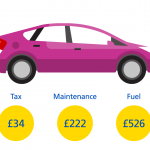
As you can see, the running costs of electric/hybrid cars is unrivalled. The cars Aviva Insurance looked at include both, which means the cost can be lower or higher depending on which car you choose. If you go for an electric model, you won’t have to pay fuel or tax but you will need access to a charging point – which is becoming much easier with thousands being installed across cities like London. In terms of hybrids, Masson says,

“around town, you can use the electric motor for clean, quiet urban driving. And out on the road, you have a petrol engine to give you the range you need.”

The results show that hatchback, hybrid or electric models will save you the most money over the course of your car’s lifetime. However, with recent plans to ban all diesel and petrol cars by 2040, selling non-electric vehicles on may become a challenge.

As a society, we are becoming more and more environmentally and financially conscious, and with that, the future is looking cleaner, greener… and electric.

Research Source: Aviva


Red Tesla Model S (Image: T. Larkum)

All New Vehicles Sold In Europe Will Be Electric From 2035

By 2035 all vehicles sold in Europe will be electric, at least that’s the prediction made by the major Dutch bank ING.

Red Tesla Model S (Image: T. Larkum)

The report predicts a huge increase in the adoption of electric vehicles, potentially overtaking many country’s own regulations which promise to cut out the sale of petrol and diesel cars.

While this is fantastic news for the environment, ING’s report points out that it could potentially have a major impact on the European car industry.

According to ING, America and Japan are well ahead of Europe when it comes to electric car technologies including the development of batteries.

With companies like Tesla already leading the way, the Dutch bank warns that unless European manufacturers pick up the pace of their R&D into the technology they could be left behind.

It goes on to warn about the potential effects on manufacturing as well. Electric cars require a lot of advanced materials, but constructing an electric motor is actually far less complicated than building a conventional combustion engine.

The main catalyst for the rise in popularity though will be a huge reduction in price.

Read more: Huffington Post


Volkswagen Golf GTE (Image: T. Larkum)

The Germans are Coming!

Volkswagen e-Up charging outside the Experience Centre (Image: T. Larkum)

The biggest manufacturers of all-electric cars sold in Europe are Nissan with their Leaf in 1st place in terms of sales (and e-NV200 van in 5th), Tesla with their Model S in 2nd place, and Renault with their ZOE in 3rd place. These manufacturers are, of course, Japanese, American and French respectively. What is interesting is that there is only one German entrant in the top 5, BMW with their i3 at 4th place, despite the fact that German manufacturers dominate the European market for fossil-fuelled cars.

Volkswagen Passat GTE (Image: T. Larkum)

The Germans do make electric cars – Mercedes has the B Class Electric and Volkswagen has the e-Golf and e-Up – but they appear to make no effort to market them. Historically they have also had lacklustre range and high prices. The bottom line is that they haven’t sold in significant numbers.

Volkswagen Passat GTE (Image: T. Larkum)

German Plugin Hybrids (PHEVs)

Instead it seems that German manufacturers have decided that the plugin hybrid (PHEV) combining an electric drivetrain with a conventional petrol engine is what people want. Or at least they see it as an intermediate step towards full electrification. Considering PHEVs, the top 10 sales now include Mercedes with the C350e in 2nd place (after the Mitsubishi Outlander), the BMW 330e in 4th place and the Volkswagen Golf GTE at 6th place.

Volkswagen Passat GTE (Image: T. Larkum)

In fact, Volkswagen has arguably embraced PHEVs more than any other manufacture. They currently offer both of their two biggest selling cars, the Passat and the Golf, in PHEV form as the ‘GTE’. Both of them offer the ability to commute (up to about 20 miles) on electricity with the option of using petrol for longer distances – they also have pretty good 0-60 times too.

Volkswagen Golf GTE (Image: T. Larkum)

VW on the Rise

With these cars in the vanguard, and with the e-Up and newly improved e-Golf to come, Volkswagen may soon make significant inroads into plugin sales in the UK.

Volkswagen Golf GTE (Image: T. Larkum)

These were some of the thoughts that came to me looking at the row of EVs charging outside the Milton Keynes Electric Vehicle Experience Centre (EVEC). Of the eight cars, three were from Volkswagen (so nearly 40%). We ourselves are looking to start offering VW plugins soon, and I’m sure we’ll see VW as an EV brand on the rise from here on.

Volkswagen Golf GTE (Image: T. Larkum)

As ever, if you want to test drive any of the cars mentioned here just get in touch.

f

We can help with a cheap car lease

Cheap Car Lease

Cheap Car Lease

Many people are in the market for a cheap car lease, and that’s something we can help with. We source our cars from around the UK and have negotiated some great deals, so talk to us.

"<yoastmark

We provide all of our cars on a monthly contract so it’s much like a mobile phone tariff. These contracts take two different forms and it’s worth outlining them:

  • Personal Contract Hire (PCH) or Business Contract Hire (BCH). These are straight leases, also known as contract hire. Essentially they are a form of long term rental, and are becoming increasingly popular.
  • Personal Contract Purchase (PCP): this is like a lease. However it has the benefit that at the end of the lease you can choose to keep the car. This is done by making a large one-off or ‘balloon’ payment. A PCP is now the most popular way for people to buy their new car.

Cheap Car Lease – Electric Car

We specialise in selling electric cars. With an electric car you get a new car at a low monthly cost, and it’s also especially cheap to run. The technology of electric cars is developing very fast with new models coming out all the time with longer range and greater performance. Our advice, therefore, is always to expect that you will give the car back at the end of the contract. Then you can upgrade to a new and better model.

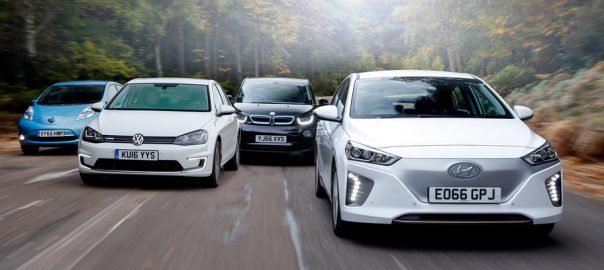
Most popular electric cars on cheap car leases (Image: Fuel Included)

Essentially you don’t want to be in a situation like someone paying off an iPhone 4 contract when everyone else is upgrading to an iPhone 8. That’s why for our purposes you can consider leases and PCP to be equivalent. They are just finance contracts where you get a new car with an initial upfront payment plus a regular monthly payment. The key thing is what the car is costing you per month.

The beauty of electric cars, of course, is that you can save a lot of money each month on fuel and road tax. This can virtually pay for the car, i.e. you can get a new car for free. It’s because of the low ‘fuel’ costs (i.e. charging with electricity) that many of our cars are offered with free charging. Specifically we provide the first 10,000 miles of charging at home for free. This, along with email and telephone support, is the Fuel Included service.

Cheap Car Lease – Saving Money

If you’d like us to work out how much money you can save with a cheap car lease on an electric car, try out the Fuel Included ‘total cost of ownership’ service.

If you just want to see how much an electric car would cost check out our most popular deals below. We provide both fully electric vehicles (EV) and plug-in hybrid vehicles (PHEV):

Electric Cars (Image: Autocar)

Car tax to be scrapped for electric vehicles

Car tax is set to be overhauled this April, so what’s changing?

From 1 April 2017 the way car tax is figured out is set to change for any vehicles registered after this date. The change could be seen as good news for owners of electric or hybrid vehicles.

How will the new tax rates affect me?

While measures are being put in place to curb congestion and reduce air pollution with the investment of millions in congestion-cutting technology, could increasing the number of electric cars on the road be the solution?

The government seems to think so as it is introducing a change to the road tax system.

As it stands all vehicles, except for pedal bicycles, are subject to Vehicle Excise Duty (VED), also known as road tax. It is split into several bands, based on CO2 emissions but as of 1 April, all electric vehicles will move into band A, which means drivers of electric vehicles will no longer pay road tax.

If this news has you thinking electric cars could be for you but aren’t quite sure which kind to buy, it’s worth noting  plug-in hybrids are also exempt, but not pure hybrids. This is because they still produce emissions, and only vehicles that produce either no emissions or emissions less than 100g/km are exempt from VED.

Further changes to the vehicle tax rates will take effect in April. The tax payable on a new vehicle for the first twelve months will be calculated based on its emissions – the higher the emissions, the higher the tax. This only applies to new vehicles registered after 1 April 2017. All vehicles registered between March 2001 and April 2017 will pay tax based on the old rates.

How can I save money on an electric car?

Buying an electric car can be quite expensive – something which will hopefully change as their popularity increases – but the good news is the plug-in vehicle grant has been extended to March 2018. This gives motorists money towards the cost of an electric vehicle, up to 35% of the cost of the vehicle. The maximum amount given is £4,500.

What it means for owners of diesel and petrol vehicles

It may still be expensive to purchase an electric vehicle, but they are expected to become cheaper over time. According to predictions by analysts at Bloomsberg New Energy Finance, the drop in battery costs could result in them being cheaper overall than petrol or diesel models by as early as 2022. Being exempt from VED will certainly contribute to this.

If you’re looking to buy a petrol or diesel vehicle, you could start paying up to £450 per month in tax. New vehicles worth over £40,000 will be taxed at the new rates for the first twelve months, after which, petrol and diesel owners will have to pay an additional rate of up to £310 per month.

Expensive as electric vehicles can be, their owners could potentially save money in the long run. Not only will you no longer have to pay expensive fuel prices, but you may well pay absolutely nothing in road tax and could qualify for the plug-in vehicle grant.

Source: Admiral Insurance

Money Box Live: The Cost of Buying a Car

There was an interesting programme on Radio 4 yesterday, it was Money Box Live on the topic of ‘The Cost of Buying a Car’. It’s well worth a listen – there’s a link below, plus the programme summary below that.

It starts with the impressive statistic that 2.7 million cars were sold in the UK last year. It then explains and discusses the various options for financing a new car, particularly PCP and PCH (lease). Some interesting facts were that 70-80% of sales were on PCP, and that 80% of those who take a PCP give the car back at the end.

There are then brief items on used cars (from 18.5 minutes), and on the poor outlook for diesels.

Finally there is a discussion on electric cars (from 20 minutes), with a contributor from the Next Green Car website covering the benefits and savings of going electric – including the tax changes from 1st April.

Overall an interesting and pretty will balanced programme.

iPlayer Radio – Money Box Live

“Louise Cooper looks at the finances of buying a car. New or used? Finance or cash? Electric or hybrid? What do we really need to know about payment plans, motoring costs, and how to buy safely?

The Society of Motor Manufacturers and Traders (SMMT) reported record sales of new cars in 2016, boosted they say by strong consumer confidence, low-interest finance deals and the launch of several new models. Fleet vehicles accounted for much of the increase with sales to consumers falling for three out of four quarters.

Consumer confidence might be boosting sales but around 86% of private buyers rely on finance agreements to make the purchase, over £18bn was advanced to consumers for new car purchases and a further £13bn for used cars last year say The Finance and Leasing Association. So how does car finance work and how easy is it to compare the actual price of a car with so many different offers, interest rates, deposits and final payments in the mix?

Could you be tempted by the grants and lower mileage costs of running an electric or a hybrid model? Sales of alternatively fuelled vehicles rose by 48.9% in February with 3,308 new registrations. If you’ve switched from petrol or diesel to a low emission car let us know how it compares.

And is it better to buy online, from a dealer or privately? How can you check the history of the car you want to buy?”

Is 2017 THE year of the Electric Car?

Electric Car Sales Boom As UK Vehicle Sales Hit a 12-Year High

The popularity of the electric car has increased exponentially in recent years, with projections of 2 million electric cars shortly on the world’s roads (Guardian, 2016). This in turn has seen many adaptations such as charging points at service stations and even fast-food chains – benefiting those already owning an electric car, as well as attracting those thinking about making the switch. Further evidence of this rise is the news of the record sales of vehicles and a 12 year high in car registrations – which was aided by the surge of purchases in electric vehicles.

January 2017 saw 174,564 cars being registered across the UK, up 2.9 per cent when compared with the previous year, and the highest monthly level since 2005 (Guardian, 2017). The Society of Motor Manufacturers and Traders (SMMT) also announced that electric vehicles took a record share in the sales market. Looking at the underlying figures, it is clear to see how alternative fuel cars are helping with this surge, especially electric cars like the new Nissan Leaf. This increased by a fifth and reached its greatest share of new vehicles registrations at 4.2 per cent, passing its previous 3.6 per cent high of November last year (Guardian, 2017).

“With the fluctuating cost of fuel, it is clear to see why motorists are opting for alternative fuel vehicles, where electricity prices are more stable”

There are a multitude of reasons why electric vehicles are leading the charge and steadily growing in the overall sales market. One of the main reasons, and alluded to earlier with the Nissan Leaf, is that no longer are electric cars a simplistic eyesore, but instead have increased in both style and scope. Drivers are now more attracted to alternative fuel cars as their appearance has evolved to be more like that of standard cars, as well as being cleaner and cheaper to run.

Almost mirroring the persistent rise in the cost of fuel is a further advantage to those thinking about purchasing an electric car: battery costs are down by 65 per cent from prices 5 years ago (CityAM).

As well as being cheaper, cleaner and more environmentally friendly, electric cars outclass internal combustion vehicles on a multitude of levels. Electric cars run more smoothly and have improved acceleration over their fuelled counterparts, as well as having significantly lower maintenance needs, and the scope for manufacturer modifications to be completed via software updates.

With four major world cities now actively moving to ban diesel vehicles by 2025 (BBC, 2016), and London looking increasingly likely to join this, alternative fuel vehicles will certainly continue to grow their share in the market. Major car companies are already altering their strategies to put electric vehicles at the center of their ranges, with Volkswagen planning to invest $11.2 billion over the course of the next decade to make electric cars 25 per cent of its total sales (CityAM, 2016). These latest trends and figures suggest that the sales of electric cars will continue to rise, with Bloomberg New Energy Finance (BNEF) forecasting that the sales of electric vehicles will account for 35 per cent of all new car sales by 2040.

Source: TryMyEV

Electric cars are set to arrive far more speedily than anticipated

Carmakers face short-term pain and long term gain

Electric cars ready for free test drives in Milton Keynes (Image: T. Larkum)

THE high-pitched whirr of an electric car may not stir the soul like the bellow and growl of an internal combustion engine (ICE). But to compensate, electric motors give even the humblest cars explosive acceleration. Electric cars are similarly set for rapid forward thrust.

Improving technology and tightening regulations on emissions from ICEs is about to propel electric vehicles (EVs) from a niche to the mainstream. After more than a century of reliance on fossil fuels, however, the route from petrol power to volts will be a tough one for carmakers to navigate.

The change of gear is recent. One car in a hundred sold today is powered by electricity. The proportion of EVs on the world’s roads is still well below 1%. Most forecasters had reckoned that by 2025 that would rise to around 4%. Those estimates are undergoing a big overhaul as carmakers announce huge expansions in their production of EVs.

Morgan Stanley, a bank, now says that by 2025 EV sales will hit 7m a year and make up 7% of vehicles on the road. Exane BNP Paribas, another bank, reckons that it could be more like 11%. But as carmakers plan for ever more battery power, even these figures could quickly seem too low.

Ford’s boss is bolder still. In January Mark Fields announced that the

“era of the electric vehicle is dawning”

and he reckons that the number of models of EVs will exceed pure ICE-powered cars within 15 years. Ford has promised 13 new electrified cars in the next five years. Others are making bigger commitments. Volkswagen, the world’s biggest carmaker, said last year that it would begin a product blitz in 2020 and launch 30 new battery-powered models by 2025, when EVs will account for up to a quarter of its sales. Daimler, a German rival, also recently set an ambitious target of up to a fifth of sales by the same date.

Read more: The Economist