Category Archives: Sales

Are Electric Vehicles Near a Tipping Point?

Oil consumption continues to rise in the U.S. and around the world, but as electric vehicles keep growing as a percentage of vehicle sales, there will ultimately be a tipping point on multiple fronts.

The first will be manufacturers investing in more EVs to ultimately overtake internal combustion engines, which is happening today from Tesla (NASDAQ: TSLA) to General Motors (NYSE: GM) to Porsche.

The bigger tipping point will be a peak in oil consumption that the world will (likely) never look back from. We don’t know when peak oil will happen, but given the cost reduction of EVs and the focus on reducing emissions around the world, it’s only a matter of time.

EV sales are still booming

There’s no question that Tesla has led the EV revolution the last decade, and it’s helping drive the industry’s growth. According to the website Inside EVs, Tesla has already sold 99,525 Model 3, S, and X vehicles in the U.S. through July 2019, and total U.S. EV sales across all manufacturers were 176,174 thru seven months of 2018, a 14.5% increase from 153,854 a year ago.

Global electric vehicle sales were 1,105,405 in the first six months of this year, a 46.9% jump from 752,690 a year ago. It’s this growth on a global level that’s going to lead to that tipping point.

No matter where you look, EV sales are going up. And in 2020 and 2021, there will be even more options coming to the market from Porsche, Ford, Kia, Mini, and many more.

Read more: Yahoo

The sun sets on drilling (Image: Pexels)

Economics of Electric Vehicles Mean Oil’s Days As A Transport Fuel Are Numbered

The future is not looking bright for oil, according to a new report that claims the commodity would have to be priced at $10-$20 a barrel to remain competitive as a transport fuel.

The new research, from BNP Paribas, says that the economics of renewable energy make it impossible for oil to compete at current prices. The author of the report, global head of sustainability Mark Lewis, says that “renewable electricity has a short-run marginal cost of zero, is cleaner environmentally, much easier to transport and could readily replace up to 40% of global oil demand”.

The oil industry faces a disruption on the same scale as that which has hit the European utilities sector over the last decade, he adds.

The sun sets on drilling (Image: Pexels)

The report, Wells, Wires, And Wheels… Eroci And The Tough Road Ahead For Oil, introduces the concept of the Energy Return on Capital Invested (EROCI), focusing on the energy return on a $100bn outlay on oil and renewables where the energy is being used to power cars and other light-duty vehicles (LDVs).

“For a given capital outlay on oil and renewables, how much useful energy at the wheel do we get? Our analysis indicates that for the same capital outlay today, new wind and solar-energy projects in tandem with battery electric vehicles will produce six to seven times more useful energy at the wheels than will oil at $60 per barrel for gasoline powered light-duty vehicles, and three to four times more than will oil at $60 per barrel for light-duty vehicles running on diesel,” says Lewis.

Read more: Forbes

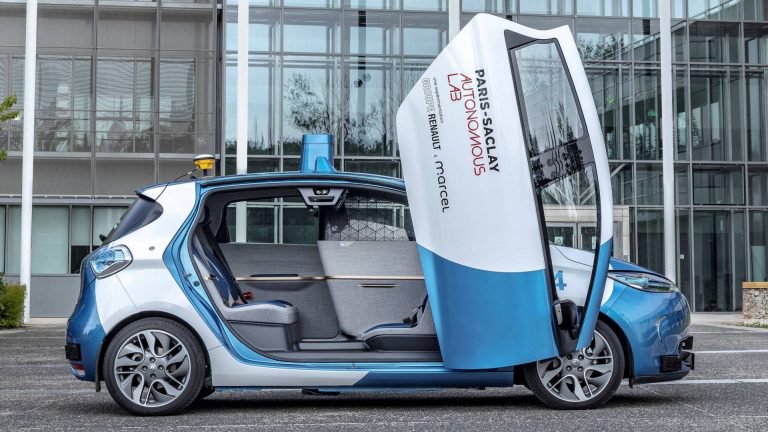
ZOE Cab autonomous vehicle (Image: Renault)

Electric vehicles will forever change how cars look

As automakers race to electrify their model lineups, the competition to stand out has never been greater.

Luckily, thanks to electrification, the opportunities to develop new designs are abundant. But if automakers want to succeed, designers need to seize these new opportunities and start developing the cars of the future.

Car companies have followed the same evolutionary design path for decades. Now, with electric cars, everything is changing quickly.

Without an internal combustion engine and a fuel tank, there are new design possibilities to explore. In most passenger vehicles, there is a large engine under the front hood and a fuel tank that takes up space somewhere under the vehicle. While there is, of course, a need for battery and electric motor placement in EVs, designers are not locked into this traditional framework and are able to package the batteries and motors differently.

ZOE Cab autonomous vehicle (Image: Renault)

When approaching design for this new era, automakers must introduce revolutionary cars, not evolutionary cars.

Automakers have a history of trying to make their electric cars “look like an EV.” For some reason, many thought an electric car needed to look “different” — and the result was often ugly. Historically, both the media and the general public have expressed distaste for electric car designs that stood out because they were electric, as opposed to just being a well-designed vehicle.

Recently, other brands have come along and proven that what people wanted in an electric car was good design without this niche “electric car” flare. There are several premium car brands right now achieving success with classic car designs for their electric models.

But this new look will be more aerodynamic and futuristic. These cars will need less front air intake and won’t need a grill on the front at all, since there is less need for airflow to cool the engine, and the designs will be more efficient in a quest to preserve battery life. There will be fewer big SUVs and more crossovers, sedans and fastbacks. But amongst all of this exterior adaptation, the interior of the car must also evolve.

In the interior, the screen and voice control become the main concerns, due to strong demand for connectivity. Gone are so many of the gauges needed to monitor a gasoline engine. The idea of a driver’s interior as a pilot’s cockpit with hundreds of switches and buttons is gone. More important to the consumer is the screen and the technology it offers. Brand expression will primarily come through user experience and digital design and less through the interior materials.

Read more: CNN

Report: One million EV cars to be sold next year in EU

Up to one million battery electric and plug-in-hybrid vehicles (EVs) are expected to be sold next year in the EU, consolidating the bloc’s position as the world’s second largest electric car market after China.

In 2020, EV sales will equate to around five per cent of total car sales, and around ten per cent by 2021, analysis released today by campaign group Transport and Environment (T&E) has found. That’s up from only around two per cent today.

T&E cites a 2009 law introducing CO2 targets for new cars as the main driver of the sales boom. Car makers can reach the emissions target of 95 g/km by improving the CO2 efficiency of combustion engines; stopping sales of the highest-emitting cars; pooling efforts with other manufacturers of EVs; or boosting sales of EVs.

Most brands have chosen to increase sales of EVs as their strategy for complying with the law, and, after years of limited efforts, are finally preparing to bring to market a large numbers of more fuel efficient and affordable electric cars, T&E says.

Toyota is best placed to comply with the law thanks to its early investment in hybrid technology, which has resulted in non-rechargeable hybrids reaching 56 per cent of its EU sales.

An alliance between Renault and Nissan is the next closest to compliance, in large part due to an early focus on sales of EVs such as the Nissan Leaf and the Renault Zoé, T&E found.

Read more: Business Green

European car sales: EV demand continues to rise as diesel shrinks

Hybrids and EVs see 29% sales boost as European industry sees a return to growth

Europe’s new car market saw a return to growth in July, with new registrations rising 1.2% over the previous year.

Figures released by analysts Jato Dynamics revealed that 1,325,600 models found homes in July, with the increase largely driven by the demand for electric and hybrid cars.

Battery-electric, plug-in hybrid and other electrified vehicles totalled 96,600 units, an increase of 29% over July 2018, but it was pure electric cars that saw the biggest gains. Volume has increased 98% to 23,200 units, with Renault’s Zoe the top-selling model and Tesla the top-selling brand.

“Even if they still makeup a comparatively marginal part of the overall market, electric vehicles are definitely becoming the industry’s bright spot during these challenging times,” JATO global analyst Felipe Munoz explained.

The increased sales helped boost the fuel type’s overall market share from 5.8% to 7.4%. Sales of diesel models continue to fall as the fuel type falls out of favour with customers, holding 31% of the overall market – a 5% drop compared to 2018.

Read more: Autocar

Renault ZOE in contactless car vending machine (Image: Taylor Herring)

UK’s first car vending machine unveiled – and you can pay with your phone

It contains a brand-new Renault Zoe with a “pre-haggled” price of £16,000

Britain’s first contactless car vending machine has been unveiled by Auto Trader, offering motorists a haggle-free way to purchase a new car.

The bespoke vending machine, installed at Spitalfields Market, allows purchases of up to £21,000 via contactless payment using a smartphone.

Renault ZOE in contactless car vending machine (Image: Taylor Herring)

It contains a brand-new Renault Zoe, which is one of the most searched for electric cars in the country, according to Auto Trader.

The vehicle comes with a “pre-haggled” price of £16,000 – down from the recommended retail price of £22,470.

Auto Trader said a team of six engineers spent three months designing and building the automatic car dispenser.

Read more: Mirror

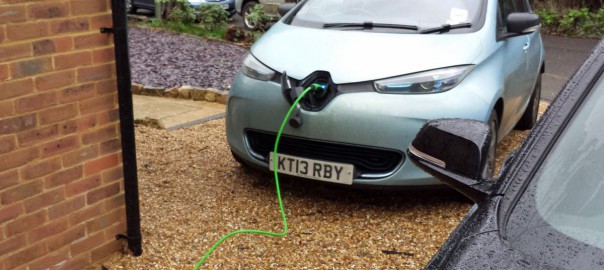
Figure 4: Charging on Christmas Day (Image: T. Larkum)

UK electric vehicle development: rising investment, concerns over Brexit

As the UK government announces a range of schemes investing in UK electric vehicle development, concern has grown over the post-Brexit future of the industry.

Last week the government launched a consultation on proposals to compel all newly built houses in the UK to be fitted with a chargepoint for electric vehicles, a legislative world first aimed at supporting UK electric vehicle development and uptake of electric mobility. The proposal follows the implementation of a government scheme offering homeowners a £500 (€555.71) grant to cover the cost of installing a chargepoint at their home.

Figure 4: Charging on Christmas Day (Image: T. Larkum)
Charging my ZOE (Image: T. Larkum)

Separately, the government has announced the deployment of £80m (€88.91m) through its Industrial Strategy to support UK electric vehicle development and innovation. In addition to supporting new research and development in on-road electric vehicles, the funding will go towards exploring potential development of a hybrid-powered aircraft. Business Secretary Greg Clark said:

“Building on our Faraday Battery Challenge and Battery Industrialisation Centre this co-investment from Government and industry is a key part of our modern Industrial Strategy, building on our strengths and helping to create the next generation of net zero technologies that will transform entire industries. The UK leads the world on combatting climate change and is the first major economy to legislate for net zero.”

The UK’s e-mobility industry is growing exponentially, with projected growth of more than 200% in the next three years. However, analysis by sustainable transport body Transport & Environment published this week highlights concerns over whether the growth of UK electric vehicle development can be maintained once the UK has left the EU. Greg Archer, Transport Environment’s UK Director, said:

“Thanks to new EU rules, a wave of new, longer range, and more affordable electric cars will be on sale across Europe. But if the UK leaves the EU with no deal it will no longer be part of these rules and the cars sold in the UK won’t count towards meeting the carmakers’ targets. As a result, cars simply won’t be made available in large numbers in the UK, slowing progress in the shift to zero emissions cars here.”

Read more: Government Europa

West Sussex Council Fleet Goes Electric With Renault ZOE (Image: Renault)

Demand for used EVs is strengthening residuals

Residual values for used electric vehicles (EVs) are growing as demand for zero-emission vehicles ramps up.

Shoreham Vehicle Auctions says the UK has reached a “tipping point of acceptance”.

The electric van market is growing with low mileage business users accepting the benefit of running a used van with very low running costs.

SVA’s managing director Alex Wright said the secret is the education given to dealers and consumers about the features and benefits of an ever-growing range of new and used cars now available.

West Sussex Council Fleet Goes Electric With Renault ZOE (Image: Renault)

“EVs need a used market that is alive and prospering. That’s why we have seen greater acceptance during 2018 and into 2019 which has boosted residuals.

“Companies have worked hard on education, including the SVA team’s training courses run in partnership with the Energy Saving Trust,” explained Wright.

“Leasing companies and finance companies can now underwrite EVs confident of a vehicle’s value in three-to-four years’ time which makes monthly rentals more competitive for companies and drivers alike.

“The next step is for the charging infrastructure to respond to market needs and provide a more reliable joined-up network of chargers across the country,” he added.

Wright cites the Nissan Leaf as a recent example of how the used market has changed. In 2017, a 2015 Nissan Leaf 6.6KW Acenta with 20,000 miles on the clock booked at £8,850. In 2019, a 2017 Nissan Leaf 6.6KW Acenta with the same mileage is booking at £11,000, a rise of £2,150.

Read more: FleetNews

Demand for pure electric vehicles soars in ‘worst July’ for new car sales since 2012

New car registrations were down 4.1 per cent last month, making it the worst July for new car sales since 2012, figures show.

In total, 157,198 new cars were registered in July, 6,700 fewer than the same month last year, according to data from the Society of Motor Manufacturers and Traders (SMMT).

The motor industry trade association said political and economic uncertainty, and confusion over future government policy on different fuel types, continued to knock consumer confidence.

Registrations of diesel vehicles fell for the 28th month, from 52,157 in July 2018 to 40,651 in July 2019.

Petrol registrations remained pretty much stable, with 2,646 more registrations than in July last year.

Sales of pure electric vehicles – those powered by battery – almost tripled, with 2,271 last month compared to 880 in July 2018.

Demand for hybrid electric cars also increased by 34 per cent, with 7,758 joining UK roads.

However, registrations of plug-in hybrid electric vehicles continued their recent decline, falling almost 50 per cent year-on-year, after the government grant for these cars was axed late last year.

Mike Hawes, chief executive of the SMMT, said: “Despite yet another month of decline in the new car market, it’s encouraging to see substantial growth in zero emission vehicles. Thanks to manufacturers’ investment in these new technologies over many years, these cars are coming to market in greater numbers than ever before.

“If the UK is to meet its environmental ambitions, however, government must create the right conditions to drive uptake, including long-term incentives and investment in infrastructure.”

Read more: YourMoney

Cheap Motoring

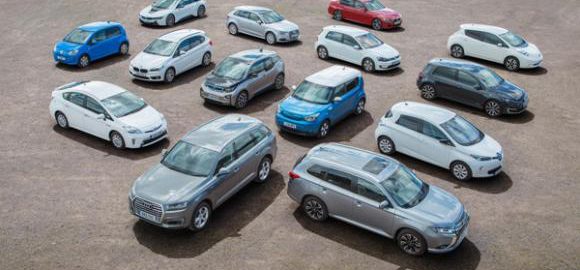
Electric car models to triple in Europe by 2021

The number of electric car models available to consumers in Europe is expected to triple by 2021, says a European environmental lobby group.

The uptake of electric cars has been stalling, blamed on a lack of charging infrastructure and higher prices.

Latest data shows carmakers will offer 214 electric car models in 2021, up from 60 models at the end of 2018.

More affordable options could see consumers switch from petrol and diesel cars sooner than anticipated.

Analysis by the European Federation for Transport and Environment (T&E), based on data by research firm IHS Markit, suggests that car manufacturers are now ready to embrace car electrification.

Cheap Motoring

In 2021, carmakers are forecast to bring 92 fully electric models and 118 plug-in hybrid models to market.

If they stick to these plans, 22% of vehicles produced could have a plug by 2025, which would enable manufacturers to easily meet the EU’s car CO2 emissions target of 95g/km by 2025.

The biggest electric car production plants will be in Germany, France, Spain and Italy, the data shows. Some 16 large-scale lithium-ion battery cell plants are confirmed or due to begin operations in Europe by 2023.

“Thanks to the EU car CO2 standards, Europe is about to see a wave of new, longer range, and more affordable electric cars hit the market,” said Lucien Mathieu, a transport and e-mobility analyst at T&E.

“That is good news, but the job is not yet done. We need governments to help roll out electric vehicle charging at home and at work, and we need changes to car taxation to make electric cars even more attractive than polluting diesel, petrol or poor plug-in hybrid vehicles.”

Read more: BBC