Category Archives: Electric Cars

News and reviews of the latest electric cars (full electrics and plug-in hybrids).

BMW to invest more than £600 million in UK EV MINI factories with £75 million gov support

BMW Group has announced that it plans to invest more than £600 million in its Oxford and Swindon MINI factories to develop a “new generation of electric MINIs”.

With the ban on Internal Combustion Engine (ICE) car sales coming into force in 2030, many car manufacturers are preparing for the transition, and BMW says that by 2030, production at its UK factories will be exclusively electric.

BMW says it is gearing up to build two new all-electric models of MINI from 2026: the MINI Cooper 3-door and the compact MINI Aceman. By 2030, BMW says it will have spent over £3 billion on its Swindon, Hams Hall and Oxford plants since 2000.


Citroen Ami (Source: uk-mediacitroen.com)

BMW says the development of its UK plants “has been supported by the UK Government”. The Financial Times reported that “The investment by the German carmaker at the site in Cowley will be backed by about £75 million of taxpayer funds, according to people familiar with the matter.”

The Oxford MINI plant has also recently celebrated its 110th anniversary this year, and has been producing the MINI Electric since 2019.

Prime Minister Rishi Sunak hailed the announcement, saying it was a “major vote of confidence in our car sector”.

Business and Trade Secretary Kemi Badenoch said, “This decision is a big vote of confidence in the UK economy and the work of this Government to ensure the continued strength of our world-leading automotive sector.

Read more: Current+

It’s Time to Go Green!

If you would like to know more about Solar Panels and the PowerBanx range of home battery systems, and get a free instant quote, please complete our online form:

10 Myths About Electric Cars That Owners Know Aren’t True


10 Myths About Electric Cars That Owners Know Aren’t True

Are electric cars going to ruin driving for everyone? If there’s one thing we all know, it’s that people don’t like change. Electric vehicles are an enormous change for the automotive world. EVs have been criticized, questioned, and insulted at every turn, yet the world is moving toward them and away from traditional ICE vehicles.

Why are electric cars criticized and questioned as much as they are? Consider the first person to drive a horseless carriage. Everyone around them still had horses to pull the wagons and get them where they needed to go. Were those with horses jealous of the person who didn’t need to feed and brush their method of transportation? Perhaps.

1EVs Don’t Have Enough Range

The U.S. Department of Transportation reports that the average American drives 40 miles per day. Some people commute much further in one direction, while others stay at home and don’t have to drive anywhere every day. Most electric cars provide ample driving range to handle the daily commute and much more.


Common EVs Driving Range

Nissan Leaf 150 Miles
Hyundai Kona EV 258 Miles
Chevrolet Bolt EV 259 Miles
Tesla Model 3 310 Miles
Tesla Model S 335 Miles

Electric vehicle skeptics might have a point when it comes to road trips. It’s difficult to complete a road trip, especially if the destination is key, when driving an EV.

Read more: TopSpeed

It’s Time to Go Green!

If you would like to know more about Solar Panels and the PowerBanx range of home battery systems, and get a free instant quote, please complete our online form:

How long does it take to charge an electric car?

The time taken to charge an electric car can vary from as little as 20 minutes to as much as 24 hours. Here’s why…

With almost one-in-five new cars being fully electric, more drivers will be learning about charging electric cars for the first time. And alongside how much charging an electric car cost and how to use a charging point, they’ll likely be considering the time it takes to charge.

The two biggest factors in how long it’ll take to charge your electric car are the size of the battery, and the speed at which your car can charge. For example, an electric car with a small battery and a fast charging speed will charge a lot faster than one with a large battery and a slow charging speed. We’ll go into both of those factors in more depth in this story, as well as looking at the different types of electric car chargers and answering your electric car charger questions.

Types of electric car chargers

The speed at which you can charge your electric car can be governed by the type of charger you’re using. Charging at home using a three-pin plug is the slowest method, typically taking around 24hrs to replenish the battery on your car. Doing so is therefore impractical for many electric car owners, although it can be doable if you own a plug-in hybrid car.

Read more: WhatCar

It’s Time to Go Green!

If you would like to know more about Solar Panels and the PowerBanx range of home battery systems, and get a free instant quote, please complete our online form:
UK’s largest electric vehicle charging hub opens in Birmingham

Up to 180 vehicles can be charged at any one time in as little as 15 minutes at the just-opened Gigahub

The UK’s largest electric vehicle charging hub has opened at Birmingham’s NEC conference centre with the power to charge up to 180 vehicles at a time in as little as 15 minutes.

The multimillion-pound site will provide the UK’s highest concentration of super-fast chargers in one location after the biggest-ever private investment in Britain’s charging infrastructure.

The hub offers motorists in the West Midlands 150 seven-kilowatt AC charging bays and a further 30 superfast, 300kW DC charging bays, which can be used to charge up a typical passenger vehicle in about 15 minutes.

The charging zone is located on the outskirts of Birmingham at the hub of the UK motorway network, with access to the M42, M6 and A45 and what will eventually become the new HS2 rail station.

The site was officially opened on Thursday by the chancellor, Jeremy Hunt. He said the “groundbreaking” investment marked “a significant step in our rollout of electric vehicle charging infrastructure across the country”.

“This is the biggest private investment in electric charging in the UK and is a huge vote of confidence in Britain’s role as a leader in green industries,” Hunt said.

Andrew Cole, a director at the NEC Group, said the conference centre’s campus, which has 7 million visitors a year, could now charge about 1,000 electric cars in every 12-hour day.

Read more: TheGuardian

It’s Time to Go Green!

If you would like to know more about Solar Panels and the PowerBanx range of home battery systems, and get a free instant quote, please complete our online form:

‘One in five new cars turn electric in August’

The number of electric cars registered in August skyrocketed by 77% compared to the same month in 2022, according to a report

New industry figures show that one-in-five new cars registered in the UK in August were fully electric, representing the strongest month for electric vehicle (EV) registrations in 2023.

According to data from New AutoMotive, the number of electric cars registered in August 2023 surged by 77% compared to the same month in the previous year.

Electric vans also saw growth, comprising 8% of new van registrations.

In the meantime, registrations of both petrol and diesel cars are now at historic lows, with registrations of both accounting for the smallest share of new cars in any twelve-month period for the last 20 years.

Ben Nelmes, Chief Executive of New AutoMotive, said: “It is great to see British motorists embracing clean cars in their thousands. Despite an unprecedented cost of living crisis and rising interest rates, demand for electric cars has remained surprisingly resilient.


“The government should build on this progress by putting in place a strong California-style Zero Emissions Vehicle Mandate to give car companies and EV charger installers certainty.”

Commenting on the report, Greenpeace UK‘s Policy Director Doug Parr said: “Electric cars are selling like hot cakes. However, with the government deciding to ‘side with motorists’, while pursuing an anti-green agenda, you have to wonder if ministers are foolishly ignoring these soaring sales and instead listening to the vested interests attempting to park EVs’ growth.

Read more: EnergyLiveNews

It’s Time to Go Green!

If you would like to know more about Solar Panels and the PowerBanx range of home battery systems, and get a free instant quote, please complete our online form:

Nissan is reusing batteries from old Leaf EVs to make portable power sources

32-pound power source sells for $1,170 in Japan

YOKOHAMA, Japan — Batteries in older Nissan Leaf electric vehicles are getting a new life as portable power sources that can be used to run gadgets on the go or deliver emergency power in disasters.

Japanese automaker Nissan Motor Co. has sold more than 650,000 Leaf EVs. Their batteries often retain a charging capacity longer than the car’s life span.

Nissan says it is using the old batteries in portable power sources it developed with electronics maker JVCKenwood Corp. and 4R Energy Corp., a company co-owned by Nissan and Sumitomo Corp. which works on ecological vehicles and power storage systems.


Nissan Leaf (Image: Qurren/Wikipedia)

The 14.4-kilogram (32-pound) power source sells for 170,500 yen ($1,170) in Japan. Overseas sales are not yet set.

Each Leaf uses 48 battery modules. The portable power stations contain two modules.

Nissan officials said they are testing the batteries in Leafs after their owners stop driving them, and reusing those that can still hold a charge.

EV batteries use expensive rare metals and other raw materials, and their manufacture produces carbon gases, so reusing them for other purposes helps sustainability.

Balakumar Balasingam, an associate professor of electrical and computer engineering at the University of Windsor who isn’t involved in the Nissan project, said batteries can no longer be used to drive electric cars when their charge capacity declines to about 80%, but can still be used for other purposes.

Read more: autoblog

It’s Time to Go Green!

If you would like to know more about Solar Panels and the PowerBanx range of home battery systems, and get a free instant quote, please complete our online form:

Nissan Turns the Townstar EV Into a Capable Camper With a Roof Tent and Tailgate Kitchen

With the global electrification efforts and more electric vehicles on the market than ever before, vanlifers seem to also be interested in jumping on the EV bandwagon. While all-electric van manufacturers are mainly competing in the last-mile delivery industry, this new generation of vans has great potential to be used as a platform for electric camper vans as well.

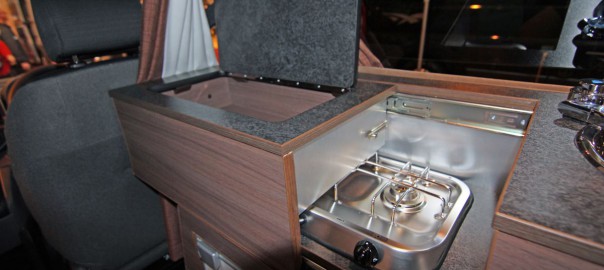
Nissan is showcasing the potential of its all-electric Nissan Townstar EV station wagon as a camping rig at the ongoing 2023 Caravan Salon in Düsseldorf, Germany. The carmaker has outfitted the light commercial vehicle with a high-popping rooftop tent and a tailgate kitchen unit, turning it into a practical camper, ideal for weekend getaways and holiday breaks.

Those who follow the e-camper van market might remember Nissan’s e-NV200, the world’s first electric camper van. That model was retired in 2021 and replaced by the Townstar EV. Considering the popular e-NV200 van regularly topped the European sales charts while it was in production, the Nissan Townstar EV has quite the reputation to uphold.


View through the rear doors (Image: T. Larkum)

This is the first time the emission-free vehicle has undergone a professional campervan conversion, but Nissan hasn’t presented it as a full-fledged camper van product but rather as a preview of how the Townstar could be turned into a compelling e-mini-camper. Also, as a sneak peek into the future of sustainable family travel.

Read more: autoevolution

It’s Time to Go Green!

If you would like to know more about Solar Panels and the PowerBanx range of home battery systems, and get a free instant quote, please complete our online form:

Hundreds more rapid charging points installed in UK to help drivers go electric

Fast charging stations that allow for longer journeys are being added in regions beyond London

Charging companies are plugging the gaps in the UK’s high-speed charger network, with hundreds added this year outside London in a shift that will help end the “range anxiety” that holds back some would-be electric car buyers.

The capital and the south-east still have far more chargers of all speeds – ranging from slow to rapid and ultra-rapid – than the rest of the country. But the presence of high-speed chargers, generally used for quick recharging on longer journeys, is increasing in other regions as electric car sales surge.

The UK’s electric vehicle drive has put the energy sector on the road to change

The West Midlands, east Midlands, the south-west of England and Wales all installed more rapid or ultra-rapid chargers than London during the past year, and their networks have grown more rapidly than the south-east of England, according to data from ZapMap, which maps UK public charging points.

Nine out of 12 regions of the UK installed more than 100 rapid chargers during the past year, ZapMap’s data showed.

Long journeys are relatively rare occurrences for most households, but perceived difficulties in finding chargers for the occasional long drive – such as the 14m trips expected over the August bank holiday weekend – have been one factor putting people off electric cars.

Read more: TheGuardian

It’s Time to Go Green!

If you would like to know more about Solar Panels and the PowerBanx range of home battery systems, and get a free instant quote, please complete our online form:

2030 UK petrol and diesel car ban: will it be delayed?

From 2030 drivers won’t be able to buy new cars powered solely by petrol or diesel, but what does this mean for you and could the ban be delayed?…

Under current Government plans, the sale of new cars powered solely by petrol and diesel will be banned from 2030. The move, announced in 2020, is intended to encourage more drivers to choose electric cars, and reduce emissions from vehicles across the UK.

Hybrid cars which can travel ‘significant’ distances on electric power alone will remain on sale until 2035, when it is expected that they too will be banned in favour of fully electric cars. The Government has yet to define what qualifies as ‘significant’.

According to official figures, electric cars currently account for around 16% of new car sales, with hybrids accounting for about 12% and plug-in hybrids 7%. Combined, that means such cars have accounted for more than a third of sales.

It’s important to note that only new car and van sales will be affected by the ban – you’ll still be able to buy used cars and vans powered solely by petrol or diesel.

In this story, we’ll cover the details of the proposed ban, including how it came about, how it affects car buyers, and whether you should still consider buying a new petrol or diesel car in 2023.

Read more: WhatCar


It’s Time to Go Green!

If you would like to know more about Solar Panels and the PowerBanx range of home battery systems, and get a free instant quote, please complete our online form:

Charging Hub with eVolt Rapid Chargers (Image: SWARCO eVolt)

Electric car charging costs

The impending ban on the sale of brand new petrol and diesel-powered cars due in 2030 may already have you thinking about switching to an electric vehicle (EV) or plug-in hybrid (PHEV) in the near future. But how much do EVs cost to charge in the UK and how much could you save by making the switch to an electric car now?

There are many ways to charge an electric car and the cost will vary depending on your choice of energy provider and your tariff. Other influencing factors on EV charging costs include the speed and power of the charger, and the size of the vehicle’s battery. Here, we take a look at how much it’ll cost you to charge an electric car, plus we delve a little deeper into whether or not it’s cheaper to run an EV than it is a petrol or diesel car.


Group sales of BMW i, BMW iPerformance, and Mini electric have seen dramatic growth

Charging an electric car at home: three-pin plug

While not recommended as such, you can charge your electric car with a conventional three-pin plug at home. It will take a long time because the power from a domestic wall socket is relatively low, so it’s best reserved for emergency charging away from home, and for cars with reasonably modest battery sizes.

The average home electricity rate costs around 30p per kWh (as of August 2023), meaning it would cost you roughly £12 and take 16-17 hours to charge a Nissan Leaf with its 40kWh battery.

Read more: FutureCar

It’s Time to Go Green!

If you would like to know more about Solar Panels and the PowerBanx range of home battery systems, and get a free instant quote, please complete our online form: