Category Archives: Electric Cars

News and reviews of the latest electric cars (full electrics and plug-in hybrids).

BMW i3 120Ah (Image: BMW Group)

BMW abandons the i3, the car that could have birthed a bright electric future

BMW’s forsaken i3 was exceptional, underwhelming, and far too ahead of its time.

The BMW i3 has reached the end of the line. Two weeks ago, BMW confirmed that this is the last month the company will be making its quirky and often misunderstood electric vehicle for US customers. In doing so, the automaker acknowledged what many EV owners, enthusiasts, and observers have long believed: the company, which was once lauded as a leader in electrification, has squandered the last eight years.

I don’t say this lightly or without experience—I owned a 2014 BMW i3 for nearly five years. It was my first electric vehicle, and I loved it. Sometimes, I wish I hadn’t sold it. Other times, I’m glad I did. It wasn’t perfect, but it was unique and fun to drive, and it felt years ahead of its time.

The i3 was a polarizing car. Its upright, narrow body rolled on skinny tires, and its layered design was loved or loathed, depending on the customer. But no matter how you feel about the i3, it was a car made by a company with a clear vision of the future, pursued with tenacity and purpose. BMW pitched the i3 as the foundation of an entirely new line, and BMW could have seriously iterated on the design. There was talk in the early days of how easy it would be to simply drop a new carbon-fiber reinforced plastic body onto the brilliantly engineered aluminum chassis, creating a suite of models that would explore a wide range of electrified mobility.

BMW i3 120Ah (Image: BMW Group)

But then BMW wavered and abandoned the i3 platform as an evolutionary dead end.

Come August, BMW won’t have a single EV for sale in the US market until next summer’s arrival of the i4, a conservative sedan based on a compromise platform that shares little of the clarity of purpose that defined the i3. The i4 may be a good car, or even a great one, but its late entry to a crowded field underlines just how much time BMW has wasted.

A car from the future
I still remember the first time I saw an i3 in real life. It was at the Boston auto show—a third-tier event—and even there, crowded among the other gleaming BMWs, it stood out. I didn’t immediately fall for its tall, rounded box exterior, but I did swoon over its interior. Here, available for purchase, was a concept car. The front doors swung wide, revealing suicide doors that made the rear seat surprisingly accessible. After I stepped over the carbon-fiber door sill and slid into the front seats, which were swathed in wool fabric and olive-tanned leather, my eyes were drawn to the wide infotainment screen floating over a curving swath of eucalyptus wood.

I had read about this car, but I wasn’t prepared for the impression it made in person.

Months later, over a bowl of cereal, I decided to buy an EV. I didn’t have the i3 in mind at first, but it quickly became a front-runner. This was February 2015, and most EVs at the time were short-range affairs. What made the i3 stand out was its range extender, a safety blanket that helped ease me into the idea of buying an EV as our household’s only car. BMW also offered something called the “Flexible Mobility Program,” which loaned fossil fuel-powered BMWs to i3 owners who needed to venture farther afield. Those features, plus a hefty discount and the appeal of driving a car from the future, sold me on it.

The car turned heads for the first year I owned it. Pedestrians would gape as I slipped silently by, and other drivers would pepper me with questions at stoplights. I grew addicted to its instant torque and the way it flipped my stomach when I punched the accelerator. If I saw an opening in traffic, I would picture myself in it and—boom—there I was. It wasn’t a Tesla Model S, but it was fast and responsive. Being rear-wheel drive, the i3 handled well around town, and it had an enviable turning radius. Parallel parking in the city was a breeze. The skinny tires made it dart a bit on highways, but I never found that issue problematic.

When BMW was designing the car, the range extender made sense. Lithium-ion batteries cost in the neighborhood of $1,300 per kWh, and most people drive around 30 miles per day or less, so at the time, it made sense to extend the range not by adding batteries but by adding an occasionally used internal combustion engine (ICE). BMW decided the car would operate best as a series hybrid with the engine only charging the battery, never driving the wheels. The company reached deep into its parts catalog, pulled out a 647 cc scooter engine, and tweaked it until it met automotive emissions standards.

The result was less than perfect. In the US, to meet California regulations for range-extended electric vehicles, the ICE only kicked in when the battery’s state of charge dropped below 6 percent. That’s fine if you’re cruising on flat terrain, but climbing mountains meant the range extender couldn’t keep up with demand, and the car quickly slipped into turtle mode.

Read more: ars TECHNICA

It’s Time to Go Green!

If you would like to know more about Solar Panels and the PowerBanx range of home battery systems, and get a free instant quote, please complete our online form:

Renault ZOE Van (Image: Renault)

Renault Zoe review: compact EV trapped in no-man’s land

The Zoe’s size, range and price put this competent hatchback in a tricky position

There’s an advert on TV right now that shows four friends laughing and having a great time as they glide around in a Renault Zoe. The tagline is “room for everyone”.

Now, unless everyone is a contortionist, I’ve got an issue with that. The Zoe has many qualities but spaciousness is not one of them and it seems a strange thing to focus on.

Like most superminis you’ll just about fit two average sized adults and a couple of small kids into the Zoe but four adults will struggle, and they certainly won’t be smiling.

Personally, if I was Renault, I’d be making more of the fact that this is an EV that sits somewhere between a city car and a supermini but offers the kind of usable range usually reserved for far larger family vehicles – up to 238 miles on a charge.

In fact, if you’re really, really careful you can do some ridiculous distances in a Zoe. A team of volunteers from the Mission Motorsport charity managed to eke an unbelievable 475 from a single charge in a completely standard Zoe recently.

Renault ZOE Van (Image: Renault)

There’s an argument that if you’re using an EV for short urban journeys, you don’t need to worry about a huge range but that forgets the millions of people who can’t simply plug in and charge overnight. I’ll admit that it’s not a worry for everyone but for those in flats or terraced houses, a range of 240+ miles means far fewer trips to a public charging station than in other similar sized cars.

It also means that drivers who cover larger distances but don’t want or need a big family vehicle can opt for a compact EV capable of long drives.

The Zoe was once the only real option when it came to smaller EVs but now it finds itself surrounded by rivals ranging from the Fiat 500 and Honda e to the Vauxhall Corsa-e and Peugeot e-208. Yet in Z.E. 50 guise it still has the advantage over them in terms of range. The Vauxhall and Peugeot both offer just over 200 miles while the Fiat, Honda and Mini Electric offer between 135 and 199 miles on a charge.

In terms of range anxiety that plays into the Renault’s favour but the downside is that the big 52kWh battery means it’s priced closer to the Corsa and 208 while feeling more like the cheaper Mini or Fiat in terms of size and practicality.

Straddling the middle ground does give the Zoe some advantages. For a start, it feels as nimble and responsive as you’d want from a city car. It’s compact enough to dart confidently around the urban jungle, backed by the instant zip from its 132bhp motor.

But it rides better than most city cars and feels more confident on open roads where a combination of good body control, stability and impressive refinement mean it feels like its larger rivals.

Read more: CarrickTimes

It’s Time to Go Green!

If you would like to know more about Solar Panels and the PowerBanx range of home battery systems, and get a free instant quote, please complete our online form:

Mercedes eVito electric van (Image: DPD)

EV tire trial to reduce air and microplastic pollution in London

DPD is joining forces with the electric vehicle tire developer Enso to conduct full road trials of a new commercial EV tire design, specified to reduce air and microplastic pollution.

The trial is a part of Transport for London’s FreightLab Innovation Challenge, which is backed by the Mayor of London.

As tires wear, they emit more air pollution than tailpipes. In addition, tire particulate matter pollution makes up 28% of all primary ocean microplastics. The increased weight and torque of EVs increase tire wear, meaning that electric vehicles often emit more tire particulate matter than ICE vehicles.

Enso, headquartered in London, has developed a new tire that increases EV range on a single charge while reducing air and microplastic tire PM pollution.

Mercedes eVito electric van (Image: DPD)

This range-extending, pollution-reducing design recently broke a world hypermiling record, achieving the longest distance ever driven by a Renault Zoe on a single charge (achieving 764km on June 10 at Thruxton Race Circuit in the UK), in partnership with Mission Motorsport, the UK Armed Forces’ motorsport charity.

During the trial with DPD, Enso will compare its tire design with industry benchmarks on a fleet of DPD’s Nissan e-NV200 vans over a nine-month period, measuring improvements in energy efficiency and tire durability.

“Rather than just simply buying EVs, our whole approach to sustainability is about joining the dots and working with like-minded innovators to help solve the big challenges like air pollution,” said DPD’s head of CSR, Olly Craughan. “Through our involvement in London FreightLab we got to know Enso and understand their vision. While EVs are the future, unless we also solve the problem of tire particulate matter pollution, we aren’t really unlocking their full potential.”

Read more: tire TECHNOLOGY INTERNATIONAL

It’s Time to Go Green!

If you would like to know more about Solar Panels and the PowerBanx range of home battery systems, and get a free instant quote, please complete our online form:

Ford Mustang Mach-E (Image: Ford.co.uk)

Ford Mustang Mach-E sets world record for EV efficiency

Team completes 840-mile route in electric performance SUV, stopping for just 45 minutes to charge

The new Ford Mustang Mach-E has set a Guinness World Record for efficiency in an electric car, averaging 6.54 miles per kWh on an 840-mile route between John o’ Groats and Land’s End.

The electric performance SUV was driven by BBC transport correspondent Paul Clifton and Fergal McGrath and Kevin Brooker, who already hold petrol and diesel efficiency records between them.

Setting off on 3 July and driving through the night to avoid congestion, the trio completed the trip in 27 hours at an average speed of around 31mph. Remarkably, they stopped only twice to charge: first at a MFG EV Power station in Wigan, Lancashire, and a second time in Cullompton, Devon. The two stops amounted to just 45 minutes spent plugged in.

Ford Mustang Mach-E (Image: Ford.co.uk)

“This record is about demonstrating that electric cars are now viable for everyone,” said the team, reflecting on their efforts. “Not just for short urban trips to work or the shops or as a second car, but for real-world use on long cross-country journeys. We’ve proved that, with this car, the tipping point has been reached.

“The Ford Mustang Mach-E’s range and efficiency make it an everyday car for tackling unpredictable journey patterns. We did a full day’s testing totalling 250 miles and still had 45% battery charge on our return.”

Range anxiety is often listed among drivers’ biggest concerns when it comes to switching from internal-combustion-engined cars to EVs.

This latest feat follows the exploits of the Renault Zoe, which recently hit 425 miles of range (180 miles more than its official WLTP figure) in a record attempt organised by Mission Motorsport at Thruxton race circuit.

Read more: AUTOCAR

It’s Time to Go Green!

If you would like to know more about Solar Panels and the PowerBanx range of home battery systems, and get a free instant quote, please complete our online form:

Dacia Spring 2021 (Image: Dacia.co.uk)

Rising oil price may speed shift to electric vehicles, says energy watchdog

IEA analysis offers hope for climate action but says inflated oil price may slow global economic recovery from Covid-19

Rising oil prices could help speed climate action by accelerating the shift to electric vehicles, but would come at the expense of the economic recovery from the Covid-19 pandemic, according to the global energy watchdog.

The world’s demand for crude surged by an average of 3.2m barrels a day (b/d) in June compared with the previous month but the return of oil production has failed to keep pace, triggering a steady rise in market prices.

The International Energy Agency (IEA) warned that oil prices, which climbed by two-thirds this year to highs of $77 a barrel earlier this month, could climb higher and lead to market volatility unless big oil producers pump more barrels.

Dacia Spring 2021 (Image: Dacia.co.uk)

“While prices at these levels could increase the pace of electrification of the transport sector and help accelerate energy transitions, they could also put a drag on the economic recovery, particularly in emerging and developing countries,” the IEA said.

US drivers are already facing record high prices to fill up their tanks due to rising oil market prices. The price per gallon reached an all-time high of $3.14 on Monday, and analysts have warned that the price could climb to $5 a gallon.

As a result, the cheaper price of running an electric vehicle may encourage more motorists to make the switch sooner than planned, boosting efforts to cut emissions from transport. But higher fuel prices could also stoke cost inflation across the global economy, particularly in developing countries.

Read more: The Guardian

It’s Time to Go Green!

If you would like to know more about Solar Panels and the PowerBanx range of home battery systems, and get a free instant quote, please complete our online form:

Solar + storage could provide 80% of annual EV power needs

A new EUPD Research report shows that a PV system can cover 39% of the power demand of an electric vehicle, but this potentially rises to 80% if storage is included.

A 7 kW PV system connected to a 7 kWh residential battery could provide 80% of the power needed by an electric vehicle with an average driving profile of 14,000 kilometers per year, according to a new report by Germany-based EUPD Research.

The market research firm said this corresponds to 2,500 kWh of electricity consumption over an entire year. It said an EV with a driving profile of 5,000 kilometers per year and electricity demand of 900 kWh could achieve the same percentage with a 6 kW PV array combined with a 6 kWh battery. It has also calculated that a 12 kW system with storage capacity would be needed for a frequent driver with 5,000 kWh of electricity needs.

Even without storage, EV drivers can use a high share of solar power. For example, with a 7 kW system and no battery, 39% of a vehicle’s electricity needs could be covered over the course of a year from solar power generation.

Read more: pv magazine

It’s Time to Go Green!

If you would like to know more about Solar Panels and the PowerBanx range of home battery systems, and get a free instant quote, please complete our online form:
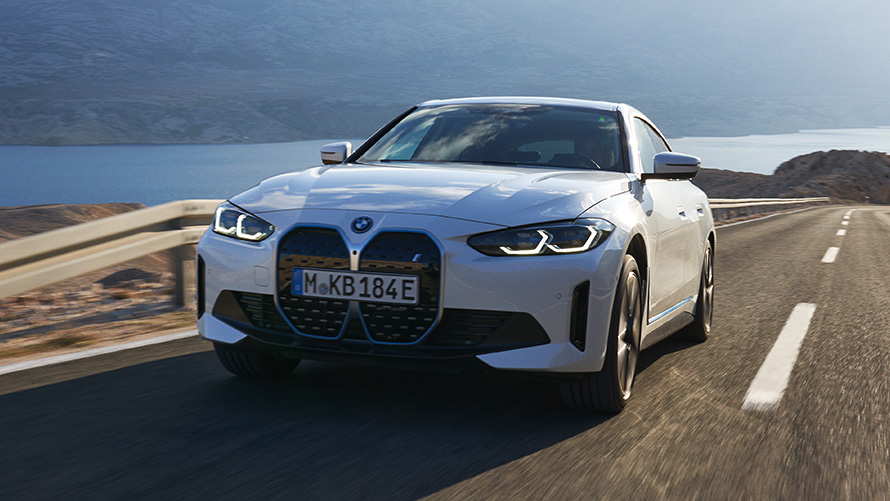
BMW i4 (Image: BMW.co.uk)

New 2021 BMW i4 makes UK debut ahead of autumn sales

Final i4 shown at Goodwood ahead of a market launch three months early, in line with BMW’s accelerated EV plans

BMW has revealed the final, production-spec version of its new i4 saloon to the UK public for the first time at this year’s Goodwood festival of speed, as it gears up to launch the Tesla Model 3 rival three months ahead of schedule.

“The decision to launch three months early was easy,” according to CEO Oliver Zipse, who outlined how BMW is “picking up the pace” with respect to the electrification of its line-up. Full specifications will be announced in the coming weeks.

The i4 will go on sale alongside the i3 electric hatchback, new iX3 mid-sized SUV and iX flagship in BMW’s expanding electric line-up. By 2023, the firm will have 12 pure EVs on sale worldwide, with an electric option available in 90% of its current market segments.

BMW i4 (Image: BMW.co.uk)

The i4’s production-spec debut comes as BMW unveils a plan to radically overhaul its approach to electric car development from 2025.

The ‘Neue Klasse’ transformation process will see the firm usher in a radically new design approach and place a heightened emphasis on technology and software. A new modular powertrain family will also be introduced, as will more efficient battery technology and greater use of recycled materials in the production process.

The final i4 stays true to the design of last year’s production-previewing concept and is clearly visually related to the combustion-engined 4 Series that went on sale late last year. The upcoming 4 Series Gran Coupé will be largely identical to the exclusively four-door i4.

Precise technical specs remain under wraps, but we know the range-topping model – likely badged i4 M – will send up to 523bhp to both axles and offer a range of 367 miles. A 0-62mph time of around 4.0sec and top speed of more than 124mph are likely.

Read more: AUTOCAR

It’s Time to Go Green!

If you would like to know more about Solar Panels and the PowerBanx range of home battery systems, and get a free instant quote, please complete our online form:
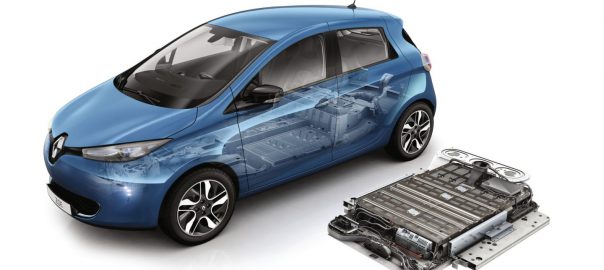
The Mobility House completes first grid-friendly second-life car battery storage system in France

A consortium led by The Mobility House has installed its first storage facility comprising both used and new Renault ZOE batteries in France, thus growing the network of such storage facilities in Europe.

The premiere was made possible by Munich-based company The Mobility House, which specializes in the use of second-life batteries and vehicle-to-grid applications.

Together with its partners Mobilize, which belongs to the Renault group, the Banque des Territoires and the Ecological Transport Modernization Fund, which is managed by the investment manager Demeter, it set up the 4.7 MW storage facility on the factory premises of the Renault branch in Douai, France.

Renault ZOE, Battery illustration (image: Renault)

Of this capacity, 4 MW are prequalified for participation in the primary control power market. The Mobility House states that this project has helped increase the total capacity of car batteries it uses for the control power market in France, the Netherlands, and Germany to 33 MW.

The Renault storage system consists not only of used car batteries, but also first-life batteries. Car manufacturers are obliged to keep a certain number of batteries available as replacements. However, since they are difficult to store, one solution is to integrate them into storage devices. To achieve the optimum state of charge, they are only minimally charged and discharged.

“We have been working successfully on the integration and marketing of electric car batteries in the electricity market since 2014 and are already active in various European markets and the USA,” said Robert Hienz, CEO of The Mobility House. “With the integration of a storage facility in the capacity market, as is now the case in France, we are once again expanding our technology spectrum with an innovative application.”

Read more: pv magazine

It’s Time to Go Green!

If you would like to know more about Solar Panels and the PowerBanx range of home battery systems, and get a free instant quote, please complete our online form:

Tesla Cybertruck (Image: Tesla)

Why Do Electric Cars Look The Way They Do? Because They Can

Free from traditional gas engines, EV designers are rethinking the shape of cars. We take a detailed look at the shape of things to come.

What should the cars of the future look like? How smooth, how tall, how spacious should they be? For more than a century, most automotive designers have had to work around an internal-combustion engine and transmission. Gas, diesel, and hybrid powertrains need room to spin and breathe—sometimes to the detriment of passengers. We’re so used to stumbling over the hump of a driveshaft tunnel and giving up kneeroom for the sake of a set-back engine that it never occurred to most of us that anything could be different. But in the future, especially the near future, with a focus on electric cars built on new, dedicated platforms, designers have a rare opportunity to reimagine what a car can offer.

Many early EV ventures used existing platforms and arranged electric powertrains to fit where gas engines and transmissions had previously resided. Even Tesla’s first attempt was a revamped Lotus Elise without its 1.8-liter inline-four. Working on a nondedicated, or “nonnative,” electric platform limited designers’ options for positioning the battery and motor. Automakers often stacked batteries under the rear seat—which is why early EVs sometimes offered less legroom or cargo space than their gas counterparts—and put the motor assemblies under the hood. Even the Nissan Leaf, which packages an underfloor battery in a dedicated EV platform, still follows the old philosophy of carrying a motor where an engine normally goes. Aesthetically, too, the early electrics couldn’t break away from distinct grille shells and large air vents.

Tesla Cybertruck (Image: Tesla)

In 2017, the consulting firm McKinsey & Company said long-term use of nonnative platforms for electric-vehicle design was inefficient. Most automakers seem to agree. This year we’ve seen a wave of new models on dedicated EV platforms similar to the flat-battery, motors-at-the-axles “skateboard” layout Tesla has been using since the Model S launched in 2012. Rearrange the words “global,” “modular,” and “electric” and pick your platform from a variety of scalable roller skates with acronyms like EVA and E-GMP to see how designers reshape the automobile when they aren’t working around an engine.

What’s Inside Counts
“We have the opportunity to give the car a totally new kind of proportion,” says Steffen Köhl, Mercedes-Benz director of advanced exterior design. Köhl worked on the EQS, the first car on Mercedes’s new Electric Vehicle Architecture (EVA). The EQS is a luxury sedan with a long wheelbase, a sweeping bridge of a roofline, and a large, screen-filled cabin. Think of it as the S-class of EVs. The underpinnings of an EV allow for bigger interiors in smaller vehicles, he says. It can be “cabin-forward, with short overhangs in front and rear. Since the battery is flat ground, we can try a new kind of interior—smooth panels, the center console floating. There are no more ups and downs between the seats.”

Escaping the tyranny of the center tunnel is exciting to many designers. Imagine trying to decorate a room with an undulating hardwood floor. Furniture would be pushed to the side, with the center of the space unusable. In cars, designers regularly hide the hump with a shallow console in the front; in the back, they simply cover it with carpet and ignore it. But now that they can smooth out that hump, there’s a lot more room to play with. Köhl’s team on the EQS used this newly available real estate for an elegant multilevel console with room for a large bag in a pass-through by the driver’s knee. In Hyundai’s new Ioniq 5, which rides on the Electric Global Modular Platform (E-GMP), the space is left open, giving driver and passenger the opportunity to bump knees romantically at stoplights, although that’s not in the press literature. The flat floor also allowed Hyundai designers to put in a deep console that slides rearward so front-seat occupants can enter or exit from either side of the car.

The Great Outdoors
Early discussion of EV design was a chorus of moans from car enthusiasts about how designers would become slaves to the wind tunnel, pursuing a coefficient of drag that made everything look like an owl pellet on wheels. This dire prediction has not come to pass. Aero­dynamicists have been able to work with shapes that range from the tennis-shoe profile of the Volkswagen ID.4 to the shocking angles of the Tesla Cybertruck to the sports-car smirk of Porsche’s Taycan. According to Köhl, the smooth blob that caused the great panic was never a technical requirement; it was more of a marketing choice.

Read more: CAR AND DRIVER

It’s Time to Go Green!

If you would like to know more about Solar Panels and the PowerBanx range of home battery systems, and get a free instant quote, please complete our online form:

Hyundai Ioniq 5 (Image: hyundai.co.uk)

New Hyundai Ioniq 5 2021 review

The new Hyundai Ioniq 5 has arrived and it’s simply one of the best electric cars on sale right now

Verdict
If the Ioniq 5 is a signal of intent from Hyundai, then rival car brands should be worried. This showcase of the Korean firm’s next generation electric car tech is hugely impressive in almost every area; from the performance to the charging speeds, few rivals can match it for the money. That it also looks unlike anything else on sale, inside and out, has great tech and is relaxing to drive, means there’s very little to fault.

This is the all new Hyundai Ioniq 5. The first car that will showcase the Korean brand’s second generation EV tech – quite an ominous thought for rivals considering that, at the more affordable end of the electric car market, Hyundai and its sister brand Kia already build some of the best offerings in the business.

This time, however, Hyundai is aiming higher. This is a car that has set its sights on premium rivals, with cars like the Audi Q4 e-tron and the upcoming Tesla Model Y seen as competition as much as the likes of the Volkswagen ID.4 and Ford Mustang Mach-e.

Hyundai Ioniq 5 (Image: hyundai.co.uk)

With premium construction comes a premium design. The Ioniq 5 is a world away from the Kona Electric or indeed anything else on the road; the retro-modern shape is covered in cool details. The multi-slotted glowing front panel, the 8-bit headlights (made from 256 individual LED ‘cubes’) and bold side surfacing are just some of the features that have created a proper head-turner.

Unlike Hyudai’s previous EVs, which used architecture designed to be compatible with combustion-powered offerings, the Ioniq 5 uses the brand’s Electric Global Modular Platform. It’s the first car to ride on the fully electric architecture, with the equally dramatic looking Kia EV6 set to be the next model to hit the roads.

The move upmarket has also resulted in an increase in size. Don’t let those neat proportions fool you – when you realise that the wheels this car rides on measure a whopping 20 inches, you realise that it’s almost like Hyundai has taken the blueprints for a family hatchback and clicked ‘select all’ then ‘resize 110 per cent’. At 4,635mm long and 1,890mm wide, the Ioniq 5 is longer and wider than Hyundai’s Tucson mid-size SUV – though its roofline is slightly lower. Perhaps more significant is the wheelbase; at 3,000mm, the gap between the front and rear axles is a couple of millimeters longer even than that on an Audi A8.

It’s a stat that really makes itself known once you swing open the huge back doors – the Ioniq’s cabin is simply vast. The floor is almost completely flat throughout, and rear occupants get genuinely limo-like levels of legroom. Yet compared to the finest luxury saloons, the Ioniq’s open plan feel and big windows make it so much brighter and more airy. The boot floor is high and the space is fairly shallow, but the area it covers is so huge that there’s still an impressive 527 litres of volume on offer.

Ahead of the driver sit a pair of screens. The central infotainment display uses a similar interface to other Hyundai models, but with cleaner graphics. The digital instrument display is equally clear to read – they’re not quite the sharpest resolution you’ll find in an EV (Tesla still holds that title) but everything is very logical and intuitive. The driver assist systems are particularly well integrated; on versions equipped with blind spot cameras, the images are displayed in real time in the instrument panel when the indicators are turned on.

It’s comfy, too. The seats are squishy yet supportive, while those in the front can recline almost completely – ideal if you fancy a quick nap when the car is charging.

Read more: Auto EXPRESS

It’s Time to Go Green!

If you would like to know more about Solar Panels and the PowerBanx range of home battery systems, and get a free instant quote, please complete our online form: