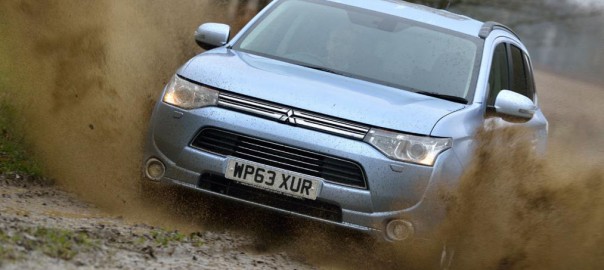
Category Archives: Electric Cars

News and reviews of the latest electric cars (full electrics and plug-in hybrids).

Renault picks up two awards at 2014 Green Apple Awards

  • Kangoo Z.E. electric van and Clio both pick up awards
  • Green Apple Awards now in their fourth year
  • 2014 is third year that Renault has won Green Apple Awards

Renault has won two environmental awards at the 2014 Green Apple Awards at a ceremony held at the Houses of Parliament in London this week.

The Renault Kangoo Z.E electric van was awarded the Green Apple Automotive Industry Bronze Award whilst the Renault Clio was named Runner Up in the Small Family Cars category.

These two accolades build on Renault’s success in previous Green Apple Awards. Last year, the Renault ZOE electric car took the Overall Winner prize as well as being named Best Small Family Car and in 2012 Renault was applauded with two awards for its commitment to zero emissions motoring.

Commenting on awarding the Kangoo Z.E. van the Automotive Industry Bronze Winner prize, a spokesperson for The Green Organisation said:

“The Renault Kangoo Z.E. Van was the market’s first all-electric light commercial vehicle. This purpose-built van has zero tailpipe emissions, is cheap to run and easy to charge. It has instant torque, making it rather quick – but at the same time very quiet and smooth to drive.”

The awards are organised by the Midlands-based The Green Organisation and were judged by members of the Midland Group of Motoring Writers.

Midland Group chairman Ian Donaldson said:

“When The Green Organisation asked us for our current green champions we wanted to go further than some other awards and look beyond the official figures and rank our favourites in the real world, taking into account how they performed in our hands.”

The Renault Kangoo Van Z.E. is the world’s first 100%-electric van produced directly by a mass-market vehicle manufacturer. It provides zero tailpipe emissions and silent motoring that is ideal for commercial use within urban environments. The 44kW electric motor and 22kWh lithium-ion battery provide 226Nm of torque, available from rest, which allows for smooth, linear acceleration.

The official range of 105 miles means that the vast majority of van users’ daily driving can be done on one charge. Kangoo Van Z.E. is available in four versions – Kangoo Van Z.E., Kangoo Van Maxi Z.E. (2 seats), Kangoo Maxi Crew Van Cab, and Kangoo Van Z.E. Maxi Crew Van (5 seats) – and is priced from £12,995 (+ VAT, after Plug in Van Grant) complete with a four-year/100,000-mile warranty and four years’ roadside assistance.

Putrajaya Formula E Grand Prix : Malaysian round

Malaysian round delivers great performances and on-track action

Renault Electric Show during the 2014 & 2015 Formula E championship, at Putrajaya, Malaysia (Image: Renault)
Renault ZOE Electric Show during the 2014 & 2015 Formula E championship, at Putrajaya, Malaysia (Image: Renault)

November 22: Spectacular fightbacks, fiercely-contested racing and a host of popular attractions combined to create a fantastic atmosphere at this Saturday’s Putrajaya ePrix. The second ever race in the history of the FIA Formula E Championship served to confirm the growing enthusiasm for the new racing category. In the heart of the “World’s First Intelligent Garden City”, the 20 Spark-Renault SRT01_E drivers once again put on a very high quality sporting spectacle.

Following the success of the inaugural round of the FIA Formula E Championship in Beijing in September, all of the teams and partners involved in the new series were looking for further confirmation in Putrajaya.

A key player since the start of the project, the Renault Sport teams had not rested on their laurels since the opening race. Their never-ending search for complete reliability, maximum safety and optimized architecture led them to strengthen the gearbox installation in order to meet the demands of racing on the streets of Malaysia’s administrative centre.

Mission accomplished, as once again the Spark-Renault SRT01_E race cars experienced no technical problems during this, the second ever ePrix. The single-seaters also proved to be robust and safe again, as the drivers who went off the Putrajaya circuit would confirm. The characteristics of the circuit equally enabled the drivers to show off their skills, as fans were treated to a series of closely-contested battles and incredible fightbacks throughout the 31 race laps.

Before the start, the enthusiastic crowd was thrilled by a brand-new electric vehicle on-track demo, showcasing the performances of the Renault ZE range. Many spectators also took the opportunity to test drive the brand’s flagship models, ZOE and Twizy, in the eVillage during the day.

In a dramatic, incident-packed day, Nicolas Prost (e.dams Renault) relinquished pole position to Oriol Servia (Dragon Racing), following the penalty he was given in Beijing. On lap five, Sam Bird (Virgin Racing) got past the Catalan and held the lead until he came into the pits to change cars. Third in Formula Renault 3.5 Series in 2012, the British driver retook the lead four laps from the end when he overtook Daniel Abt (Audi Sport ABT), who was on a different strategy. He went on to secure the win, ahead of Lucas di Grassi (Audi Sport ABT) and Sébastien Buemi (e.dams-Renault), both of whom had fought their way through the field from the back of the grid.

The Brazilian continues to lead the championship standings going into the next round at Punta del Este, in Uruguay, on December 13.

Kuan Kim Luen, CEO of TC Euro Cars, Renault’s sole franchise holder for Malaysia:

“Electric vehicles are set to play a key role in Renault’s development in Malaysia. What we saw today makes us proud and gives us a lot of confidence for the future. Not only did we witness a very exciting race but there was also a great performance from the two e.dams-Renault cars, which finished third and fourth! Renault, which is involved in a major EV car sharing programme, was also here with a fleet of ZOE and Twizy cars for members of the public to try out in test sessions, not forgetting the Renault Electric Show. It was without doubt a fantastic day for Renault, both on and off the track!”

Launch of Rapid Charge Network (Image: Renault)

Renault-Nissan Alliance sells its 200,000th electric vehicle

  • Renault-Nissan EVs have driven 4 billion kilometres and enjoy 58 per cent of zero-emission global market share
  • Nissan LEAF remains best-selling EV ever; Renault led in Europe last month
  • Alliance launches monthly video series introducing electric vehicle owners from around the world sharing their personal stories with their zero-emission car

The Renault-Nissan Alliance has sold its 200,000th electric vehicle and has a leading 58 per cent market share for zero-emission cars.

Together, Renault and Nissan EVs have driven approximately 4 billion zero-emission kilometres – enough to circle the earth 100,000 times. Renault-Nissan’s EVs represent 200 million litres of fuel saved – enough to fill about 80 Olympic-sized swimming pools. Alliance EVs also represent 450 million kg of CO2 that has not been emitted while driving.

The Alliance sold its 200,000th EV in early November, about four years after the launch of the Nissan LEAF, the world’s first mass-market electric vehicle. Nissan LEAF remains the best-selling electric vehicle in history.

From January through the first week of November of this year, the Alliance sold about 66,500 EV units—an increase of about 20 per cent from the same period last year. The Alliance sells about two out of three electric vehicles worldwide, including Twizy, Renault’s two-seater urban commuter vehicle and the Nissan e-NV200 van on sale in Europe and Japan.

“Renault and Nissan’s electric vehicles are the zero-emission volume leaders – and, most important, they enjoy high satisfaction rates from customers around the world,”

said Carlos Ghosn, Chairman & CEO of the Renault-Nissan Alliance.

“Based on positive owner feedback and the increasing demand for cars that run on renewable energy, it’s no surprise that EV sales are accelerating – particularly in regions where the charging infrastructure is well developed.”

To capture what the first 200,000 consumers love about their electric vehicles, the Renault-Nissan Alliance is launching a series of videos featuring EV owners on three continents. “I Made the Switch” tells why people bought their electric vehicles and how switching to a zero-emission vehicle has changed their lives. The first video features Chris Beers, a software engineer from Holliston, Massachusetts, USA, one of many Americans who powers his Nissan LEAF with clean solar energy. To see the video, click here: www.multivu.com/players/English/7381531-renault-nissan-electric-vehicle-sales/

USA and Japan lead the world in EV ownership

In the United States, the Alliance’s biggest electric vehicle market, there are more than 750 quick chargers in operation. Nissan is working with its dealers and charging partners to increase that number to 1,100 by mid-2015. The quick chargers are able to charge a LEAF from zero to 80 per cent capacity in about 30 minutes.

This year, Nissan also launched its “No Charge to Charge” program, which provides free access to selected charging stations for two years with the purchase or lease of a new Nissan LEAF. “No Charge to Charge” is currently active in 12 U.S. markets, and Nissan plans to expand to additional markets by mid-2015.

In Japan, the Alliance’s second-biggest EV market, there are more than 2,900 quick chargers in operation. Nissan and Japan’s three other top automakers have pledged to work together to raise that number to 6,000 by March 2015.

In Europe, the UK is the most advanced market in terms of electric vehicle infrastructure. Today, the quick charging network already covers 87 per cent of the UK’s motorways.

Nissan LEAF is the world’s best-selling electric vehicle; Renault led in Europe in October

With six electric vehicle models on the road, the Renault-Nissan Alliance is the only global car group with a full range of 100 per cent electric vehicles – and they can be fully charged with purely renewable energy.

Yokohama, Japan-based Nissan has sold a cumulative 148,700 units worldwide since December 2010, when Nissan LEAF went on sale. Nissan LEAF has collected industry honors including the 2011 World Car of the Year, European Car of the Year 2011 and Car of the Year Japan 2011-2012. The electric vehicle has the highest global customer satisfaction rate for any Nissan vehicle ever.

The top markets for Nissan LEAF are the United States with about 67,000 sales since its launch, Japan with about 46,500 units and Europe with about 31,000 units.

In the United States, LEAF is on track to be the top electric vehicle in 2014, outselling all other electric and plug-in hybrid vehicles. Sales so far this year are up 35 per cent, and Nissan LEAF has enjoyed 21 consecutive record sales months and has already shattered its own yearly U.S. sales record with two months to go. In addition to LEAF, Nissan also sells the e-NV200 van, which went on sale in Europe in June and in Japan in October.

Meanwhile, Boulogne-Billancourt, France-based Renault has sold a cumulative 51,500 electric vehicles worldwide since its first model the Kangoo Z.E. went on sale in October 2011. Kangoo Z.E. was voted International Van of the Year 2012. Renault recently delivered its 5,000th Kangoo Z.E. to La Poste, France’s national postal service and operator of the country’s largest corporate fleet. An additional 5,000 units will be delivered in the coming years.

In addition to Kangoo Z.E. and Twizy, Renault’s zero-emission range also includes the ZOE subcompact and the Fluence Z.E. sedan. In South Korea, the Fluence Z.E. is sold as the SM3 Z.E. under the Renault Samsung Motor badge. Like Nissan LEAF, ZOE enjoys the highest satisfaction rate of Renault’s Global product lineup.

Renault’s top markets in Europe – its main electric vehicle market – are France, Germany and the United Kingdom. In October, Renault regained the number one EV position in Europe with a market share of 31 per cent. ZOE was the most popular vehicle with a 23 per cent market share.

About the Renault-Nissan Alliance

The Renault-Nissan Alliance is a strategic partnership between Paris-based Renault and Yokohama, Japan-based Nissan, which together sell one in 10 cars worldwide. The companies, which have been strategic partners since 1999, sold 8.3 million cars in nearly 200 countries in 2013. The Alliance also operates strategic collaborations with automakers including Germany’s Daimler, China’s Dongfeng, and India’s Ashok Leyland and has a majority stake in the joint venture which owns Russia’s top automaker, AVTOVAZ.

SEPUR's Renault ZOEs (Image: Renault)

Alphabet equips SEPUR’s fleet with Renault ZOEs

SEPUR's Renault ZOEs (Image: Renault)
SEPUR’s Renault ZOEs (Image: Renault)

Alphabet France, the fourth-biggest multi-brand long-term car hire company on the French market, delivered the first 11 Renault ZOEs to the headquarters of SEPUR in Thiverval Grignon (Yvelines), on 21 November.

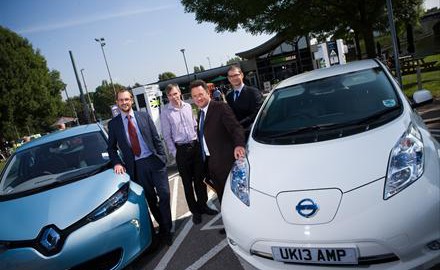
It’s just a short step from A for Alphabet to Z for ZOE, and AlphaElectric is the name of the first all-round package for the long-term hire of electric vehicles. Alphabet has signed an order with SEPUR for 61 Renault ZOE electric cars.

By the end of the first quarter of 2015, SEPUR, a company specialising in waste management and urban cleanliness, will replace all the conventional vehicles at its 17 outlets in the Paris area by about 100 ZOEs.

Renault contributed to the project by organising training in eco-friendly driving for SEPUR employees and by urging the sales teams to ensure all the ZOEs are delivered on time.

2014 Has Seen a Rise in Electric Vehicles

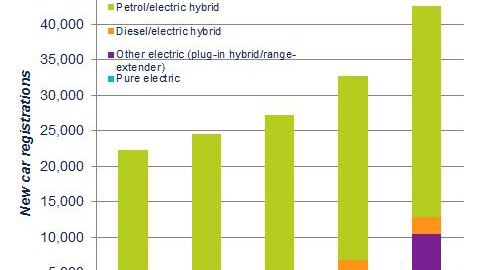
Electric and Hybrid Registrations to 2014

The Society of Motor Manufacturers and Traders reports on October 2014 registrations:

  • Rising demand for alternatively-fuelled vehicles continues, with market up more than 50% in both month and year-to-date.
  • 2014 has seen a significant rise in registrations of alternatively-fuelled vehicles (AFVs). With two months still remaining in the year, registrations are already 12,000 ahead of the full-year total for 2013.
  • Petrol-electric hybrid cars have long been the most popular choice for AFV buyers, but other variants are gaining in popularity. Registrations of pure electric cars have more than doubled over last year, while those of plug-in hybrid and range-extended models look set to quadruple by the end of 2014.
  • Key to this surge in popularity is a constantly increasing range of models available: in 2011 buyers were restricted to just six plug-in models. Now there are 20 to choose from, in a range of body styles including coupés and SUVs.
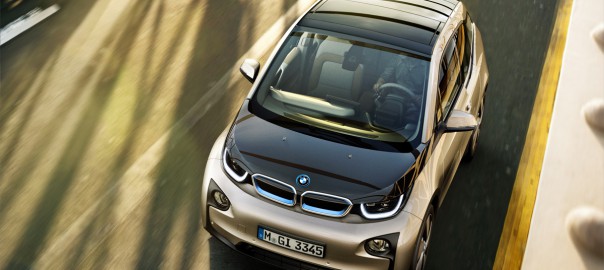
BMW i3 (Image: BMW Group)

Numerous accolades highlight the success of the BMW i3

Munich. With the Green Car of the Year Award 2015, the BMW i3 has added a further trophy to an impressive raft of honours in its first year on the market. It was chosen for this award, presented by Green Car Journal at the Los Angeles Auto Show 2014, as the first dedicated all-electric vehicle in the premium segment. This latest honour, which adds to a long tally of awards the BMW i3 has picked up over the past months, is a further endorsement of this model’s unique sustainable mobility concept. More than 12,000 BMW i3s have already been sold since November 2013. The presence of more and more of these vehicles on the roads of cities all over the world is clear proof that it is now possible to successfully mate zero tailpipe emissions with premium-class driving pleasure, and that this groundbreaking combination is here to stay. One year after its launch, the BMW i3 is already the third best-selling all-electric automobile on the market.

Early adopters of the BMW i3 in Germany praise its sporty performance in particular. This is based on a 125 kW/170 hp electric motor, which offers highly responsive acceleration, and advanced chassis engineering. These drivers mainly use their BMW i3 for everyday urban driving and for commuting to work. For the most part they charge the lithium-ion battery overnight, at home. These first customers’ main reasons for buying the first electric vehicle from the BMW Group are its integrated sustainable mobility concept and BMW’s acknowledged technological expertise. Stand-out features of the BMW i3 in the eyes of its first German customers are its carbon-fibre (CFRP) passenger cell, renewable interior materials, mature powertrain engineering, state-of-the-art connectivity, and styling which these customers perceive as “futuristic”.

Demand for this electric vehicle, which can optionally be supplied with a range extender, is outstripping expectations. Both in number and diversity, the string of awards the BMW i3 has picked up – starting before the market launch and continuing on an upward trend ever since – is quite exceptional. In Germany, no sooner had pre-launch sales begun than the BMW i3 won the Green Steering Wheel 2013 award – one of the categories in the Golden Steering Wheel competition hosted by Auto Bild and Bild am Sonntag – and was voted best car in its class in auto, motor und sport’s Best Cars 2014 awards.

It also won two readers’ awards from Auto Zeitung magazine, plus the Auto Trophy 2013 and the Green Mobility Trophy 2014.

On the international stage, too, the successful market launch of the BMW i3 was accompanied by very positive ratings in opinion polls and independent expert reviews. Highlights to date include the UK Car of the Year Award, the Next Green Car Award, the Green Car of the Year Award, the Fleet Hero Award and a class win in the Sunday Times Top 100 Cars list (all of these in the UK), the Special Jury Award in the Swiss Car of the Year Award and a win in the French Trophées de l’Argus awards. In April 2014, a jury of motoring journalists from across the world named the BMW i3 World Green Car of the Year and World Car Design of the Year.

The BMW i3’s groundbreaking and individualistic exterior and interior design also earned it many other accolades, including the German Design Award, the iF gold product design award and the Automotive Interiors Expo Award, while the French edition of GQ magazine named BMW i Head of Design Benoit Jacob “Designer of the Year”. In further tributes, Auto Bild voted the BMW i3 Design Innovation of the Year, and readers of Auto Bild Klassik named it Classic of the Future.

The latest honour, the Green Car of the Year Award 2015, presented at the LA Auto Show, is a further tribute to the BMW i3’s all-round sustainable mobility concept. The evaluation by Green Car Journal was based on the BMW i3’s zero emissions at the point of use, its innovative lightweight design and the high percentage of sustainably produced materials used in its manufacture. Green Car Journal specialises in reporting on sustainable, efficiency-enhancing technologies and pioneering trends in the automotive industry and has been hosting the Green Car of the Year Award annually at the LA Auto Show since 2005. This year’s show is open to the public from 21 to 30 November.

Source: BMW Group

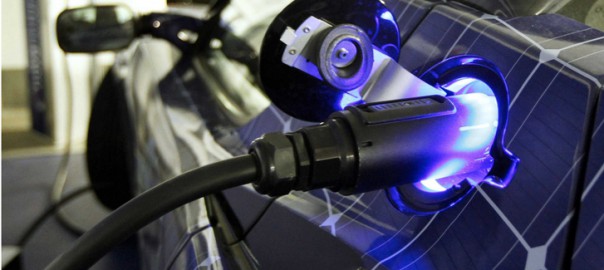
Electric Car Recharging

Is now the time to buy an electric or hybrid car?

Best cars and options explored

The future of driving appears to be electric, with Formula E in full effect, supercars adopting hybrid drive systems and range getting further all the time. Fuel powered engines may have their days numbered. But is it time to make the change to electric?

Now that the big car manufacturers are creating hybrid and electric cars we can be assured that it’s the future. And thanks to infrastructure improving all the time for charging stations range isn’t becoming such a big issue. But last year’s Tesla owners won’t get updated with the latest self-driving tech of this year’s Tesla, not a very nice reward for early adopting.

So is it still too early to adopt? Are batteries in cars suddenly going to improve to make current models a joke? We’ve looked at what going on to help give you a clearer idea of what to do.

Pure electric cars right now

The selection of pure electric cars right now isn’t huge, but it’s more than ever before and range is now good enough for day-to-day use. Prices, in the UK at least, are kept reasonable thanks to government assistance taking £5,000 off the price and offering free tax. If you offset petrol costs too you’re saving even more.

At the top end there’s Tesla with its Model S boasting all wheel drive and self-driving smarts starting at around the £50,000 mark. But this is in a league of its own with sports car performance, plus the latest model is not actually going to be in the UK until July 2015, even if you can buy yours now.

Then there are established brands like BMW, Ford, VW, Nissan and Renault all making fully electric cars at affordable prices right now.
Range, charging times, price and power

When going electric most people will be juggling these few key numbers: range, charging time, price and power.

PRICE: Firstly there’s price, at which the Renault Zoe wins by a fair margin starting at £14,000. Nissan’s Leaf can be bought from £16,500, Kia’s Soul EV is £25,000, the VW e-Golf is from £26,000, and BMW with its i3 is from £31,000.

RANGE: The range winner, from the reasonably priced cars, is the Kia Soul EV with 135 miles. In close second is the Nissan Leaf with 124 miles. Coming in behind them is the BMW i3 with a 118 mile range along with the VW e-Golf also sporting a 118 mile range, followed by the Renault Zoe with 93 miles.

Of course if you include the Tesla Model S that wins with its base model eeking out an impressive 240 miles on a charge and its top end offering 312 miles a go. But you get what you pay for.

CHARGE: This is a fairly even playing field with the cars all offering a rapid charge to 80 per cent in half an hour. Across the board it’ll cost you to upgrade your home charger for faster charging but this can result in as fast as a 3-hour charge to full.

POWER: Electric cars deliver all their torque instantly and the engine directly powers the wheels, this means they feel really nippy pulling away. The Nissan Leaf utilises 107hp to do 0-60mph in just 7 seconds making it the quickest of the lot off the mark.

The BMW i3 has 170hp for a 0-60mph time of 7.2 seconds, the Renault Zoe has 83hp for a 0-60mph time of 8 seconds, and the VW e-Golf manages 0-62mph in 10.4 seconds thanks to its 114hp motor. In last place is the Kia Soul EV with its 108bhp delivering a 0-60mph time of 10.8 seconds.

So for price the Renault Zoe wins it, but for range and power the Kia Soul EV comes out on top.

Plug-in hybrid electric cars right now

Hybrids have been around for years with the Toyota Prius leading the way with its dual-drive system. These are now more common than ever with Uber drivers using Prius as the car of choice.

But the market has grown, especially recently, with plug-in hybrids that allow drivers to charge at home so they may never need to use the fuel engine, instead reserving that for long distance journeys only.

From the Volvo V60 Plug-in and Ford Mondeo Titanium Hybrid to the Golf GTE or the BMW i3 with range extender, hybrids are fast becoming viable alternatives to single engine cars. The extra you may spend on the new technology can soon be made back in the petrol and tax savings they offer.

Range, charging times, price and power

Plug-in hybrid cars mean less of a worry about range than pure electric while also offering power and a reasonable price.

As with the Tesla we’re not going to include the likes of the McLaren P1, BMW i8, Porsche 918 and Ferrari LaFerrari as they’re all reserved for the super rich. And we’re only using plug-in hybrids as straight hybrids are fast becoming outdated in favour of the electric only options and extended range of plug-in hybrids.

PRICE: The plug-in hybrid range have all arrived at a similar time with manufacturers savvy to the government’s £5,000 contribution. For this reason they’re all very similarly priced.

The winner, by a narrow margin is the Ford Mondeo Titanium Hybrid from £25,000, with Mitsubishi PHEV GX3h from £28,250 in second and closely followed by the Toyota Prius Plug-In Hybrid from £28,395.

Then we have the Vauxhall’s Ampera from £29,000, Audi A3 Sportback e-tron from £35,000, BMW i3 Range Extender from £34,000 and Volvo V60 Plug-in hybrid from £45,000.

RANGE: Winning with an impressive 967 mile range is the Ford Mondeo Titanium Hybrid but it only manages around 20 miles on electric alone. Closely behind that is the BMW i3 with range extender that offers a 930-mile top end with pure electric for 105 miles, making it overall cheaper to run than the Ford. The Toyota Prius Plug-In Hybrid can manage up to 700 miles in one journey but loses on electric alone with just 15 miles on a charge.

Audi’s A3 Sportback e-tron can last for 585 miles with 31 of those miles on electric alone. Despite its size the Mitsubishi PHEV GX3h manages 500 miles with 32 on electric alone. Vauxhall’s Ampera eeks out 310 miles with between 20 and 50 of those miles on battery.

CHARGE: As in pure electric cars this is a fairly even playing field with the cars all offering a rapid charge to 80 per cent in half an hour. Across the board it’ll cost you to upgrade your home charger for faster charging but this can result in as fast as a 3-hour charge to full.

POWER: The Audi A3 Sportback e-tron, as the name suggests, wins this with a 0-62mph time of 7.9 seconds thanks to 204hp. The BMW i3 Range Extender model is second offering 170hp for 0-60mph in 7.9 seconds.

The Vauxhall Ampera does 0-60mph in 8.7 seconds with 148hp, despite having 178hp the Ford takes 9.2 seconds to get from 0-62mph, the Toyota Prius Plug-In Hybrid gets from 0-60mph in 11 seconds from 134hp, the Mitsubishi PHEV GX3h does 0-60mph in 11 seconds and has 186hp.

The winner for price is the Ford Mondeo Titanium Hybrid but the BMW i3 takes it for range with the Audi offering the most power.

Future electric and hybrid cars

The future of electric cars and hybrid machines is looking positive. Charging infrastructure is cropping up all over the country with Tesla’s Elon Musk promising to install his Supercharger network UK wide by the end of next year.

Crucially, right now, it’s possible to drive pure electric all the way from the top of Scotland to the bottom of England thanks to fast chargers along the way. It might take a little longer than petrol cars since you have to stop for half an hour to recharge, but it won’t cost as much by a long shot. So adopting right now, especially if you’re going for a hybrid, isn’t as risky as it once was.

Another issue is batteries. Developments are being made more and more regularly as car manufacturers pour money into research. But worrying about having an older battery shouldn’t be an issue as, hopefully, manufacturers will be able to swap out old for new future-proofing any car you buy now.

Next year Tesla hopes to offer a car which is nearly completely self-driving. But since that’s out of the price range of most people current electric car offerings are plenty futuristic.

If you’re already driving a car and the cost of petrol and tax are proving too much then electric or hybrid could be your way out.

Source: Pocket Lint
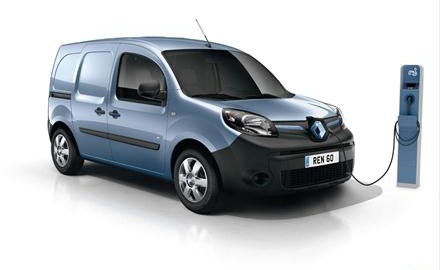
Mitsubishi Outlander PHEV (Image: AutoExpress)

Mitsubishi Outlander PHEV 2014 review

First-ever plug-in hybrid SUV promises to save owners thousands of pounds

Verdict:

SUV owners – and company car users in particular – can save serious cash with the Outlander PHEV, especially if they don’t drive mega miles. That’ll make rival plug-in hybrid manufacturers sit up, take notice and, hopefully, react. There’s plenty of space and kit on offer, too. The only shame is that the Outlander isn’t more engaging to drive or better quality.

Once in a while a game-changer comes along – a car that proves a hit with buyers and makes rivals rush to copy the concept. The Mitsubishi Outlander PHEV is one of those cars.

On the face of it, it’s a pretty good plug-in hybrid based on a pretty average SUV. But Mitsubishi has chosen to break with tradition and price this PHEV model exactly the same as its diesel equivalent.

To put that into context, the most expensive Volvo V60 diesel estate costs £35,505, while the plug-in hybrid version costs £44,275. The Outlander PHEV starts from just £28,249 (after the Government’s kind £5,000 grant) for the nicely equipped GX3h model, but even our top-spec GX4hs is still hugely tempting at £34,999.

For that you get a stylish SUV with a good-sized boot (436 litres) and plenty of space for five, at a price that’s the same as an Outlander diesel auto.

But while the diesel claims 48.7mpg, the PHEV claims 148mpg. Even Mitsubishi will tell you that’s unlikely, but we still managed an impressive 92mpg. If you plug in regularly and do less than the 32-mile electric range each day, you’ll barely see a filling station.

The savings don’t stop there – with emissions of 44g/km you’ll save thousands on company car tax compared to diesel SUVs, the road fund licence is free and there’s no Congestion Charge to drive into London.

The only compromises when driving are due to the Outlander’s dynamics. Whether on EV or petrol power or any combination of the two, performance is smooth if not scintillating.

The ride is a bit too firm for our liking, but there’s the reassurance of four-wheel drive for light off-roading or to help with towing.

With good visibility, light controls and decent practicality, the PHEV is an easy car to live with.

You’ll need a PhD to understand the infotainment system, though, and the quality inside is a bit of a letdown. But when you’re saving so much cash, there’s more to like than not.

Source: AutoExpress