Category Archives: Electric Cars

News and reviews of the latest electric cars (full electrics and plug-in hybrids).

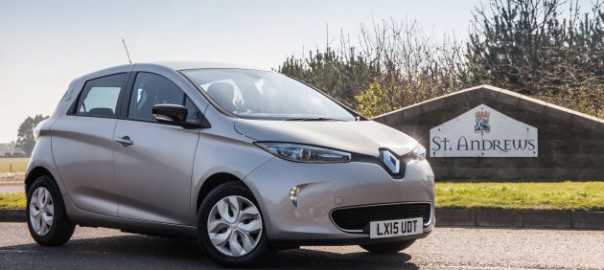
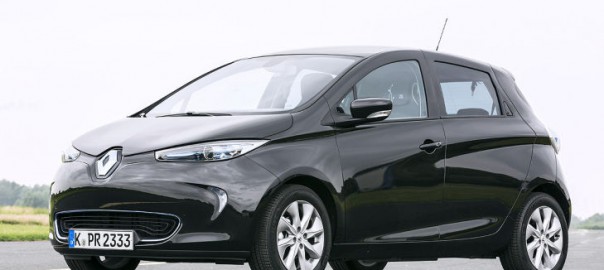
New Renault ZOE from £145 per month fuel included

Update: latest offers here: Renault ZOE 2018 prices


We had the latest PCP prices for the Renault ZOE (effectively an electric Clio) confirmed today and they are looking very good. Renault recently rejigged its prices significantly, essentially reducing the monthly cost of the car while at the same time increasing the cost of the battery rental.

The end result is a substantial reduction in cost overall, particularly for low mileage drivers. Also, the PCP term was previously either 36 or 48 months, but now the term can be 24 months, and this is now the term with the lowest prices. This makes it seem like a particularly attractive and low risk deal.

Our prices are now as follows for a Renault ZOE Dynamique Intens on 2 year PCP:

  • 750 miles per quarter: £75 deposit plus £145 per month, Fuel included*
  • 7500 miles per year: £75 deposit plus £180 per month, Fuel included*
  • 9000 miles per year: £90 deposit plus £190 per month, Fuel included*
  • 10000 miles per year: £100 deposit plus £199 per month, Fuel included*

For clarity the monthly figure includes the battery rental. Renault will also pay for the installation of a home fast charge point (7kW/30A).

Road tax is, of course, free, and no MOT is required during the term of the contract.

be1393e978dcb6da_Renault_Zoe_AutoBild

A home 13Amp charge cable isn’t included, though it isn’t required if the charge point is used – it can, however, be taken as an option for £22 per month. Metallic paint (black, grey, blue) is also available and, again, adds about £22 per month on a standard white finish.

For comparison, consider the current deal for the Clio Dynamique S Nav TCE 90 for which the deposit is a massive £3571 and the monthly payment is £169. At 60mpg, if you could get it fuel included it would cost an additional £55 per month in fuel for 7000 miles per year. Therefore in total over 24 months it would cost £373 per month compared to the ZOE’s £183.

You could therefore run two ZOE’s for the price of a Clio, and still have some change left over. And being electric the ZOE is much nicer to drive, and can be run from a renewable energy supply.

It’s worth noting that you get a lot of car for your money. The ZOE Intens is a very high specification including satnav with traffic control, bluetooth, MP3, auto-lights, auto-wipers, electric mirrors and windows, reversing camera, cruise control, speed limiter, traction control, keyless entry, alloy wheels, air conditioning, etc. And being electric you can monitor the battery charge and remaining range, and control the heating or air conditioning, from your smartphone.

*Fuel Included

The following are included on a fuel included deal:

  1. Fuel (electricity) for the given mileage on Economy 7
  2. Registration and access cards for the biggest charging networks: Ecotricity and Chargemaster/Polar
  3. Registration for London congestion charge exemption
  4. Out of hours telephone and email support for the first 6 months
  5. Office hours telephone and email support for the duration of the contract

It’s the ultimate in predictable, fixed-cost motoring. Stocks are low, though, plus the £5000 government grant that makes it possible will run out in a few months time so it can’t last.

Who’d have believed you could drive away a new high-tech high-end car with low fuel costs, no road tax and no MOT required, for a deposit of £75?!

If you want to know more email Trevor (sales@fuelincluded.com) or call on 07920-790600.
Long Termers: Renault ZOE

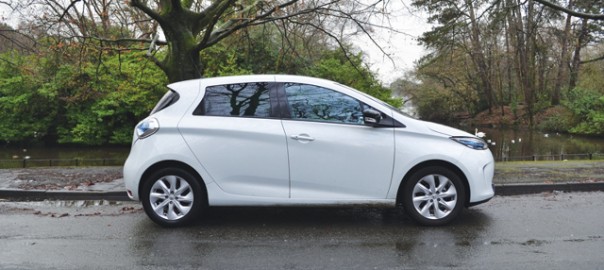
After six months and almost five thousand miles, our ZOE has gone back to Renault. But, in that time, it’s answered the question I’ve been asked so many times since it was delivered: what’s it really like living with an electric vehicle?

It’s much easier than you’d expect. We usually carry hundreds of miles of unnecessary fuel in a conventional car, but the ZOE shows a typical range of between 80 and 100 miles is quite generous. It’s enough to comfortably get from my house in Cardiff to Bristol and back, and the electricity costs less than half the price of the Severn Bridge toll. At each end, I can plug in while I do other things.

Of course, long trips take planning. The range drops to around 75 miles on the motorway, not helped by my impatience at the Eco mode’s 60mph speed limiter. At a steady 70mph, with the blowers on but air conditioning off, it comfortably gets between Ecotricity’s Electric Highway network on an 80% charge, reached in 20 minutes. Range anxiety is usually down to bad planning.

It’s hard not to love the technology, too. R-Link is fiddly at first but easy to get used to, setting cabin temperatures from your bed is a useful feature, and the Chameleon Charger means it takes the fastest charging speeds from whatever you can plug it into. Domestic sockets are the painfully slow exception, though, and the three-pin cable is really only a backup.

The more you live with it, the more it becomes a normal car. It’s stylish, comfortable, has a generous boot, folding seats and ISOFIX points in the back, plus the refinement is blissful. For mostly urban driving and occasional motorway trips, do you really need a plug-in hybrid?

Source: EV Fleet World

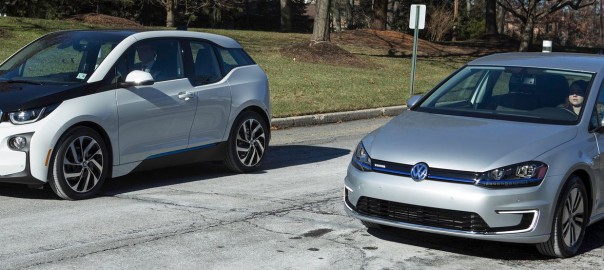
BMW i3 and Volkswagen e-Golf

Kelley Blue Book Announces Best Green Cars For Earth Day – BMW i3 Declared Winner

April this year, Kelley Blue Book (KBB) compiled a list of the most efficient stand-out cars of the year that are chosen based on efficiency, price, practicality and powertrain, just in time for Earth Day.

KBB’s “Best Green Cars of 2015″ list includes 10 vehicles, 5 of which are plug-in electric cars.

For 2015, the BMW i3 is the repeat winner. It captured the top spot from KBB last year too.

BMW i3 and Volkswagen e-Golf

In #2, we find the Volkswagen e-Golf, followed by the Nissan LEAF in third. The two other plug-ins to make the cut are the Tesla Model S in sixth and the Chevrolet Volt [Vauxhall Ampera] in seventh.

And here’s the ranking:

KBB.com’s 10 Best Green Cars of 2015

Rank 2015 Model-Year Vehicle

1 BMW i3
2 Volkswagen e-Golf
3 Nissan Leaf
4 Toyota Prius
5 Honda Accord Hybrid
6 Tesla Model S
7 Chevrolet Volt
8 Toyota Camry Hybrid
9 Ford C-Max Hybrid
10 Volkswagen Jetta TDI

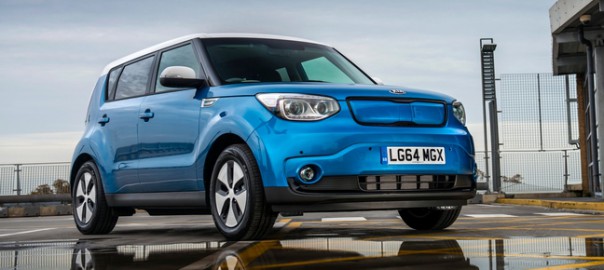
Kia Soul EV in puddle (Image: The Register)

Kia Soul EV: Nifty Korean ‘leccy hatchback has heart and Seoul

A cracking little wagon and a declaration of intent

Vulture at the Wheel I didn’t have high hopes for the Kia Soul EV. I assumed that it was a bit of a lash up; a regular Soul with the engine and gearbox ripped out and a battery pack and electric motor rudely bolted onto it. Wrong.

Kia Soul EV in puddle (Image: The Register)

In many ways it is quite the equal of the Renault Zoe and Nissan Leaf if not quite the ground-breaking BMW i3.

What you think of the Soul EV’s looks will depend on what you think about the aesthetics of the conventionally powered version. Personally, I’ve always quite liked it and I like the EV version even more. Granted, it is not as pretty as the Zoe but it’s a darned sight less frumpy than the Leaf and considerably less jarring than the BMW i3, which is a shape you either love or loathe.

The very slightly restyled rear light clusters and blanked-off grille – which houses the recharge ports – give it, again, to my eyes, a modern and resolved appearance. The EV-specific detailing, like the wind-cheating alloys and LED-running lights, look right at home too. The funky styling really shouldn’t come as a surprise because the Soul was styled at Kia’s California studio.

In terms of battery capacity and motor power, the Soul has the Zoe and Leaf beaten. It boasts 27kWh and 81.4kW to the Zoe’s 22kWh/65kW and the Leaf’s 24kWh/80kW. Kia reckons that the Soul’s battery energy density of 200Wh/kg is a class best. I can neither confirm nor refute that for the simple reason that I’m not sure how Kia arrived at the figure.

What I can confirm is that the Soul can hit 60mph in 10.8 seconds and waft on to a top speed of 90mph. That acceleration figure means the Soul is noticeably faster than either the Renault Zoe or the Nissan Leaf. Granted, a BMW i3 will leave it for dead (the BMW can hit 60 in 7.5 seconds) but the Soul is still a rapid little pup, especially at lower speeds.

The Soul is quiet as well as quick. At all times the electric motor is as silent as the grave. In fact, I think it’s the quietest electric car I’ve driven. Kia has done a good job keeping wind and road noise at bay too, considering that the Soul EV has a semi-detached drag coefficient of 0.35. That is an improvement on the regular Soul’s 0.38.

Read more: The Register

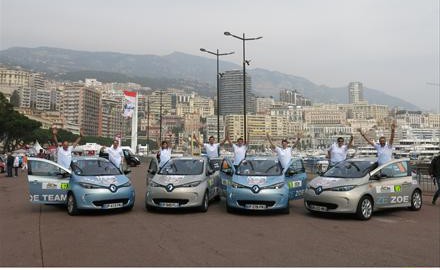
Renault ZOE takes the top four places in the 6th ZENN Monte-Carlo Rally

Following its victory last year, Renault ZOE has put in yet another remarkable performance at the 2015 ZENN Monte-Carlo Rally with four ZOE models taking the top four places.

In its second appearance in the prestigious international competition, Renault ZOE led the field:

  • First in the overall standings of the ZENN Rally
  • Four ZOE in the top four places in the overall standings
  • First in the consumption standings
  • Five ZOE in the top five places in the consumption standings
  • First in the regularity standings
  • Four ZOE in the top four places in the regularity standings

With eight racing zones punctuated with five regularity tests in this year’s ZENN Monte-Carlo Rally (ZENN standing for “zero emissions, zero noise”), the competitors drove a total of 130 miles over seven and a half hours.  Renault entered four teams, including a press car and a blogger car. A team of individuals also took part in the rally on an individual initiative alongside the competing brands.

At the conclusion of the two-day race, these five ZOE finished in first, second, third, fourth and seventh place. The “individual” team finished fourth. Renault applauds this non-professional team and is delighted to see that the electric hatchback brought it every chance of competing strongly in an event as demanding as the ZENN Rally.

Renault ZOE had already been acclaimed by 98% of its customers for its design, performance, best-in-class range, driving pleasure and exclusive technologies. With this array of victories, Renault ZOE is once again demonstrating its unrivalled performances in the world of electric vehicles.

With some 22,000 registrations worldwide since launch, the Renault ZOE adventure continues.

E-Car Club launches in Scotland

The University of St Andrews, together with Transport Scotland and E-Car Club have launched Scotland’s largest all electric, community car club.

St Andrews now has a fleet of 10 electric vehicles (8x Renault ZOE hatchbacks and 2x Renault Kangoo vans) which residents, businesses and visitors can hire by the hour; making the it Scotland’s most densely populated EV town.

The launch, hosted in the town’s central Church Square, gave residents and visitors the opportunity to meet with representatives from E-Car Club, the University of St Andrews, Renault and Carplus.

The E-Car Club represents a positive step in reducing the towns’ emissions from transport and towards the University of St Andrews’ goal of becoming the UK’s first carbon-neutral university.

For as little as an hour, or for several days, members can collect zero-emission vehicles from three locations; Agnes Blackadder Halls, The Gateway at North Haugh, and David Russell Apartments.

E-Car Club members will pay a £50 one-off joining fee for access to the scheme (£25 until 31 July) — with rental prices starting at £4.50 per hour or £35 per day (24 hours), including power and insurance.

Members will be supplied with a membership card and pin number which they can use to book the vehicles; either online or by phone. Once the vehicle is booked, the membership card can be swiped on the windscreen-mounted reader to unlock the vehicle.

The cars can generally travel around 65-90 miles on a single charge; putting Dundee and Edinburgh within easy reach, with their fantastic infrastructure of rapid charging units making even longer journeys an option.

Scottish Minister for Transport and Islands, Derek Mackay said:

“It is really exciting to see the nation’s first all EV car club launch in St Andrews, funded in part by the £1 million announced last summer for EVs in car clubs through the ‘Developing Car Clubs in Scotland’ programme.

“The Scottish Government is committed to achieving the target of almost total decarbonisation of road transport by 2050 because of the numerous benefits this will bring.”

Chris Morris, Managing Director of E-Car Club said:

“I’m delighted to be able to officially announce the launch of E-Car Club in St Andrews. This is particularly significant to us as our first scheme in Scotland – once home to many of the E-Car team including myself – and our largest single deployment of vehicles to date.”

Source: Next Green Car

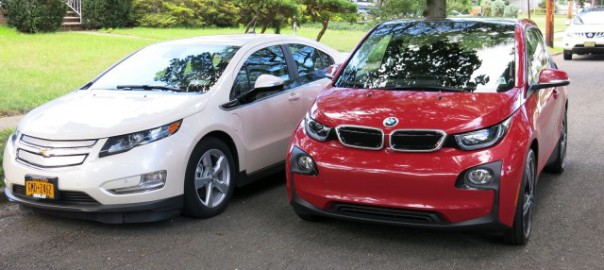
2014 BMW i3 REx vs Chevrolet Volt comparison (Image: D Noland/T Moloughney)

Electric Cars Are City Cars? Not In U.S.

Electric Cars Are City Cars? Not In U.S.: They’re Suburb Cars Here

Automotive journalists who write about electric cars hear the phrase “city car” a lot.

As in, “Battery-electric cars are perfect city cars, but [fill in different powertrain] is required for other uses.”

There’s just one problem: No one in the U.S. has ever turned to their better half and said, “Honey, let’s go buy a city car.”

A recent blog post by electric-car advocate and restauranteur Tom Moloughney points out that, in fact, electric cars are largely used in the suburbs here in the U.S.

His article expands on comments to trade journal Automotive News by BMW’s U.S. CEO, Ludwig Willisch, that the company’s BMW i3 battery-electric car has not caught on in the “big urban centers in the Northeast,”

Instead, BMW sells the largest numbers of i3s in areas of California, Texas, and southern Florida.

2014 BMW i3 REx vs Chevrolet Volt comparison (Image: D Noland/T Moloughney)
2014 BMW i3 REx vs Chevrolet Volt (Vauxhall Ampera) comparison (Image: D Noland/T Moloughney)

(Willisch also then suggests that Northeasterners aren’t particularly concerned about the environment and sustainability–conflating desire for electric cars with solely environmental concerns, while overlooking the practical challenges of owning and recharging them in city centers.)

Moloughney notes that dense urban centers–like those of Boston, Manhattan, and San Francisco–are some of the most challenging places to own any car, let alone a plug-in electric car that requires a charging station.

The BMW i3 Moloughney drives was originally developed as the “Megacity Car,” intended for use in future cities of 15 million or more people that are even more densely packed than today.

But his arguments underscore a unique challenge to selling electric cars with ranges of 62 to 100 miles to U.S. drivers: We don’t buy “city cars.” We just buy cars.

In Western Europe, where local, regional, and long-distance mass transit is common, clean, punctual, and a regular part of travel patterns, a much smaller car for short local trips can make sense.

That was the idea behind the 8-foot-8-inch-long Smart ForTwo (which has been completely redesigned for the first time since the late 1990s for the 2016 model year).

You see Smarts all over Amsterdam, London, Paris, and Rome, sometimes parked end-in at the curb.

In the U.S., not so much. They’re no cheaper than larger subcompact cars, so they’re almost entirely restricted to those same dense urban centers where minimal length is a huge advantage for street parking, but recharging is scarce and expensive.

In fact, very small cars of any kind have largely been a sales flop in this country. Toyota’s Smart competitor, the Scion iQ “3+1-seat” minicar, has now been pulled off sale.

Moloughney’s post is worth reading because it underscores the challenges facing all automakers as their executives grapple with the very real challenges of understanding who buys electric cars, how they use them, and what specific challenges they face in making them practical.

Upcoming longer-range battery electric cars–including the 2017 Chevrolet Bolt, for which 200 miles of range has been promised, and the second-generation Nissan Leaf–may make electric cars more broadly palatable to buyers for whom a range of less than 100 miles is a dealbreaker.

But for North American marketing, we’d suggest that automakers simply eradicate the phrase “city car” from their lexicon.

Thus far, electric cars are largely bought by relatively affluent suburban buyers for whom off-street charging at their homes is possible.

Urban dwellers, meanwhile, are starting to participate in car-sharing programs that eliminate the need for them to pay for and store a vehicle they may not use for commuting.

And until there are far more publicly-available plug-in vehicle charging stations–and most likely the far faster DC quick-charging stations–the city centers of Boston, San Francisco, and so forth will remain a far more challenging place to own electric cars.

In other words: No. More. City. Cars. Please.

Source: Green Car Reports

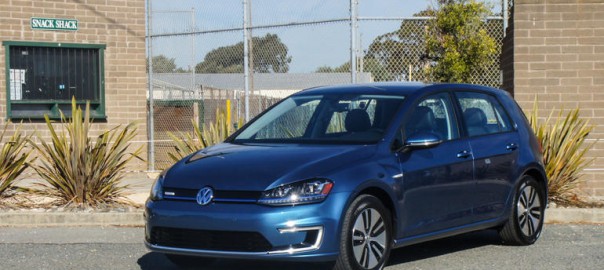
e-Golf is an attractive new electric from VW (Image: CNet)

Review: 2015 Volkswagen e-Golf (With Video)

Because I live in California, it seemed only fitting that my first taste of the new Golf arrived in electric form: the 2015 VW e-Golf. (Why e-Golf? Because “Golfe” just sounded silly.) The Golf isn’t just the first Volkswagen EV in the US, it’s also the first VW built on the new MQB platform which promises reduced weight and lower development costs. While MQB isn’t a dedicated EV platform like Nissan’s LEAF, it was designed to support electrification from the start rather than being converted like the Fiat 500e. While that may sound like a quibble, the difference is noticeable as the e-Golf feels like a regular VW that happens to be electric. The e-Golf also demonstrates just how rapidly EVs have evolved since the LEAF launched in 2010.

Exterior

Volkswagen has always been a company that prefers restrained elegance when it comes to design and the new Golf is no different. While some described the look as boring, I generally appreciate design evolution more than design revolution because the latter leads to products like the Aztek. The downside to VW’s design evolution is that the Golf doesn’t look all that different from the last Golf, but VW owners tell me that’s how they like it. Park it next to the last VW hatch and you will notice a difference. The 2015 model is longer, wider and lower than its predecessor with a longer hood and a shorter front overhang. The result is a more grown-up hatch than ever before that also schleps more stuff than ever before.

For EV duty, VW swaps in their first US-bound LED headlamps, and (according to a product announcement released when we had the e-Golf) will swap them back out if you opt for the new starting trim of the e-Golf which is coming soon. We also get a revised DRL strip of LEDs curving around the front bumper that gives the electric version a distinctive look in your rear-view mirror. Finishing off the transformation are blue accents here and there, EV specific wheels and unique badging. From a functional standpoint, the electrically heated windshield (ala Volvo and Land Rover) helps reduce energy consumption by heating the glass directly instead of heating the air and blowing it on the glass.

Interior

Changes to the new interior are as subtle as the exterior. It was only after sitting in a 2012 Golf that I realized that parts sharing appears to be somewhere near zero. Although the shapes are similar, everything has been tweaked to look more cohesive and more up-scale. The console flows better from the climate controls, infotainment screen and knick-knack storage all the way to the armrest. The dashboard design is smoother and more Audiesque and the door panels have improved fit and finish with slightly nicer plastics. Keeping in mind that the Golf competes with the Hyundai Elantra GT, Ford Focus, Mazda3, Chevy Sonic, and Fiat 500L, this is easily the best interior in this class.

When it comes to the e-Golf things get murky. Since most auto companies have just one EV model, the electric Golf competes with a more varied competitive set spanning from the Spark EV and 500e to the BMW i3 and Mercedes B-Class Electric. In this competitive set, the VW still shines with an interior that isn’t that far off the B-Class or the i3 in real terms. The only oddity here is that the e-Golf does not offer leather in any configuration. The new base model gets cloth seats which are comfortable and attractive but the top end trim we tested uses leatherette which is attractive but doesn’t breathe as well as leather or cloth. Breathability is a problem the Spark’s leatherette seats also suffer from and is especially important in an EV where you frequently limit AC usage to improve range. Kia’s Soul EV is a stand-out in this area by offering real leather and ventilated seats which consume less power than running the AC.

Read more: The Truth About Cars

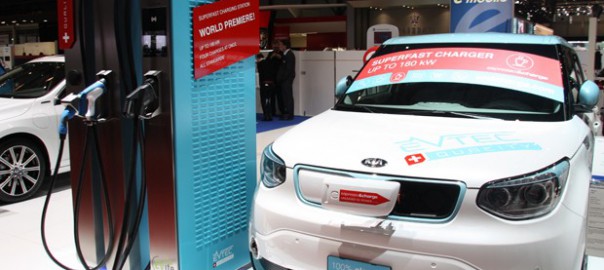
EVTEC 180kW rapid charger and Kia Soul EV (Image: Automobile-Propre)

EVTEC has an 180kW AC / DC charger

In Geneva, Switzerland, the EVTEC company has introduced a new generation of quick charger, AC / DC, capable of operating at a maximum power of 180 kW.

[Translation by Google] Welcoming 4 connectors load, three in rapid charge and a AC 22 kW the “Espresso & charge” terminal of EVTEC meets the standard Combo, CHAdeMO and AC with a maximum load of 180 kW. Depending on the number of supported vehicles, power is automatically regulated between takes with a maximum of 120 kilowatts and 43 kilowatts DC side AC side.

In Geneva, the terminal was presented alongside a Kia Soul EV. A choice that is not trivial since the electric crossover Korean manufacturer is the first model to bear charging CHAdeMO 100 kW.

EVTEC 180kW rapid charger and Kia Soul EV (Image: Automobile-Propre)

According to the information we have collected from the manufacturer’s stand, the first terminal is expected to be deployed this year in Switzerland as part of the project AVOIDED.

Towards a new generation of “superchargers”?

If EVTEC is perhaps now the only company to offer this type of charger, you imagine that other manufacturers quickly follow the trend since the load capability of 100 kW and over become widespread among manufacturers.

Especially, the transition to faster charging powers will better meet the needs of future generations of electric cars, expected for 2016-2017, the capacity of batteries should be around 40 to 50 kWh.

Source: Automobile Propre

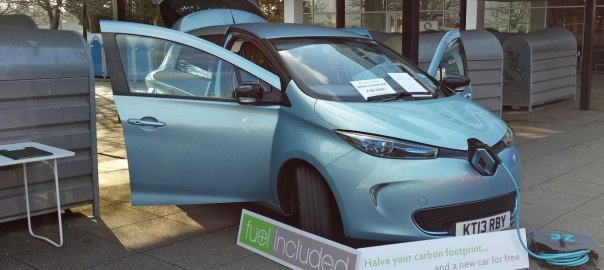
Fuel Included ‘pop-up shop’ outside Milton Keynes Central railway station (Image: T. Larkum)

Free Electric Car Parking at Milton Keynes Station

One of the best benefits available for drivers of electric cars is that London Midland provides free car parking at its railway stations.

This is particularly attractive at two of its stations, Milton Keynes and Watford, as they have very high parking charges (an annual season ticket at these stations costs £1200 and £1093 respectively).

Fuel Included ‘pop-up shop’ outside Milton Keynes Central railway station (Image: T. Larkum)

The deal is that London Midland provides a discount off a car parking permit at its station car parks for what it calls an “ECO friendly vehicle”. The discounts are as follows:

  • 50% discount on monthly, quarterly and annual parking permits if the vehicle emits no more than 120g of carbon dioxide every kilometre (120g/km).
  • 100% discount on monthly, quarterly and annual parking permit, if the vehicle is registered with the DVLA and has “Electric” fuel type. This can be checked on the vehicle registration document (V5C) sent by the DVLA.

Full details are given on the London Midland website for the parking permits and their associated discounts; they are very generous. Clearly if someone pays £200 per month to lease one of our electric cars, for example, they can get back half that money just from savings in parking charges.

Rapid Chargers next to Milton Keynes Central railway station parking (Image: T. Larkum)

We used this idea recently as the basis for a marketing campaign, in two parts. Firstly we set up a small ‘pop-up shop’ outside Milton Keynes Central station. This was done in a similar way to the school event we did late last year, with the ZOE on display and me chatting to passers-by. It ran for a couple of hours in the early evening to catch commuters on their way home.

Renault ZOE in Milton Keynes Central railway station multi-storey (Image: T. Larkum)

Secondly, we did a pass through the station car park a couple of days later, putting fliers under the wipers of cars with season tickets in the windscreen to give information on the discount and our offers. While there I noticed there was a new pair of rapid chargers installed outside and awaiting commissioning, so it definitely looks like a welcoming location for electric cars.

Vauxhall Ampera in Milton Keynes Central railway station multi-storey (Image: T. Larkum)

Inside the multi-storey part of the car park there were already a couple of EVs in residence, a Renault ZOE and a Vauxhall Ampera. With a bit of luck there will be a lot more soon.