Category Archives: Electric Cars

News and reviews of the latest electric cars (full electrics and plug-in hybrids).

BMW Going All In on Electric Cars After EV Sales Jump 50 Percent

BMW announces massive electric vehicle sales growth in the first quarter of 2017—and it’s on track to sell a record number of EVs this year.

In announcing its sales data for 2017’s first quarter, BMW has shown substantial growth in its electric car department. Sales for BMW’s i3 and i8 plug-ins doubled from 2016’s report, totaling deliveries of nearly 20,000 units in just the first three months of 2017. Currently, EV sales account for three percent of BMW’s overall sales—and that number is expected to continue to climb.
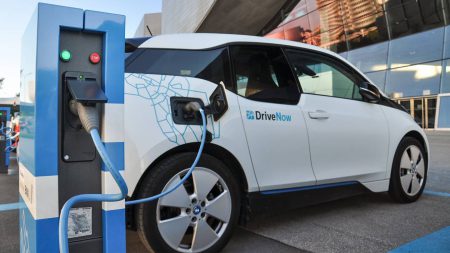
We Are Therefore Well On Course To Delivering More Than 100,000 Electrified Vehicles For The First Time In 2017.

-HARALD KRÜGER, CHAIRMAN OF THE BOARD OF MANAGEMENT OF BMW AG
SHARE.

It certainly seems that BMW is in it for the long haul now when it comes to electric cars. It has become evident this is the shared thought amongst many manufacturers, as they invest more money into the infrastructure of electric charging and begin to pump out more and more EVs in the coming years. BMW has announced its plans to release several new EVs in the near future, including a new i8 roadster in 2018, a fully electric Mini in 2019, a fully electric X3 in 2020, and BMW’s autonomous electric iNext concept in 2021.

Why is BMW investing so much in electric cars? BMW recognizes the growth in sales, sure. But from a marketing perspective, BMW states that, from experience, they know customers prefer to have choices. And BMW has taken that to mean EVs, so it is prioritizing electrification of its vehicle lineup to meet this demand. BMW currently has eight variations of electric vehicles available for consumers to purchase.

Another realization that the manufacturer has attributed to the adoption of EVs is that the vehicles’ usable range is constantly increasing. This could be why BMW agreed to invest in a considerable sum in peppering the nation with more chargers in previously-unutilized spots.

With BMW on pace to sell 100,000 electric vehicles in 2017, the charging infrastructure will continue to grow. The luxury brand shifting focus towards electrifying its fleet will only help to push this agenda, as well as help grow the brand’s sales numbers during the upcoming months. Large players like Tesla will continue to push the limits of adoption, as their vehicle offerings compete with an emerging market. BMW has shown its intent to compete in this rapidly changing market by offering more options to consumers.

Source: The Drive


First drive: Smart Forfour Electric Drive company car review

Sales of electric five-door Forfour expected to overtake its two-door forerunner.

Smart is offering a four-seat electric car for the first time with the new Forfour Electric Drive.

It will go on sale alongside the Fortwo Electric Drive later this year, and it’s the five-door, four-seater Forfour that Smart believes will be the best-seller in the UK.

Although prices hadn’t been set at the time of testing the car, the Forfour should reflect other models in the range and command a £500 premium over the Fortwo, with many customers then recognising the extra value in the additional doors and seats of the Forfour.

The Smart Forfour is a joint development with Renault that also spawned the current Twingo. The Forfour Electric Drive is produced in Slovenia, with the drivetrain manufactured by Renault in France. There is no word on whether an electric version of the Twingo will be launched, but Renault already has a compact EV in the Zoe, so maybe it is unnecessary.

Potential battery range in the Forfour is slightly lower than in the Fortwo (96 miles instead of 100), with maximum power of 81PS from the electric motor and top speed electronically limited to 81mph to avoid wasting charge unnecessarily.

The car will be sold with a standard 7kW charger, meaning the car can be charged in around two and a half hours from empty using a 16amp socket. Early in 2018, Smart will launch a 22kW on-board charger, which means the Smart could be charge in around 45 minutes using a 32amp charger.

Smart had considered delaying the launch of the Electric Drive models until this rapid charging system was available, but has decided to introduce it with the 7kW on-board charger.

The Forfour Electric Drive is nippy around town and eager to take advantage of gaps in traffic with responsive acceleration. Despite being slightly less powerful than a Renault Zoe, it actually accelerates more quickly. The Forfour takes 12.7 seconds to reach 62mph from rest, while a Zoe covers the same benchmark in 13.5 seconds. It isn’t as quick as the Volkswagen e-Up, (12.4 seconds) and is also slightly behind on the e-Up’s 99-mile electric range.

Like other Smart models, there are three equipment grades: Passion, Prime and Proxy, with power steering and heated front seats standard from Prime, as well as a lane-keeping assistant.

The maximum range of 96 miles is disappointing compared to the latest models coming to market (the new Zoe is up to 200 miles). In winter it wouldn’t be surprising if this fell to 60 or so miles, with heated seats and climate control as well as headlamps and windscreen wipers adding to demands on the battery.

We can’t help feeling the company should have been a bit more ambitious and given more people a reason to switch to electric.

Source: FleetNews

BMW Q1 2017 Plug-In Sales At 4% Of Total Sales, Double Year Ago

BMW released its sales results for the first quarter of 2017, and boasted of twice higher sales of plug-in vehicles compared to the previous year.

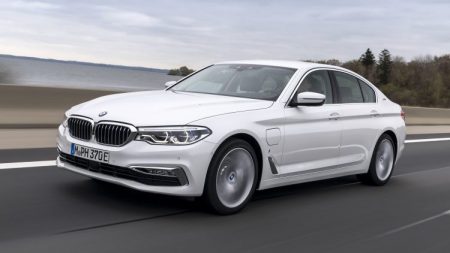
BMW 530e iPerformance

Total deliveries amounted 19,400 (up 101%), which was a 3.85% share of the total 503,438 BMW vehicles sold during the period.

We also got some insights/splits between the BMW i and iPerformance brands:

  • BMW i – 8,098 (up 57.9%)
    BMW iPerformance – 11,302 (up 150%)

The BMW i3 is still the most popular plug-in model with 7,431 sales in Q1 (up 67%), while the i8 decreased by 3% to 667.

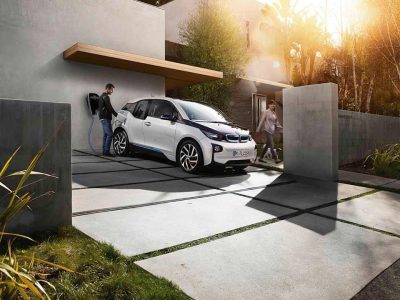
BMW i3

BMW Group vehicles with electrified drivetrains performed particularly well during the first quarter, as nearly 20,000 BMW i3, BMW i8 and BMW iPerformance plug-in hybrids were sold, twice the previous year’s corresponding figure.

“We are therefore well on course to delivering more than 100,000 electrified vehicles for the first time in 2017,”

Krüger stated.

Electrified vehicles accounted for more than three per cent of all BMW Group vehicle deliveries to customers in the first quarter (Q1 2016: 1.7%).

With the launch of the BMW i3 almost four years ago, the BMW Group was an early pioneer of electric mobility and has remained true to its strategy ever since. When the first MINI brand plug-in hybrid model is introduced in summer 2017, the BMW Group will have nine electrified models in its portfolio. The BMW i8 Roadster is set to follow in the coming year and the first all-electric MINI is due in 2019. In 2020, the battery-powered BMW X3 will integrate all-electric mobility into the Group’s core brand. One year later, the new BMW iNEXT is set to take to the roads. As the BMW Group’s new technological spearhead, it will set the benchmark in the future-oriented ACES fields Autonomous, Connected, Electrified and Services/Shared.”

Source: Inside EVs

2017 Hyundai Ioniq Electric: how ‘Unlimited’ subscription really works

To dig its teeth into California’s crowded electric vehicle market, its Korean maker has rolled out an “Unlimited+” lease program for the 2017 Hyundai Ioniq Electric.

The plan mimics a subscription service, and adds unlimited mileage allowance, vehicle-charging reimbursement, and a cohesive maintenance plan to the standard lease terms, according to CarsDirect.

While most of the program is pretty cut and dried, there are a few catches that potential lessees should be aware of.

Unlimited+ could be considered a “lease with benefits,” but in fact the program really is a subscription.

Monthly payments are based on the Ioniq Electric’s trim levels: $275 for the Base, $305 for the Limited, and $365 for the Limited Ultimate.

The program does require $2,500 down, but that’s neatly offset by the California Clean Vehicle Rebate, which is $2,500 for most buyers.

Still, as the article notes, interested lessees will have to come up with the $2,500 at first before the rebate is received.

A few taxes and fees are built into the payment as well: initial taxes, title, license, and fees.

These are all covered by the dealer and then reimbursed by Hyundai, but California sales tax is the responsibility of the lessee.

What about the mileage factor of Unlimited+?

This portion truly has no catch: Hyundai will let drivers clock as many miles as they want during the 36-month term. No overage charges—nothing.

The same can’t be said for the charging benefit, though, which doesn’t offer Ioniq Electric drivers unlimited charging.

2017 Hyundai Ioniq Electric (European spec), 2016 Geneva Motor Show

Instead, drivers will be issued a credit on their account each month for three years or 50,000 miles, whichever comes first.

Monthly use will then be calculated by monthly mileage, the vehicle kilowatt-hour-to-mile rating, and the cost per kwh in California.

It’s better, but certainly not entirely “unlimited” as the program proclaims.

Finally, the maintenance benefit covers more items than you might imagine, but also isn’t “unlimited” in the most expansive sense.

Drivers can rest assured that brake pads, wiper blades, headlamps, belts and hoses, fuses, and bulbs are all covered for three years or 50,000 miles.

There’s also coverage for one 12-volt battery replacement during the term of the lease, if required.

While the program isn’t entirely unlimited in all facets, Unlimited+ does provide a few exceptional benefits electric-vehicle owners will likely take advantage of.

How it will work for drivers depends in part on how much driving is anticipated; those who clock high mileage will benefit the most from the program’s benefits.

With a 124-mile EPA-rated range, the Ioniq Electric is among the highest-range mass-priced electric cars that aren’t the Chevy Bolt EV.

Source: Green Car Reports

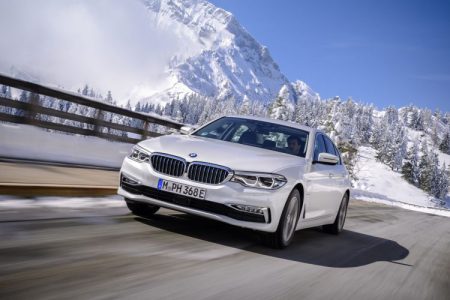
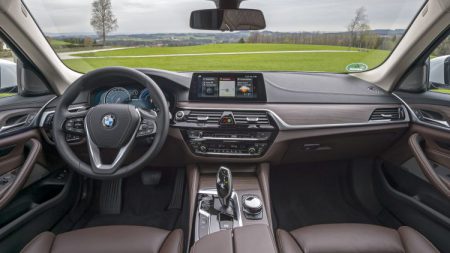
BMW 530e PHEV Test Drive Review

BMW’s new 5 Series now offers no-compromise plug-in power.

On a cold, foggy morning in the Alps southeast of Munich, right along the Austrian border, I don’t notice any of the BMW 530e’s hybrid wizardry working. It’s there, silently and effortlessly and unobtrusively switching between gasoline and electric power. But seeing as how I can barely see ten feet in front of me at this point, with unexpected patches of snow and ice tugging at my confidence during high-altitude cornering, it’s safe to say my mind’s focus is elsewhere.

BMW 530e iPerformance

Down at sea level, on the flat, winding roads leading back toward Munich, I’m hustling along like I would in any other version of the fantastic new 5 Series. Like the 530i and 540i, this is an executive sedan that’s packed with luxury and an overwhelming amount of technology. And this 530e only enhances the experience with a bit more fuel economy, to boot. This is definitely the kind of hybrid driving that I could easily, um, plug in to.

Electric boost. The 530e mates a 2.0-liter turbocharged four-cylinder engine to an electric motor with a 9.2-kilowatt-hour battery. The gas engine itself is good for 180 horsepower and 255 pound-feet of torque, with the electic motor generating its own 111 hp and 184 lb-ft. BMW’s official combined system output ratings are 248 hp and 310 lb-ft, exactly like in the smaller 330e sedan. The 530e makes just as much horsepower as its gas-only sibling, but it has more torque – again, 310 lb-ft here, compared to 258 in the 530i. And because the electric oomph hits right from idle, the 530e and 530i run identical 0-60 times of six seconds flat with rear-wheel drive, despite the plug-in model carrying an extra 520 pounds of battery weight. The all-wheel-drive 530e xDrive shortens that sprint to 5.8 seconds – same as the 530i xDrive.

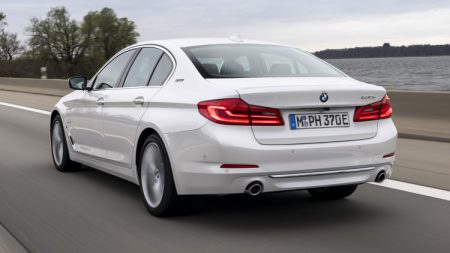
BMW 530e iPerformance

Increased range. When Jake Holmes earlier reviewed the 330e, he rightly pointed out that its 14 miles of electric range seems like enough for daily travels, but in reality – turn on the air conditioning or go heavy on the throttle a couple of times, and that alleged 14 miles is gone before you know it. Good thing, then, that the 530e uses a larger battery pack (9.2 kWh versus 7.6), which means it’ll do around 15% more EV driving, making it much more usable (on electricity) day to day.

Wireless charging. I’m still getting used to wireless charging for my iPhone, but BMW will soon allow drivers to wirelessly charge the entire car. Equip your home with one of BMW’s charging pads, drive the 530e over it, and juice up the battery without using the usual plug port. The details are still being finalized, but in the meantime, should you choose to use a conventional plug, the 530e will charge in less than three hours on a 240-volt (Level 2) outlet.

The only plug-in option in its class. Competitors like the Audi A6, Jaguar XF, and Mercedes-Benz E-Class don’t yet offer a hybrid alternative. What’s more, the base price of a 530e is only $200 more than a 530i, so it’s not out of reach for most would-be 5 Series buyers.

BMW 530e iPerformance

Read More: Inside EVs

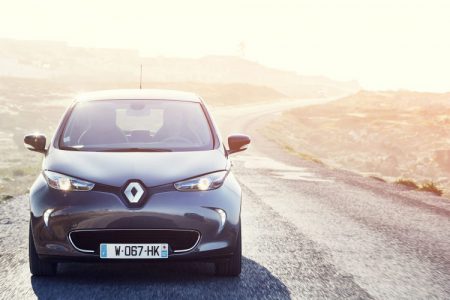
In Q1 2017 Renault ZOE Sales Were Up 57%, Looking For 40K By Year’s End

Renault opens 2017 with an electric car sales surge, as the new ZOE is selling like proverbial hotcakes.

Renault ZOE

The first quarter of 2017 ended with some 9,220 ZOE sales, which is 57% more than year ago (around 5,900).

Most of the sales comes via France – 56% (5,191) where ZOE holds an astounding 70% of all electric passenger car registrations, and notes growth of 60% year-over-year.

“Against the backdrop of a particularly vibrant and rapidly growing (up 22.9%) electric passenger vehicle market, the ZOE with its increased range of 400km NEDC has seen its sales figures climb close to 60%, and it alone accounts for 70% of the market with 5,191 units registered.”

Sales also hit new high in March – around 3,800 (41% of the total first quarter), which gives us hopes that ZOE may be able to reach up to 40,000 sales for the year (in 2016 it was around 22,000)!

Source: Inside EVs

BMW i3 Shows What Nissan Leaf & Chevy Bolt Are Missing

The priority in the EV market right now is for cars to offer the best driving range around and this is why many manufacturers are pushing for 200 miles as the new bare minimum.

The latest Chevrolet Bolt is already capable of offering 238 miles of EV range and the next-gen Nissan Leaf promises something similar. BMW, on the other hand, seems unbothered by it because the i3 is still viewed as a success despite not able to keep up with rival EVs on the sales front.

For BMW, they are targeting a niche market that wants luxury and exclusivity. While the i3 may be far behind its rivals in terms of driving range, it does come with a couple of features that reflects well on BMW’s luxurious status.

One of the features which many are pleased for is the suicide doors. As how you can see in the picture above, the door layout is just so rare to come by these days that it automatically became the single most attractive feature on the i3.

Even those that have purchased the i3 cannot get bored of the suicide doors hence we are not expecting the feature to go away on the next-gen BMW i3.

Source: NSE Voice

BMW 530e iPerformance review: Come in from the cold – this is the plug-in hybrid worth scrapping

Drive a diesel car in London? Monster! Recent emissions revelations have turned you into an outcast. It doesn’t matter that you quite like your powerful diesel BMW 5 Series, and you’re not going to buy a bloody Prius – so what can you do?

Right on cue, BMW has launched a plug-in hybrid version of its astonishingly capable new 5 Series, called 530e iPerformance. The name’s a mouthful – we’ll stick with 530e – but the figures are jaw-dropping: more than 140 mpg, 46g/km CO2 and NOx emissions so minuscule, they don’t even come into it.

And, as if it couldn’t get any better, the government will give you £2,500 if you buy one, taking it down below £30k – not far shy of the best-selling BMW 520d.

BMW took us to its spotless and very Germanic Munich garage for a trial drive. While BMW’s reps were light on the details, we did learnt that the car, is in essence a 2.0-litre turbo petrol 5 Series hooked up with a BMW i3 electric motor and a battery with enough juice to do 31 miles on electric power only.

Once the battery is flat, the engine kicks in, as it does in the plug-in hybrid Mitsubishi Outlander PHEV. There are several driving modes to give you different styles of eco-ness, including one that will fully charge the battery on the move. BMW’s done this with potential future city centre legislation in mind – if combustion engines are banned from certain areas, the 530e will still be allowed in.

Sensibly, you’ll just leave it in auto, and let the system work out what’s best. I did this and found the engine was off more than it was on, allowing me to cruise through Munich in silent, futuristic electric-assist serenity. It’s nothing like having a grunty old diesel clattering away: even a posh V8 5 Series isn’t this silent. And 0-62mph in 6.2secs is pretty fast, too; it’s a Tesla experience in an executive BMW.

Read more: City A.M

2017 BMW i3 REx (94 Ah) — Modern-Day Sci-Fi

Twenty years ago, if you had asked me what cars would be like in 2017, I’d probably tell you they’d be able capable of flight.

I always had this image in my head, as a child, that cars be able to just hover and fly around by the time I was old enough to drive. Maybe I watched too many sci-fi movies as a kid but that was always my vision. Fast forward to today and the automobile is a lot less sci-fi than I had previously imagined. Eight-year old me would be crushed. However, if there was ever a car that could get close to my childhood dreams, it’s the BMW i3 and I just spent a week indulging my inner child’s imagination.

Before we talk about that, let’s take a quick look at what’s new about the i3. BMW launched the i3 2013, as a 2014 model, and back then it was absolutely state-of-the-art. It had almost 100 miles of range, which was about standard for the time, but it was made almost entirely of carbon fiber and had looks like something from Minority Report, both inside and out. So it shocked the world and put BMW on the EV map.

Since then, though, the i3’s charms have wained in the EV community. Other cars had surpassed the i3 in terms of electric range, such as the Chevy Bolt and updated Nissan Leaf. So BMW was forced to give its i3 an update of its own, bumping up its range to over the 100-mile mark, which seems to be the point where customers’ range anxiety becomes less of an issue. So BMW swapped the standard i3’s battery out for a larger, 94 Ah battery that packs a very solid 114 miles of total range. The Bavarians also added some new colors and “Worlds”, as well as some new options, such as a moonroof in North America (finally). And now, the BMW i3 is more competitive in its current market. Though, it still gets some flak for its range. But I’m here to tell you that none of that matters. At least not to eight-year old me.

Stepping into the i3 is an experience unlike anything else in the automotive world. Firstly, just look at it. Nothing else on the road looks even remotely as funky, futuristic or interesting as the i3. It looks like it’s from another world and my eight-year old self would go insane over it, especially in the new Protonic Blue paint color. I know this because kids love the i3. They point and jump around, trying to get their friends to notice what seems like a spaceship to them driving down the street. When it’s parked, people take pictures of it at all angles, regardless of if anyone’s inside of it. It’s a head-turner, like it or not.

Read more: BMW Blog

We can help with a cheap car lease

Cheap Car Lease

Cheap Car Lease

Many people are in the market for a cheap car lease, and that’s something we can help with. We source our cars from around the UK and have negotiated some great deals, so talk to us.

"<yoastmark

We provide all of our cars on a monthly contract so it’s much like a mobile phone tariff. These contracts take two different forms and it’s worth outlining them:

  • Personal Contract Hire (PCH) or Business Contract Hire (BCH). These are straight leases, also known as contract hire. Essentially they are a form of long term rental, and are becoming increasingly popular.
  • Personal Contract Purchase (PCP): this is like a lease. However it has the benefit that at the end of the lease you can choose to keep the car. This is done by making a large one-off or ‘balloon’ payment. A PCP is now the most popular way for people to buy their new car.

Cheap Car Lease – Electric Car

We specialise in selling electric cars. With an electric car you get a new car at a low monthly cost, and it’s also especially cheap to run. The technology of electric cars is developing very fast with new models coming out all the time with longer range and greater performance. Our advice, therefore, is always to expect that you will give the car back at the end of the contract. Then you can upgrade to a new and better model.

Most popular electric cars on cheap car leases (Image: Fuel Included)

Essentially you don’t want to be in a situation like someone paying off an iPhone 4 contract when everyone else is upgrading to an iPhone 8. That’s why for our purposes you can consider leases and PCP to be equivalent. They are just finance contracts where you get a new car with an initial upfront payment plus a regular monthly payment. The key thing is what the car is costing you per month.

The beauty of electric cars, of course, is that you can save a lot of money each month on fuel and road tax. This can virtually pay for the car, i.e. you can get a new car for free. It’s because of the low ‘fuel’ costs (i.e. charging with electricity) that many of our cars are offered with free charging. Specifically we provide the first 10,000 miles of charging at home for free. This, along with email and telephone support, is the Fuel Included service.

Cheap Car Lease – Saving Money

If you’d like us to work out how much money you can save with a cheap car lease on an electric car, try out the Fuel Included ‘total cost of ownership’ service.

If you just want to see how much an electric car would cost check out our most popular deals below. We provide both fully electric vehicles (EV) and plug-in hybrid vehicles (PHEV):