Category Archives: Electric Cars

News and reviews of the latest electric cars (full electrics and plug-in hybrids).

Hyundai Kona Electric (Image: Hyundai)

Hyundai’s Kona Electric tops ‘real range’ test for zero emission cars

Hyundai’s Kona Electric achieved a ‘real-world’ range of 259 miles on a single charge during a What Car? Real Range test – the highest of any vehicle tested.

The compact SUV, which Hyundai says has a range of up to 300 miles, was one of 13 electric cars tested, with the brand’s Ioniq achieving the highest energy efficiency and lowest cost per mile.

It covered 3.9 miles per kWh – 11% further than any model from a rival brand. It achieved a real-world range of 117 miles. Hyundai says its range is 174 miles.

Hyundai Kona Electric (Image: Hyundai)

Tony Whitehorn, president and CEO of Hyundai Motor UK, said: “The results of the What Car? Real Range tests are a terrific endorsement of our zero-emissions models.

“Achieving not only the highest ‘real-world’ driving range, but also the best efficiency and lowest cost-per-mile figure of any brand is testament to our commitment to reducing the environmental impact of our vehicles.

“These cars are a compelling proposition for both fleet and retail customers, and we’re confident that Kona Electric and Ioniq Electric will continue to attract praise from media and motorists alike.”

Read more: Fleet News

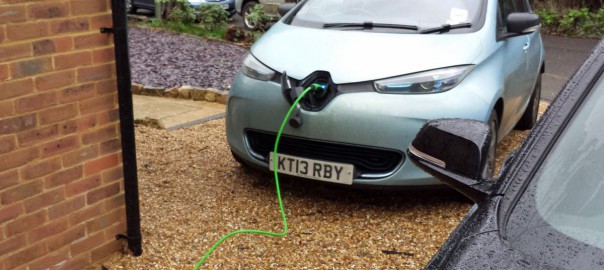
Figure 4: Charging on Christmas Day (Image: T. Larkum)

ScottishPower follows up renewables shift with electric vehicle supply offer

ScottishPower has launched an ‘end-to-end’ electric vehicle deal alongside a car retailer to offer drivers an EV of their choice with an installation of a home charger, powered with green electricity.

Following last month’s announcement that the company had sold its gas and hydro assets to be 100% powered by wind, the company has continued its shift to decarbonised technologies with the new agreement with vehicle dealership Arnold Clark.

This will allow buyers to purchase or lease an EV, book a home installation of a charge point from Wallbox, and sign up to an exclusive 100% renewable electricity tariff as part of the same package.

Figure 4: Charging on Christmas Day (Image: T. Larkum)
Home Charging (Image: T. Larkum)

ScottishPower’s chief executive Keith Anderson said:

“After removing carbon from how we generate electricity we believe the decarbonisation of the UK’s transport system has to be next. This means industry and government working together to build the infrastructure so we can charge electric vehicles as well as building clean and cheap renewables to bring down the cost of motoring.

“The UK needs to decarbonise transport faster and we have to make the switch to electric vehicles simpler.”

Read more: Current News

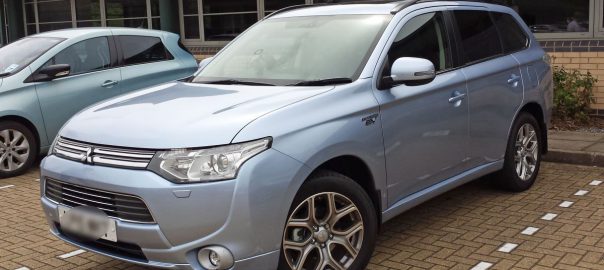
Mitsubishi Outlander PHEV (Image: T. Larkum)

PHEVs’ exclusion from the Plug-In Car Grant was inevitable

The government’s announcement that Category 2 and 3 hybrid cars will no longer be eligible for its Plug-In Car Grant seems totally incongruous in terms of environmental and societal policies, CO2 targets and other influences.

Private motorists, company car drivers and fleet managers have been buffeted around by continuously changing messages and strategies for too long.

Hybrids are now widely perceived by many as the obvious step amidst today’s anti-diesel climate and the near future looked very promising thanks to the procession of new hybrid models in the pipeline, such as PHEV iterations of the Honda CR-V, SKODA Superb and Volvo XC40.

Mitsubishi Outlander PHEV (Image: T. Larkum)

The government’s cessation of monetary support for plug-in hybrid vehicles will leave many prospective car leasing and finance customers scratching their heads, with monthly rentals or repayment costs set to rise by around £65 on a 3-year contract.

Between now and 2020, only eligible fully-electric vehicles that can travel at least 70 miles without emitting any CO2 will receive the reduced level of £3,500 support.

Although it’s understandable that the government wants people and businesses to adopt full EVs sooner rather than later, this move is a blow because only a small number of vehicles like the Nissan Leaf and Renault Zoe will be eligible and their compactness may limit interest, as does the Tesla’s price tag.

In other ways, though, the exclusion of plug-in hybrids from the PICG hasn’t come as a surprise. Introduced in 2011, the PICG was never expected to be a limitless pot of gold and was originally widely expected to expire around five years later.

Read more: Fleet News

OVO Vehicle-to-Grid (V2G) charging (Image: T. Larkum/Fuel Included)

EDF Energy prepares launch of V2G offer following agreement with Nuvve

EDF Energy is to offer its business customers vehicle-to-grid (V2G) chargers, as well as using them on its own sites, after partnering with charger supplier and technology developer Nuvve.

The supplier is expecting the partnership to result in up to 1,500 installations of V2G chargers, while hoping to unlock 15MW of additional energy storage capacity at its own sites.

This represents the largest planned deployment of V2G technology in the UK, overtaking Nissan and OVO Energy’s plans to install 1,000 chargers under a government-backed innovation project.

OVO Vehicle-to-Grid (V2G) charging (Image: T. Larkum/Fuel Included)
Vehicle-to-Grid (V2G) charging (Image: T. Larkum/Fuel Included)

Using the V2G chargers, idle EVs are able to be used to participate in the energy services markets at times, or be used to power onsite demand.

EDF Energy expects its business customers to utilise their fleet or workforce vehicles to tap into these revenues and energy savings using its new offer, taking advantage of the expected increase in EVs entering the commercial sector.

Read more: Current News

Fastned targets UK EV charging market following €11 million fund raise

Dutch fast electric vehicle charging provider Fastned has set its sights on the UK as one of four markets to be targeted following an €11 million (~£9.6 million) fund raising.

The company issued bonds last month offering 6% interest per annum over five years to be paid quarterly in arrears. The proceeds are now to be used to expand Fastned’s network beyond the Netherlands and Germany, where it currently has 78 operational stations, to include Belgium and the UK.

The company has 12 fast charging stations under construction and expects to use the latest funding boost to expand this further.

Bart Lubbers, co-founder of Fastned, said:

“More than 5,000 people have now invested in Fastned. These people believe in our mission and in our company. They see that the growth of electric mobility is accelerating.

“Where our stations used to get only a few visitors per day, we now see multiple cars charging at the same time. Our best station already attracts more than 100 visitors a day! This is just the beginning and people are seeing that.”

Read more: Current News

Copyright: arisanjaya / 123RF Stock Photo

Why Fleets Will Drive Adoption of Electric Vehicles

Electrification is one of the most significant trends in transport today.

Future demand for both electric vehicles (EVs) and the associated electric vehicle supply equipment (EVSE) will, of course, be driven by increased adoption of electric vehicles by individuals and businesses. In this post, I will be making the case that the economics of EVs prove particularly favorable for fleet operations, focusing on full-battery as opposed to plug-in hybrid electric vehicles (BEVs vs. PHEVs).

Electric Vehicles Have Operating Cost Advantage

Electric vehicles are cheaper to operate than those powered by fossil-fuels.

To start, electric powertrains have lower energy costs on a per-mile basis than internal combustion engines. They convert energy into motion more efficiently, with today’s BEVs attaining the miles per gallon equivalent (MPGe) of around three times the MPG of their traditional counterparts. Electricity and gasoline prices vary significantly by region, with some countries imposing heavy taxes on transport fuel.

Copyright: arisanjaya / 123RF Stock Photo

Beyond enjoying lower energy costs, BEVs have fewer moving parts than internal combustion engine vehicles (ICEVs) and forgo liquid fuels entirely. Below is a list of part replacements/maintenance/issues that BEV owners do not need to worry about:

  • Oil changes, oil filters
  • Spark plugs, wiring, ignition coils
  • Muffler, timing belt, catalytic converter, air intake filters
  • Fuel filters, fuel injector cleaning
  • Engine sludge
  • Emissions checks
  • Less frequent brake replacement due to regenerative braking

An EV owner does need to be mindful of their lithium-ion battery, as these lose charging capacity over time and may need to be replaced. Fortunately, data from drivers of Tesla and Chevy BEVs point to significant battery resilience.

BEVs are expected to last a long time thanks to their simplicity and lower number of moving parts. For this reason, an owner may find that when a battery does eventually wear out, it may make sense to replace it instead of buying a new vehicle. Furthermore, since grid/building operators are making use of Li-ion batteries to improve power quality and better integrate renewables, the residual value of a lower capacity BEV battery is expected to be far larger than the scrap value of an entire ICEV.

Read more: Arc Web

SWARCO eVolt launches innovative new charging network App for EV drivers

SWARCO eVolt, the nationwide supplier of electric vehicle (EV) charging points, has launched SWARCO E.Connect, an EV Recharging network for eVolt and third party-manufactured charging stations across the UK and Europe.

The location and live status of all charging points can be viewed online or via a dedicated App on the automated live-map, while a journey planner feature gives drivers the opportunity to carefully plan their route and identify the available charging points on the way, should they need to stop and recharge.

EV drivers can join SWARCO E.Connect for free online or via the mobile app store, with no connection fees for charging their EV at any of the charge points across the network in the UK and Europe. For those who do not wish to, or are unable to access the app, an RFID access card can be purchased for a one-off cost of £10; subscribers simply need to tap their card on the reader on the charger unit to connect their account.


For charge point owners, SWARCO E.Connect can be integrated into existing parking management systems and can also incorporate fault management processes so that any historic, technical issues with the charge points can be viewed. Advanced reporting tools including environmental impact statistics, such as comparative national data on carbon emissions, can be accessed via the online portal. Automated usage statistics are delivered in a weekly report.

SWARCO E.Connect is compatible with all charge point manufacturers and service companies to ensure the most efficient uptime across the network, with all faults being reported immediately and not requiring manual intervention. It can also be integrated with other SWARCO products and services.

Justin Meyer, General Manager at SWARCO eVolt, says SWARCO E.Connect offers significant benefits to both EV drivers and charge point owners: “The advanced reporting tools available will give owners accurate and insightful data on the environmental impact of the charging points.”

“E.Connect is unique in the sense that EV drivers can join, access the network and charge their vehicle completely free of charge. We are committed to lowering emissions providing reliable and high-quality charging infrastructure across the UK, Europe and beyond.”

SWARCO E.Connect also operates a 24/7 365 days a year helpline for drivers and charge point owners to ensure that any issues can be addressed efficiently and effectively.

Source: Gravity London PR

Ubitricity charging post demonstrator at CENEX show (Image: T. Larkum)

Southwark Council begins roll out of lamppost electric vehicle charging

Southwark Council is launching a network of 50 lamppost electric vehicle charge points after partnering with char.gy to deliver installations in two areas of the borough.

Two chargers are already live, with plans to roll out the rest of the network across Borough & Bankside and Dulwich by the end of January.

Char.gy designs and manufactures the units, which are rated at 7.7kW charging speed. However, due to the availability of power from the lampposts, these are reduced to around 5.3kW in most instances.

Ubitricity charging post demonstrator at CENEX show (Image: T. Larkum)
A lamp post demonstrator from rival Ubitricity (Image: T. Larkum)

Lamp post charging has become an area of interest for local authorities, particularly those in London, as they offer a solution to residents without off street parking without adding to existing street furniture.

In addition, char.gy can offer load management across multiple chargers, queuing or delaying charging periods or reducing speeds at times of grid constraint.

Richard Stobart, chief executive of char.gy, said: “Char.gy offers easy, affordable, open-access EV charging without the need to dig-up residential streets across Southwark to lay additional cables or add on-street electricity cabinets. We look forward to offering this convenient means of on-street charging as a vital step towards reducing vehicle emissions across London.”

Read more: Current News

Electric vehicles are going to render the fight over fuel economy standards moot

The auto industry is headed for revolution, Trump notwithstanding.

Though it may seem like several dozen scandals ago, the Trump administration is just now finalizing plans to freeze national fuel-economy standards in place, rather than steadily increasing them as Obama planned.

This is a terrible idea, for reasons I have detailed at length — it will cost consumers more, ensure more air and climate pollution, and, obviously, yield less fuel-efficient vehicles. It’s a bad idea economically, environmentally, and in terms of America’s international reputation.
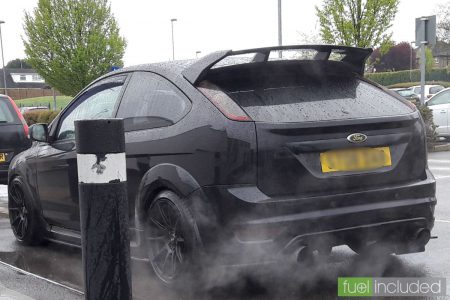
I’m not going to go through all that again, though. Instead, in this short post, I want to do two things: point out a fact about the political calculations of this plan, namely, that it is opposed by the very corporate entities for which it was designed; and, second, make a bold prediction about the effect of electric vehicles on this fuel-economy debate. Basically, I think EVs are going to render the whole dispute moot!

First, the fact.

Car companies don’t like this plan

Car companies have acted with grotesque dishonesty throughout the history of the fuel-economy debate. It was only when Obama bailed them out — literally saving them from bankruptcy — that they agreed to come to the table to work out increased national standards.

When Trump took over, they immediately reversed course and, like jackals, descended on the new administration, pleading for regulatory relief, for a few more years of SUV profits.

And as in so many other areas, Trump gave business what they wanted. More than what they wanted. So much of what they wanted that they don’t want it anymore! Let me explain.

The administration has been holding public hearings on its proposal, and not surprisingly, it has received a torrent of opposition from the usual suspects — environmentalists, health groups, California. What is somewhat surprising is that considerable opposition has come from the auto companies themselves. (Also speaking out against, Axios reports: Shell Oil! When you’ve lost Shell …)

Ford has opposed it, along with the United Auto Workers. “Let me be clear,” said Bob Holycross, Ford’s global director of Sustainability & Vehicle Environmental Matters. “We do not support standing still.” GM and Chrysler have also lobbied the administration to alter its plans.

The Alliance of Automobile Manufacturers, a major automaker trade group, has also opposed the plan. “We support standards that increase year over year,” said AAM CEO Mitch Bainwol at a hearing.

“The industry is united in its request that the agencies work out an agreement with California” for a single, rising national standard, Honda said in recent comments.

As for Trump’s plan? “We didn’t ask for that,” Robert Bienenfeld, Honda’s assistant vice president in charge of environment and energy strategy, told the New York Times. “The position we outlined was sensible.”

Read more: Vox

Electric vehicles will be allowed to drive at higher speed limits than gas cars, says Austrian government

A new initiative from the Austrian government is set to reward electric car owners with a unique incentive.

On October 25, the Austrian ministerial cabinet announced that it would be adjusting the speed restrictions for electric vehicles traveling in the country’s IG-L-Hundred zone, which covers a total area of 440 kilometers (273 miles). With the updated rules in place, owners of Teslas and other electric vehicles will be allowed to travel up to 130 km/h (80 mph) on the highway, 30 km/h (20 mph) faster than their fossil fuel-powered counterparts.

Austrian Minister of Sustainability Elisabeth Köstinger noted that the speed limit exception for electric vehicles is part of the country’s initiative to encourage the adoption of sustainable transportation. Together with the adjusted speed limits, the Austrian government is also pushing to open bus lanes for zero-emissions cars, and promote free parking programs for electrified vehicles.

“The exception for electric vehicles in the IG-L-Hundred is an advantage that we want to give owners of e-vehicles to internal combustion engines,” Köstinger said.

While the specifics of the speed limit incentive are yet to be fully announced, the Austrian government’s wording on the program suggests that the exception would be tailor-fit for battery-powered vehicles like Tesla’s electric cars. Köstinger, for one, noted that the top speed advantage would be given to EV drivers over drivers in vehicles with internal combustion engines. With this statement in mind, it appears that hybrid vehicles such as the BMW i8, which are equipped with a internal combustion engines and electric motors, would not be awarded the same top speed incentive.

The country’s EV community would likely appreciate a speed limit incentive for electric cars, and if it proves effective in Austria, there is a good chance that the program would be adopted in other regions as well. Electric cars, after all, emit no emissions regardless of their speed, and with the advent of high-performance vehicles like the Tesla Model S, Model X, and Model 3, EVs are now more than capable of maintaining high speeds for long periods of time. With batteries getting cheaper and better, electric cars will soon be able to travel even farther than before as well. With this in mind, even simple perks like a higher speed limit would likely encourage even more drivers to join the growing electric car movement.

Read more: Teslarati