Category Archives: Charging

SWARCO eVolt is supplying 45 charging units, including 11 of its Rapid Chargers capable of charging two vehicles simultaneously in 30 minutes, across 28 sites in East Lothian (Image: eVolt)

SWARCO eVolt Supports East Lothian Council Roll Out of New EV Charging Hubs

East Lothian Council has selected SWARCO eVolt to supply electric vehicle (EV) charging units for its current project to introduce a number of charging hubs across the county to provide essential infrastructure for EV drivers and lower emissions in the area.

In total, SWARCO eVolt is supplying 45 charging units, including 11 of its Rapid Chargers capable of charging two vehicles simultaneously in 30 minutes, across 28 sites in the county.

A new central charging hub is being introduced in each of East Lothian’s six largest towns – Musselburgh, Tranent, Haddington, Dunbar, North Berwick and Prestonpans – and will feature multiple charging units, including Rapid Chargers.

SWARCO eVolt is supplying 45 charging units, including 11 of its Rapid Chargers capable of charging two vehicles simultaneously in 30 minutes, across 28 sites in East Lothian (Image: eVolt)

As well as the central town hubs, charging units are also being installed at car parks and on-street in a number of the county’s smaller towns and villages. In some cases, these installations include the replacement of older units to offer the latest available technology to local residents and other drivers.

Ryan Robertson, Roads Officer at East Lothian Council, says SWARCO eVolt’s positive reputation in Scotland made them an obvious choice:

“Our aim is to promote the use of EV’s to the residents of East Lothian and provide them with the essential infrastructure they need to use and charge their EV’s, including in some of the most rural areas in the county. And that requires a reliable supplier, capable of fulfilling our plans.

“SWARCO eVolt came well recommended and were selected after a thorough due diligence process. So far they’ve been fantastic. We have a local maintenance engineer who is always available to provide support and first-class customer service.”

Justin Meyer, General Manager at SWARCO eVolt, says:

“Scotland is leading the way for EV’s and EV infrastructure, so we are pleased to be supporting East Lothian Council and its project to promote the use and uptake of EV’s. We are pleased to see our proven and reliable charging units making a real difference to the local residents and visitors.”

Source: SWARCO eVolt PR

Engenie maps out plans to double UK rapid chargers by 2024

Engenie is set to double the number of rapid chargers in the UK, installing over 2,000 by 2024.

The move comes after a £35 million investment commitment from European infrastructure fund Cube Infrastructure Fund II.

In May, data from Zap-Map revealed there were 2,189 rapid chargers across the country. This figure has since increased to 2,296 at 1,573 locations. Engenie’s plans for the installation of over 2,000 chargers will effectively double the number of rapid chargers in the UK.

The rapid charging points are to be installed at accessible public sites, including supermarkets and retail parks. By the end of this year, 100 sites are to have rapid chargers installed.

Engenie’s charge points don’t require a membership of connection fee, operating a contactless payment method. The 50kW chargers are compatible with all EVs currently on the market.

Read more: Current News

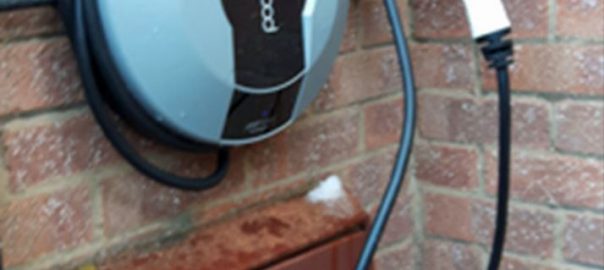
POD Point installed (Image: T. Heale)

Electric car charge points to be installed in every new home

England will be the first country in the world to introduce mandatory electric car charging points for new-build homes

All new homes in England will have to be fitted with charge points for electric vehicles, as the government seeks to facilitate the infrastructure improvements necessary for the planned mass-adoption of electric vehicles.

POD Point installed (Image: T. Heale)

The news comes as Department for Transport has announced a public consultation on the subject. If the planned changes to building regulations go through, it would force homebuilders to install charge points so potential owners could easily charge their plug-in hybrids and electric cars at home. The move would mean buyers of new-build homes would not need to make use of the Government’s home charger subsidy scheme, which has seen almost 100,000 wallboxes installed.

No mention has been made of how new-build houses without off-street parking would be fitted with charge points, but last week the Government invested nearly £40 million into research projects that included wireless charge points, and charge points that rise up from the pavement.

Read more: Auto Express

BP Chargemaster Rapid Charger at Milton Keynes Charging Hub (Image: T. Larkum)

BP Chargemaster to install 200 rapid chargers at UK pubs

BP Chargemaster is to roll out up to 200 rapid chargers at pubs and restaurants run by Mitchells & Butlers across the UK.

The decision to roll out the chargers comes after trials at several of Mitchells & Butlers’ locations. Up to 50 chargers are expected to be installed by October 2019.

The 50kW Ultracharge chargers are to be installed with investment from BP Chargemaster and will be part of its Polar network. They will be available to be used on a pay-as-you-go or subscription basis.

BP Chargemaster Rapid Charger at Milton Keynes Charging Hub (Image: T. Larkum)

In 2018, Marston’s Inns and Taverns partnered with Engenie to become the first UK pub company to roll out rapid chargers across its sites. This new announcement marks increased interest in rapid charging from UK pub companies.

David Newton, chief operating officer at BP Chargemaster, said the chargers will make driving across the country “even easier” and allow drivers to enjoy a break on a long journey.

“At this stage in the market, we are seeing electric vehicle drivers actively seek out locations that offer convenient charging, so we also expect to deliver additional footfall to sites that host our rapid chargers.”

Read more: Current News

Government unveils proposals for new build housing to have EV chargers as standard

The government has unveiled proposals for new build houses to be fitted with chargepoints and pledged to ensure new rapid chargers will provide ‘pay as you go’ payment options.

In a public consultation, the government is proposing that every new residential building with an associated car parking space is fitted with a chargepoint. This would also apply to any buildings undergoing renovation to residential use.

Every residential building undergoing major works with more than 10 parking spaces would also be required to have a chargepoint and the cable routes for a chargepoint for one in five spaces. This would also be true for every non-residential new build and non-residential building undergoing major renovation.

Existing non-residential buildings with over 20 parking spaces will also be required to have a chargepoint, which would be applicable from 2025.

In its second EV announcement, the government revealed plans to ensure all new rapid chargers provide ‘pay as you go’ credit or debit card payment options from spring 2020. It says it is prepared to use powers in the Automated and Electric Vehicles act to ensure ‘a good deal’ for consumers.

Read more: Current News

Milton Keynes 'Mushrooms' Charging Hub (Image: T. Larkum)

‘How do I charge an electric car without a driveway?’ And more of your questions answered

How much does it cost to run an electric car? How can I get a charging point when I don’t have a driveway? Are they really better for the environment?

These are just some of the many questions you have been sending us about electric cars, and with more and more manufacturers investing in and developing these vehicles, more questions are being raised.

This week the government announced it is pumping nearly £40m into improving the infrastructure for electric vehicles.

Milton Keynes 'Mushrooms' Charging Hub (Image: T. Larkum)
Milton Keynes ‘Mushrooms’ Charging Hub (Image: T. Larkum)

Business correspondent Theo Leggett and transport correspondent Tom Burridge have been answering some of the questions sent to us by BBC News online readers.

Phil: How much does it cost to put an electric charging point in your home?

Tom: The first thing to note is that the government provides a grant of £500. A basic charging unit can cost around the £700 mark so in that case you would have to pay the remaining £200.

However the price of installation can vary depending on how far the charging point is from the mains supply.

Faster charging units can cost around £1,500 (minus the £500 grant).

If you don’t buy a charging unit you can still charge your car from your mains supply using a simple bit of kit provided by the car manufacturer, but it will charge more slowly.

Read more: BBC

OVO Vehicle-to-Grid (V2G) charging (Image: T. Larkum/Fuel Included)

Pricing dilemma pivotal to unlocking V2G potential

There is “brilliant” potential for vehicle-to-grid charging technologies to sweep the UK, but only if the industry can bring prices down.

That’s the view of Tom Pakenham, director of electric vehicles at OVO and Kaluza, who said that V2G technologies could “unlock the potential of the car in ways smart charging just doesn’t”.

Kaluza parent company OVO is one of a select few energy companies in the UK currently installing domestic V2G chargers in the UK and currently has around 30 installed, forming part of a major government-backed competition to help boost the technology.

OVO Vehicle-to-Grid (V2G) charging (Image: T. Larkum/Fuel Included)

Pakenham says that expanding these technologies to a mass market of a million cars had the potential to be brilliant but, on top of ensuring that customers had the “right habits” and the right relationship with their supplier, technology costs would have to come down.

Read more: Current News

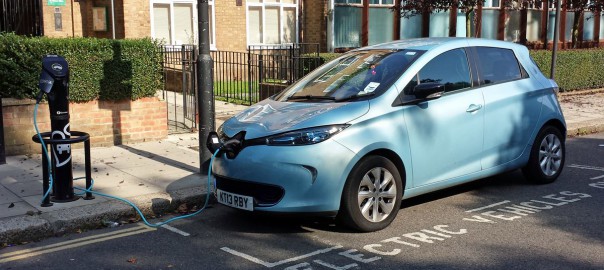
Slow Charging the ZOE at Highgate (Image: T. Larkum)

On-street charging gets £37m boost from Government

Department for Transport announces funding for 12 projects to help drivers charge on streets

The Government is to invest £37 million in a series of schemes designed to help drivers with no off-street parking charge their electric vehicles.

It’s thought that up to 45% of people in the UK don’t have access to their own driveway or private parking, but 90% of ‘charging events’ are estimated to take place at home.

Meanwhile, only households with private parking currently qualify for the Office for Low Emissions Vehicles’ wallbox grant, which contributes up to £500 towards the total cost of installation.

Slow Charging the ZOE at Highgate (Image: T. Larkum)

A dozen projects will share the £37 million fund, with each having passed a three-month feasibility study as part of the Government’s Future of Mobility Grand Challenge.

Char.gy – which opened the first lamp post chargers in London last year – has been given £2.3 million to develop wireless chargers for residential streets.

Consultants Urban Foresight secured £3 million to deploy pop-up chargers that rise up from the kerbside, a project that’ll see Virgin Media helping to monitor usage.

Other projects include the installation of multiple chargers in car parks in order to enable “mass charging” of electric cars at night, while “solar forecourts” – which use solar panels to power charging facilities – will also benefit from funding.

Read more: Driving Electric

Ubitricity charging post demonstrator at CENEX show (Image: T. Larkum)

£37 million in government funding earmarked for EV charging innovation

Twelve electric vehicle (EV) charging projects, including wireless charging and solar powered forecourts, are set to receive a share of government funding totalling £37 million.

Over £2.3 million has been awarded to Char.gy for the development and deployment of wireless charging on residential streets in Milton Keynes, the London Borough of Redbridge and Buckinghamshire County.

The project is in collaboration with the Open University and The University of Warwick’s Warwick Manufacturing Group. Char.gy has previously worked with Southwark Council to install a network of 50 lamppost chargers.

Ubitricity charging post demonstrator at CENEX show (Image: T. Larkum)
Lamp post charging demonstrator at CENEX show (Image: T. Larkum)

Richard Stobart, Char.gy CEO, said the company is “excited” to help accelerate the uptake of EVs through its ability to retrofit to existing vehicles and enable several parking bays per lamp column “without the need for cables”.

Over £3 million has been awarded to a project for the roll out of ‘pop up’ chargers built into pavements in Plymouth and Dundee, with the aim to provide a solution for drivers without access to off-street parking. Urban Electric, along with partners Urban Foresight, Co-wheels, Duku and Appy parking, is to conduct the project.

Read more: Current News

Charging with an Ohme smart charging cable

Octopus Energy and Ohme launch smart EV charging cable

Octopus Energy and Ohme have collaborated to offer smart EV charging to customers, with the energy company’s time-of-use tariff and the new Ohme cable reducing charging costs.

The cable will manage a customer’s charging depending on requirements, and optimising the process to make the most of the Agile Octopus tariff. Customer’s open Octopus’ app, set their requirements – such as ‘On weekdays, charge my car battery to 100% by 7am’ – and Ohme then uses the energy company’s API to automatically draw the right amount of electricity when it is cheapest.

Charging with an Ohme smart charging cable

Estimated cost savings could see those using the Ohme cable and Agile Octopus tariff reduced by £300 per year, compared to charging on a typical standard energy tariff. This not only reduces costs for customers on the smart time-of-use tariff, but also reduces load on the grid.

The cable manages to turn any home or public untethered EV charge point effectively into a smart unit, and costs £399. The first 1,000 Octopus Energy customers will get a special launch price of £199.

The cable can feed back a Green Score to drivers, calculating CO2 consumption per mile, and also a cost per mile summary. It can manage an EV driver’s energy usage and sets charging preferences such as daily commutes or regular trips.

Read more: Zap-map